
Choosing a career as a pharmacist can lead to a stable job and a good income. The pharmacist salary UK is competitive, and your earnings can grow as you gain experience. In the UK, pharmacists usually earn between £35,000 and £85,000+ a year. Newly qualified pharmacists start at the lower end, while experienced and consultant pharmacists earn much more. The average pharmacist salary in the UK is around £40,000 to £55,000 a year. However, your pay depends on your experience, location, job role, and employer. NHS and private sector salaries can also vary.
In this guide, you’ll learn about average salaries, NHS pay bands, private sector pay, and the factors that affect your earnings. You’ll also see how your salary can increase as your career grows.
What is the Average Pharmacist Salary UK?
The average pharmacist salary UK is competitive and increases as you build your career. Your pay depends on your experience, employer, job role, and location. Here is a simple breakdown.
- Average yearly salary: Most pharmacists earn £45,000 to £55,000 a year.
- Median full-time salary: National surveys and ONS data show a median salary of about £50,853 a year.
- Starting salary: Newly qualified pharmacists usually earn £35,000 to £40,000 a year.
- Experienced salary: Many experienced pharmacists earn £65,000 or more each year.
- Average monthly salary: Most pharmacists earn around £3,750 to £4,583 a month before tax.
- Median monthly salary: The average full-time pharmacist earns about £4,238 a month before deductions.
- Average hourly rate: Permanent pharmacists usually earn around £22 to £26 an hour.
- Locum pharmacist pay: Locum pharmacists often earn £30 to £40+ an hour. Busy areas and weekend shifts may pay even more.
Salary By Role
- NHS Band 6 Pharmacist: Newly qualified pharmacists usually start on £35,392 a year.
- NHS Band 7 Pharmacist: Specialist clinical pharmacists often earn £43,742 to £50,056 a year.
- NHS Band 9 Pharmacist: Consultant and chief pharmacists can earn up to £114,949 a year.
- Community Pharmacist: Many large pharmacy chains offer starting salaries of around £42,000 a year.
- Branch Manager: Experienced pharmacy managers often earn £50,000 or more each year.
Your pharmacist salary can increase as you gain experience, complete extra training, or move into senior roles. Choosing a specialist area or becoming a pharmacy manager can also help you earn a higher salary.
How Much Does a Newly Qualified Pharmacist Earn in the UK?
Starting your career as a pharmacist is both exciting and rewarding. Most foundation pharmacists earn between £28,000 and £35,000 a year during their training year. After you register as a pharmacist, your salary usually increases.
If you join the NHS, you will normally start on Band 6 and earn £37,338 a year. On the other hand, many private pharmacies and large pharmacy chains offer starting salaries between £40,000 and £45,000 a year. Some employers pay even more in areas where pharmacists are in high demand.
In your first year after registration, you can usually expect to earn between £37,000 and £45,000. However, your pay depends on your location, employer and job role. As you gain more experience, you can earn more money. You can also increase your earnings by moving into specialist roles, management, or locum work.
What is the NHS Pharmacist Salary By Band?
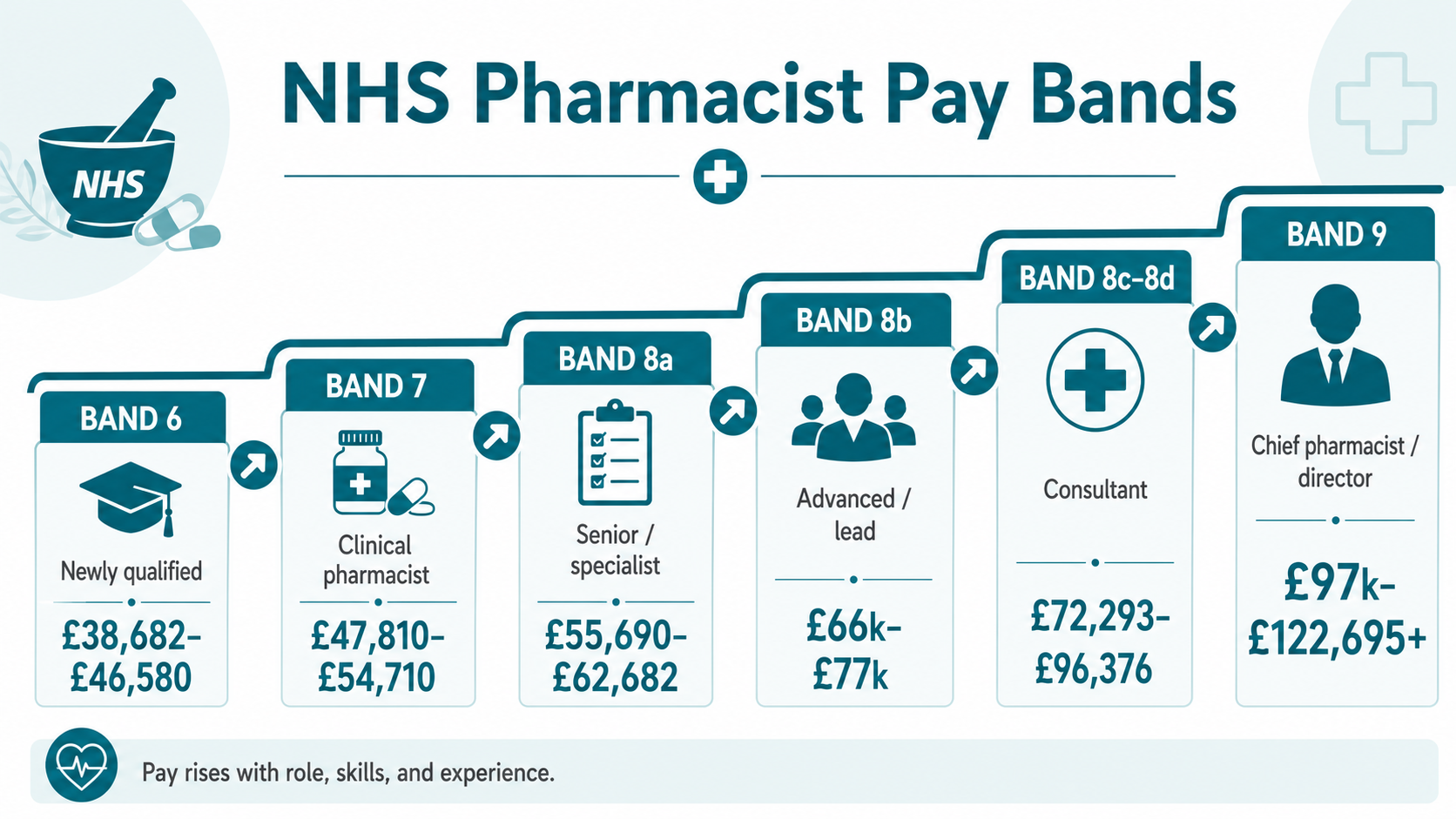
The NHS uses the Agenda for Change (AfC) pay bands to set pharmacist salaries. Your pay depends on your experience, skills, and job role. As you learn more and take on extra duties, you can move to a higher band and earn more money.
Band 6 Pharmacist Salary
Most newly qualified pharmacists start on Band 6. The salary ranges from £38,682 to £46,580 a year. This is where you build your skills and gain real work experience.
Band 7 Pharmacist Salary
After a few years, many pharmacists move to Band 7. Most clinical pharmacists work at this level. The salary ranges from £47,810 to £54,710 a year. You may care for more patients and take on extra duties.
Band 8a Pharmacist Salary
Senior and specialist pharmacists usually work at Band 8a. The salary ranges from £55,690 to £62,682 a year. At this level, you may lead a team or work in a specialist area.
Band 8b and Above Salary
As your career grows, you can move to Band 8b and earn about £66,000 to £77,000 a year. Consultant pharmacists usually work in Band 8c or Band 8d. They earn between £72,293 and £96,376 a year. Band 9 is the highest level. Chief pharmacists and pharmacy directors can earn £97,000 to £122,695+ a year.
The NHS pay bands give you a clear career path. As you gain experience, complete more training, and take on more responsibility, you can move to the next band and increase your salary.
How Much Do Community Pharmacists Earn?
Community pharmacists work in local pharmacies and help people with medicines, health advice and everyday healthcare. Their salary depends on the type of pharmacy, their experience, and where they work.
Pharmacists who work in high street pharmacies usually earn between £40,000 and £55,000 a year. Busy locations or extra responsibilities can lead to higher pay.
If you work in an independent pharmacy, your salary may range from £38,000 to £55,000 a year. Some smaller pharmacies offer flexible working hours, while others may pay more to attract experienced pharmacists.
Many supermarket pharmacies, such as those inside large grocery stores, offer salaries between £42,000 and £58,000 a year. These jobs often include extra staff benefits and regular working hours.
Large chain pharmacies usually offer competitive pay. Newly qualified pharmacists often start at around £42,000 a year. Experienced pharmacists and pharmacy managers can earn £50,000 to £65,000+ a year.
Overall, community pharmacy offers a stable career with good earning potential. As you gain experience and take on more responsibility, your salary can continue to grow.
Which Factors Affect Pharmacist Salary UK?
The pharmacist salary in the UK can be different from one person to another. Some pharmacists earn more because of their skills, experience, or where they work. Here are the main things that affect your salary.
- Experience: The more experience you have, the more you can earn. Most pharmacists see their salary grow over time.
- Qualifications: Extra training and new qualifications can help you get a better-paid job. They can also help you move into senior roles.
- Location: Your salary can change depending on where you work. Pharmacists in London and other big cities often earn more than those in smaller towns.
- Employer: Different employers pay different salaries. The NHS, private pharmacies, supermarkets, and drug companies all have their own pay rates.
- NHS or Private Sector: NHS pharmacists follow fixed pay bands. Private employers set their own salaries. In some jobs, private companies may pay more.
- Specialisation: Pharmacists with special skills often earn more. For example, clinical pharmacists and consultant pharmacists usually receive higher pay.
- Extra Responsibilities: You can earn more if you manage a pharmacy, lead a team, or take on extra duties.
Which UK Cities Pay Pharmacists the Highest Salaries?
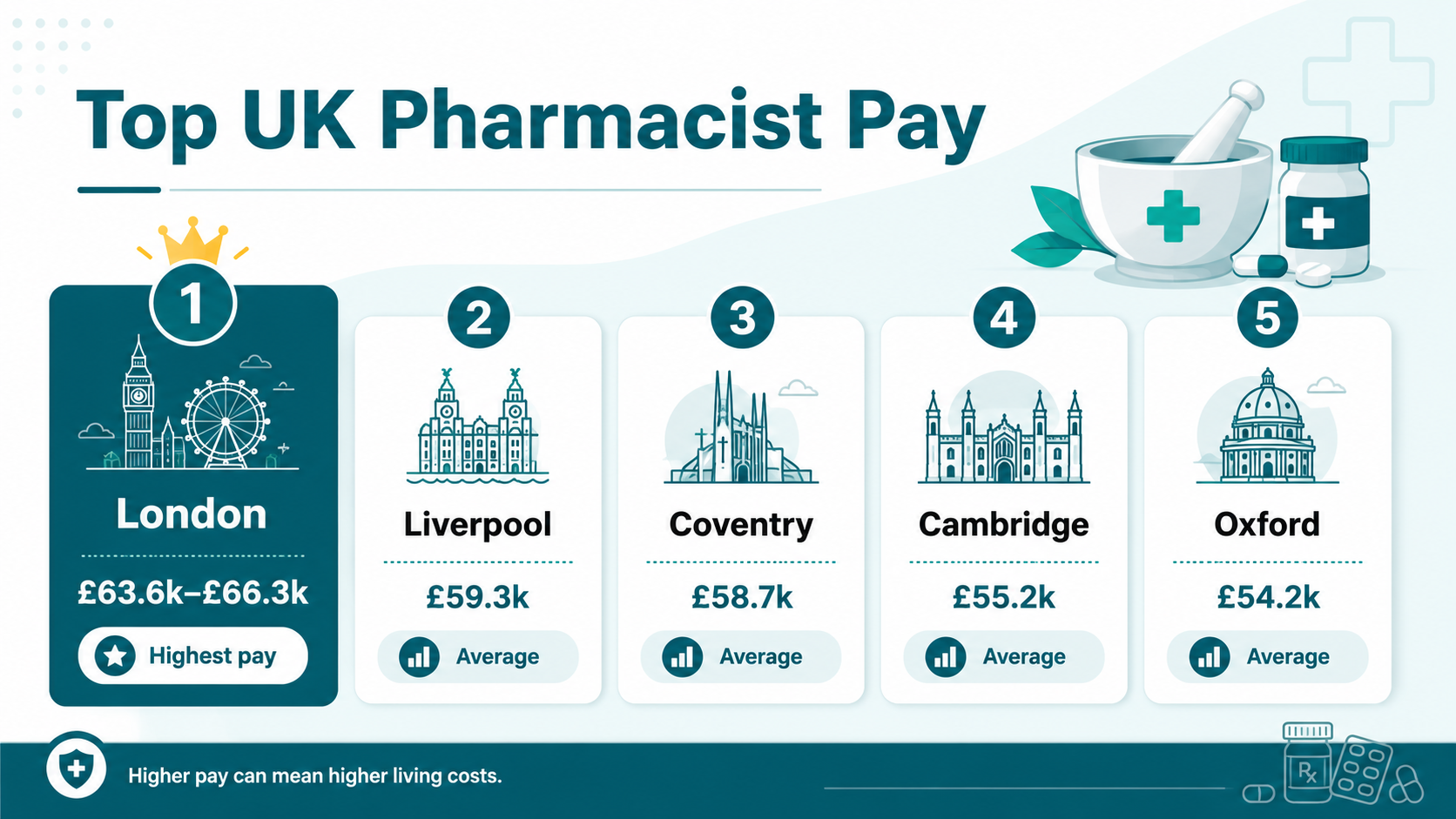
Where you work can make a big difference to your salary. Some cities pay more because they have a high demand for pharmacists. However, these places often have higher living costs too.
- London: London offers some of the highest salaries in the UK. Many pharmacists earn between £63,600 and £66,300 a year. Areas around London, such as Carshalton, also offer high pay.
- Liverpool: Pharmacists earn an average salary of about £59,300 a year.
- Coventry: The average salary is around £58,700 a year.
- Cambridge: Many pharmacists earn about £55,200 a year.
- Oxford: The average salary is around £54,200 a year.
Locum pharmacists can earn even more in some places. Inverness and several areas in Scotland and Wales often offer some of the highest hourly rates for locum shifts.
Is Becoming a Pharmacist Worth It in the UK?
Yes, for many people, becoming a pharmacist is a good career choice. You need to study and train for several years. However, the hard work can pay off. Pharmacists in the UK can earn more money as they become more experienced.
Pharmacists are in high demand across the UK. The NHS, hospitals, community pharmacies, and private companies all need qualified pharmacists. This gives you good job security and many career options.
You can also move into higher-paying roles. For example, you can become a clinical pharmacist, pharmacy manager, consultant pharmacist, or independent prescriber. These jobs offer more responsibility and better pay.
If you enjoy science, like helping people, and want a stable career, pharmacy is a great option. It offers good pay, strong job security and plenty of chances to learn, grow, and build a successful future.
How Does Pharmacist Salary UK Change by Experience?
Your experience has a big effect on your pharmacist salary UK. As you learn new skills and take on more responsibility, your pay usually goes up. Here is a simple guide to what you can expect.
- Newly qualified: Most newly qualified pharmacists earn £37,000 to £45,000 a year. This is the time to build your skills and gain confidence.
- 2–5 years: Many pharmacists earn £45,000 to £55,000 a year. At this stage, you often take on more duties and work more independently.
- 5–10 years: With 5 to 10 years of experience, pharmacists can expect to earn £55,000 to £70,000 a year. Some choose specialist or leadership positions.
- 10+ years: After 10 or more years, pharmacists often earn £70,000 to £90,000+ a year. They may supervise staff or run pharmacy services.
- Senior pharmacist: Senior, consultant, and chief pharmacists can earn £90,000 to £120,000+ a year.
If you want to compare this career with another pharmacy role, read our guide on “How Much Does a Pharmacy Technician Earn in the UK?” from the School of Health Care website.
Final Thoughts
The pharmacist salary UK is good and can grow over time. Your pay depends on your experience, skills, employer and where you work. As you gain more experience, you can move into better-paid jobs and earn more money. The NHS, community pharmacies, and private companies all offer good career opportunities. Pharmacy also gives you job security and many ways to grow. If you enjoy helping people and want a stable career with a good salary, becoming a pharmacist is a great choice. With hard work and the right training, you can build a successful future.
FAQs
1. What a levels do I need to be a pharmacist?
- Most UK universities ask for A Levels in Chemistry and one other science, such as Biology, Maths or Physics. Entry requirements vary, so always check the university’s course details.
2. Is it hard to become a pharmacist?
- Yes, it takes hard work and dedication. You need to complete an MPharm degree, foundation training and register as a pharmacist. However, many people find the career rewarding.
3. Which country pays pharmacists the most?
- The United States is one of the highest-paying countries for pharmacists. Switzerland and Australia also offer high salaries.
4. Is a pharmacist a good job in the UK?
- Yes. Pharmacy offers a good salary, strong job security, and many career opportunities in the NHS and private sector.
5. Is 40 too late to become a pharmacist?
- No. Many people start a pharmacy career later in life. You can become a pharmacist if you meet the required qualifications.
6. Is pharmacy a hard degree in the UK?
- Yes. The MPharm degree is challenging because it includes science, medicine and patient care. With regular study and practice, many students complete it successfully.
7. Will AI eventually replace pharmacists?
- No. AI can help with routine tasks, but pharmacists provide expert advice, patient care and clinical decisions that require human skills.
8. What is the quickest you can become a pharmacist?
- In the UK, it usually takes five years. This includes a four-year MPharm degree and one year of foundation training before registration.