
What’s the average wage of a pharmacist in the UK? And is it really as steady as people think? Let’s break it down in simple terms. Most pharmacists earn between £40,000 and £65,000 a year. The average wage of a pharmacist in the UK is about £55,342. But this pay is not the same for everyone. It changes with experience. It also depends on NHS pay bands.
Job type also makes a big difference. Community, hospital and locum pharmacists all earn different pay. Location matters too. London usually pays more than cities like Liverpool or Bristol. Independent prescriber roles can also help pharmacists earn even more.
Now let’s go deeper and see how pay works across the UK, from hourly wages to top jobs that can reach £100K+.
What Is the Average Wage of a Pharmacist in the UK?
The average wage for pharmacy tech in the UK shows how pay changes during a career. Most pharmacists earn around £55,342 a year. New pharmacists usually start on around £40,000. Senior roles can go above £100,000.
But this pay is not the same for everyone. Experience makes a big difference. Job level and skills also affect pay. Over time, salary goes up step by step. Many pharmacists see a rise of about 38% to 62% in their careers.
Here is a simple breakdown:
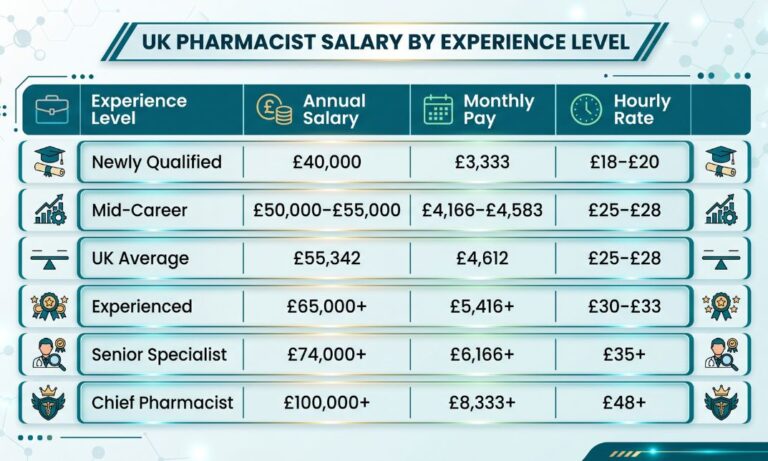
At the start, pay stays close to £40,000. With more experience, the salary grows step by step. Later, senior jobs and leadership roles bring much higher pay.
How Much Do Pharmacists Make Per Hour in the UK?
A pharmacist’s wage depends mainly on experience, job type and where they work. Most pharmacists work 38 to 42 hours each week. That comes to about 1,976 to 2,184 hours in a year.
So, how much does a pharmacist earn in the UK? Simply, a pharmacist in the UK usually earns around £18 to £33 per hour. If the working week goes up to 42 hours, the hourly pay drops to about £18.32. This change depends on total weekly hours and pay setup.
As experience grows, pay also goes up. A pharmacist in the UK earns an average salary of £55,342 which is about £28.01 per hour with a 38-hour work week. With a 42-hour week, it becomes around £25.34 per hour. Over time, skills and experience help increase earnings.
An experienced pharmacist earning £65,000 a year makes about £32.89 per hour. If the working hours increase, this drops to around £29.76 per hour. This happens when total weekly hours are higher.
Now let’s talk about locum work. Locum pharmacists often earn more per hour. Their pay usually ranges from £25 to £40 per hour. This depends on demand, location and shift timing. Weekend shifts, urgent cover and last-minute work often pay more.
When we look at daily pay, the picture becomes clear. A new pharmacist earns about £154 per day. The UK average is around £213 per day. On the other side, an experienced pharmacist can earn £250 or more in one day. This depends on the job, hours and type of shift.
How Does Pharmacist Salary Grow With Experience?
Pharmacist pay in the UK grows step by step as experience builds. At the start, a pharmacist earns around £43,000 to £46,000 in the first 0–1 years. At this stage, they learn the job and build basic skills. They also get used to working with patients and teams.
After that, pay starts to go up. With 1–3 years of experience, salary usually rises to £48,000 to £52,000. With 5+ years, it often reaches £55,000 to £60,000. This shows that more experience brings better pay. After 10+ years, many pharmacists earn £65,000 or more. At this level, they take more responsibility and handle more complex work.
Overall, salary grows steadily over time. Pay can rise about 38.4% from the starting level to the UK average and up to 62.5% at the experienced level. As careers move forward, pharmacists also step into better roles. They get promotions, move into specialist jobs, take prescribing roles, or move into management positions.
What Is NHS Pharmacist Salary by Pay Band?
NHS pharmacist pay uses a band system. Each band shows a different level of job and experience.
At Band 6, the salary ranges from £38,682 to £46,580. This is often the starting level for new or junior pharmacists. At this stage, they learn the job and build basic skills. After that, pay increases with experience. At Band 7, salary rises to £47,810 to £54,710. Here, pharmacists work more on their own. They also take on more responsibility in daily work.
Moving higher, Band 8a–8b pays between £55,690 and £74,896+. These roles include senior clinical work, specialist tasks, or team leadership. So, pharmacists handle more complex work at this level. At the top, Band 9 can reach £100,000 or more. This level is usually for a chief pharmacist or senior manager role.
Overall, NHS pharmacists earn around £60,000 on average. This is about 21% higher than the UK average salary. Many also earn extra through on-call work and overtime. So, hospital pharmacists often sit among the highest-paid employed pharmacists in the UK.
Which Pharmacist Jobs Pay the Highest Salaries?
Pharmacist pay in the UK changes with the job type. Some roles pay more as they require strong skills and more responsibility.
To begin with, community pharmacists usually earn £40,000 to £55,000. Hospital pharmacists often earn more and senior roles can reach £75,000 or higher. Locum pharmacists earn per hour. Their rate usually stays between £25 and £40 per hour, and it can go higher during busy or urgent shifts.
Moving on, the pharmaceutical industry offers higher pay. Salaries often start around £60,000 and grow with experience. At the top level, consultant pharmacists earn £80,000 to £100,000 or more.
On top of that, specialist roles like clinical, oncology and intensive care pharmacy often pay more. Independent prescriber roles can also increase income and open better career options.
Where Do Pharmacists Earn the Highest Salaries in the UK?
Pharmacist pay in the UK depends on location. Some cities pay more, but living costs also affect how much money you keep. Take a look at how pharmacist pay changes across key cities:
- London: £61,326
- Doncaster: £59,196
- Liverpool: £58,623
- Bristol: £55,312
- Coventry: £54,444
To start with, London has the highest average pay. It also gives about an 8% pay boost. However, rent, travel and daily costs are much higher. So, the real money you keep can feel lower.
Looking at other cities, pay is still strong across the UK. Still, it is a bit lower than London. On the other hand, Scotland shows higher pay in some roles. Salaries there can reach up to £111,150. In London, pay usually sits between £60,450 and £78,000.
So, the main point is that higher pay does not always mean more savings. Location plays a big role in the question “where do pharmacists earn the highest salaries in the UK?” and in how much value you get from your salary.
What Factors Affect the Average Wage of a Pharmacist?
Here are the main factors that affect pharmacist pay in the UK:
- Experience and seniority: Pay goes up with experience. Senior pharmacists earn more. They also take more responsibility at work.
- Specialisation: Some jobs pay more than others. Clinical, prescribing and consultant pharmacists usually earn higher pay. These roles need extra skills and training.
- Employer type: NHS jobs follow set pay bands. Private employers like Boots, LloydsPharmacy and Superdrug may offer different pay and extra benefits.
- Location: Pay changes by area. Big cities usually pay more. London often has the highest salaries. Smaller towns may pay less.
- Extra pay and benefits: Many pharmacists earn extra money. This includes overtime pay, bonuses, pension, weekend pay, paid memberships and relocation help.
How Long Does It Take to Become a Pharmacist?
It usually takes 5 years to become a pharmacist in the UK. To begin with, students complete a 4-year MPharm degree. In this stage, they learn about medicines, health and patient care. They also build strong basic knowledge for real work.
After that, students move into a 1-year foundation training. Here, they work in a real pharmacy. They get real work experience and learn how daily pharmacy work runs. Then, they pass their final assessment and register with the GPhC (General Pharmaceutical Council). Once they register, they become a fully qualified pharmacist. At this stage, many start earning around £40,000 or more.
After qualification, some pharmacists go for extra training. One option is the independent prescriber pathway. This allows pharmacists to prescribe medicines in some cases. It also improves job options and can increase long-term pay.
Looking for the quickest way into a pharmacy career? Start your journey today with our Pharmacy Technician Course and build real skills for your future in healthcare.
Is Pharmacist Pay Worth It Compared With Similar Careers?
Many people compare pharmacy jobs before choosing this career. So, let’s keep it simple.
Pharmacy assistants usually earn around £24,000 to £31,000. Pharmacy technicians earn more, around £28,000 to £39,000. On the other hand, pharmacists earn much higher, usually £40,000 to £65,000+, depending on experience and job role.
So, pharmacists clearly sit at the top in pay in this career path. They also carry more responsibility in patient care and medication safety. Because of this, pharmacists are one of the best-paid healthcare roles in the UK.
When we look at training time and salary together, the return is strong. It takes about 5 years to qualify as a pharmacist. After that, many start on a good salary right away. Over time, pay grows with experience, skills and career progress.
What Is the Job Outlook for Pharmacists in the UK?
The future for pharmacists in the UK looks strong. Demand keeps growing in hospitals, community pharmacies and GP practices. So, this job stays stable and secure for the long term.
Here are the main trends:
- Steady growth: The job market is expected to grow by about 2.8% by 2029
- More job openings: Both the NHS and the private sector need more pharmacists
- Higher need for prescribers: Independent prescribing roles keep increasing
- GP practice roles: More pharmacists now work with doctors in GP clinics
- Private healthcare growth: Private services create more job options
- Strong stability: Pharmacy stays steady even when the job market changes
So, pharmacy remains a safe career choice. Strong demand and steady salary growth support long-term earning potential.
Conclusion: Is Pharmacy a High-Paying Career in the UK?
The average wage of a pharmacist in the UK shows a strong and steady career path. Many pharmacists start at around £40,000. This is a good starting salary. As experience grows, pay rises to £55,000+ on average. With senior roles, earnings can reach £100,000 or more.
So, pharmacy gives both a stable income and steady growth. It also stays in high demand across the UK. This means good job security and regular work opportunities.
On top of that, pharmacists can increase their income in different ways. They can move up through NHS roles, take locum shifts, go into prescribing, join the pharmaceutical industry, or choose specialist areas. Each option adds more earning power and career growth. So, pharmacy is not just a job. It is a long-term career with strong pay and clear growth options.
FAQs About Pharmacist Pay in the UK
How much is a pharmacist paid in the UK?
- A pharmacist in the UK usually earns around £40,000 to £65,000+ per year. Pay grows with experience, skills and job role.
How much does Boots pharmacist earn?
- A Boots pharmacist usually earns about the same as other community pharmacists, around £40,000 to £55,000+. Senior roles can earn more.
Do pharmacists earn a lot of money?
- Yes. Pharmacists earn a strong salary compared to many healthcare jobs. Many also move up to higher pay with experience.
Do pharmacists get paid by NHS?
- Yes. Many pharmacists work in the NHS and get paid through NHS pay bands. Salary depends on their band and experience level.
Is pharmacist a high stress job?
- It can be busy at times. Pharmacists deal with patients, medicines and safety. But good training and teamwork help manage the pressure.