
Henna is a staple at UK festivals and South Asian weddings. You might see people wearing beautiful patterns on their hands and feet. Have you ever wondered what is inside that dark green paste? Many people assume it is just a simple plant from a shop. However, understanding the ingredients is very vital for your skin safety. Recently, natural beauty trends have become very popular in the United Kingdom. People now want to know exactly what they put on their bodies. This guide will help you understand what henna made of for safe use. Learning about these ingredients helps you avoid harmful chemical reactions. You can enjoy beautiful body art while keeping your skin very healthy.
What Plant Does Real Henna Come From?
The henna plant is a small shrub called Lawsonia inermis. This plant grows best in very hot and dry climates. You can find it in North Africa and the Middle East. It also grows in large parts of Southern Asia as well. Farmers wait for the heat to peak before they harvest leaves. These leaves contain a special dye molecule called lawsone for staining. Once picked, these leaves are dried under the bright, hot sun. Workers then crush the dry leaves into a very fine powder. This natural powder is the starting point for all real henna. Most UK artists import this powder from Rajasthan or Pakistan. Consequently, the quality of the powder depends on the soil conditions. Fresh powder should always have a bright, vibrant green colour.
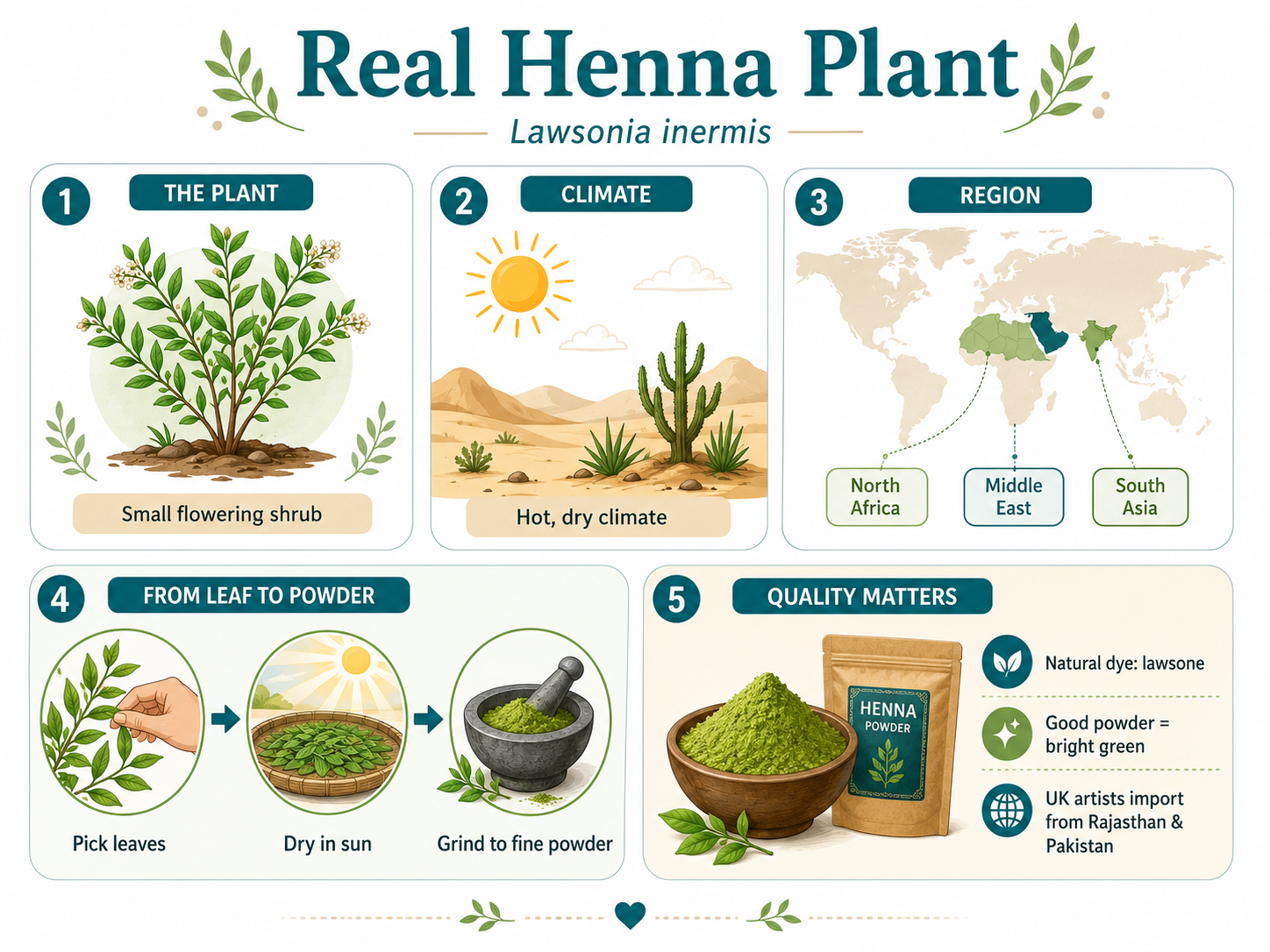
What is the Botanical Source?
Now, let us look at the botanical source and what henna is made of exactly. The process starts with the fine green powder from dried leaves. Next, artists add a liquid catalyst to start the dye release. You might use water, lemon juice, or even strong tea. This acidic liquid helps the dye molecules come out of the plant.
After that, artists often add some specific essential oils to the mix. These oils are called “terps” because they contain natural monoterpenes. Common choices in the UK include high-quality Lavender or Eucalyptus oils. Finally, a bit of sugar is added for a smooth texture. The sugar helps the paste stick to your skin during application. Furthermore, it prevents the paste from cracking too quickly in dry air.
What Is the Difference Between Natural and Synthetic Henna?
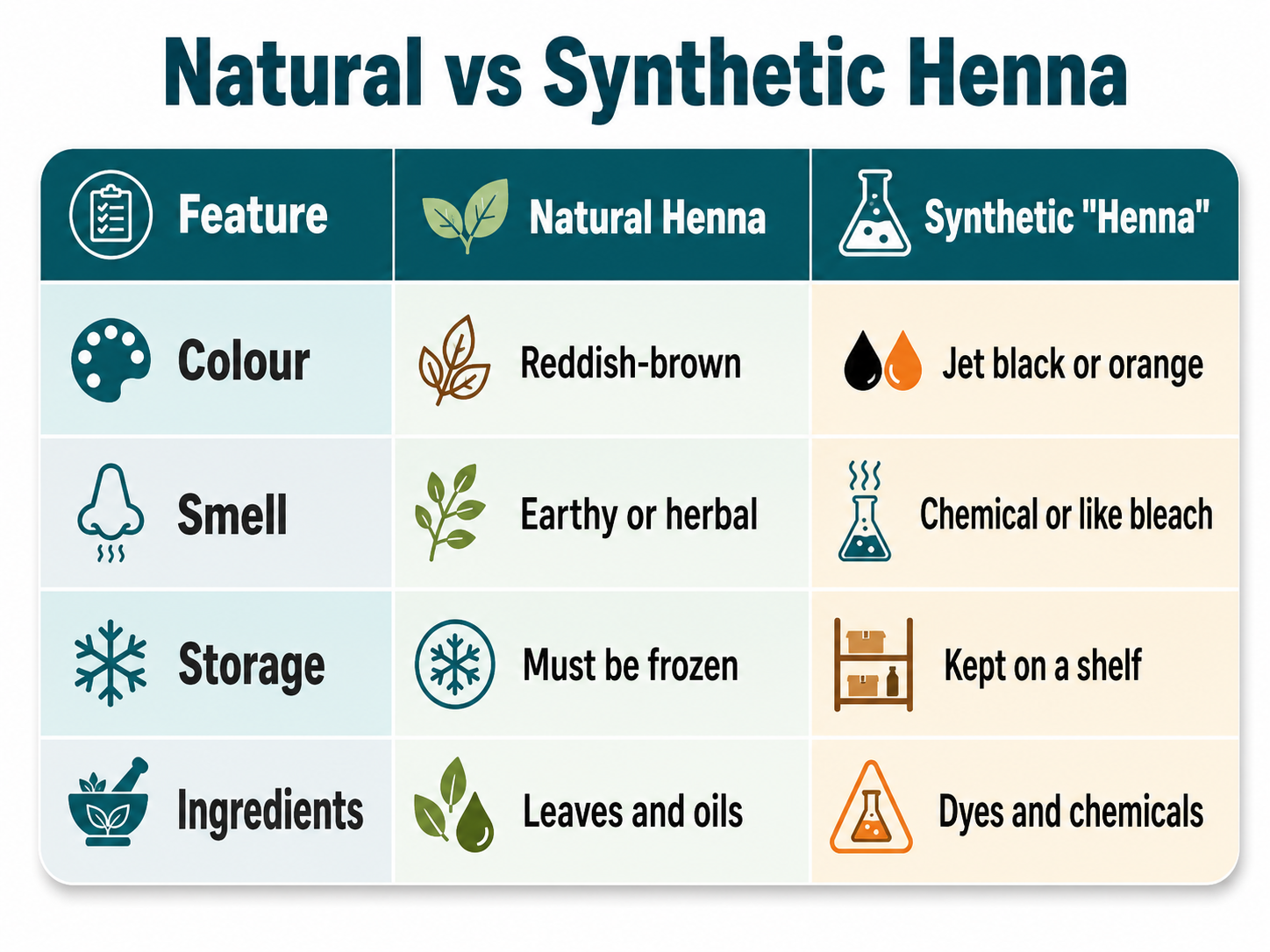
Is all henna natural when you buy it in British shops? Sadly, many products on the high street contain very hidden chemicals. You should always perform a smell test before using any paste. Natural henna has a very earthy and herbal scent like grass. Conversely, synthetic henna often smells like strong chemicals or ammonia. You can also check the shelf life of the product easily. Real henna paste must be kept in a cold freezer. If a cone sits on a shelf, it likely has preservatives. These chemicals can be very harsh on young or sensitive skin. Therefore, you must always choose fresh paste for the best results.
How to Check if Henna Is Safe for Your Skin
How can you verify that what henna is made of is safe for your skin? First, you must read the labels on any packaging very carefully. Most safe products list every ingredient on the back of the box. Be very careful with “Black Henna” sold at some local markets. This product often contains a dangerous chemical called PPD for dark colour.
PPD can cause very bad burns or permanent scars on your skin. Furthermore, the UK has strict legal rules against using PPD this way. Always perform a patch test on your arm for 24 hours first. This step ensures you do not have a bad allergic reaction. If you feel any itching, wash the paste off immediately. Safety should always come before having a pretty design on the skin.
Why Does Henna Change Colour Over Time?
The way henna stains the skin is a very fascinating process. When the paste sits on skin, lawsone molecules move into cells. These molecules then bind with the keratin in your skin layers. This process takes several hours to complete a dark, rich stain. Initially, the stain will look bright orange when you remove the paste.
Do not worry because the colour will deepen over two days. It eventually turns into a beautiful, deep reddish-brown or mahogany tone. Heat helps this reaction happen much faster in the UK weather. Thus, many people wrap their hands to keep the area warm. You should avoid using water on the design for 24 hours. This allows the dye to set firmly into your top skin.
Which Essential Oils Are Best for Henna?
These oils play a very big part in the staining process. Specifically, oils like tea tree or cajeput help darken the colour. They contain high levels of terpenes which help the dye release. However, some people might have allergies to these strong natural oils. This is why lavender oil is popular for children and pregnant women. Lavender is much gentler but still provides a very dark stain. You should always ask your artist which oils they have used. In the UK, professional artists take great pride in their oil blends. They often create unique scents that smell like a luxury spa.
Why Sugar Matters in the British Climate
The UK can be quite cold and damp for many months. This weather affects how the henna paste dries on your skin surface. Consequently, adding sugar to the recipe is very important for artists. The sugar acts as a humectant to keep the paste moist. If the paste dries too fast, it will simply fall off. You need the paste to stay in contact with the skin longer.
Some artists use white sugar while others prefer liquid molasses. This makes the paste very stretchy and easy to draw with. It also ensures the design stays stuck to you while sleeping. Without sugar, the henna would crumble away like dry autumn leaves.
Where to Buy Authentic Henna in the UK
Finding good henna in the UK is now easier than before. You can find many independent artists on social media platforms. These professionals mix their own organic paste in small, fresh batches. They usually ship the cones in special cold-insulated leaf packaging. You should avoid buying henna from pound shops or general markets.
Those products often stay on shelves for many months or years. Instead, look for suppliers who mention organic or hand-mixed labels. Many talented artists live in cities like London, Birmingham, and Manchester. They can provide you with the safest and darkest staining paste.
How Should You Store Henna Cones?
Real henna is a perishable item just like fresh green vegetables. If you leave it on the counter, it will lose power. The dye molecules will eventually break down and stop staining skin. Therefore, you must store your henna cones in the freezer. They can stay fresh in the freezer for up to six months.
When you want to use one, let it thaw naturally. This takes about twenty minutes at normal UK room temperature. Never use a microwave to defrost your henna cones at all. The high heat will ruin the dye and the plastic cone. After you finish drawing, put the leftovers back into the freezer. This keeps the henna strong for your next creative session.
Conclusion on What Henna Made OF
Understanding what henna made of helps you appreciate this ancient art. It is a beautiful blend of nature, science, and creative skill. By choosing natural ingredients, you protect your skin from harmful chemicals. Remember to always look for that earthy smell and green colour.
Avoid anything called black henna to stay safe from chemical burns. Whether at a wedding or a park, henna brings joy. Supporting local UK artists also helps keep this traditional craft alive. Always ask your artist about their recipe before they start drawing. This ensures you have a wonderful and safe body art experience. Now you are an expert on the secrets of henna paste!
FAQs
-
What are the bad chemicals in henna?
- The main harmful chemical is PPD (para-phenylenediamine), often found in black henna. It can cause burns, allergic reactions, and permanent skin damage.
-
What is real henna made of?
- Real henna is made from dried leaves of the Lawsonia inermis plant, mixed with water or lemon juice, essential oils, and a little sugar.
-
Is henna cultural or Islamic?
- Henna is mainly a cultural tradition used in many countries. It is also popular in Islamic celebrations, but it is not exclusive to Islam.
-
What is the main ingredient in henna?
- The main ingredient is powdered leaves from the Lawsonia inermis plant.
-
Why do hairdressers not like henna?
- Some hairdressers avoid henna because it can make chemical colouring or bleaching more difficult and produce unpredictable results.
-
Is 100% natural henna safe?
- Pure 100% natural henna is generally safe for most people when used correctly. A patch test is always recommended before use.
-
Which henna is 100% natural?
- 100% natural henna is made only from Lawsonia inermis leaf powder with natural ingredients like water, lemon juice, essential oils, and sugar without added dyes or chemicals.