A beautiful salon means little if it cannot pay its bills. That’s why learning how to open a beauty salon in the UK starts with careful planning. Begin by choosing treatments local customers want and working out your startup costs. Once your budget is clear, you can find suitable premises and check the legal requirements. You will also need the right equipment, insurance and a plan to attract customers.
But how can you manage all this without overspending? This guide explains the costs, qualifications and practical steps to help you get started.
How to Open a Beauty Salon: What to Decide First?
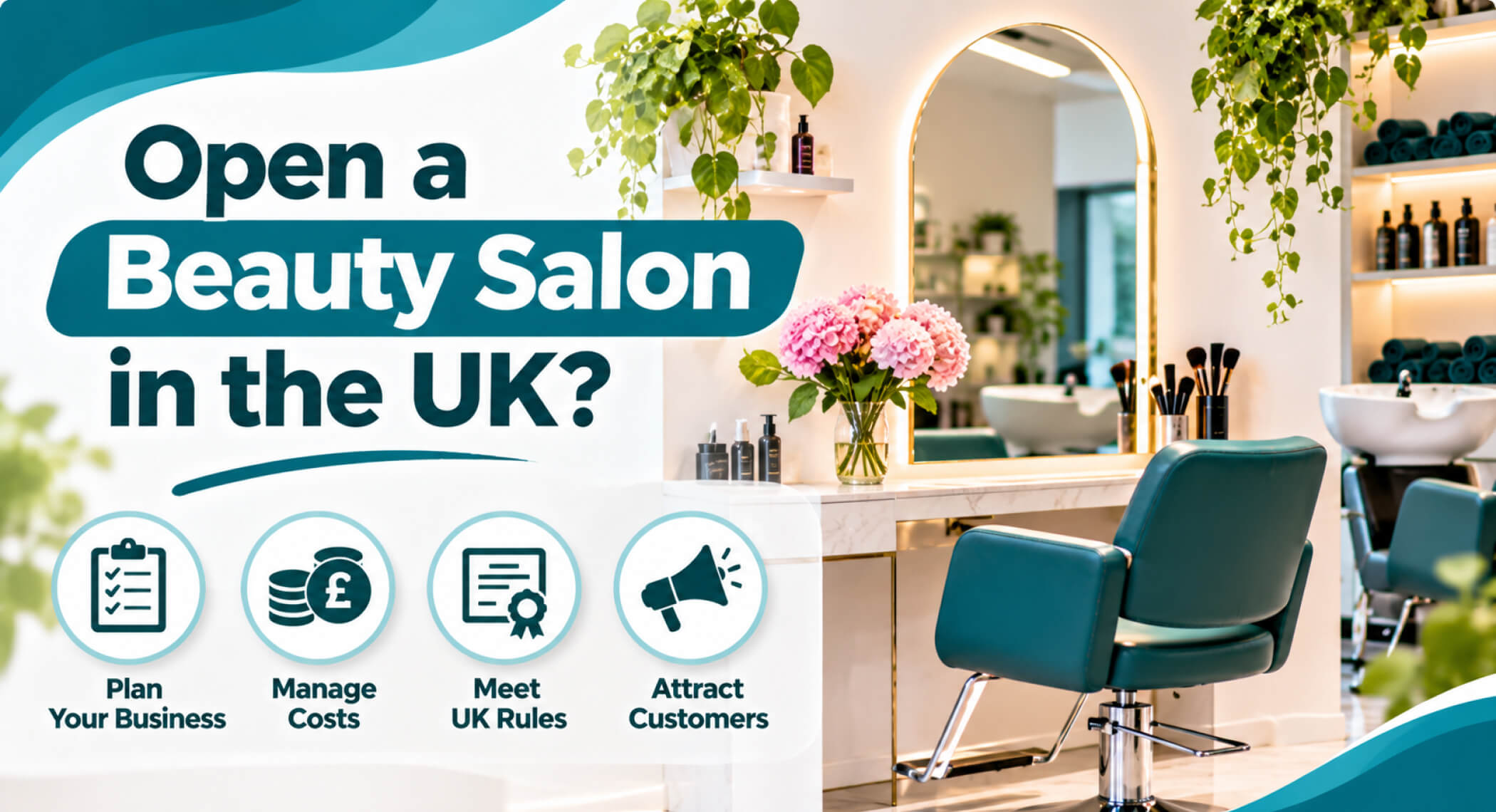
Start by choosing how you want to work and which services you can offer well. Your model will shape rent, kit and staff costs. For example, a small lash studio needs less space than a salon with several treatment rooms. But why pay for extra rooms before you have enough clients? Choose a salon model that matches your skills and local customer demand.
- Your own salon: Enjoy full control over your space, prices and brand. However, rent, bills and fit-out costs begin before the business earns money.
- A rented treatment room: Work inside an existing salon without renting a whole shop. This lowers startup costs, though access and working hours can be limited.
- A home or mobile service: Avoid shop rent by working from home or visiting clients. However, local permissions, travel costs and insurance still need attention.
- A franchise salon: Benefit from an established name and a ready business model. In return, expect franchise fees and some limits on your decisions.
Now, look at what people want in your local area, not just what is popular online. Check nearby salon prices, customer reviews and how soon people can book treatments. For example, do people find it hard to book evening brow treatments? Are nearby salons busy with nails but quiet with facials? These details can help you choose your services. So, start with a few treatments you can do safely and well.
How Much Does It Cost to Open a Beauty Salon in the UK?
There is no fixed UK price for opening a beauty salon. A rented room can cost far less than a shop with several beds. For a simple budget example, room hire at £18 an hour costs £144 for eight hours. Buying a £300 treatment couch adds another one-off cost. These are sample figures, not UK averages.
| Cost area | Money needed before opening | Costs after opening |
| Premises | Deposit, rent in advance, legal fees | Rent, rates and service charges |
| Fit-out | Plumbing, lights, power and airflow | Repairs and upkeep |
| Equipment | Beds, chairs, tools and storage | Servicing and new parts |
| Products | Opening stock and supplies | Top-ups and cleaning stock |
| Rules and cover | Licence fees where needed, insurance | Renewals and policy updates |
| Staff | Hiring and training | Pay and staff costs |
| Systems | Booking site and card setup | Software and card fees |
| Cash reserve | Money set aside for bills | Support during quiet weeks |
Don’t plan your budget for opening day alone. You still need to pay rent when a worker is ill or bookings are low. So, get written prices for repairs, insurance and equipment before spending money. Also, save some cash for quiet weeks and sudden repairs. Remember, a cheap shop can cost more when you add sinks, wiring and good airflow.
What Should a Beauty Salon Business Plan Include?
A beauty salon business plan should show who will book, what they will buy and how bills get paid. Write down your target clients, local rivals, core treatments and likely prices. Then set a monthly goal for paid visits. Use a six-month cash plan to show when money comes in and goes out. Test what happens if sales fall below your goal.
You could use savings, a loan or an investor but each has a cost. Eligible UK founders can seek a government-backed Start Up Loan of £500 to £25,000. It is a personal loan with interest, not a grant. The lender will check your plans and ability to repay.
How Do You Price Beauty Treatments and Calculate Break-Even Bookings?
Set prices from the true cost of each treatment, not just what the salon next door charges. Count products, card fees, labour, rent and time spent cleaning. A £60 service is not £60 in profit. Also, a long facial can use the room for twice as long as a brow visit. What matters is what you earn per usable hour.
Here is a simple example, not a forecast for your salon. Say monthly fixed costs and the owner’s planned pre-tax pay total £3,600. A treatment sells for £60 and uses £15 in variable costs. That leaves £45 to help cover the monthly target. Divide £3,600 by £45 and you need 80 paid visits. At 20 workdays, that means four each day.
Now check your bookings. If each visit takes 90 minutes, including cleaning, four visits will take six hours. One therapist can manage this, but empty slots and missed bookings can affect earnings. Also, this example does not count tax or other extra costs. So, what should you do? Check your budget for both busy and quiet months before setting your prices.
What Should You Check Before Renting Beauty Salon Premises?
Check the full costs before you rent a shop. A busy road means little if rent eats your profit. For example, a nail bar needs good air control, while a massage room needs peace and privacy. Ask the council about use and licences before you sign.
- Property use: Check that your planned work is allowed at that site. Some changes need planning consent.
- Lease terms: Look at rent rises, break clauses, repairs and who pays for major faults.
- Full costs: Ask about rates, service charges, deposits and any relief you might get.
- Room needs: Test the water, sockets, airflow, toilets and safe access for all clients.
- Client travel: See how people will reach you by bus, on foot or by car.
- Room sharing: Get clear consent if you hope to rent space to other workers later.
In England, some small businesses pay no business rates on their only property. This can apply if its rateable value is £12,000 or less, but other rules also apply. Rules differ across the UK, so always check your bill before expecting this saving. Also, get price quotes before you agree to any salon work. A lawyer who understands shop leases can help you spot terms that are hard to change or end.
Which Licences, Registrations and Insurance Does a Beauty Salon Need?
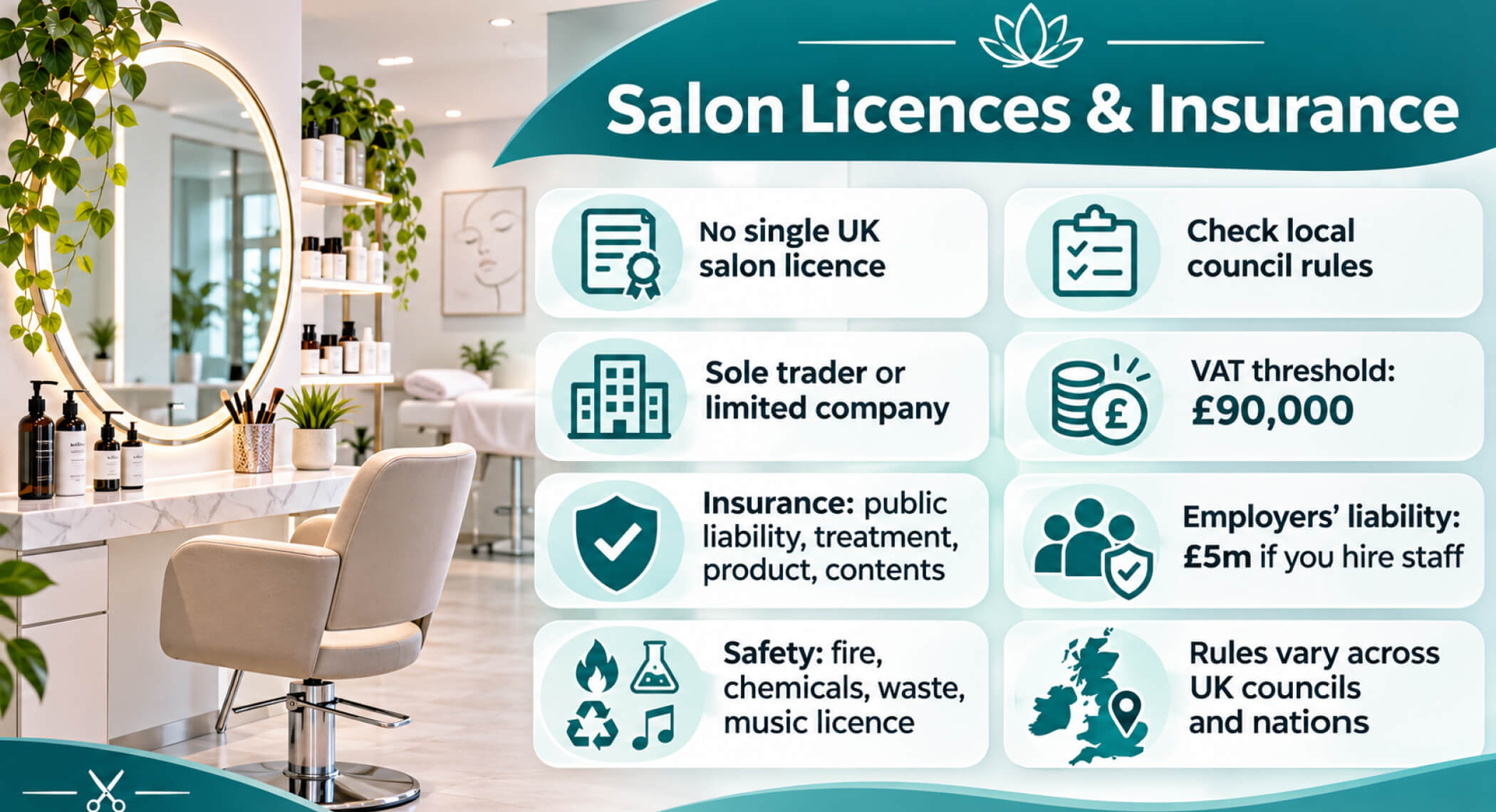
There is no single beauty salon licence for all parts of the UK. The checks depend on where you work and what treatments you offer. Some councils require a special treatment premises licence, even for massage or manicures. Piercing and other skin work can need separate approval. Ask the council for your salon address and service list. Do this before you take bookings.
- Business setup: You can trade as a sole trader or form a limited company. Sole traders usually register for Self Assessment once gross trading income tops £1,000 in a tax year. Limited companies register with Companies House before trading.
- Treatment rules: Ask about massage, nail work, electrolysis, tanning, piercing and light-based services. Rules and fees differ by council and UK nation.
- VAT: You normally register when taxable turnover goes above £90,000 over the past 12 months. The rule also applies if you expect more than £90,000 in the next 30 days alone.
- Business cover: Check public liability, treatment liability, product cover and contents cover. Employers’ liability is generally required when you employ staff, with at least £5 million of cover, subject to exemptions.
- Workplace safety: Check fire risk, safe exits, chemical use, waste and staff duties. Playing recorded music for clients usually needs the right music licence.
- Changing rules: Check the rules in England, Scotland, Wales or Northern Ireland. Do not assume one council’s licence covers another area.
Do Advanced Treatments Need Extra Checks?
Some advanced beauty treatments need extra checks. In October 2026, England asked for public views on stricter rules for some high-risk treatments. However, these plans are not yet law. Scotland has its own law and plans to start licences for certain treatments in September 2027. So, check the latest rules for your services before buying special equipment.
Insurance also needs careful checks. A policy for basic nail work may not cover all skin treatments you add later. So, tell your insurer what services you offer, where you work and who does each treatment. Also, read the policy before paying. Check if any treatment needs extra insurance or proof of training.
What Qualifications Do You Need to Open or Work in a Beauty Salon?
You do not need one set UK beauty therapy award just to own a salon. But owning the business and doing the treatments are different jobs. Staff need the right skills and training for the work they carry out. Councils or insurers can also set proof-of-training rules for some services. Check these before you pay for a course or hire someone.
For hands-on work, Level 2 and Level 3 beauty therapy routes can build useful skills. Specialist training can also matter for certain treatments. Still, a short CPD course is not the same as a regulated qualification. You can own the salon without doing treatments yourself. In that case, hire skilled staff and check each person’s ability, records and insurance terms.
What Equipment and Safety Procedures Does a Beauty Salon Need?
Buy the kit your booked services need, not everything in a salon catalogue. Plan where clients will wash hands, where clean items stay and where used tools go. Also, give staff enough time to clean between visits. This time belongs in your booking plan, not outside it.
- Treatment kit: Buy sound beds, chairs, lights, trolleys and tools that fit your menu.
- Clean work areas: Set rules for hand care, tool cleaning, laundry and safe storage.
- Air and chemicals: Check ventilation, nail dust control and safe use of salon products.
- Client checks: Use suitable consultations, patch tests when needed, consent and clear aftercare.
- Stock and waste: Keep products safe, check use-by dates and arrange the right waste service.
Nail dust and acrylic fumes can harm staff health. So, some nail treatments need a dust and fume extractor, along with fresh air. Also, follow COSHH safety rules when using harmful products. Check the safety advice for each treatment. Buying used furniture can save money, but check its condition before paying. For electrical or special equipment, ask for service records and proof that it is safe to use.
Should You Hire Beauty Therapists or Rent Out Treatment Rooms?
Hiring staff gives you more say over hours, service rules and client care. Yet it also brings wages and legal duties when bookings are low. You must check the right to work, run PAYE where required and meet leave and pension duties. Build those costs into each treatment price. A new salon does not need a large team before demand exists.
Renting out a room can bring in steady rent without adding more staff. But the worker must be truly self-employed if you treat them that way for tax. HMRC looks at real work habits, not just the name on the contract. Who sets prices and hours? Who owns the client list? Put the deal in writing and check lease and insurance terms.
How Should You Manage Salon Bookings, Payments and Client Records?
A good booking system helps clients choose a time, see the full price and pay with ease. Leave enough time for a chat, the treatment and cleaning. Use reminders to help cut missed visits. If you take a deposit, make the terms clear before payment. You can also help clients feel more comfortable by explaining payment expectations and answering common questions, such as Do You Tip Hairdressers UK, so they know what to expect when paying for a salon service. A rule that says all deposits are kept is not always fair under consumer law.
Beauty salons interview may hold private health details in client forms. Keep those records safe and only collect what you need. Give clear privacy details and set access rules for staff. You may also need to pay a data protection fee to the ICO unless exempt. Many small firms pay £52 or £78 a year. Keep a simple plan for complaints, refunds and bad reactions.
How Can You Attract Customers and Prepare for Your Salon Opening?
Start by reaching people in your local area. A clear treatment list, fair prices and easy booking matter more than a big launch event. So, set up your Google Business Profile and a simple website. Also, share real photos of your work, but ask clients for permission first. Before opening, check that everything works well. Can staff find client records easily? Does the card machine work properly?
- Help people find you: Keep your address, hours, services and booking details up to date.
- Show real results: Share clear work photos and ask for honest reviews after visits.
- Try a test day: Check your rooms, tools, booking flow, payments and cleaning time.
- Give clients a reason to return: Offer useful aftercare and simple ways to rebook.
- Watch the first 90 days: Track paid visits, missed slots, repeat bookings and cash left.
Avoid big launch deals that leave little profit. A modest offer with clear terms can work better than a deep cut. After opening, check which services earn enough for the time they take. If Tuesday is quiet, test a new time slot before hiring more staff. Use real booking data to plan changes.
Final Thoughts: Are You Ready to Open a Beauty Salon?
Learning how to open a beauty salon is only part of the process. The real challenge is building a business that earns enough to cover its costs. So, what’s the smartest way to begin? Choose treatments people want, check your budget and understand the legal requirements before investing. Taking a salon management course can also help you develop the business knowledge needed to manage daily operations and attract regular customers. Most importantly, start with a setup you can afford and focus on building a loyal client base. As your bookings grow, you can expand with greater confidence.
FAQs About How to Open a Beauty Salon
1. How Much Does It Cost to Open a Beauty Salon in the UK?
Opening a beauty salon in the UK can cost around £20,000 to £50,000. However, costs vary by location, size and services.
2. How Much Do I Need to Start a Beauty Salon?
You need enough money for premises, equipment, insurance, products and early bills. A small rented treatment room can reduce your starting budget.
3. Is a Beauty Salon Profitable?
Yes, a beauty salon can make a profit when its income exceeds running costs. Your earnings depend on bookings, treatment prices and regular customers.
4. How Much Money Do I Need to Start a Beauty Parlour?
A small beauty parlour can cost much less than a fully fitted salon. Your budget depends on rent, equipment and treatments.
5. How to Open a Small Salon?
Choose your treatments, set a budget and find suitable premises. Then arrange insurance, check council requirements and prepare your booking system.
6. Do You Need a Licence to Run a Beauty Business From Home?
Not always but some beauty treatments need council licences or registration. Check local rules, planning requirements and insurance before opening.

Salon Management
Course Description :
- Certificate: Yes(Free)
- Accreditation: CPD Accredited
- Access: Lifetime