
Youth workers help young people aged 11 to 25 with personal, social and educational development. They help young people build confidence, learn life skills and make positive choices. So, how do I become a youth worker? You can follow different routes, including youth work courses, college qualifications, university degrees, apprenticeships and practical experience.
A National Youth Agency (NYA) endorsed qualification can help you gain recognised skills for this career. Entry-level youth workers earn around £24,000, while experienced workers can earn around £37,000 per year. Most youth workers work 37 to 42 hours weekly.
This guide covers qualifications, skills, experience, apprenticeship routes and career progression.
What Does a Youth Worker Do?
A youth worker helps young people aged 11 to 25 grow, learn and make positive choices. They build confidence, teach life skills and support personal and social development. They also help young people overcome challenges and reach their goals.
Every day is different. Youth workers run activities, provide one-to-one support and organise community projects. They also work with schools, social workers, police and local organisations. Most importantly, they create a safe space where young people feel supported and valued.
What Qualifications Do You Need to Become a Youth Worker?
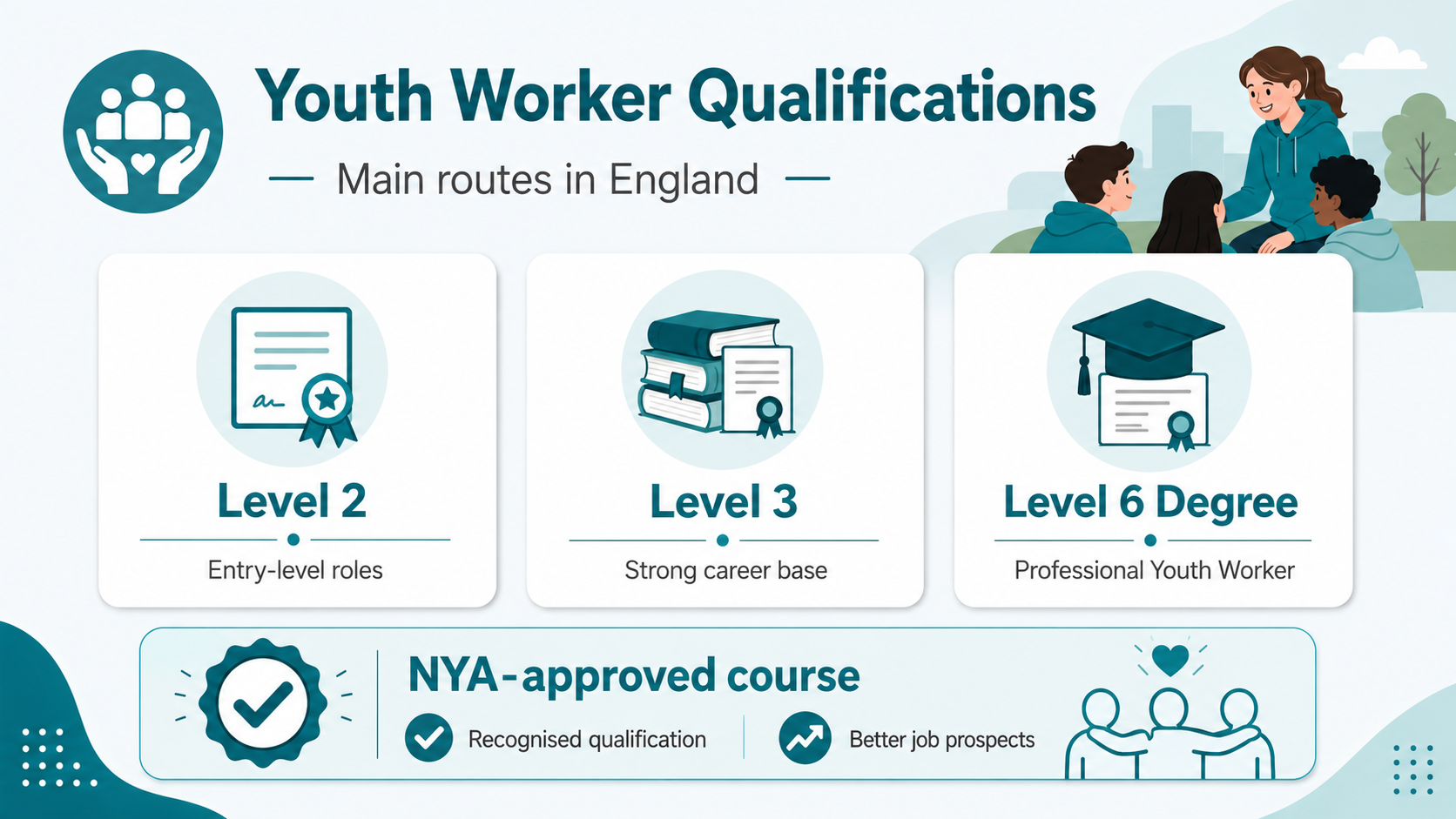
You do not need just one specific path to become a youth worker. However, getting a recognised qualification will help you find a job much faster. In England, the National Youth Agency (NYA) approves the courses that meet professional standards. Here are the main levels you can choose from:
- Level 2: This is for entry-level youth work jobs.
- Level 3: It builds a strong foundation for a career in youth work.
- Level 6 (Degree): This qualifies you to be a Professional Youth Worker.
Choosing an NYA-approved course gives you a nationally recognised certificate. Consequently, this greatly improves your chances of starting a successful career in youth work.
How Do I Become a Youth Worker Through College?
College is one of the easiest ways to start a youth work career. Many UK courses help beginners build skills quickly. A Level 2 qualification is ideal for beginners aged 14 or older. This course usually takes 6 to 12 months to finish. It teaches basic skills, youth work values and ways to support young people.
A Level 3 qualification suits learners aged 16 or older who want support roles. The course lasts about 18 months. It qualifies you to become a Youth Support Worker. Both levels cover vital topics like safeguarding, communication and key youth work principles. You can study in a classroom, online or through local training providers.
How Can a Youth Work Degree Help Your Career?
A youth work degree is the best route to becoming a Professional Youth Worker. You must usually be 18 or older to apply. The course takes three years full-time or four to six years part-time. Most universities ask for three A Levels with grades CCD or above. However, some universities accept relevant youth work experience instead.
During the course, you learn about safeguarding, youth work legislation and inclusive practice. You also study trauma-informed practice and professional youth work methods. If you already have a degree in another subject, you can take a postgraduate youth work course. This qualification still allows you to become a professional youth worker.
How Does a Youth Worker Apprenticeship Work?
A youth support worker apprenticeship is a great earn-and-learn route. You earn a wage while gaining hands-on experience. This Level 3 youth support worker apprenticeship takes 18 months. Afterwards, you complete a three-month End Point Assessment.
To start, you need GCSE English and Maths at Grade 4, plus an Enhanced DBS check. Learners without these qualifications must achieve Level 2 English and Maths before their final assessment. The training structure combines workplace learning with online and face-to-face sessions. Finally, you prove your skills through a portfolio, workplace observations and a professional discussion.
Can I Become a Youth Worker Without a Degree?
Yes, you can become a youth worker without a college degree. Many people start with a simple, entry-level job. They work as a Youth Support Worker. They learn by doing the job every day. Later, they can take classes to get higher certificates.
You can also get this job if you have worked with people before. For example, you might have been a teacher. You might have helped people find jobs. Employers like people who already know how to help others. Because of this, many workers take their training classes while they are already working in their jobs.
How Much Experience Do You Need to Become a Youth Worker?
You need experience to become a youth worker. Many bosses want you to have one year of experience. People who teach youth work courses also want you to have these skills. You can get experience by helping out for free. You can work at youth clubs or local community projects. Part-time work or charity work is also a great way to learn.
Volunteering helps you feel more confident. It makes your CV look good and improves your talking skills. It can even help you get into a good university. You can find these helpful roles at your local council youth services or community groups.
How Much Experience Do You Need to Become a Youth Worker?
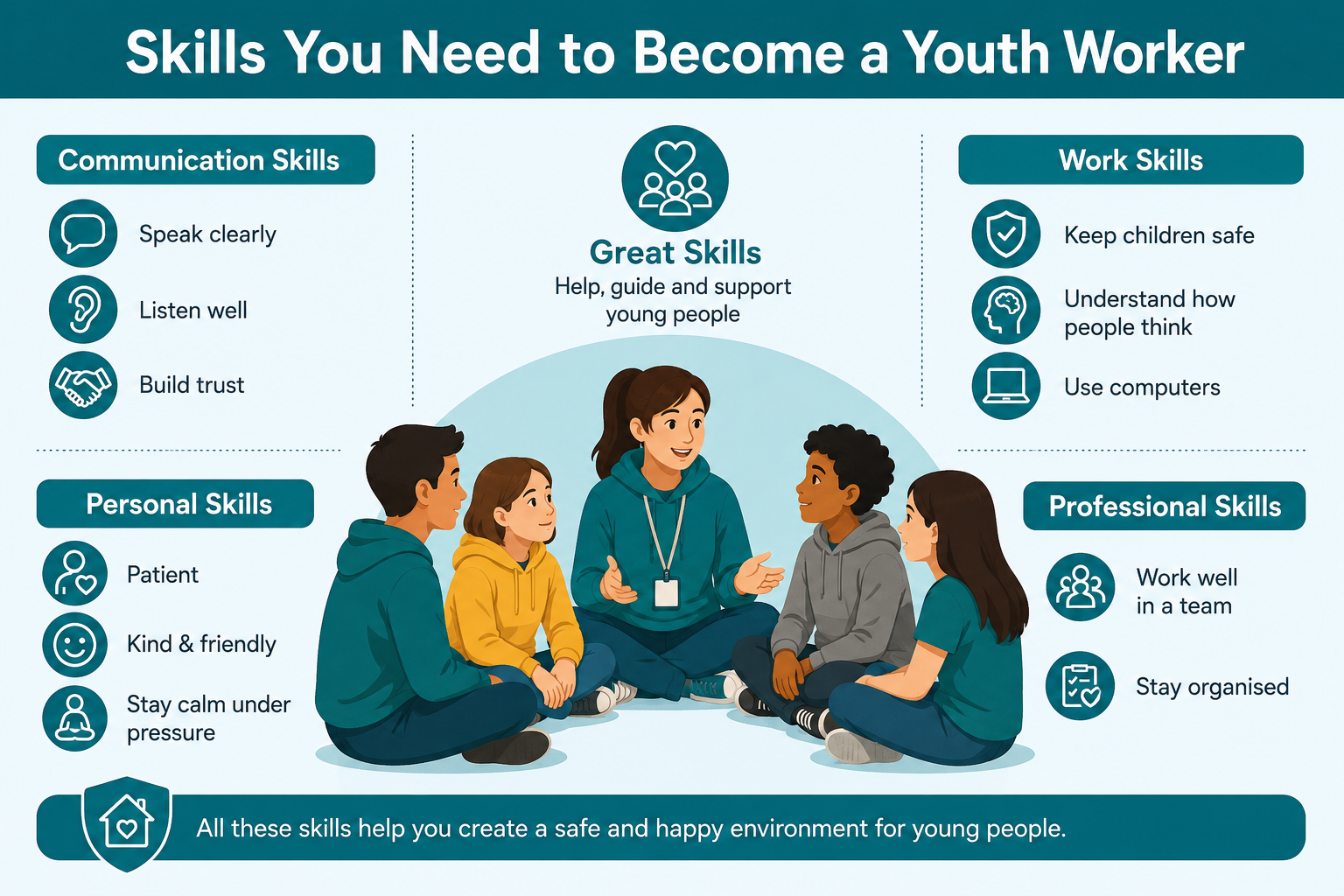
Youth workers need great skills to help and guide young people. Good communication is very important. You must speak clearly, listen well and build trust. Personal skills are also helpful. You need to be patient, kind and friendly. Being organised and staying calm under pressure helps you work with different children.
Work skills matter just as much. Youth workers need to know how to keep children safe. They must understand how people think, use computers and work well in a team. All of these skills help you make a safe and happy home for young people.
Where Do Youth Workers Work?
Youth workers work in many different places. You can find them in schools, youth centres, colleges and hospitals. They also work for local charities and community projects. Some youth workers even travel to different places in the same week.
Most youth workers work full-time hours. They often work in the evenings and on weekends. This is because children are out of school at those times. Some parts of the job happen outdoors. The work can be hard sometimes. This is because youth workers help young people deal with tough problems.
Do Youth Workers Need a DBS Check?
Yes, most youth work roles require an enhanced DBS check. This check helps protect young people and creates a safer working environment. It also gives employers confidence when hiring staff who work with children and young people. Most employers ask you to complete the DBS check before you start your job.
A DBS check helps to:
- Protect children and young people.
- Create a safe working environment.
- Check your criminal record history.
- Meet safeguarding requirements.
- Give employers confidence when hiring.
- Support legal and professional standards.
How Much is a Youth Worker’s Salary in the UK?
The youth worker’s salary in the UK depends on several factors. A starter youth worker earns around £24,000 per year. An experienced youth worker can earn around £37,000 per year. As you gain experience, your earning potential usually increases.
Your salary can also change based on your location, qualification level, experience, employer and specialist area. As you move into senior roles like Team Leader or Service Manager, you can earn a higher salary and take on more responsibility.
What Career Progression Can Youth Workers Follow?
A youth worker’s career path offers many growth opportunities. Many people start as a Youth Support Worker. With experience and training, they can become a Youth Worker, Team Leader or Project Coordinator. Senior positions include Youth Service Manager, Specialist Mental Health Worker and youth policy roles.
Youth work also opens the door to other careers. Many experienced youth workers move into social work, counselling, community development or teaching. Gaining new qualifications and practical experience can help you progress faster.
How Long Does It Take to Become a Youth Worker?
The time it takes to become a youth worker depends on the route you choose. A Level 2 qualification takes 6 to 12 months. A Level 3 qualification takes around 18 months. A Youth Work Degree takes 3 years full-time or 4 to 6 years part-time.
A Degree Apprenticeship takes around 3 years, while a Level 3 Apprenticeship takes 18 months and includes an End Point Assessment (EPA). The fastest route depends on your experience and career goals. Volunteering and practical experience can help you progress faster.
Final Thoughts: Could Youth Work Be Your Future Career?
Youth work suits people who want their job to make a real difference. You will guide young people, support their choices and help them face challenges. So, how do I become a youth worker and build a strong career? You can start by volunteering, joining an apprenticeship or taking a recognised course. A university degree can also lead to professional youth work roles. However, qualifications alone are not enough. Real experience, patience and clear communication matter just as much. An NYA-endorsed qualification can strengthen your profile and show that you meet professional standards. With the right skills and training, youth work can offer purpose, growth and long-term career options.
FAQs
1. What is the salary of a youth worker?
- Youth workers usually earn around £24,000 at entry level and up to £37,000.
2. What qualifications do I need to work with youth offenders?
- You usually need a recognised youth work or related qualification, plus experience working with young people.
3. Can I become a social worker without going to university?
- No. In the UK, you must complete an approved social work degree to become a social worker.
4. What’s the difference between a social worker and a youth worker?
- A social worker manages legal and care cases, while a youth worker helps young people through guidance and activities.
5. Do I need qualifications to be a youth worker?
- Yes. Most employers prefer recognised youth work qualifications or relevant experience with young people.
6. What is the highest paid type of social worker?
- Senior social workers, team managers, and specialist social workers usually earn the highest salaries.
7. Is a youth worker a good job?
- Yes. Youth work is a rewarding career if you enjoy helping young people grow and succeed.
8. What not to say to a social worker?
- Always speak honestly and respectfully, and avoid giving false or misleading information.