
How long does natural henna paste last on skin? Natural henna paste usually lasts 7 to 14 days on the skin. The exact time can change based on your skin type, aftercare, and where the design is applied. Thicker skin areas like palms and feet hold the stain longer and show a deeper colour.
To get the best result, keep the paste on for at least 4–6 hours or even 8–12 hours overnight for a darker stain. After removing the dried paste, avoid washing with water for the first 12–24 hours so the colour can fully develop. The stain first appears orange, then slowly darkens into a rich reddish-brown within 24–48 hours. Coconut oil or olive oil helps protect the design. It also makes the henna last longer.
What is Natural Henna and How Does It Work?
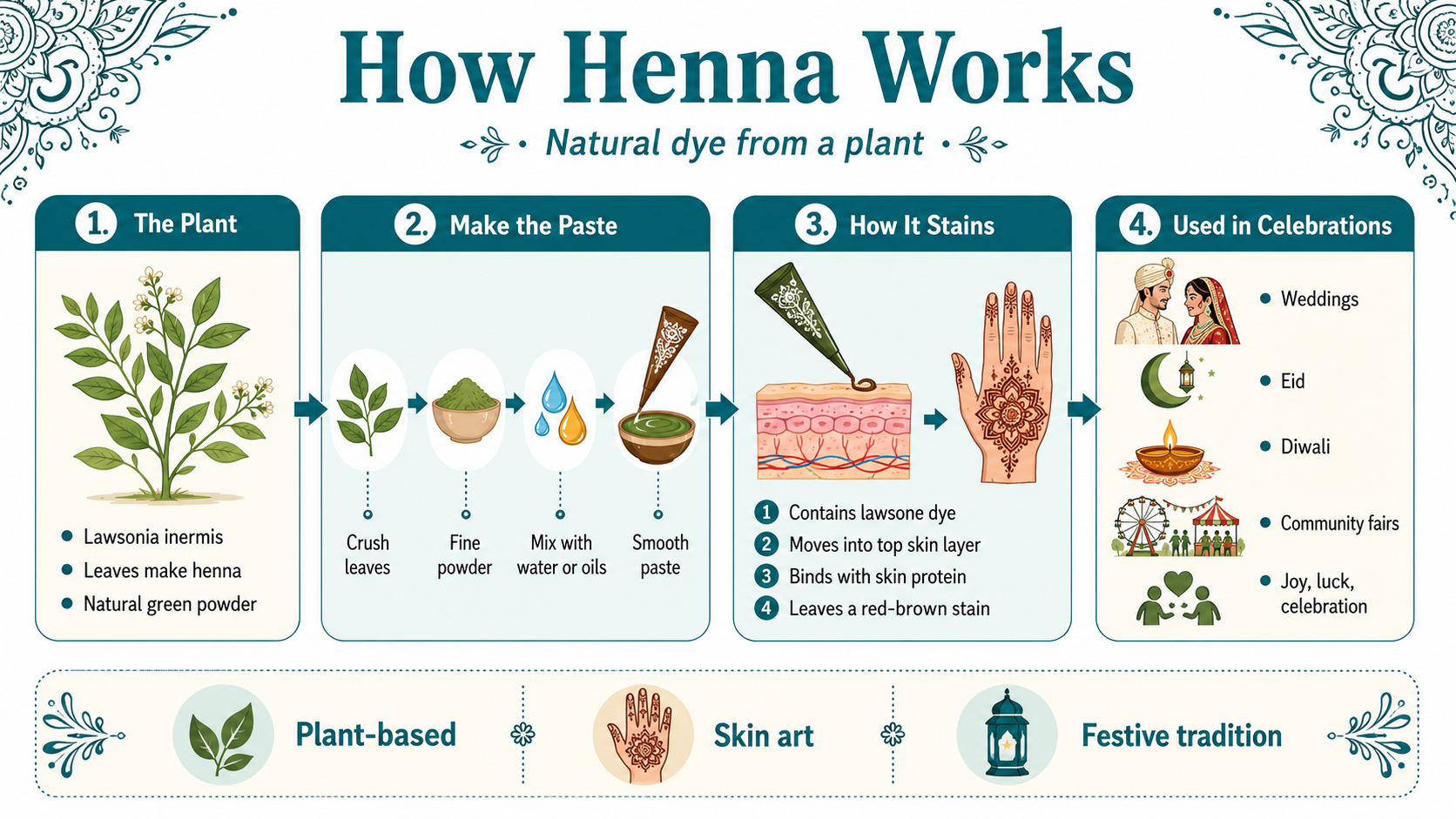
Natural henna is made from the leaves of the Lawsonia inermis plant. People crush these leaves into a very fine green powder. Then, they mix this powder with water or essential oils. This mixture creates a thick, smooth paste for drawing art. The plant contains a special dye molecule called lawsone. Lawsone migrates from the paste into your top skin layers. Consequently, it binds with the protein in your skin cells.
This process creates a lovely, deep reddish-brown stain on you. Many cultures use this art for weddings and big festivals. In the UK, many people enjoy henna during Eid or Diwali. You can find beautiful designs at local community fairs too. Henna represents joy, luck and celebration for many families here.
How Long Does Natural Henna Paste Last On Skin?
You might wonder how long your beautiful design stays visible. Typically, a natural henna stain lasts between one and three weeks. Initially, the stain appears bright orange after you remove the paste. The colour then deepens into a rich brown over the next two days. Gradually, it fades as your skin naturally renews itself.
- Natural henna usually lasts 7 to 21 days on skin
- The stain looks orange at first, then darkens in 24–48 hours
- Skin naturally sheds old cells, so the design slowly fades
- Duration depends on skin type and aftercare habits
- Washing hands frequently can make the stain fade faster
- Thicker skin areas like palms and feet last longer
- Proper care helps the design stay visible for more days
Therefore, how long does natural henna paste last on skin depends on your skin and care routine. Some people see fading after just a week, while others enjoy it for up to three weeks.
Why Do Different Body Parts Hold Henna Stains Differently?
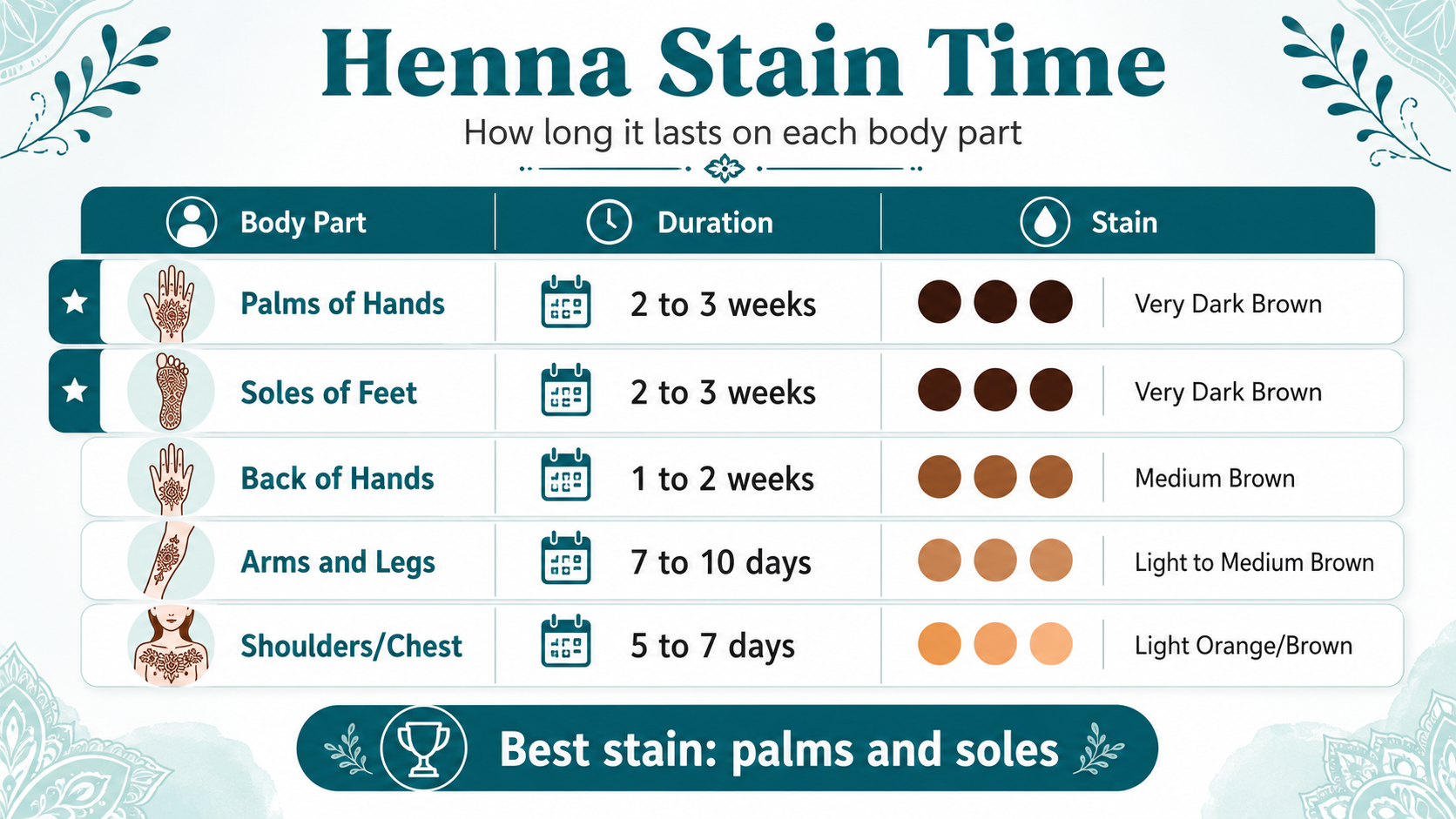
Skin thickness varies across your body in many different ways. For example, your palms have very thick layers of skin. These thick areas absorb much more henna dye than others. Consequently, henna on your palms usually looks the darkest brown. Your feet also hold the stain for a long time. However, skin on your arms or back is quite thin. Thin skin cannot hold onto the dye molecules very well.
Because of this, designs on your neck fade very quickly. You will notice the colour looks lighter on your shoulders. Similarly, your legs might show a medium-strength brown colour. Therefore, choose your placement wisely if you want long-lasting art. Thick skin areas are always the best choice for longevity.
What Factors Influence How Long Natural Henna Paste Lasts On Skin?
Several things can change the life of your henna art. Firstly, the quality of the henna powder matters a lot. Fresh powder always produces a much stronger and longer-lasting stain. Secondly, your own body chemistry plays a very big role. Some people have warmer skin which helps the dye sink. Furthermore, how often you wash the area is very important. Frequent scrubbing with soap will pull the dye out fast.
Chlorinated water in UK swimming pools can bleach the stain. Additionally, using harsh cleaning chemicals will make the henna disappear. Friction from tight clothing or shoes also rubs the skin. This constant rubbing speeds up the natural shedding of skin cells. Finally, the weather can affect how your skin retains the moisture.
How Can You Make Your Henna Stain Look Much Darker?
A darker stain usually lasts much longer on your skin. To achieve this, leave the paste on for many hours. Six to twelve hours is the perfect time for results. Many people apply the henna before they go to sleep. Afterwards, they wrap the area in medical tape or tissue. Keeping the area warm helps the dye release more effectively.
You can gently use a hair dryer for extra heat. Furthermore, apply a mixture of sugar and lemon juice. This sticky liquid keeps the henna paste stuck to you. When the paste stays moist, the dye continues to travel. Dry henna stops staining the skin once it falls off. Therefore, moisture and heat are your two best friends today.
Which Aftercare Tips Help Your Henna Design Stay Longer?
Good aftercare starts the moment you remove the dry paste. Never use water to wash off the crusty henna bits. Instead, use a blunt butter knife to scrape it off. Afterwards, apply a natural oil like coconut or olive oil. This oil creates a waterproof barrier over your fresh stain. Avoid using any lotions that contain alcohol or strong scents.
These chemicals can strip moisture from your skin and cause flaking. When you shower, try to keep the henna area dry. You can use a plastic glove to protect your hand. Additionally, pat the area dry very gently with a soft towel. Do not rub the skin roughly after your daily bath. These easy steps can help your design last longer.
Stain Duration Comparison Table
Is Natural Henna Safe for Everyone to Use in the UK?
Natural henna is very safe for the vast majority of people. It is a plant-based product with very few side effects. However, some people might have a mild allergy to henna. You should always perform a small patch test on your skin. Wait twenty-four hours to see if any redness appears. If your skin feels itchy, wash the area immediately.
In the UK, we follow strict safety rules for cosmetic products. Real henna should never cause any burning or painful blisters. It actually feels quite cool and soothing on your warm skin. Many people find the earthy smell of henna very relaxing too. Most importantly, ensure your artist uses only natural ingredients in the paste.
How Do You Know if Your Henna is Actually Natural?
You must learn to spot the difference between real and fake. Natural henna paste is always a dark green or brown. It smells like grass, hay, or fresh essential oils. Most importantly, it takes many hours to leave a stain. If the paste stains in ten minutes, it is fake. “Black henna” is a dangerous chemical called PPD used here.
PPD can cause permanent scars and very painful chemical burns. Real henna never produces a jet-black stain on your skin. Furthermore, natural henna cones usually require storage in the freezer. If a cone sits on a shelf, it contains preservatives. Always ask your artist about the ingredients inside their henna. Your safety is much more important than a dark black colour.
What is the Best Way to Remove Henna Quickly?
Sometimes, you may need to remove henna quickly, for example for school or work. Since henna stains the skin deeply, it takes a bit of time and gentle care to fade it.
Here are the best ways to remove henna safely:
- Soak the stained area in warm, salty water to loosen the stain.
- Use a gentle exfoliating scrub or loofah sponge.
- Rub the area in soft circular motions for a few minutes.
- Apply hydrogen peroxide with a cotton ball to help lighten the stain.
- Try whitening toothpaste as a mild fading method.
- Repeat exfoliation gently over a few days for better results.
- Avoid harsh scrubbing that can make your skin red or irritated.
- Always apply a good moisturiser after cleaning to protect your skin.
With consistent and gentle care, the henna stain will gradually fade away.
What Role Do Essential Oils Play in the Paste?
Artists add essential oils to make the henna work better. Oils like eucalyptus, lavender, or tea tree are very common. These oils contain “terps” which help dissolve the henna dye. When the dye dissolves, it moves into your skin easily. Furthermore, these oils give the henna a very pleasant scent. Lavender oil is very safe for children and pregnant women.
However, some oils might be too strong for sensitive young skin. Always check if you are sensitive to the oil used. Natural artists prefer high-quality oils for the best possible results. These oils ensure the stain looks vibrant later. Without these oils, the henna might look a bit dull.
Conclusion: Ready To Enjoy Your Beautiful Henna Art?
Now you know how long does natural henna paste last on skin. Natural henna is a beautiful and safe way to decorate your skin. In most cases, the stain lasts between one and three weeks, depending on your skin type and aftercare. To enjoy your design for longer, keep the paste on for several hours, avoid water at first, and protect the stain with natural oils. Remember that every person’s skin is different, so your results may vary. With the right care, your henna can stay dark, bright, and beautiful for many days. Enjoy your lovely design and let it fade naturally over time.
FAQs
1. How long does henna paste last on skin?
Henna paste usually lasts 7 to 14 days on the skin. It fades faster with frequent washing and on oily skin, while it lasts longer on dry, thicker skin like palms and feet.
2. How long should I leave natural henna on my hands?
Leave natural henna on your hands for at least 4–6 hours. For a darker stain, you can leave it 8–12 hours or overnight.
3. Does henna irritate eczema?
Yes, it can irritate eczema in some cases. Even natural henna may worsen dry, sensitive, or inflamed skin, so a patch test is important.
4. Is natural henna safe for skin?
Yes, pure natural henna is generally safe for skin. However, it should be free from chemicals like PPD, which can cause allergic reactions.
5. Why are salons against henna?
Some salons avoid henna because it is messy, time-consuming, and gives less profit compared to other fast cosmetic treatments.