Every workplace needs a safe plan to protect workers from injuries and emergencies. A first aid kit is an important part of this safety. In the UK, employers must follow the Health and Safety (First-Aid) Regulations 1981 and do a risk assessment. This helps them understand their workplace first aid kit requirements and what items they need. Slips, trips, and falls cause about 30%–32% of workplace injuries in the UK. That means nearly 1 in 3 injuries happen this way. They often happen because of wet floors or things in the way.
The Health and Safety Executive (HSE) suggests using BS 8599-1 first aid kits. These kits include dressings, bandages, wipes, and safety pins. A good first aid kit helps give quick care, reduces harm and can even save lives.
What Are Workplace First Aid Kit Requirements?
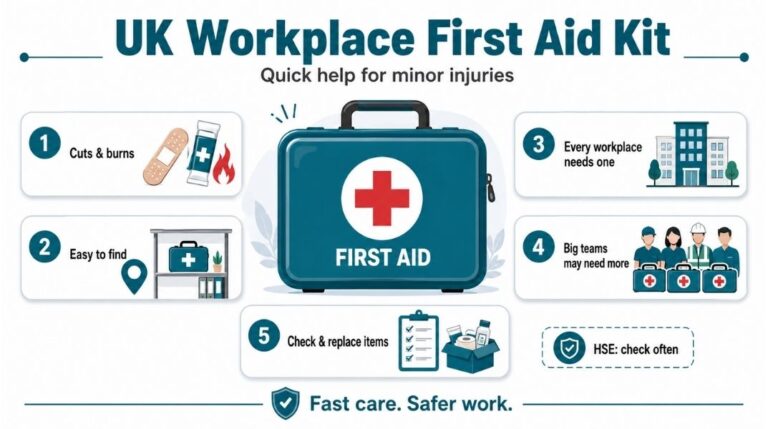
A simple first aid kit helps treat small injuries at work. It can help with cuts, burns, and other minor accidents. In the UK, workplace first aid kit requirements say every workplace must have a first aid kit. Workers must find it quickly in an emergency. So, you should keep it in a clear and easy-to-reach place.
Every workplace must have at least one kit. However, bigger workplaces may need more kits. This depends on the number of workers and the type of work they do. The Health and Safety Executive (HSE) also suggests checking the kit often. You should replace used or expired items on time. A good first aid kit helps give fast care. It can reduce pain, prevent problems, and keep everyone safe at work.
Why Are Workplace First Aid Kit Requirements Important?
These requirements are very important for safety at work. First of all, a first aid kit helps treat injuries quickly. When someone gets hurt, fast care can stop the problem from getting worse. This gives comfort and relief in a stressful moment.
Also, it helps reduce the risk of infection. Clean items like wipes, bandages, and gloves keep wounds safe and protected. So, workers heal faster and avoid extra problems. In addition, a first aid kit helps keep workers safe until medical help arrives. Sometimes accidents happen, and doctors take time to reach. In those moments, first aid support becomes very important.
Finally, these requirements also help employers follow UK safety laws. This keeps the workplace legal and safe for everyone. So, both workers and employers feel more secure every day.
What Must Be In A Workplace First Aid Kit?
A workplace first aid kit should have simple but important items. These items help treat small injuries quickly and safely. First, it should include sterile plasters for small cuts. These help cover wounds and stop dirt from entering. It should also have sterile gauze pads for larger cuts or wounds. These pads help absorb blood and protect the injury.
Next, adhesive tape and bandages are very important. They help hold dressings in place and give support to injured areas. Disposable gloves are also needed. They keep both the helper and the injured person safe from infection.
The kit should include antiseptic wipes. These are used to clean cuts and wounds and help stop infection. Scissors are also important. They help you cut bandages or tape when needed. Safety pins are useful too. They help keep bandages in place and stop them from moving. Burn dressings are included for small burns. They help protect the skin and reduce pain. Eye wash solution is needed for eye injuries. It helps clean the eyes if dust or chemicals get inside.
What Types Of Workplace First Aid Kits Are There?
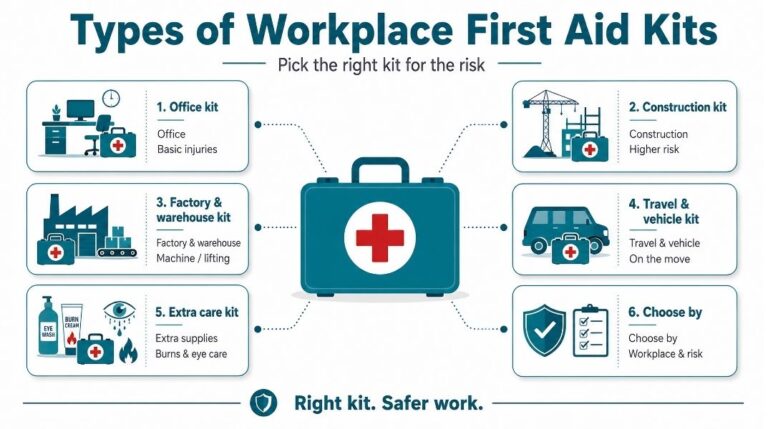
- Small office first aid kits for basic injuries
- Construction site first aid kits for higher-risk work
- Factory or warehouse first aid kits for machine or lifting injuries
- Travel or vehicle first aid kits for workers on the move
- Some kits include extra burn or eye care supplies
- The right kit depends on the type of workplace and risk level
How Many First Aid Kits Does A Workplace Need?
The number of first aid kits depends on the size of the workplace. A small office may only need one kit, but a larger workplace will need more kits to keep everyone safe. As the workplace grows, more kits are needed. This helps workers get quick help during an emergency. No one should walk far when someone is hurt. Fast access can really make a big difference.
First aid kits should be placed in easy-to-reach places. Everyone should be able to see them clearly and reach them quickly. This helps save time in emergencies. It can make a big difference when someone is injured. High-risk areas may need more first aid kits. Places with machines, tools or chemicals have a higher chance of accidents. More workers and more risk mean more first aid kits are needed. This helps keep everyone safe.
Where Should Workplace First Aid Kits Be Kept?
Visibility is very important in an emergency. You should fix first aid kits at eye level. Put them in busy places like staff kitchens or near main exits. These are places where people often gather. If a building has many floors, you must keep at least one kit on each floor. This helps people get help quickly and saves time.
If your team works with chemicals or machinery, keep a specialised kit within reach of those specific hazards. Always ensure that no heavy boxes or office furniture block these stations, as a clear path allows for a faster response when someone gets hurt.
Who Is Responsible For Workplace First Aid Kit Requirements?
- The Employer: They carry the legal weight and must fund all necessary medical supplies for the entire staff.
- Health and Safety Officers: These professionals determine exactly how many kits the building needs based on current risk assessments.
- Appointed First Aiders: These individuals take charge during accidents and must keep their training certificates up to date.
- All Staff Members: Every person in the office shares the duty to report a used kit so the team can restock it immediately.
How Often Should A First Aid Kit Be Checked?
A first aid kit needs regular checks to stay useful and safe. Most workplaces check the kit every month. Regular checks help make sure everything stays ready for emergencies. Used items should be replaced as soon as possible. Expired items also need replacing because they may not work properly. A full and updated kit gives people confidence during stressful moments.
A simple checklist can help track all the items inside the kit. This makes checking faster and easier. Workers can quickly see what is missing or needs replacing.
Nothing should be missing from the kit. Missing supplies can cause delays when someone needs help quickly. A well-checked first aid kit keeps the workplace safer and helps people feel more protected every day.
What Training Is Needed For Using A First Aid Kit?
Workers need basic first aid training to use a first aid kit properly. Simple training helps people stay calm and act quickly during emergencies. Staff should know how to treat small injuries like cuts, burns or minor falls. This helps reduce pain and stops injuries from getting worse before medical help arrives.
Workers also need to understand emergency steps. They should know what to do first and how to keep the injured person safe. Quick action can make a big difference in serious situations.
Knowing when to call medical help is also very important. Some injuries need professional treatment straight away. Good training helps workers feel confident and ready to help others when accidents happen.
What Are The Legal Requirements For Workplace First Aid Kits?
- Employers in the UK must follow health and safety laws
- Every workplace must have a suitable first aid kit
- The kit should match the level of workplace risk
- Small offices may need basic supplies only
- High-risk workplaces need extra safety items
- Construction sites and factories often need more equipment
- Employers should check first aid kits regularly
- Used or expired items should be replaced quickly
- A full first aid kit helps workers stay safe during emergencies
What Are Common Mistakes In First Aid Kit Management?
Many workplaces forget to check first aid kits regularly. This can lead to missing, damaged or expired items inside the kit. During an emergency, workers may waste valuable time looking for supplies that should already be there. Regular checks help keep everything ready for use.
Some workplaces also keep first aid kits in hard-to-reach places. Workers may struggle to find the kit quickly when accidents happen. A first aid kit should stay in a clear and easy-to-access area so people can reach it without delay.
Poor staff training is another common problem. Some workers do not know how to use bandages, gloves, or other first aid items correctly. Simple first aid training helps workers stay calm, act faster, and feel more confident during emergencies.
What Are The Benefits Of A Well-Prepared First Aid Kit?
A well-prepared first aid kit helps workers get quick treatment during accidents. Fast care can reduce pain, stop bleeding, and prevent injuries from getting worse. Quick action often makes a big difference in emergencies.
Workers also feel safer when they know help is nearby. This creates a more caring and supportive workplace. People feel more relaxed and confident when safety comes first at work.
A good first aid kit also improves workplace safety culture. It shows that the employer cares about worker health and wellbeing. Proper first aid supplies help workplaces stay prepared for unexpected situations every day.
Why Is First Aid Signage Important In The Workplace?
First aid signs help workers find first aid kits quickly during emergencies. Clear signs save time and reduce panic when someone gets hurt. Fast access to first aid can help workers get support sooner.
Easy-to-read labels also help workers understand where important supplies are kept. Emergency instructions near the kit can guide people step by step during stressful situations. This helps workers stay calmer and more focused.
Visible signs should appear in all important workplace areas. Hallways, offices, warehouses, and work sites should all have clear first aid signs. Bright and simple signs help everyone stay prepared, safe, and confident during emergencies.
Final Words
Workplace safety is very important for every business. A good first aid kit helps workers get quick care during accidents and emergencies. It also helps employers follow UK safety laws and keep the workplace safer for everyone. Regular checks, proper training and easy access to first aid supplies can help save time and reduce harm when injuries happen.
To learn more, read “What Needs to Be in a First Aid Kit for Workplaces in The UK” from the School of Health Care. This blog explains important first aid items, workplace safety rules, and useful tips in simple English. It can help employers and workers understand how to stay safe and prepared at work.
FAQs
1. What are the legal requirements for first aid in the workplace UK?
UK employers must follow the Health and Safety (First-Aid) Regulations 1981. They must do a risk assessment and provide suitable first aid equipment, trained staff, and easy access to help.
2. How many first aid kits are required in the workplace?
It depends on workplace size and risk. Small offices may need one kit. Larger or high-risk workplaces need several kits in different areas.
3. What should be in a workplace first aid kit in the UK?
A basic kit includes plasters, bandages, sterile dressings, gloves, wipes, tape, scissors, safety pins and burn dressings.
4. Is it a legal requirement to have a first aid kit?
Yes, UK law requires employers to provide suitable first aid equipment based on workplace risk.
5. What is the British standard for first aid kits?
The main standard is BS 8599-1. It gives guidance on what modern workplace first aid kits should contain.
6. What is my manager not allowed to do?
A manager must not ignore safety rules, deny access to first aid, or stop workers from reporting injuries.
7. What are red flag words for HR?
Common HR red flags include harassment, discrimination, unsafe work, bullying and unfair treatment.
Workplace First Aid Training
Course Description :
- Certificate: Yes(Free)
- Accreditation: CPD Accredited
- Access: Lifetime