
What is multi agency working in health and social care? It means professionals from different services work together to support a person. These professionals may include doctors, nurses, social workers, teachers, police officers and care workers. Each professional can share useful information and bring their own skills to the team. This helps them understand the person’s needs more clearly. It can also help them spot risks that one professional may miss. Multi-agency working can support children, young people and adults who may be at risk. Most importantly, the person should stay at the centre of every decision. When services work well together, they can provide safer, better and more joined-up support.
Who Is Involved in Multi-Agency Working?
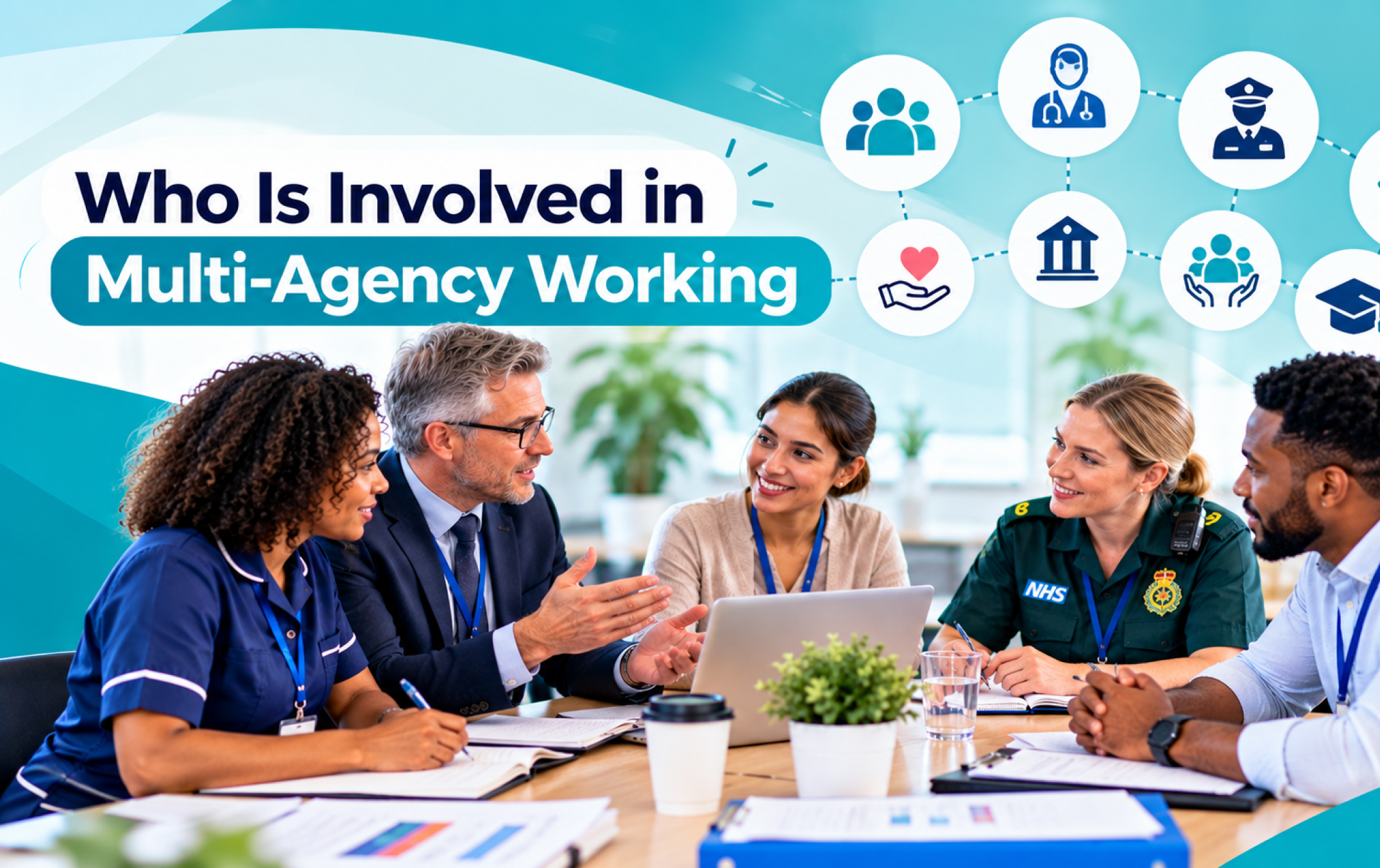
The people involved in multi-agency working depend on what help a person needs. Different services have different skills. They share their knowledge and work as a team. This helps them understand the person’s needs and give better support.
Health Professionals
Health workers can be an important part of the team. They may include:
- GPs
- Nurses
- Health visitors
- Mental health workers
- Other health workers
They can check a person’s health and share useful information. They can also report any health or safety concerns.
Social Care Professionals
Social care workers help people with daily life, care and safety. They may include:
- Social workers
- Care workers
- Adult social care teams
- Children’s social care teams
For example, a social worker may work with a GP when a person needs extra care. They may also help protect children or adults who are at risk.
Education Professionals
Schools and nurseries can also work with other services. These workers may include:
- Teachers
- Designated Safeguarding Leads
- Early years staff
- School support staff
They may notice changes in a child’s behaviour or health and notice problems at home. They can also share their concerns with the right service.
Other Services
Other services may also join the team. These can include:
- Police
- Housing teams
- Youth offending teams
- Charities
- Voluntary groups
- Advocacy services
Each service sees a different part of a person’s life. Therefore, sharing information can help the team understand the full situation. It can also help them make safer choices and give the right support.
Why Is Multi-Agency Working Important in Health and Social Care?
Multi-agency working is important because one service may not know everything about a person. A person may need help with health, care, safety, housing or school. When professionals work together, they can share what they know. This helps them understand the person better.
Earlier Identification of Problems
Different professionals may notice different signs of a problem. For example, a teacher may notice that a child looks sad or worried. A nurse may notice a change in the child’s health. A social worker may notice problems at home.
When they share their concerns, they can spot problems earlier. They can then take action sooner. This can help stop a problem from getting worse. Early action can be very important when a person may face abuse, neglect or harm.
A More Complete Picture
One professional may only know one part of a person’s life. For example, a GP may know about a person’s health. However, they may not know about problems at home.
A social worker may know about problems at home. But they may not know about the person’s health.
When professionals share information, they can understand more. They can see what help the person needs. They can also spot risks that one service may miss.
Better and Safer Support
Working together helps professionals plan care and support. They can agree on what each person should do. This can help reduce delays. It also helps professionals make safer choices. For example, they can share concerns when a child or adult may be at risk.
What Are the Benefits of Multi-Agency Working?
- Earlier identification of concerns: Different professionals may notice different signs of a problem. For example, a teacher may notice a child looks sad, while a nurse may notice a health problem. By sharing concerns, they can act sooner.
- Holistic support: Multi-agency working helps professionals look at the whole person. Someone may need help with health, home, money or family life. Working together helps meet these different needs.
- Improved services: Professionals can share information and ideas. This can reduce delays and help people get the right support sooner. It can also stop the same work from being done twice.
- Stronger professional relationships: Working together helps professionals understand each other’s roles. It also builds trust and makes it easier to share concerns and solve problems.
- Reduced risk of harm: Professionals can share information about risks such as abuse, neglect or exploitation. This helps them act sooner and protect children and adults from harm.
Overall, multi-agency working helps different services work as one team. It can lead to better support, quicker help and safer care.
How Does Multi-Agency Working Support Safeguarding?
Multi-agency working helps keep people safe from abuse, neglect and harm. Different professionals work together and share important information. This helps them understand what a person may be going through.
When someone may be at risk, one professional may not know the whole story. For example, a teacher may notice a child acting differently. A GP may notice an injury. A social worker may hear about problems at home. When they share these concerns, they can spot risks more easily.
Quick action also matters. If someone may be in danger, professionals need to share concerns quickly. They can then decide what help the person needs. This can help stop further harm.
Safeguarding decisions should not depend on just one person. Each professional may know a different part of the situation. By working together, they can make safer and better decisions.
Multi-Agency Working in Safeguarding Children
When a child may be at risk, different services need to work together. Schools and nurseries may notice changes in a child’s behaviour. Health workers may notice health problems or injuries. Children’s social care can look into concerns at home. Police may help when there is a risk of abuse or crime. Family support services can also help children and their families. By sharing information, these services can act quickly and help keep children safe.
Multi-Agency Working in Safeguarding Adults
Adults may also need help when they face abuse, neglect or harm. Adult social care can assess their needs and arrange support. GPs and healthcare teams can notice health problems or signs of harm. Police can help when a crime may have happened. Housing teams can help with unsafe living conditions. Advocates and charities can also support the person. By working together, these services can understand the person’s needs and help keep them safe.
What Are the Challenges of Multi-Agency Working?
Multi-agency working can help people get better care. However, it can also have some problems. Different teams may work in different ways. This can make teamwork harder.
Different Priorities and Views
Professionals may have different goals. A doctor may focus on health. A social worker may focus on home life. They may also see the same problem in different ways. So, they need to listen to each other and agree on the best help.
Poor Communication
Good communication helps teams work well. However, different services may use different words. This can cause confusion. Poor communication can also delay support.
Information Sharing Concerns
Professionals may worry about keeping personal information private. They need to know when they can share information. They also need to know who they can share it with. Clear rules can help them share information safely.
Unclear Roles
Sometimes, staff may not know who should take action. One team may think another team will deal with the problem. As a result, important tasks may get missed. Clear roles can help avoid this problem.
Time and Workload
Meetings and sharing information take time. Staff may already have many tasks to do. A busy workload can make teamwork harder. It can also delay important support.
What Is the Role of Communication in Multi-Agency Working?
Good communication plays an important role in multi-agency working. Different professionals need to share information clearly. This helps everyone understand the person’s needs, risks and support plan. It also helps agencies work towards the same goal.
Regular updates help professionals stay informed about changes. For example, a person’s health or home situation may change quickly. Sharing updates can help the team respond at the right time.
Poor communication can cause confusion and delays. Important information may not reach the right person. As a result, the person may not get the support they need quickly. Clear records also help teams work well together. Staff should record important information, agreed actions and deadlines. This gives everyone a clear idea of what they need to do next.
Finally, professionals should communicate with respect. Different services may have different views. Listening to each other and speaking politely can build trust and improve teamwork.
How Can Multi-Agency Working Be Made Effective?
- Put the person first: Focus on the person’s needs, wishes and safety. Always keep their support person-centred.
- Build good working relationships: Encourage trust between professionals. Staff should speak openly and respect each other’s views.
- Make roles clear: Everyone should know what they need to do. Set clear tasks and deadlines to avoid confusion.
- Share information safely: Share important information at the right time. Follow data protection and safeguarding rules when sharing information.
- Use formal meetings and teams: Structures such as Multi-Agency Safeguarding Hubs (MASH) help agencies work together. Team Around the Child (TAC) meetings help plan support for children and families. Child protection conferences also bring key professionals together.
- Review the work: Look at what went well and what did not. Learn from past mistakes so you can give better support in the future.
- Give regular training: Keep staff up to date with safeguarding guidance. Training can also improve communication and teamwork skills.
- Keep communication clear: Use simple language and share updates with the right people. This helps everyone understand the situation and work towards the same goal.
What Are the Key Principles of Multi-Agency Working?
The main aim of multi-agency working is to put the person first. Professionals should listen to what the person needs and wants. They should also think about their safety and make decisions that support their wellbeing.
Good communication also makes a big difference. Professionals should share clear and useful information with the right people. They should keep each other updated and follow data protection rules when sharing information.
Everyone should know who does what. Clear roles and responsibilities help the team avoid confusion. At the same time, professionals should value different ideas and support each other at work.
Safeguarding belongs to everyone. If a professional notices a risk, they should take action early. Quick action can stop a small concern from becoming a bigger problem.
Teams should also review their work and keep learning. They can talk about what went well and what they could improve. Regular training helps staff build better skills and provide safer, more helpful support.
Key Takeaway: What is Multi Agency Working in Health and Social Care
When someone needs support from more than one service, teamwork can make a big difference. So, what is multi-agency working in health and social care? It means different professionals and organisations work together to meet a person’s needs and keep them safe.
Doctors, nurses, social workers and care workers may work together as one team. Clear communication, safe information sharing and clear roles help everyone provide better support. Good teamwork can also help professionals spot risks early and take action quickly. This can make support safer and reduce problems. Most importantly, what is multi agency working in health and social care should always focus on the person. Professionals should listen to their wishes, respect their choices and support their wellbeing.
FAQs About What is Multi Agency Working in Health and Social Care
1. What does “multi-agency working” mean?
Multi-agency working means different services work together. They share information and skills to support a person and keep them safe.
2. What does multiple agencies mean?
Multiple agencies means two or more services work together. These can include health, social care, schools and the police.
3. What are some examples of multi-agency working?
A doctor, social worker and care worker may work together. A teacher, social worker and police officer may also work together to protect a child.
4. What are the key principles of multi-agency working?
The key principles include good communication and safe information sharing. Everyone should know their role and respect each other.
5. What is a multi-agency in health and social care?
It means different health and social care services work together. They aim to give better care and keep the person safe.
6. Do care workers have to attend multi-agency meetings?
Care workers may attend when their input can help. However, they do not need to attend every meeting.