
What if one trusted adult could help a young person feel safe, heard and ready for life? That is where youth work matters. So, what is youth work? It gives young people real-life support outside the classroom, where school cannot always reach them. It gives them safe spaces, caring guidance and real chances to build confidence, identity, life skills and community connection. Youth work can happen in youth centres, schools, colleges, community groups or on the street through outreach. At its best, it helps young people find their voice, feel they belong and make better choices for life.
Now, let’s look more closely at how youth work happens, what youth workers do, and how this career can grow in the UK.
What is youth work in simple words?
Youth work is informal support that helps young people grow socially, emotionally and educationally. It gives them safe spaces, trusted adults and real chances to build confidence, skills and independence. The young person chooses to take part, which makes the relationship different from school or formal care.
This work focuses on the personal, social, and educational development of young people. It usually supports those aged 11 to 25. You might see this work happening in youth clubs, schools, on the streets, or in modern youth zones. The core goal is to help a young person find their voice and feel like they belong in their community. The clearest way to understand this is that youth work starts with trust.
Why does youth work matter for young people?
Youth work matters because many young people need support beyond school and home. It gives them space to talk, try new activities, build friendships and understand themselves better. It can also support mental wellbeing, school engagement, confidence, leadership and safer choices.
In a world that can feel busy or scary, a youth club or a community group offers a safe place to belong. Young people learn how to work in teams and how to lead others. They get help with their identity and independence. When they face risks like bullying or pressure from others, a youth worker helps them make better choices. This builds a stronger connection between the young person and their local area. The part worth slowing down for is that many young people open up only when they feel safe.
Where does youth work happen?
Youth work can happen almost anywhere young people spend time. It may take place in youth centres, schools, colleges, community halls, faith groups, outdoor centres or on the street through outreach work. The setting changes, but the goal stays the same: support young people where they are.
Here are the common places where youth work happens:
- Youth clubs and youth centres: Relaxed spaces for activities, support and friendship.
- Schools and colleges: Extra support for attendance, confidence and learning.
- Community and faith groups: Local spaces where young people already gather.
- Detached work: Support in streets, parks and public spaces where young people hang out.
- Targeted projects: Focused help with gangs, drugs, bullying or employability skills.
- Youth zones: Larger centres with sports, arts, interviews, skills and safe social time.
Whether it is a small room in a church or a large sports hall, these spaces are for the young person. Some workers go to where the young people are, which is called outreach or detached work. The interesting thing is that the place matters less than the relationship.
What do youth workers do each day?
Youth workers spend much of their day by giving direct support to young people. They may run group sessions, listen to concerns, organise activities, guide young people through problems and build trust over time. Their daily work feels practical, active and people-focused.
When asking what youth workers do, the answer shows a mix of fun and serious support. One hour may involve football or a cooking class. The next may involve listening to a young person facing mental health struggles. Much of the work is about talking, listening and building trust without judgement. Youth workers also encourage new activities and give young people space to speak openly. Practical support matters too, from writing a first CV to finding a counselling skills course. In real life, no two days look exactly the same.
What values guide good youth work?
Good youth work starts with respect, choice and inclusion. Young people should feel welcome, not judged. They should also help shape the support they receive. This makes youth work different from many formal services, because the young person remains an active partner.
Principles of youth work
- Young people choose to take part (voluntary participation).
- Youth work starts from their real life and interests.
- The young person and youth worker learn together.
- Inclusion, equality and respect guide each session.
- Safeguarding sits at the centre of the work.
- Youth work builds a positive view of young people and their potential.
These values ensure that the young person is in the “driving seat” of their own lives. A youth worker is there to guide, not to tell them what to do. The thing many people miss is that youth work is done with young people, not to them.
What outcomes can youth work create?
Strong youth work can help young people feel healthier, manage relationships, learn new skills and take part safely in groups. It can also help them make better decisions, express their voice, lead change and see life from new angles.
These outcomes change lives. A young person might join a club just to play football but leave with better mental health awareness. Over time, anger feels easier to manage and talking to adults becomes less scary. Community risks become clearer, so safer choices feel possible. Active citizenship can grow too, as young people start to care about their local area and help others. This is where youth work becomes powerful: small moments can change wider choices.
What should a youth worker job description include?
A youth worker job description should explain what the employer expects from the role. It should cover programme delivery, young person support, experience, safeguarding knowledge, reporting, working hours and partnership work. It should also show whether the role is full-time, part-time, fixed-term or project-based.
Here are the main details you should expect to see:
- Job title and role level: Lead Youth Worker, Assistant Support Worker or similar.
- Age group supported: Usually young people aged 11 to 25.
- Type of setting: Youth Zone, street-based work, school or community setting.
- Main programme duties: Planning activities, workshops and support sessions.
- Required experience: Time spent working with groups of young people.
- Required qualification level: Level 2, Level 3, degree or similar training.
- Safeguarding knowledge: Understanding how to keep children and young people safe.
- Working hours: Often include late evenings or Saturdays.
- Evening or weekend work: Clear details about shift patterns.
- Reporting and admin duties: Writing notes, keeping records and checking outcomes.
- Team or volunteer supervision: Managing staff, helpers or volunteers.
- Contract type and funding details: Whether the job is permanent, fixed-term or linked to a grant.
Reading this carefully helps you understand the pressure and the rewards of the job. The detail that changes the decision is that a job description shows the real shape of the role.
What responsibilities come with the role?
Youth workers carry serious professional responsibility. They must protect young people, keep clear boundaries, respect confidentiality and know when to involve other services. The role needs kindness but it also needs strong judgement, safe practice and clear action when risk appears.
Professional youth worker roles and responsibilities focus heavily on safety. You must follow strict safeguarding rules to ensure child protection. You have to keep records of what happens in sessions and attend multi-agency meetings. This means talking to teachers, the police, social care, and health teams like the NHS. You must keep information private unless someone is in danger. Working with families and carers is also a key part of the duty. The point worth remembering is that kindness must work with clear rules.
What skills and checks do youth workers need?
Youth workers need strong communication, patience, calm thinking and active listening. They also need good judgement, emotional strength and respect for confidentiality. In the UK, roles normally require enhanced background checks before working with children and young people.
Youth worker job requirements
- Clear verbal communication to talk to young people and professionals.
- Active listening to understand the “hidden” problems a child might have.
- Patience when dealing with difficult behaviour.
- Calm behaviour under stress or in an emergency.
- Non-judgemental attitude towards all backgrounds and cultures.
- Teamwork involves working with other staff and volunteers.
- Safeguarding awareness to spot signs of abuse or neglect.
- Good record-keeping for legal and funding reports.
- Computer skills for emails and activity planning.
- Resilience to handle emotional stories and tough days.
- Respect for boundaries helps keep the relationship professional.
Youth workers in England and Wales usually need an enhanced DBS check. The same safety process goes through the PVG scheme in Scotland. For Northern Ireland, employers use AccessNI checks for roles with children and young people. The real strength of youth work is care guided by safe practice.
How much do youth workers really earn in the UK?
There is no single fixed pay rate for youth workers across the UK. A support worker usually earns less than a qualified youth worker. London roles can pay more, while senior or management posts often offer higher salaries. The real answer sits in four things:
- Role level
- Location
- Experience and
- Responsibility.
What is the usual UK salary range?
Based on the School of Health Care research, UK youth work pay usually looks like this:
- Youth support worker: £22,000 to £30,000 per year
- Starter youth worker: around £22,000 per year
- Experienced youth worker: around £35,000 to £42,000 per year
- Senior or management roles: can earn £45,000+ with extra responsibility
Support workers may earn less because they usually start in lower-level roles. Qualified youth workers can earn more as they gain experience. Senior workers and managers may earn higher pay because they lead teams, projects or services.
How much do youth workers earn in London?
Here are some London salary examples that show how much location can affect pay:
- Average youth worker salary in London: £33,600 per year
- Senior youth worker in London: around £37,330 per year
- Detached Youth Worker role in London: £32,385 to £33,385 per year
- Evening or support roles in London: around £13 to £15 per hour
London can pay above the national average to help with the higher cost of living. However, the pay still changes by employer, role type and working hours. Some evening or support roles pay hourly, while full-time roles usually show yearly pay.
Why does youth worker pay change by role and location?
Youth worker pay changes because each role carries a different level of responsibility. A support worker in one UK town may run evening activities, while a senior youth worker in London may manage staff, budgets and safeguarding risks. Location also affects pay, as London boroughs and council-funded projects can have different budgets. Not only that, evening or weekend work may increase pay, but it also depends on the employer.
How can someone start a youth work career?
You can enter youth work through volunteering, college, university, apprenticeships or direct application from a related career. Many people begin as youth support workers and then gain higher qualifications while working. Fully qualified professional roles usually need a recognised youth work qualification.
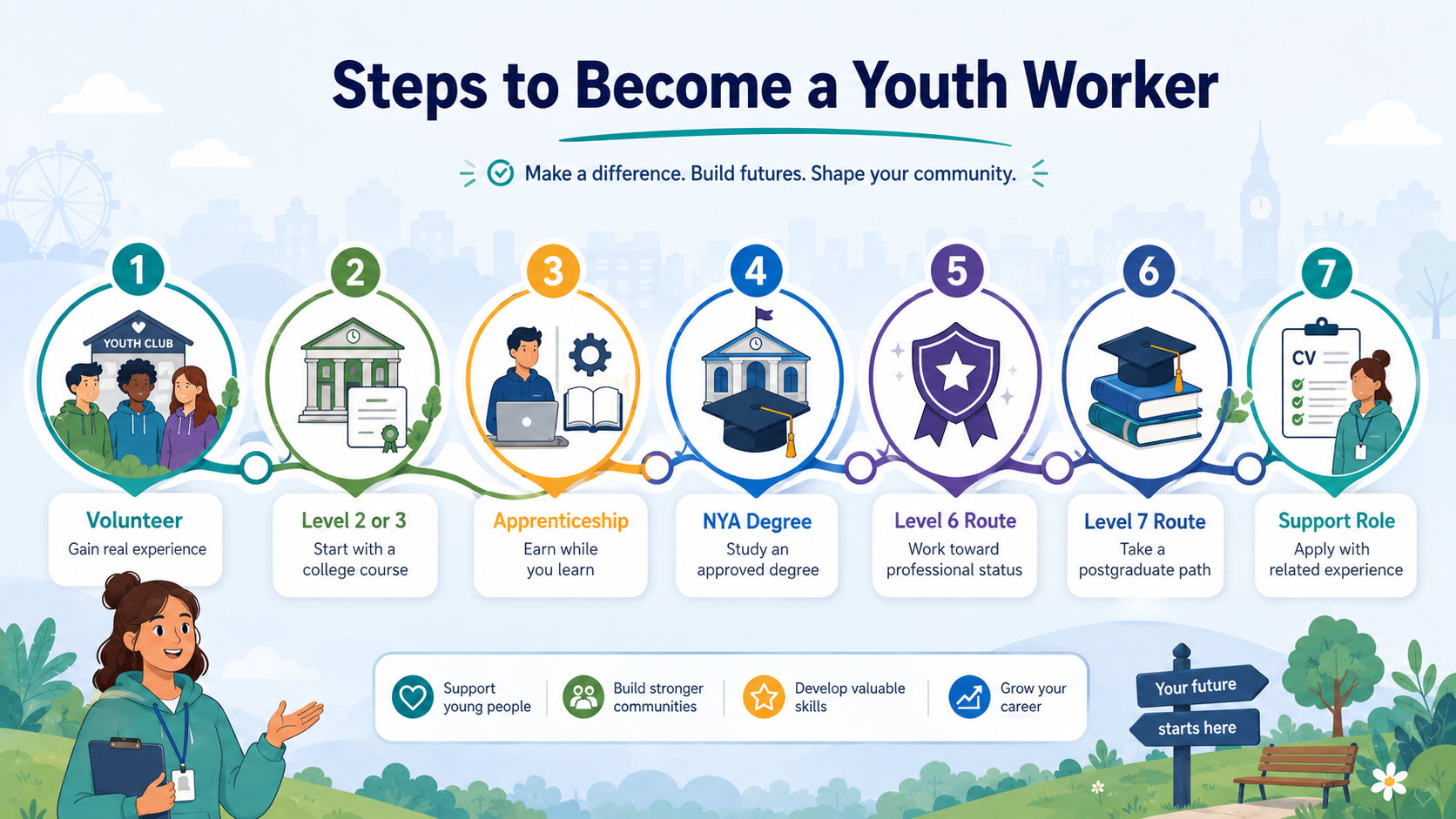
So, how to become a youth worker step by step?
- Volunteer with young people at a local club to build real experience.
- Start with a Level 2 or Level 3 youth work practice qualification at a local college.
- Take a Level 3 youth support worker apprenticeship to earn while you learn.
- Study an NYA (National Youth Agency) recognised youth work degree.
- Use a Level 6 degree apprenticeship for professional status.
- Take a postgraduate route (Level 7) if you already have a degree in another subject.
- Apply directly for support roles if you have strong related experience in health and social care.
The practical answer is that experience often opens the first door. Most employers value someone who has already spent time in a youth centre or community group.
What qualifications are recognised in UK youth work?
Recognised qualifications matter because youth work is a skilled profession. A Level 2 or Level 3 route can support youth support roles. Professional youth worker roles usually need a JNC-recognised Level 6 or Level 7 qualification, such as a degree, postgraduate diploma or degree apprenticeship.
The National Youth Agency (NYA) validates these courses in England. If you want to be a “professional youth worker”, you usually need that JNC status. This ensures you have the right training in social development and informal education. There are also bursaries and funding support available for those who want to study. The part people only notice later is that the right qualification affects job level and your long-term salary.
Who employs youth workers?
Youth workers can work for local councils, charities, schools, colleges and housing groups. They also work with faith organisations, youth offending teams, drug and alcohol services, social care teams and the NHS. Many roles depend on public funding, charity funding or project grants.
You might work for a local authority youth service or a large national charity like the YMCA or Barnardo’s. Some workers are based in schools as teaching assistants with a focus on wellbeing. Others work for NACRO or youth offending teams to help young people stay out of trouble. Even housing associations and churches employ youth workers to support the community. The real picture starts when readers see how wide the sector is.
What is the working life like?
Youth work can feel rewarding, busy and emotionally demanding. Youth workers may work evenings and weekends, travel between sites and support young people with serious challenges. The work can involve stress, but many people stay because the impact feels personal and meaningful.
A standard week is usually 37 to 39 hours but your shifts might start at 2 PM and finish at 10 PM. You might spend your day in meetings and your evenings at a youth club. Some roles involve outdoor work or residential trips where you stay away from home. It can be emotionally heavy when a young person is in crisis. However, seeing a young person succeed makes it worth it. Also, having a minor criminal record does not always mean automatic rejection, as long as you are honest and pass the risk checks. The day-to-day reality is that the work asks for both heart and structure.
Where can youth work lead in the future?
With experience, youth workers can move into senior roles, team leadership, project coordination, service management, policy work or specialist support. Some also move into social work, counselling, community development, outdoor education, teaching, advice work or training.
Many people use youth work as a foundation for a long career path. You could become a manager of a large youth zone or work for the government on youth policy. Some workers specialise in areas like gang prevention or mental health. Others decide to move into formal education or social services. The stronger truth is that youth work can become a long-term career path with many different branches.
Is youth work a good career choice?
Youth work can suit people who care about young people, enjoy community work and stay calm under pressure. It may not suit someone who wants a simple 9-to-5 job. The best fit is someone who can listen, guide, protect and encourage without taking over.
If you enjoy variety and making a difference, this is a great choice. You need emotional strength and a lot of patience. It is not always about big wins; sometimes it is about the small chats that help a child get through the week. If you are unsure, volunteering for a few hours a week is the best way to test if you like it. The useful truth is that this career feels easier to choose after real experience.
Final Thoughts: What is youth work really about?
So, what is youth work for a young person who feels life is too heavy to handle alone? It is support that reaches them before they feel left behind. It helps them feel safe, heard and ready to grow. Through youth work, young people build confidence, learn life skills and begin to see a better future for themselves.
This work is bigger than a job. It is a trusted relationship, built one conversation at a time. For the right person, youth work becomes a career with deep meaning. When a young person finds their voice, the whole community becomes stronger.
FAQs
Do you get paid for being a youth worker?
- Yes, most youth workers get paid. Some people start as volunteers to gain experience. Paid roles can include youth support worker, qualified youth worker, senior youth worker or youth project worker.
What’s the difference between a social worker and a youth worker?
- A youth worker supports young people through trust, activities and informal guidance. A social worker often deals with legal duties, child protection plans and serious family support. Youth work is more voluntary and community-based.
What are the 4 pillars of youth work?
- The 4 key pillars are voluntary participation, trust, inclusion and personal growth. In simple words, young people choose to join, feel respected, get fair support and learn skills for life.
What can you do with a youth work degree?
- A youth work degree can lead to roles in youth centres, schools, charities, councils and community projects. You can also move into safeguarding, mental health support, youth justice, social care or service management.
Do you need a qualification to do youth work?
- You can start with volunteering or a support role. However, many paid roles need a Level 2 or Level 3 qualification. Professional youth worker roles usually need a recognised degree or postgraduate qualification.
Is a youth worker a good job?
- Yes, it can be a good job if you enjoy helping young people. It is not always easy, but it has real meaning. You support confidence, safety and better choices every day.