
Professional phone manners are essential for a strong brand reputation. Many new workers ask, “what is a telephone etiquette, and why does it matter?” Essentially, it is a set of rules that shows you are organised. If you sound helpful, people will trust your business more. On the other hand, a rude tone can drive clients away instantly. Learning these skills helps you sound confident and reliable in any office.
Telephone manners are like a digital handshake for your business. When you pick up the phone, you show your professional side. Furthermore, a good call can build a forceful relationship. This is especially true when you are working in the United Kingdom.
In this blog, we will explore the best ways to answer calls. We’ll look at how to deal with challenging circumstances. Let’s explore the field of professional British phone manners together.
What is a Telephone Etiquette?
Many people ask, “What is telephone etiquette?” when they start a new job. It is a set of rules for speaking on the phone. These habits help you sound professional and reliable. Good manners build trust with your customers and colleagues.
Why Telephone Etiquette Matters
Using the right tone makes a huge difference in business. First, it prevents mistakes because you listen carefully to details. Next, it makes the caller feel important and respected. If you are polite, people will enjoy doing business with you.
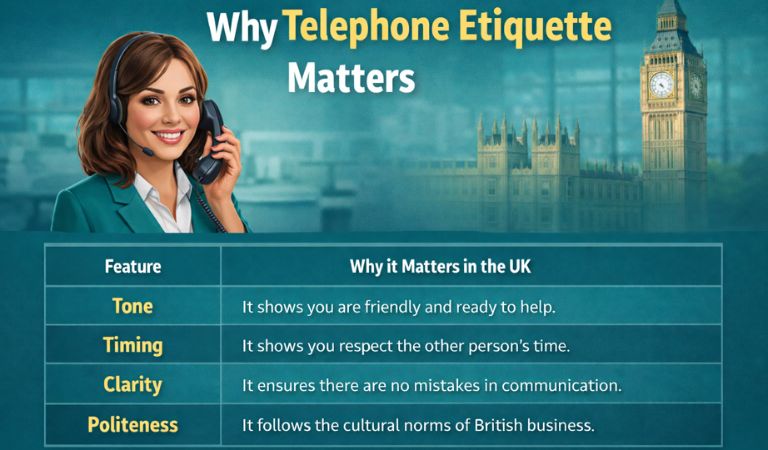
Finally, always end the call by saying “thank you”. Wait for the other person to hang up first. These simple actions show that you are a true professional.
What is a Telephone Etiquette in a Professional UK Setting?
Telephone etiquette means using polite manners during a call. It helps you build strong bonds with clients. In the UK, businesses value professional speech very much. Therefore, you must learn these basic rules. Good communication helps everyone work together smoothly.
Key Rules for the UK
British business culture values a balance of warmth and formality. Use these tips to stay professional:
- Mind the Tone: Keep your voice calm and friendly at all times.
- Active Listening: Say “I see” or “certainly” to show you are listening.
- Be Clear: Avoid using slang or complicated jargon during the conversation.
What are the fundamental rules of British phone manners?
British phone manners are built on respect and being very helpful. One of the biggest rules is answering the phone promptly. Most UK offices follow the famous “three-ring rule” for every call. This means you should try to answer before the third ring. Furthermore, waiting too long makes the caller feel quite unimportant.
The professional greeting is your chance to shine right away. You should always introduce yourself and your company very clearly. For example, say, “Good morning, ABC Supplies, this is Omar speaking.” This tells the caller they have reached the correct place. Additionally, speaking at a steady pace helps people understand you better.
Active listening is another core part of good telephone manners. You should use verbal cues to show you are paying attention. Phrases like “I see” or “Certainly” are very helpful here. These small words let the caller know you are still there. Likewise, they show that you care about what they are saying.
- Answer quickly: Never let the phone ring for too long.
- State your name: Let the caller know who they are speaking with.
- Be attentive: Focus entirely on the person on the other end.
- Use polite words: Always say “please” and “thank you” during calls.
How do you demonstrate telephone etiquette in a professional setting?
Phone calls build bridges between people in every business. In a professional setting, your voice acts as your face. Therefore, you must show respect and care at all times. Telephone etiquette involves many small but vital habits. These habits make you look very reliable to your clients. This guide shows you how to master these essential skills.
The Power of Your Voice
Your tone says more than your words during a call. Many experts suggest smiling while you speak to others. Surprisingly, callers can actually hear that smile in your voice. This makes your tone sound much warmer and welcoming. Consequently, the person on the line feels more comfortable.
Additionally, you should watch your speaking speed very carefully. Talking too fast can confuse the listener. On the other hand, talking too slowly is quite boring. Therefore, aim for a steady and calm pace throughout. This ensures everyone understands your message perfectly.
Using Professional Language
A specific kind of English is needed in professional contexts. You should avoid using slang or casual nicknames. For instance, do not say “mate” or “cheers”. Instead, use polite and formal UK phrases during every talk.
- Use “Good morning” or “Good afternoon” as a start.
- Always say “May I” instead of “Can I”.
- Avoid saying “What?” and use “Pardon?” instead.
- Say “Certainly” to show you agree with them.
Furthermore, always address people by their preferred titles. Use “Mr” or “Ms” unless they ask you otherwise. This shows that you respect their professional position.
Managing Calls Like a Pro
Handling technology is a big part of good etiquette. You must ask before putting someone on hold. Say, “May I put you on hold for a moment?” Then, wait for their answer before you click the button. Furthermore, do not leave them waiting for too long. Check back every thirty seconds with a quick update.
Staying Focused and Present
Distractions are the enemy of good phone manners. You should never eat or drink during a call. The microphone picks up every tiny noise you make. Similarly, avoid typing loudly on your computer keys. Focus entirely on the person talking to you.
Keep a pen and paper ready at all times. Taking notes helps you remember important details. Furthermore, it prevents you from asking the same questions twice. This makes you look very sharp and professional.
Ending the Call with Grace
The end of a call is very important too. Always summarise what you both agreed to do next. This prevents any mistakes or messy confusion later on. After that, ask if they need anything else. Finally, let the caller hang up their phone first. This is a sign of deep respect.
Mastering these skills takes some time and practice. However, the effort is truly worth it for you. You’ll develop deeper connections with your customers. Furthermore, your career in the UK will develop faster. Good telephone etiquette serves as a powerful tool for achieving success.
How should you handle difficult or angry callers?
Handling an angry caller is a test of your professional skills. The first step is to stay calm and keep breathing. Furthermore, you should never take their anger as a personal attack. They are usually frustrated with a situation, not with you personally. Therefore, keeping a soft voice will help de-escalate the tension.
Empathy is a very powerful tool when people are quite upset. You should use phrases that acknowledge their feelings very clearly. Try saying, “I understand why that would be frustrating for you.” This shows that you are on their side and listening. Consequently, the caller might start to calm down and talk softly.
Problem-solving is the final stage of managing a difficult call. You must move from the complaint to a resolution quickly. Ask questions to find out how you can fix the problem. After that, explain the steps you will take to help them. This turns a negative experience into a positive professional outcome.
Calming Phrases to Use:
- “I am sorry you are experiencing this trouble today.”
- “Let me see how I can fix this for you.”
- “Thank you for your patience while I check this.”
- “I will make sure this gets sorted out immediately.”
What is the correct way to end a professional call?
Ending a call correctly is just as important as the start. First, you should summarise the outcome of your long conversation. Confirm that both parties agree on the next steps to be taken. For example, say, “I will send that email by five today.” This prevents any confusion about what will happen after the call.
The final courtesy is a hallmark of British professional life. Always ask, “Is there anything else I can help with today?” This gives the caller one last chance to ask questions. Moreover, it shows that you are not rushing them away. It leaves the customer feeling very satisfied with your helpful service.
Finally, let the caller hang up their phone first. This is a subtle but vital mark of respect in the UK. It ensures you do not cut them off by accident. Similarly, it shows that you were fully available until the end. This small gesture creates a very polite and lasting final impression.
What Are the Common Telephone Etiquette Mistakes to Avoid?
Even experienced workers make mistakes when they are very busy. One major mistake is eating or drinking while on a call. The microphone picks up every crunch and every sip you take. Consequently, this sounds very unprofessional and can be quite distracting. Always wait until after your call to enjoy a snack.
Using “mumble” words is another habit you should try to break. Words like “um”, “ah”, or “like” make you sound unsure. Instead, take a small pause if you need to think. This makes you sound more confident and much more professional. Therefore, your message will be clearer to the person listening.
Nowadays, a lot of people make the mistake of multitasking. You might try to type loudly or check your emails. However, the caller can usually hear the clicking of your keys. This makes them feel like you are not really listening. Furthermore, you might miss an important detail while you are distracted.
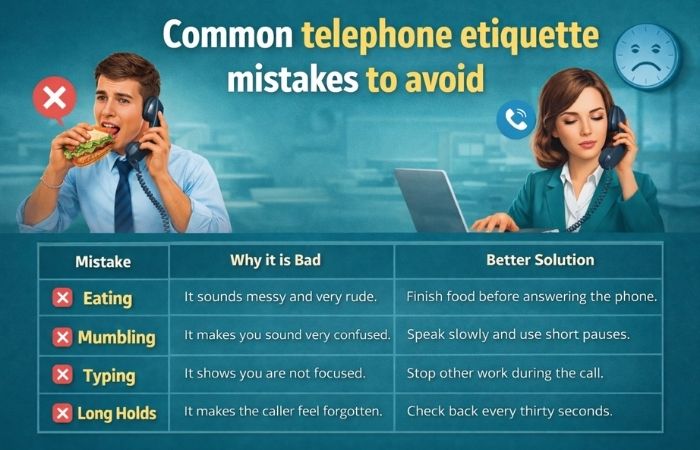
Leaving callers on hold for too long is very risky. If you must wait, check back every forty-five seconds. Simply say, “Thank you for waiting. I am still helping.” This lets them know that they are still a priority. Otherwise, they might hang up and feel very unhappy with you.
Conclusion on What Telephone Etiquette is
Mastering what is a telephone etiquette is a vital skill. It distinguishes top-tier professionals from everyone else in the UK market. Our Telephone Etiquette Online Training is designed to help you build these essential skills step by step. Dealing with difficult callers becomes easier when you use empathy. Finally, always end your calls with a summary and a thank you. These simple steps will make you a star in any office. Thank you for reading, and good luck with your future calls!
Frequently Asked Questions (FAQs)
1. What are the 5 basic etiquettes?
- Be polite and respectful, listen actively, use good manners, be punctual and dress appropriately
2. What are the 7 P’s of telephone etiquette?
- Politeness: Be courteous, Patience: Stay calm, Professionalism: Speak clearly, Promptness: Respond quickly, Preparation: Know what to say, Positive attitude: Keep a friendly tone and Precision: Give accurate information.
3. What is the 8 phone etiquette?
- Answer promptly, greet warmly, speak clearly, listen carefully, be polite, take accurate notes, transfer correctly and end politely.
4. What are the 11 essential rules of phone etiquette?
- Answer within 3 rings, introduce yourself, speak clearly, listen actively, stay professional, be courteous, avoid distractions, take notes, confirm details, handle calls efficiently and end politely
5. What is the rule of 12 etiquette?
- Keep your tone, words, and message within 12 seconds or less when possible for clarity and attention.
6. What are the 10 rules of online etiquette?
- Be polite, respect others’ opinions, avoid typing in ALL CAPS, proofread messages, respond promptly, use professional language, avoid spamming, respect privacy, use appropriate emojis and keep messages concise
7. What is the golden rule of telephone etiquette?
- Treat the caller as you would like to be treated: politely, patiently, and professionally.

Telephone Etiquette Online Training
Course Description :
- Certificate: Yes(Free)
- Accreditation: CPD Accredited
- Access: Lifetime