
Telephone etiquette means how you speak, listen, and behave during a phone call. It is about being polite, clear and respectful every time you talk. Even today, phone calls still matter a lot in daily life and work. A simple call can shape first impressions. It can also build or break trust. That is why good phone communication is still very important.
So, telephone etiquette is more than just speaking on the phone. When you use the right tone and simple words, people understand you better. You can improve telephone etiquette with small daily practice. First, focus on how you greet people on calls. Then, pay attention to how you listen without stopping others. After that, work on your tone, speaking speed and patience. These small steps slowly build strong phone skills.
Now let’s dive in and explore what telephone etiquette means and how to use it in real calls.
What Telephone Etiquette Means – Definition and Explanation
Telephone etiquette means speaking with care and paying full attention during a phone call. At the same time, it reflects how a person behaves while talking on the phone. In simple terms, this shows polite and professional behaviour in every conversation. As a result, it helps create a good impression even without meeting in person.
First, always start with a clear and friendly greeting. Next, keep your voice calm and polite. This helps the other person feel respected and at ease. Then, use simple and clear words. This makes your message easy to understand. After that, focus on listening. Do not talk over the other person. Let them finish speaking. Then reply carefully. Finally, end the call gently and respectfully. This leaves a good last impression.
Even though no one can see you, your body still affects your voice. So, sit straight and stay relaxed. This helps your voice sound clear and confident. In daily life, casual calls feel quick and relaxed. However, professional telephone etiquette keeps your talk clear, polite, and focused from start to finish.
Why Telephone Etiquette Is Important in Business and Daily Life

Here’s why strong telephone etiquette is important in business and daily life:
- First impression: Start every call with a clear and polite voice. This builds quick trust and confidence.
- Build trust: Use respectful words with a steady voice. People feel safe when your voice stays steady and kind.
- Customer satisfaction: Use simple and clear words. This makes people feel valued and easy to understand.
- Professional image: Stay polite and steady on every call. It shows you are serious and responsible in your work.
- Business reputation: Provide a positive experience on every call. This leads to fewer repeat calls and stronger customer loyalty.
- Reduce mistakes: Speak clearly and listen with care. Confusion and errors go down when communication is simple.
- Support growth: Good phone communication builds strong relationships. It also brings more business chances over time.
Core Elements of Good Telephone Etiquette
Good telephone etiquette has a few simple but important parts. Each part helps you speak clearly and stay polite on every call.
First, start with a professional greeting. It sets the right tone and builds a strong first impression. Then, use a clear and peaceful tone when speaking. This helps the other person feel relaxed and understood. Also, use simple words so your message stays easy to follow.
After that, focus on active listening. Do not interrupt the other person. Instead, listen fully and respond with care. Then, respect time during the call. Keep your talk short, clear, and on point. A clear flow in your conversation also helps. It keeps the talk smooth and easy to follow.
Finally, end the call with a gracious closing. It leaves a good last impression and shows respect. Together, these steps form strong telephone etiquette and smooth communication.
Best Telephone Etiquette Tips to Sound Professional
Good telephone etiquette helps you sound professional and confident on every call. It also makes communication clear for both sides. First, answer calls within 2 to 3 rings. This shows respect for the caller’s time. Next, introduce yourself and your organisation straight away. It helps the caller understand who they are talking to.
Then, speak clearly and at a steady pace. Do not rush your words. Keep a calm and friendly tone. This helps the other person feel relaxed and understood. Also, avoid background noise and distractions. A quiet place helps your voice stay clear and easy to hear.
After that, take notes during the call. This helps you remember important points. It also reduces mistakes. If you need to put someone on hold, always ask first. Do not leave them waiting without telling them. At the same time, stay honest in your answers. If you are not sure, say it clearly instead of guessing.
Finally, confirm understanding before ending the call. This makes sure both sides agree on what was said. These simple steps build strong telephone etiquette. They also improve trust, respect, and clear communication.
Do’s and Don’ts of Telephone Etiquette
Do’s of Telephone Etiquette
Good telephone etiquette starts with simple, everyday habits. First of all, treat every caller with respect and speak politely. This helps build trust from the very start. Next, listen carefully without stopping the caller. This shows you care about what they say. Also, use simple and clear words. This makes your message easy to understand. After that, stay patient, even when the call is long or busy. Finally, end the call professionally. A polite closing leaves a strong and positive impression.
Don’ts of Telephone Etiquette
Some habits can harm good communication. Firstly, do not interrupt the caller. Let them finish speaking. Next, avoid doing other work during a call. Focus only on the person you are speaking with. Also, do not raise your voice. A calm voice always works better. Then, avoid long hold times. If you must put someone on hold, keep it short and explain clearly. Finally, do not use slang or rude words. Simple and polite language keeps every call clear, respectful and professional.
Step-by-Step Structure of a Professional Phone Call
Here’s how a professional phone call works step by step:
- Opening: Start with a clear greeting and introduce yourself. This builds a strong first connection and sets the right tone for the call.
- Middle: Listen carefully to the caller and let them finish speaking. Ask simple questions to understand the issue. Then work step by step to solve the problem clearly and steadily.
- Handling: If needed, place the caller on hold or transfer the call. Always explain before you do it. Handle issues with patience and focus so the caller feels supported throughout.
- Closing: Check and confirm the issue is fully solved. Then end the call in a clear and professional way. This leaves a strong final impression.
- Result: This simple flow helps you manage every call in a clear, smooth, and effective way.
Telephone Etiquette Skills Every Professional Needs
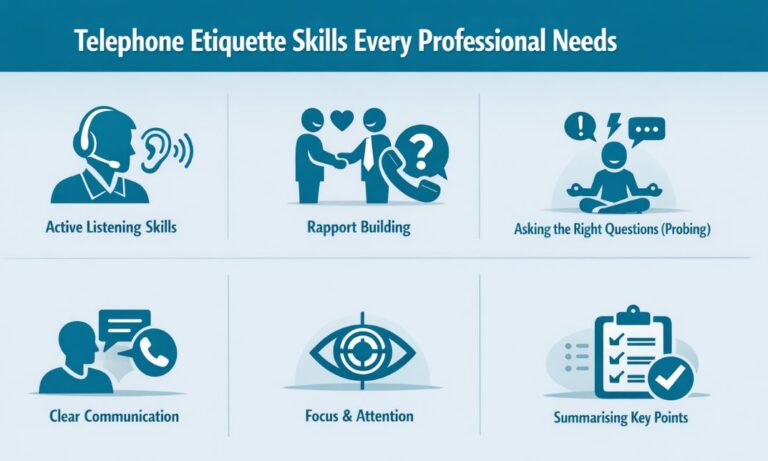
Key telephone etiquette skills every professional needs:
- Active listening skills: Give full attention to the caller. Do not interrupt. Focus on understanding each point before you reply.
- Rapport building: Build a friendly link with the caller. Use a warm tone and show interest in what they say.
- Asking the right questions (probing): Ask simple, clear questions to understand the real issue. This helps you find the right solution faster.
- Staying calm during conflict: Keep your voice steady during problems or complaints. This helps control tension and keep the call on track.
- Clear communication: Use simple words and short sentences. Make your message easy to understand with no confusion.
- Focus and attention: Stay fully present on the call. Avoid distractions so you catch every important detail.
- Summarising key points: Repeat the main points at the end. This checks understanding and avoids mistakes later.
Telephone Etiquette in Different Situations
Business Phone Calls
Keep your tone clear and professional in business calls. First, greet the caller in a polite way. Then, stay on the main topic. After that, speak in short and simple sentences so it is easy to follow. Also, remember you represent your company. So, speak with care and respect at all times.
Personal Phone Etiquette
In personal calls, respect the other person’s time. First, keep your message short and clear. Then, do not change topics too often. This keeps the call easy to understand. Finally, end the call in a polite way once your message is complete.
Conference Call Etiquette
Firstly, join the call on time. This shows respect for everyone. Next, mute your phone when you are not speaking. This stops background noise. Then, listen carefully and do not talk over others. Also, wait for your turn before you speak. Finally, prepare before the call so you can join with confidence.
Receptionist / Customer Service Calls
First, answer calls quickly. This creates a good first impression. Then, speak in a clear and friendly voice. This helps the caller understand you easily. After that, manage more than one call with care and focus. Also, stay calm when answering questions or problems. Finally, give simple and helpful answers so the caller feels supported.
Common Telephone Etiquette Mistakes to Avoid
Good phone skills can break down when small mistakes happen. First, avoid speaking too fast or unclearly. Keep your voice slow and your words simple. This helps the caller understand you better. Next, do not ignore the caller’s concern. Listen carefully from start to end. Then respond with full attention. This shows respect and builds trust. Also, avoid sounding robotic or scripted. Speak in a natural and simple way. Talk like a real person, not like a recorded voice.
After that, do not interrupt the caller. Let them finish speaking. Then reply in a calm and clear way. This keeps the conversation smooth and polite. Then, avoid rushing the call closing. Always end the call politely. Also, ask if the caller needs more help before you finish. Finally, do not multitask during calls. Focus only on the caller. This helps you understand every detail and avoid mistakes.
Do you hesitate when a call starts? Or do you lose your flow while speaking? Don’t worry. Join our Telephone Etiquette Online Training and take control of every call.
How to Improve Your Telephone Etiquette Skills
Improving telephone etiquette means building better habits in how you handle phone conversations. It is not only about words. It also includes tone, timing, listening, and patience.
Firstly, people judge your confidence in the first 7 seconds of a call. So your opening voice matters a lot. Next, understand this point. Your tone carries most of your message. People often understand meaning more from tone than from words.
Now focus on daily practice. Speak slowly and clearly. Keep your voice calm and friendly. Also, use simple words so anyone can understand you easily. Then record your practice calls. Listen carefully. You will notice mistakes in tone, speed, and breathing. After that, fix them step by step.
Next, take feedback from others. Ask how you sound on calls. Then improve based on their advice. Also, watch skilled people. Notice how they greet, pause, and stay calm in hard moments. If you can, take short training sessions. They help you build good habits faster.
Finally, remember one key point. A short silence is fine in a call. It shows you are thinking and staying calm. So do not rush to speak. Keep practising every day. Over time, strong telephone etiquette skills become your natural way of speaking.
Conclusion
Telephone etiquette means how you use your voice, words, and listening skills to make every phone call clear, polite, and easy to understand for the other person. It also shows how people see you in daily life and work. First of all, good phone skills build trust fast. They also help you feel more confident on every call. When you use proper phone manners, people understand you better. They also feel respected and valued. As a result, this can increase the chances of success in jobs, business, and relationships.
So, make it a daily habit. Use simple phone manners in every call. Speak clearly and listen with care. After that, stay calm from start to finish. Over time, these habits become part of your normal way of speaking. Finally, strong phone skills do more than improve communication. They build better relationships and open new opportunities.
Feeling nervous when the phone rings? Struggling to find the right words? Stop freezing on calls. Build confidence and speak naturally with our Communication Skills Course.
FAQs About What Telephone Etiquette Means
What is telephone etiquette in simple words?
- Telephone etiquette means speaking politely and clearly on a phone call. It also means listening well and responding with respect. It helps you make a good impression even without face-to-face contact.
What are 5 basic etiquettes?
- The 5 basic etiquettes are simple habits for better calls. Speak clearly, listen carefully, stay polite, do not interrupt, and end the call in a respectful way. These five steps keep every call smooth and easy.
What are the 7 P’s of telephone etiquette?
- The 7 P’s guide good phone behaviour. They are Preparation, Promptness, Politeness, Patience, Positivity, Professional tone, and Proper closing. Together, they help you handle calls in a smart and calm way.
What are the phone etiquette rules?
- Phone etiquette rules are simple guidelines. Answer quickly, speak clearly, listen fully, avoid background noise, and stay respectful. Always keep your tone calm and your words easy to understand.
What is the golden rule of telephone etiquette?
- The golden rule is simple. Treat the caller the way you want to be treated. Speak with respect, listen with care and respond with patience. This builds trust in every call.
What are the 5 P’s of phone etiquette?
- The 5 P’s are Preparation, Politeness, Patience, Positivity, and Professional tone. These five habits help you stay clear, calm, and confident during any phone call.
What is the 10/5/3 rule in customer service?
- The 10/5/3 rule explains the timing of greetings in customer service. At 10 feet, awareness starts. At 5 feet, eye contact or a small sign of attention shows readiness. At 3 feet, a polite greeting begins the conversation. This simple habit creates a warm and friendly start to communication.

Telephone Etiquette Online Training
Course Description :
- Certificate: Yes(Free)
- Accreditation: CPD Accredited
- Access: Lifetime