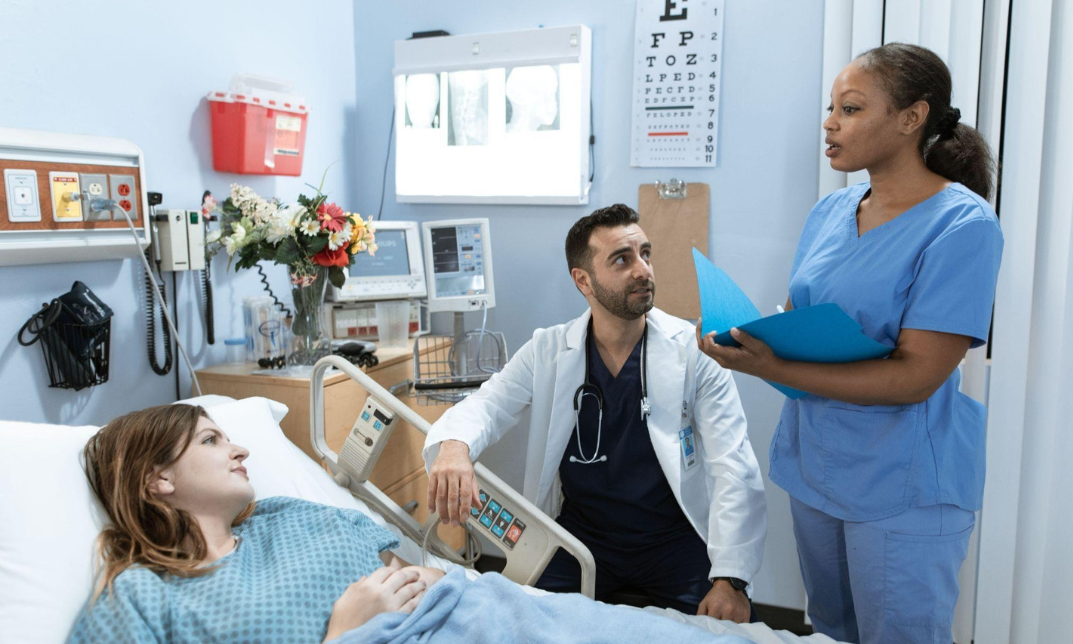
Healthcare employers are preparing for a sharp rise in the number of nurse practitioners needed over the next decade. Meeting that demand will require universities to train more experienced nurses without treating online delivery as a substitute for clinical practice. The Texas Woman’s University online nurse practitioner program illustrates how that balance can work, with academic study completed online and hundreds of hours spent in supervised patient care.
The question facing nursing education is now one of capacity. Universities need enough faculty, preceptors and suitable placement settings to support growing student numbers. These resources take considerably longer to develop than an online course platform.
Nurse Practitioner Employment Is Set to Rise
The US Bureau of Labor Statistics expects nurse practitioner employment to increase from 320,400 positions in 2024 to 448,800 by 2034. The projected growth rate of 40% compares with 3% across all US occupations and 8% among healthcare professionals who diagnose or treat patients.
The scale of the increase creates a timing issue for nursing schools. Programs must expand several years before the additional practitioners are expected to enter clinics because graduate study, placements, certification and licensing all take place before advanced practice begins. That projection represents 128,400 additional nurse practitioner positions. Demand is being driven partly by an aging population and the growing prevalence of chronic conditions, according to BLS. Hospitals, outpatient centers, clinics and physicians’ offices are also making greater use of advanced practice nurses in primary, preventive and acute care.
Nurse practitioners assess patients, order or interpret diagnostic tests and manage treatment plans. Many also prescribe medication, although the exact scope of practice varies between states. Preparing a registered nurse for those responsibilities requires graduate education, national certification and state-level advanced practice licensure.
The profession has expanded considerably since Loretta Ford and Henry Silver established the first US nurse practitioner program at the University of Colorado in 1965. The American Association of Nurse Practitioners records that the country had more than 65 programs by 1973. By 2024, nurse practitioners held more than 320,000 positions nationwide.
Graduate Enrolment Is Recovering
Universities have recorded renewed interest in advanced nursing qualifications. Figures released by the American Association of Colleges of Nursing in May 2026 showed that enrollment in master’s nursing programs rose by 6.8% between 2024 and 2025. The increase added 9,276 students and brought total master’s enrollment to 146,718 across 669 nursing schools. It was the second consecutive annual increase at this level after an earlier period of decline.
Universities still turned away nearly 17,000 qualified graduate-program applications in 2025. AACN attributed these decisions to shortages involving faculty, clinical sites, preceptors, classroom space and other institutional resources. The figure counts applications rather than individual people, since one prospective student may apply to several programs. It nevertheless shows that available places have not kept pace with interest.
Recruiting faculty presents a related challenge. Advanced practice teaching requires educators who combine academic preparation with relevant clinical knowledge, making suitable appointments harder to fill quickly. Universities must compete for professionals whose experience is also in demand within hospitals, clinics and other care settings.
Clinical placements are especially difficult to expand. Each placement needs an appropriate setting, an eligible supervisor and a way to assess whether the student can apply advanced knowledge safely. Increasing an online cohort without adding that practical capacity would simply move the shortage from the classroom to the placement stage.
Online Courses Do Not Remove Clinical Demands
The transition from RN to FNP changes the decisions a nurse is expected to make. Registered nursing experience provides an important clinical foundation, while family nurse practitioner education adds diagnostic reasoning, advanced assessment and greater responsibility for treatment planning.
TWU’s online Master of Science in Nursing Family Nurse Practitioner pathway consists of 14 courses carrying 45 credit hours. Full-time students can complete the program in two years, with a part-time route available. The curriculum covers advanced health assessment, pharmacology, pathophysiology, evidence-based practice and the management of common health concerns.
Alongside the online coursework, students complete 780 clinical hours involving direct patient care. During these placements, theoretical knowledge is used in consultations, assessments and treatment decisions under supervision. Digital case studies can help students examine possible diagnoses or compare management options, but competence must also be demonstrated in a healthcare setting.
Online delivery mainly changes where the academic work takes place. This can matter in Texas, where long distances make regular campus attendance impractical for some working nurses. Placement availability remains local, however, so expanding geographical access also requires networks of qualified preceptors across the areas served.
Growth Depends on More Than Student Numbers
A larger online intake can extend the reach of graduate nursing education, but enrollment is only one part of the workforce calculation. Universities also need enough educators to teach advanced material and enough clinical partners to supervise 780 hours of patient-facing work for every TWU FNP student.
Those limits explain why strong demand for graduate study can exist alongside thousands of turned-away applications. If nurse practitioner employment grows at the rate projected by BLS, educational capacity will have to increase without compressing the clinical experience on which safe practice depends.