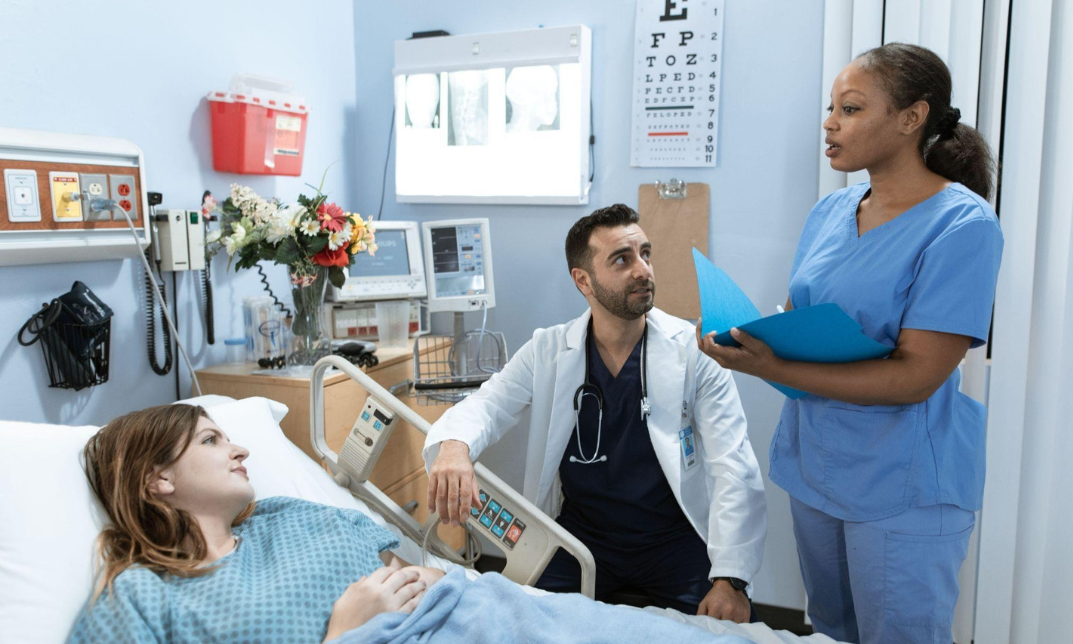
The United States has a psychiatric workforce problem that more psychiatrists alone cannot solve, and the clinical role that’s quietly filling that gap is one that most people outside healthcare haven’t heard of. This is what psychiatric mental health nurse practitioners actually do, why the MSN-PMHNP qualification produces a categorically different kind of advanced practitioner and why the workforce gap they’re stepping into is structural rather than temporary.
The US mental health access crisis is well documented. What gets less attention is the supply-side reality behind it. There aren’t enough psychiatrists, the training pipeline is long and the geographic distribution of the existing workforce is heavily skewed toward urban areas and private practice. Rural communities, community mental health centres and underserved urban populations bear the consequences most acutely.
Psychiatry alone cannot close this gap within any realistic timeframe. The residency pathway into psychiatry takes four years post-medical school. Output is constrained by training capacity. And a significant proportion of newly qualified psychiatrists move into subspecialties or private practice rather than the community and outpatient settings where access is most critically needed.
This is the structural context in which the PMHNP role has expanded from a niche advanced practice specialism into a mainstream psychiatric workforce component. An MSN PMHNP online programme prepares registered nurses for independent psychiatric practice (covering assessment, diagnosis, psychopharmacological management and psychotherapeutic intervention across the full lifespan) through a graduate curriculum that builds the clinical and academic foundation for a scope of practice that goes considerably further than mental health nursing at the RN level.
What Independent Psychiatric Practice Actually Covers
The PMHNP scope of practice is worth being precise about because it’s commonly undersold in general descriptions of the role. This is not a supportive or collaborative position sitting alongside a supervising psychiatrist. In the majority of US states, a certified PMHNP practises independently. This includes assessing and diagnosing psychiatric conditions, formulating and managing treatment plans and prescribing across the full range of psychopharmacological agents without physician oversight.
That means independent management of complex presentations. The clinical reasoning demands of that scope are substantial, and the prescribing responsibility attached to it is among the most complex in advanced practice nursing.
The prescribing authority and clinical scope of certified PMHNPs across US states has expanded consistently over the past decade, with full practice authority now granted in a majority of states. A policy shift that reflects both the workforce necessity and the evidence base supporting PMHNP clinical outcomes.
Why the PMHNP Qualification Is Categorically Different From General NP Practice With Mental Health Exposure
There is a meaningful distinction between a family or adult-gerontology NP who manages some mental health presentations and a board-certified PMHNP practising within their specialist scope. The MSN-PMHNP curriculum is built around psychiatric specialisation from the outset. Advanced psychopathology, psychiatric diagnostic frameworks, lifespan development and its implications for mental health presentation, neurobiological underpinnings of psychiatric conditions and a psychopharmacology curriculum that goes considerably deeper than the general prescribing preparation in non-specialist NP programmes.
The clinical placement component reinforces this specificity. PMHNP students complete supervised psychiatric hours across varied settings (inpatient units, community mental health, child and adolescent services, substance use programmes), building the breadth of exposure that independent specialist practice requires.
The distinction matters clinically and professionally. A PMHNP presenting to an employer or a patient panel is offering a defined specialist credential, not a general NP qualification with a mental health concentration. That specificity is increasingly recognised by healthcare systems doing the hiring.
Where PMHNPs Are Actually Working
The practice settings for PMHNPs are more varied than the community mental health framing suggests, and that variety is part of what makes the qualification professionally resilient.
Community mental health centres represent the largest single employment sector, and the need there is acute. But PMHNPs are also working in inpatient psychiatric units, primary care settings managing integrated behavioural health, correctional facilities, school-based mental health programmes, telehealth platforms that have significantly expanded psychiatric access in rural and underserved areas and private practice.
The telehealth dimension is particularly significant. The expansion of telepsychiatry services in the United States has created practice opportunities for PMHNPs that didn’t exist at scale a decade ago, allowing independent practitioners to serve patient populations across state lines, reduce geographical barriers to psychiatric care and build sustainable caseloads outside traditional institutional employment.
The Workforce Trajectory
The demand picture for PMHNPs is not speculative. The Health Resources and Services Administration has projected significant shortfalls in psychiatric providers across the coming decade, with rural and semi-rural areas facing the most acute shortages. PMHNPs are explicitly identified in federal and state workforce planning as a primary mechanism for addressing those shortfalls (which translates into sustained hiring demand across both public sector and private practice settings).
For registered nurses considering advanced practice, the PMHNP pathway offers something that most other specialisms cannot: entry into a field where demand structurally exceeds supply, where independent practice authority is well established and where the clinical work sits at the intersection of pharmacological management and therapeutic relationship in a way that draws on the full depth of nursing’s patient-centred foundations.
The access gap that psychiatry alone cannot close is real, documented and growing. The practitioners stepping into it are doing some of the most consequential clinical work in American healthcare.