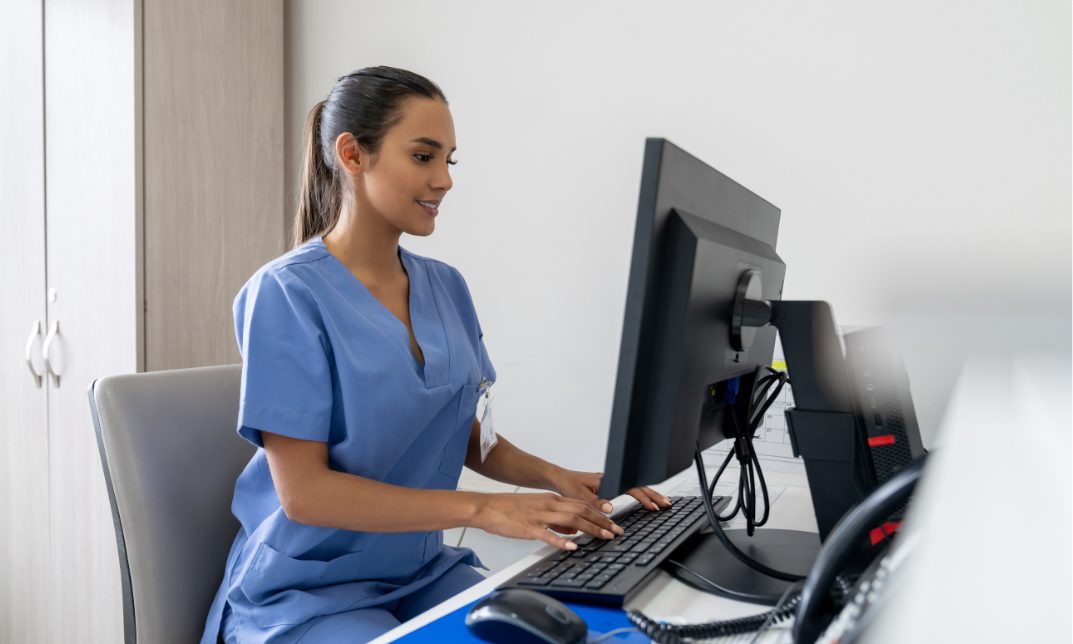
Medical receptionist responsibilities include more than just answering phones or booking appointments. In GP surgeries, hospitals, and clinics across the UK, they are often the first people patients meet.
They welcome everyone with kindness and listen carefully. They also keep the front desk running smoothly, so everything stays on time. It’s a job that mixes care with organisation. A good receptionist helps patients feel supported while keeping things moving behind the scenes.
What makes this job special is the people side. Patients often come in feeling nervous or unwell. A kind receptionist can help them feel calm straight away. Balancing people’s feelings with admin work takes patience, understanding, and a caring attitude.
In this article, we simply explain medical receptionist responsibilities. You will learn what a medical receptionist does each day. You will also see how they help patients and doctors, and what skills they need. By the end, you will understand why this role is so important in keeping a clinic or hospital running well.
What Does a Medical Receptionist Do?
So, what does a medical receptionist do each day? In simple terms, they help everything run smoothly at the front desk. Whether it’s in a GP surgery, hospital, or clinic, they welcome patients with warmth and kindness. They’re often the first voice you hear on the phone or the first smile you see when you walk in.
Here’s what their main tasks usually include:
- Welcoming patients and helping them feel at ease.
- Answering phone calls and replying to emails quickly and politely.
- Booking, cancelling, or rearranging appointments as needed.
- Updating and maintaining accurate patient records.
- Handling repeat prescriptions and processing referrals.
- Passing messages to doctors and nurses clearly and on time.
- Signposting patients to the right service or specialist using practice protocols.
- Keeping the reception area tidy and organised.
Every smooth and quiet waiting room runs well because of a caring medical receptionist. They stay calm, kind, and organised, even on busy days. Their job is to make sure every patient feels welcome and understood. Whether in a GP clinic or a hospital, they help every visit go smoothly, with care and respect.
Daily Medical Receptionist Responsibilities
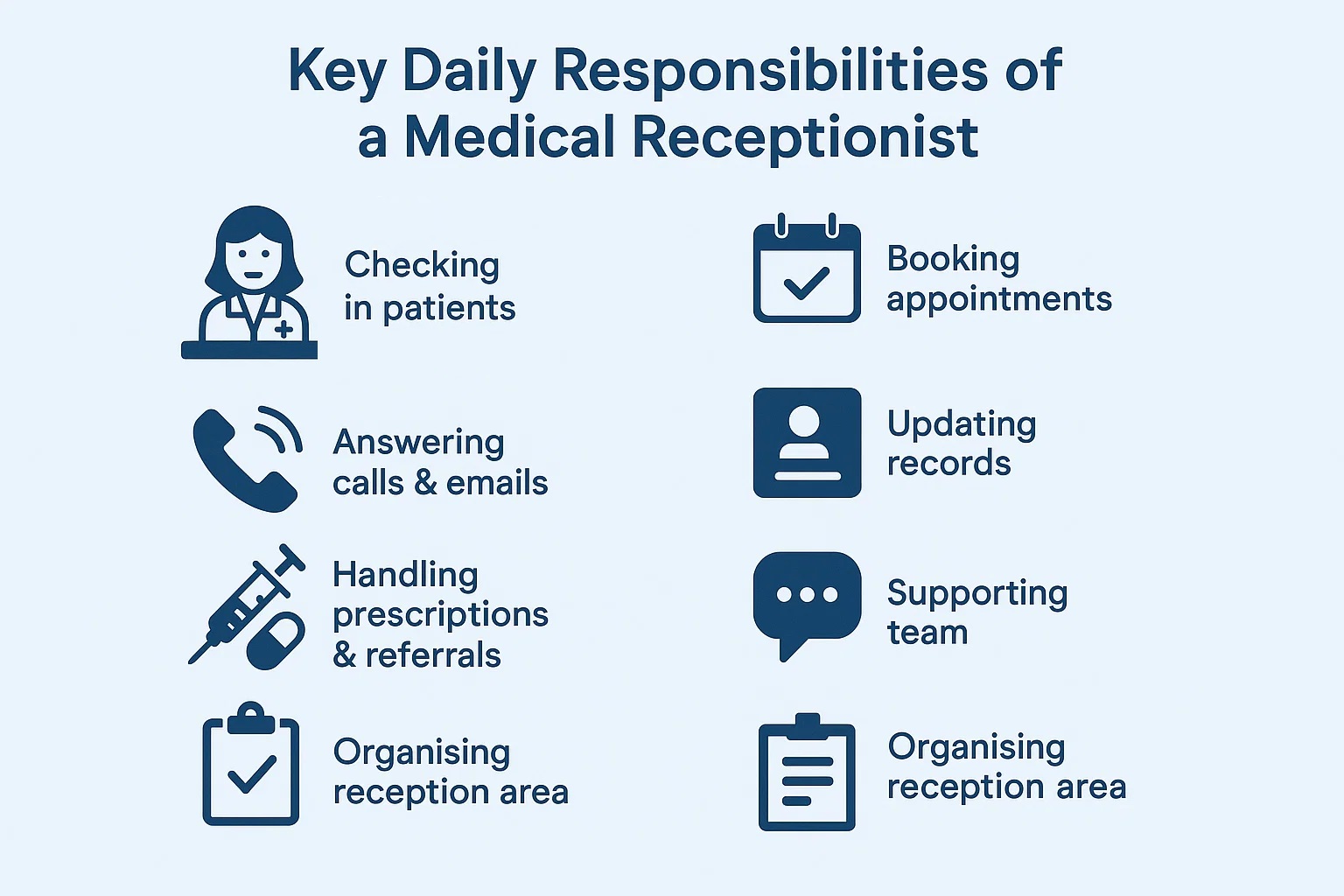
Here are some main duties you’ll see every day:
- Checking in patients: Greet patients with a smile and help them feel at ease.
- Booking appointments: Arrange and manage slots for doctors, nurses, or clinics. Make sure each one is used well.
- Answering calls and emails: Speak politely and help patients with questions or worries.
- Updating records: Keep patient details correct so doctors can give safe and proper care.
- Handling prescriptions and referrals: Process them quickly so medicines and specialist visits are not delayed.
- Supporting the team: Pass on messages, share updates, and keep everyone informed.
- Organising reception: Keep the front desk tidy, calm, and welcoming for all patients.
These daily tasks may seem small, but they make a big difference. They help clinics and GP surgeries run smoothly. A GP receptionist’s role is not just about paperwork — it’s also about kindness, teamwork, and helping people feel cared for from the moment they arrive.
Front Desk & Patient Communication Duties
The front desk is the heart of every clinic or surgery. It’s where patients arrive, ask questions, and look for support. That’s why strong patient communication in healthcare is so important. A good medical receptionist makes every patient feel welcome, calm, and respected—no matter how busy the day gets.
Here are the main reception desk duties in a GP or hospital:
- Greet patients with a smile and help them check in quickly.
- Explain waiting times and let people know if there is a delay.
- Listen carefully when patients share worries or problems.
- Stay calm and polite when someone is upset or angry.
- Answer questions simply and clearly.
- Keep all patient information private and safe.
- Help both patients and staff so the day runs smoothly.
In the end, it’s about kindness and clear communication. Every smile, gentle word, and calm explanation helps patients feel safe, valued and cared for.
Administrative & Record-Keeping Tasks
Every well-organised clinic relies on a skilled and caring medical receptionist. They manage many important admin tasks that keep the practice safe and efficient. These medical admin duties may not always be noticed, but they play a big part in giving patients the best care.
Here’s what they usually do each day:
- Enter patient details and updates into the system correctly.
- Scan and upload documents like test results or hospital letters.
- Code information and file admin letters for doctors to review.
- Chase up results or reports to make sure nothing is missed.
- Keep medical records accurate and up to date in EMIS Web or SystmOne.
- Maintain clear audit trails so every change can be checked if needed.
These tasks need focus and accuracy, but also care. Every click or entry affects someone’s health record. Whether it’s updating medical records in the UK or filing new reports, a receptionist’s attention to detail helps the whole healthcare team give safe and reliable care.
Handling Appointments and Scheduling

Managing appointments is one of the most important parts of a medical receptionist’s job. A good organisation keeps the day running smoothly. It also helps both patients and staff feel less stressed. That’s why appointment scheduling needs care, patience, and clear communication.
Here’s what this part of the job usually includes:
- Booking new appointments: Arrange visits with the right doctor or nurse.
- Changing or cancelling: Update plans when patients need to reschedule.
- Managing follow-ups: Check recalls and waitlists so no one misses important care.
- Recording missed visits: Note DNAs (Did Not Attend) and rebook if needed.
- Keeping urgent slots open: Save spaces for patients who need quick help.
- Working with the care team: Follow simple steps to guide patients safely.
In the GP appointment system in the UK, every booking matters. Receptionists use the NHS booking tools carefully so time is used well. A friendly voice and an organised mind also make a big difference in keeping each day on track.
Confidentiality and Data Protection
Protecting patient information is one of the most important parts of a medical receptionist’s job. Every detail shared at the desk or on the phone must stay private. Patients trust the team to keep their information safe, so following the rules is vital.
In the UK, GDPR for medical receptionists and the Data Protection Act 2018 set clear rules for how personal data is used and stored. Receptionists also follow the Caldicott Principles, which remind everyone to share information only when it’s truly needed for patient care.
Here’s how receptionists protect patient confidentiality in the NHS:
- Check a patient’s ID before sharing any personal details.
- Give information only to those who need to know for care purposes.
- Store and send messages through secure NHS systems.
- Lock screens, log out of computers, and keep desks clear of papers.
- Avoid discussing patient details where others might overhear.
These habits may seem small, but they build trust. By following the right steps every time, receptionists show patients that their privacy matters and that their care is always handled with respect and professionalism.
Essential Skills for a Medical Receptionist
To do the job well, a medical receptionist needs a mix of people skills and practical ability. Every day brings new patients, busy moments, and important details to manage. The right mix of medical receptionist skills helps everything run smoothly and keeps patients happy.
Here are the key skills every receptionist should have:
- Good communication and empathy – Listening carefully and speaking kindly make patients feel comfortable and understood.
- Organisation and multitasking – Receptionists handle calls, appointments, and paperwork all at once, so staying calm and organised is vital.
- IT literacy and data entry – Using NHS systems like EMIS or SystmOne to update records accurately is a big part of the job.
- Customer service and professionalism – Every patient should feel respected and cared for, no matter how busy the day gets.
- Attention to detail – Small mistakes can cause big problems, so accuracy matters in every task.
These NHS receptionist skills help create a friendly, reliable front desk. With patience, warmth, and strong healthcare customer service, medical receptionists make every patient’s experience smoother and more reassuring.
How a Medical Receptionist Supports Patient Care
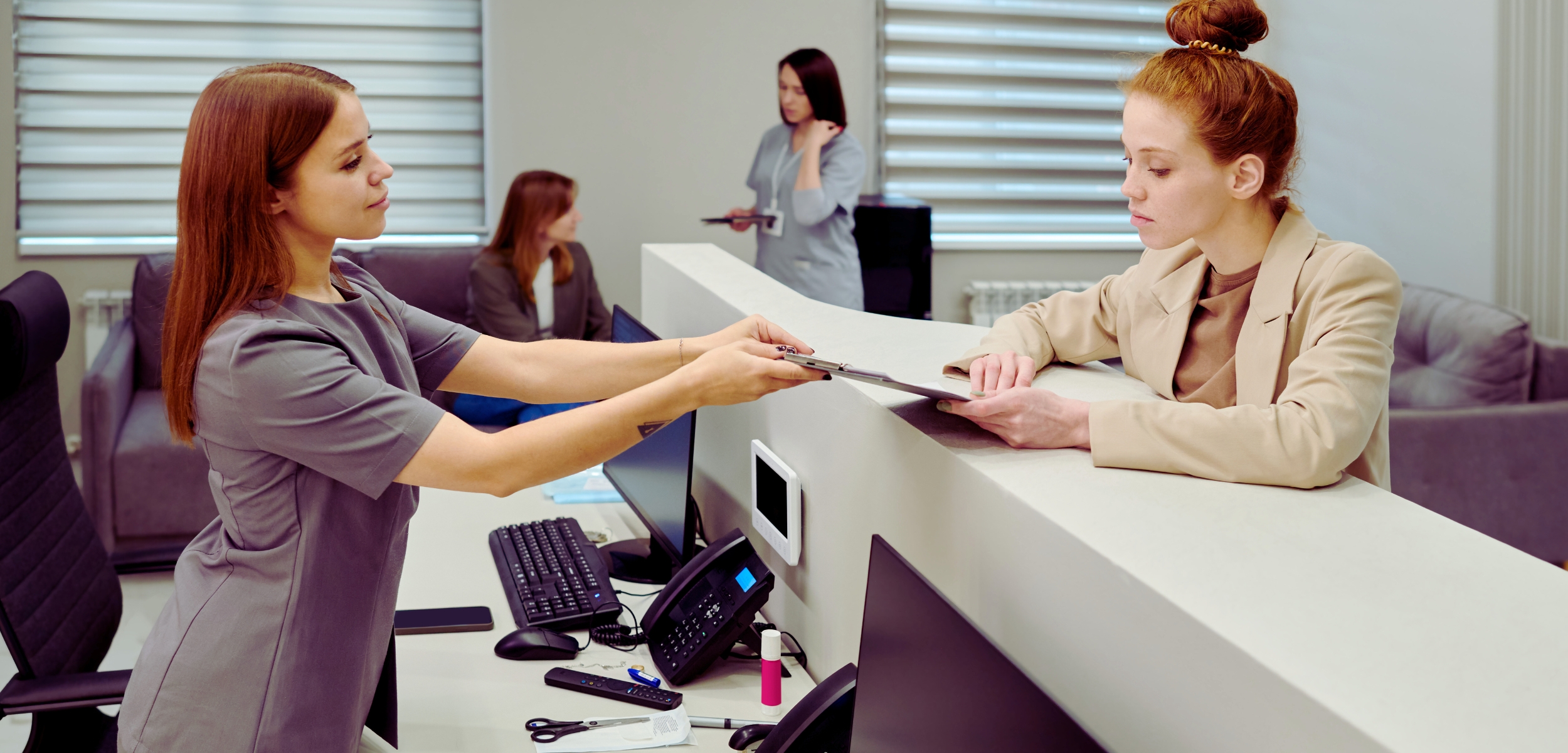
A medical receptionist helps patients in many important ways. Their job is not just about booking appointments or answering calls. It’s about making sure every patient gets the right care at the right time.
In the patient pathway in the UK, receptionists help things run smoothly from the moment a patient contacts the clinic. They send accurate referrals so people see the right doctor or specialist quickly. They also make sure test results and letters are passed on without delay. These small actions help doctors make faster and safer decisions.
Receptionists also look out for patients who need extra help. Their reception support in patient care includes noticing safeguarding concerns and arranging interpreters or BSL (British Sign Language) support. This helps everyone get equal care and feel understood.
They give clear instructions about follow-up care, too. Patients leave knowing what to do next—whether it’s booking another appointment, collecting medicine, or waiting for results.
This shows the real healthcare admin impact. Receptionists may not treat patients directly, but their kindness, care, and accuracy make a big difference to every patient’s journey.
Training and Qualifications for Medical Receptionists
You do not need a degree to work as a medical receptionist. Most people learn on the job in a GP surgery or hospital. This medical receptionist training in the UK helps you understand how the NHS works and what patients need.
Formal qualifications are not always needed, but they can help you get a job faster. Many people take a medical administration course to learn about record keeping, patient data, and confidentiality. Customer service training is also useful because you will talk to patients every day.
You can also take short courses such as:
- Safeguarding Level 1 or 2
- Basic Life Support (BLS)
- Medical terminology
- EMIS Web or SystmOne computer skills
These skills show that you are ready to work safely and professionally. Some employers may ask for NHS receptionist qualifications, but most skills are learned through experience. With good communication, patience, and a kind attitude, you can build a strong career as a medical receptionist and truly help patients.
Boost Your Career with CPD Courses
To stand out in healthcare, CPD (Continuing Professional Development) courses can make a real difference. They help you stay up to date with new systems, NHS policies, and patient care standards. CPD learning also shows employers that you take your professional growth seriously — a key advantage in a busy healthcare setting.
Study with the School of Health Care
If you want flexible, recognised training, the School of Health Care offers a wide range of CPD-accredited courses designed for real NHS careers. You can learn online at your own pace, gain valuable skills and earn a certificate that strengthens your CV. Whether you are just starting or want to advance in healthcare, these courses help you build confidence and move forward with ease.
Explore CPD-accredited courses at the School of Health Care today — and take the next step in your medical career.
Career Progression for Medical Receptionists
Working as a medical receptionist is a great starting point in healthcare. It helps you learn how a clinic or GP surgery runs and how to care for patients with kindness and respect. With experience and the right training, there are many ways to grow in your career.
In time, you can move into senior roles such as Senior Receptionist or Team Leader. These positions involve supporting other reception staff and helping to manage daily tasks. It’s a natural next step in a medical receptionist’s career progression.
Some people choose to move into management. With more experience, you could become an Admin or Operations Manager in a GP practice or hospital. This role focuses on planning, organising, and making sure everything runs smoothly—an important part of any NHS admin career. If you enjoy detailed work and communication, you could follow the medical secretary pathway. This involves typing reports, managing letters, and working closely with doctors and consultants. Others take a more patient-facing route, becoming a Patient Coordinator or even a Healthcare Assistant with further training.
No matter which path you choose, every step builds on the skills you learned as a receptionist: organisation, empathy and professionalism. With effort and care, this role can open the door to a long and rewarding career in healthcare.
FAQs: Medical Receptionist Responsibilities
- What Are the Main Duties of an NHS Receptionist?
An NHS receptionist helps patients both in person and over the phone. They answer calls, book or change appointments, and guide patients to the right service.
- What is a key responsibility of a medical receptionist?
A key responsibility of a medical receptionist is to be the first point of contact for patients. They manage appointments, handle queries, and keep patient records organised while supporting the smooth running of the clinic or practice.
- What is the difference between a receptionist and a medical receptionist?
A medical receptionist works like a regular receptionist but with extra healthcare knowledge. They understand medical terms and help connect patients with doctors and other healthcare services.
- What skills do you need to be a medical receptionist?
To be a medical receptionist, you need good communication, organisation, and people skills. You should also be comfortable using computers and medical record systems.
- What are the five functions performed by a receptionist?
A receptionist greets visitors, answers calls, manages inquiries, schedules appointments, and helps keep the front desk running smoothly.
Final Thoughts
Medical receptionists are the heart of patient access in the NHS and GP surgeries. They greet patients with care, manage records accurately, and keep appointments running smoothly. Their calm and friendly communication helps every patient feel supported and valued.
If you want to begin a meaningful career in healthcare, the Medical Receptionist Course from the School of Health Care is the perfect first step. You’ll learn how to handle patient information, manage front-desk tasks, and work confidently in medical settings. With flexible online learning and a CPD-accredited certificate, you can train at your own pace and gain skills that truly matter.
Join the School of Health Care today and take your first step towards a rewarding NHS career.

Diploma in Medical Receptionist and Secretary
Course Description :
- Certificate: Yes(Free)
- Accreditation: CPD Accredited
- Access: Lifetime