
You finish work, shut the laptop and try to enjoy your evening. A few minutes later, your mind drifts back to emails, meetings and tomorrow’s tasks. Then it keeps looping the same thoughts again and again. Doesn’t it feel boring and repetitive? So, how to stop thinking about work when your brain refuses to slow down? Firstly, your mind does not like unfinished tasks. It keeps pulling those thoughts back until it feels clear. That is why simple habits matter more than we think.
A short end-of-day routine, clear next steps and calm after-work habits can help your brain leave work mode. In Great Britain, work-related stress, depression and anxiety still lead to millions of lost working days every year. This shows that many people face the same struggle.
Now, let’s look in detail at how to not think about work after working hours.
Why Can’t I Stop Thinking About Work?
Your mind does not shut down just because work is over. It keeps going for one simple reason. It wants things to feel done and clear.
That is why work thoughts stay in your head. Your brain treats them like “open loops.” A task not finished, a missed email, a tight deadline, or a hard meeting all feel unfinished. So your mind keeps bringing them back. It tries to sort them out, even after work is over. Also, modern work makes this harder. Phones, laptops and remote work keep you linked all day. Messages come in fast. Replies feel urgent. So your brain starts to feel like work never really stops.
Then there is personal pressure too. You may worry about mistakes and want to do your job well. You may also feel unsure about job security. So your mind keeps checking work again and again. Think of it like open tabs on your phone or computer. Each task stays open in the background. Each one uses your mental energy. Your brain cannot fully relax until it sees a clear plan for each tab.
Is It Planning or Rumination?
Not every work thought is a problem. Some thoughts help you move forward. At the same time, some thoughts keep you stuck in the same loop. Planning feels clear and helpful. It gives you the next step. For example, “I will email Sarah at 9 am” gives your mind direction. So, it feels calm because you know what to do next.
But rumination feels different. It keeps repeating the same worry again and again. No action comes from it. For example, “What if Sarah thinks I did badly?” keeps playing in your mind. Still, nothing changes and nothing gets solved.
So, here is a simple way to check your thoughts. Ask yourself, “Did this thought give me a next step?” If yes, write it down and move on. If not, it is rumination. Over time, this small habit makes a big change. It helps your mind break free from useless thinking loops. It also keeps your thoughts clear and light.
That is also a key part of how to stop thinking about work after working hours. You do not stop all thoughts. You just learn to stop the ones that go round and round with no solution.
What Are the Signs Work Stress Is Taking Over?
Work stress does not manifest in a single clear way. It slowly affects your feelings, thoughts, actions and body. So, if you start feeling anxious at work, see it as an early warning. Your mind is telling you something needs attention.
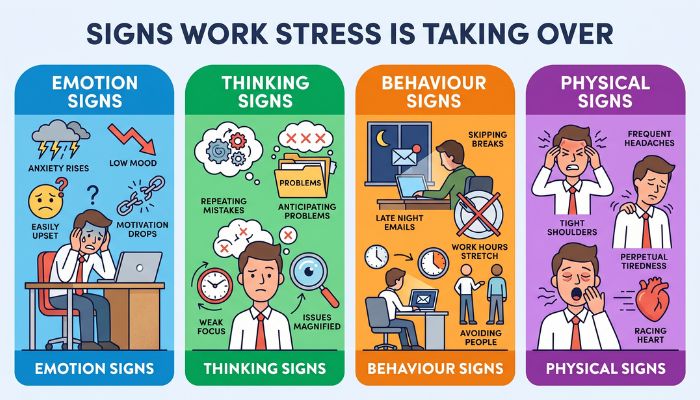
- Emotion signs often come first. Anxiety rises more than usual. Mood feels low, angry, or easily upset. At the same time, motivation drops. Even simple tasks start to feel difficult.
- Thinking signs come soon after. Mistakes keep repeating in the mind. Problems feel like they’re going to happen before they even arrive. Focus becomes weak. Small issues start to feel much bigger than they really are.
- Behaviour signs begin to change the daily routine. Emails get checked late at night. Breaks get skipped without noticing. Work hours stretch longer than planned. Hard tasks get avoided and the distance from people slowly increases.
- Physical signs show stress in the body. Shoulders feel tight. Headaches become more frequent. Tiredness stays even after rest. Some people also notice poor sleep or a fast heartbeat.
So, when these signs build up, your body asks for rest. The sooner you notice them, the easier it becomes to take control.
What Happens If You Never Switch Off?
When the mind never leaves work, rest stops feeling like real rest. Sleep becomes light and broken. Mood feels low and flat. Focus also drops. Over time, both mind and body feel tired and drained. This can lead to burnout, where energy and interest slowly fade away.
At the same time, home life starts to change. Patience becomes shorter with family or friends. Free time no longer feels relaxing. Even a quiet evening feels tiring instead of calm. Work performance can also go down because the brain does not have enough time to recover and reset.
On a wider level, HSE data in Great Britain shows a clear pattern. During 2024/25, about 40.1 million working days were lost from work-related ill health and injuries. A large share of these links to stress, depression and anxiety. This shows that many people across the country face the same problem.
So, switching off is not just about feeling better. It helps protect health, energy and balance in daily life.
What If the Workload Is the Real Problem?
Sometimes the problem is not the mind. It is the workload. Work may feel too heavy. Tasks may feel too many. The role may also feel unclear. At the same time, some workplaces expect people to stay available even after work hours. So, in these cases, simple habits like breathing exercises or hobbies can help for a short time. However, they do not fix the main problem. The pressure from work is still there in the background.
That is why it helps to step back and look at things clearly. What can be controlled here? What needs a talk at work? Clear priorities can reduce confusion. Fair deadlines can reduce pressure. Also, fewer messages after work can give the mind space to rest. At the same time, support can come from a manager, HR or occupational health team. A simple and honest talk can make work easier to manage.
So, the main point is simple. Personal habits can calm the mind. But when the real issue is workload, the workplace must also be part of the solution.
How to Stop Thinking About Work With the 3C Method?
Work thoughts do not disappear when the laptop closes. The mind keeps holding unfinished tasks, pressure and worries. So, instead of fighting those thoughts, it helps to guide them in a better way. That is where the 3C method helps. It gives the brain a clear way to exit work mode and enter personal time.
C1: Capture the Thought
The goal here is simple. Do not keep the thought to yourself. Capture it. When a work thought appears after hours, write it down straight away. Note it down in your phone or a notebook. Keep it short and clear. Write the task, worry or idea in one sentence. Then add one small next step.
For example: “Need to update the report. Next step: check the numbers at 10 am.“
This small habit helps more than many people realise. The brain feels calmer when it sees a clear plan. It stops carrying the thought all evening. So, instead of holding work in the mind, the thought moves somewhere clear and organised.
C2: Close the Workday
Many people stop working, but the workday never truly ends in their minds. The laptop closes, but the brain still feels active. So, create a short end-of-day routine before finishing work. Spend 10 to 15 minutes wrapping things up. Write tomorrow’s top three tasks. Check unfinished work. Close tabs. Clear the desk. Then say a simple phrase like, “Work is done for today.“
These small actions send a clear message to the brain. Nothing is forgotten. There is already a plan for tomorrow. That feeling helps the mind settle down faster.
C3: Change Your State
The brain also needs a clear sign that work time has ended. Without that sign, work and home life start mixing together. So, change your state after work. Turn off work notifications. Put the laptop away. Change clothes. Go for a short walk. Stretch your body. Cook dinner. Listen to calm music. Call someone you enjoy talking to.
For remote workers, a short walk works especially well. Think of it as a “fake commute.” Even 10 minutes outside can help the mind move from work mode into home mode.
This is also a key part of how to not think about work. The brain needs clear endings. Without them, work keeps following people into the evening.
Does work leave the office but stay in your mind? Our Workplace Stress Management course helps you switch off, reset and take your evening back.
How Do I Stop Work Thoughts at Night?
Work thoughts often feel stronger at night. The house turns quiet. There are fewer distractions. Then the mind starts replaying unfinished tasks, emails, meetings, or worries about tomorrow. As a result, small problems can feel much bigger before sleep.
Still, bedtime is not the right time to solve work problems. The aim is not to fix everything at night. Instead, the aim is to move the thought out of the mind and into a simple plan for tomorrow.
That is why a quick 3-minute bedtime reset can help:
- Write down the work thought or worry
- Write what you can control
- Add one small next step for tomorrow
- Close the notebook and leave it there
This small habit helps the brain feel calm. So, it does not need to carry the thought through the night.
After that, focus on calming the mind rather than returning to work thoughts. Slow breathing can help the body relax. Calm music, light reading, or a few quiet minutes of gratitude can also help you fall asleep.
Some people also feel calmer with short phrases like:
- “Work is closed for tonight.”
- “I have a plan for tomorrow.”
- “Rest helps me think better.”
These simple habits help the mind feel safe, calm and ready for rest.
How Can I Manage Anxiety at Work?
Managing anxiety at work starts with noticing it early. Managing anxiety at work gets easier when small stress signs are handled during the day, not only after work. Anxiety often builds up at work and then follows people home. When the body stays tense all day, the mind finds it hard to relax later.
So, start with simple steps during the day. Notice what triggers the feeling. It could be a meeting, a message or a task. After that, name the feeling in simple words like “I feel stressed” or “I feel worried.” Then slow the body with a few deep breaths. This helps the stress settle. Next, focus on one small step instead of thinking about everything at once.
For example, if a meeting feels stressful, pause for three slow breaths. Then write one clear question that needs an answer. After that, focus only on that question. This helps the mind stay steady and stops overthinking.
At the same time, clear communication makes a big difference. If tasks feel unclear, ask simple questions like, “What is the priority?” or “What does done look like?” This removes guessing and lowers stress.
If anxiety keeps coming back, speak to a trusted manager or colleague. Support at work is normal. No one needs to carry stress alone.
When Should I Ask for Help?
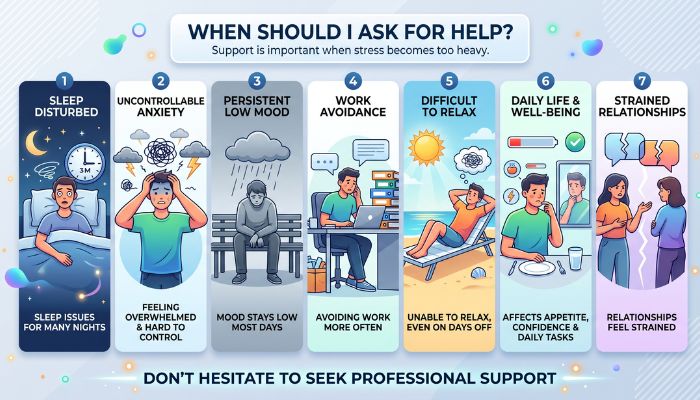
Sometimes stress becomes too heavy to manage alone. At that point, support becomes important. So, look out for these signs:
- Sleep gets disturbed for many nights
- Anxiety feels hard to control
- Mood stays low most days
- Work gets avoided more often
- Relaxing feels hard, even on days off
- Stress affects appetite, confidence or daily life
- Relationships with family or friends start to feel strained
When these signs persist, they send a clear message. The pressure has become too much to carry alone.
In the UK, support is available in simple and practical ways. A GP can give advice and guide the next step. At work, an employer, HR team, or occupational health service can also help. NHS talking therapies can support with stress and anxiety when needed.
At the same time, reaching out early can make a real difference. Small support now can stop stress from growing later. If someone ever feels unsafe or at risk of harm, urgent help is needed straight away.
The main message is that no one needs to carry heavy stress alone. Help is available and asking for it is a strong and positive step.
What Habits Make Switching Off Easier?
Switching off from work becomes easier when life has more than work. When the day feels balanced, the mind finds it easier to rest. Sleep, food, water, movement and fresh air all help the body handle stress in a better way.
So, small daily habits matter more than big changes. A short evening walk can clear the mind. Time in nature can bring calm. Some people feel better with sport, yoga or light exercise. Others relax with calm music, hobbies, or simple activities they enjoy.
At the same time, emotional habits also help. A few moments of thankfulness at the end of the day can calm the mind. Letting go of small worries can reduce pressure. Forgiving mistakes, even small ones, can also make the mind feel lighter.
Most importantly, there is no need for a perfect routine. Life does not have to be strict to feel balanced. One evening walk in a week can help. One hobby session can help. Even a phone-free bedtime can sometimes make a difference.
Over time, these small habits build a strong balance. Work stays important, but it does not take over everything. The mind slowly learns one simple truth. Work ends and life continues.
Final Thoughts: How to Stop Thinking About Work
Thinking about work sometimes is normal. It shows care and effort. But when work starts taking over evenings, sleep and personal time, something needs to change.
So, keep the main idea simple. Do not fight every thought in your mind. Instead, capture it, close the workday and change your state. These small steps help the brain understand one clear message. Work time is over.
At the same time, step back and look at the bigger picture. If the workload feels too heavy, speak up and ask for more. If anxiety or stress keeps coming back, ask for support early. Silence makes stress grow. Support makes it lighter. So, balance matters more than perfection.
“Learning how to stop thinking about work takes practice. Start small. Close one loop, protect one evening and give your mind permission to rest.”
Frequently Asked Questions (FAQs
1. What is the 3-3-3 rule for overthinking?
- The 3-3-3 rule helps bring the mind back to the present. Look at 3 things you can see. Then name 3 sounds you can hear. After that, move 3 parts of your body, like fingers, shoulders, or feet. It pulls attention away from overthinking and back to the real world.
2. How to stop constantly thinking about work?
- Stop work thoughts by not keeping them in your head. Write them down. Set a clear plan for tomorrow. Then end your workday properly. A simple routine tells your brain that work is finished for today.
3. How to compartmentalise work stress?
- Keep work and home separate in a clear way. Finish tasks before leaving work. Write tomorrow’s plan. Then switch your focus to personal life. A short walk or a change of routine helps the mind shift mode.
4. How to control work anxiety?
- Start by noticing what triggers it. Then slow your breathing and focus on one small step. Ask clear questions when things feel unclear. Support from a manager or colleague can also reduce pressure.
5. What are the first signs of burnout?
- Early signs include constant tiredness, low motivation, poor sleep and feeling disconnected from work. Even simple tasks start to feel heavy. You may also feel less patient and more drained.
6. What is the #1 worst habit for anxiety?
- Overthinking without action is one of the worst habits. The mind keeps repeating the same worry. Writing things down and taking small steps helps break this cycle.
7. What are the 5 warning signs that someone is chronically stressed?
- Common signs include poor sleep, constant worry, low mood, body tension like headaches or tight shoulders and pulling away from people. When these last for a long time, stress may be too high.

Workplace Stress Management
Course Description :
- Certificate: Yes(Free)
- Accreditation: CPD Accredited
- Access: Lifetime