
A noisy heating system can quickly become annoying in any home. It often produces banging, tapping, or gurgling noises moving through your pipework. If this is happening, learning how to stop a noisy central heating pipe can help you deal with it early. Statistics show that around 1 in 5 UK homes face regular heating and pipe noise issues. So, it is more common than you think.
Most of these sounds come from trapped air inside the system, sludge build-up, or normal pipe expansion when hot water moves through. In some cases, loose fittings or water hammer can also trigger sharp noises.
Let’s go through the causes and simple fixes to reduce heating pipe noise.
What Do Different Pipe Noises Mean for Your Home?
Different sounds reveal specific problems within your heating system. For instance, clicking sounds usually mean pipes are expanding. On the other hand, gurgling indicates air is trapped inside. You should listen carefully to find the cause. Therefore, you can choose the right fix for your pipes. Proper identification prevents small issues from becoming expensive repairs.
How Do You Find the Source of the Noise?
Identifying the source of the noise helps you fix it faster. You should walk through each room while the heating is turning on. Listen for rhythmic tapping or sudden loud bangs. Furthermore, check the area around your boiler for humming. This process narrows down the list of possible problems. Consequently, you can save time and money.
Why Do Copper Pipes Make More Noise than Plastic?
Most UK homes use copper pipes that make noise easily. These pipes react to heat by growing in size. Because they are metal, they carry sound throughout the entire house. You can often stop this by securing loose brackets. Additionally, checking your water pressure is a vital step. Therefore, your pipes will stay silent and safe.
Common Reasons for Pipe Noises
- Trapped Air: Creates a distinct gurgling or splashing sound.
- Thermal Expansion: Causes metal pipes to click against wood.
- Water Hammer: Leads to loud banging when valves close.
- High Pressure: Causes vibrating or humming throughout the system.
How Do You Fix Gurgling Heating Pipes?
Gurgling is usually caused by air pockets moving through the water. This air prevents hot water from filling the radiator. To fix this, you must bleed your radiators using a key. Turn the valve slowly until the hissing stops. Moreover, make sure your heating is turned off first. This simple task makes your home much quieter.
When Should You Bleed Your Radiators for Best Results?
You should bleed your radiators every year before winter starts. If you hear gurgling, you should do it immediately. Air bubbles rise to the top of the system over time. Therefore, they block the heat from reaching your rooms. Bleeding them ensures the water flows smoothly. Consequently, your boiler will not have to work as hard.
How Does Trapped Air Affect Your Heating Efficiency?
Trapped air makes your heating system much less efficient. Because air does not hold heat like water, radiators stay cold. Your boiler will run longer to try to warm the house. This results in higher energy bills for your family. Furthermore, it causes annoying noises in the pipes. Removing the air saves money and stops the sound.
What is the Best Way to Use a Bleed Key?
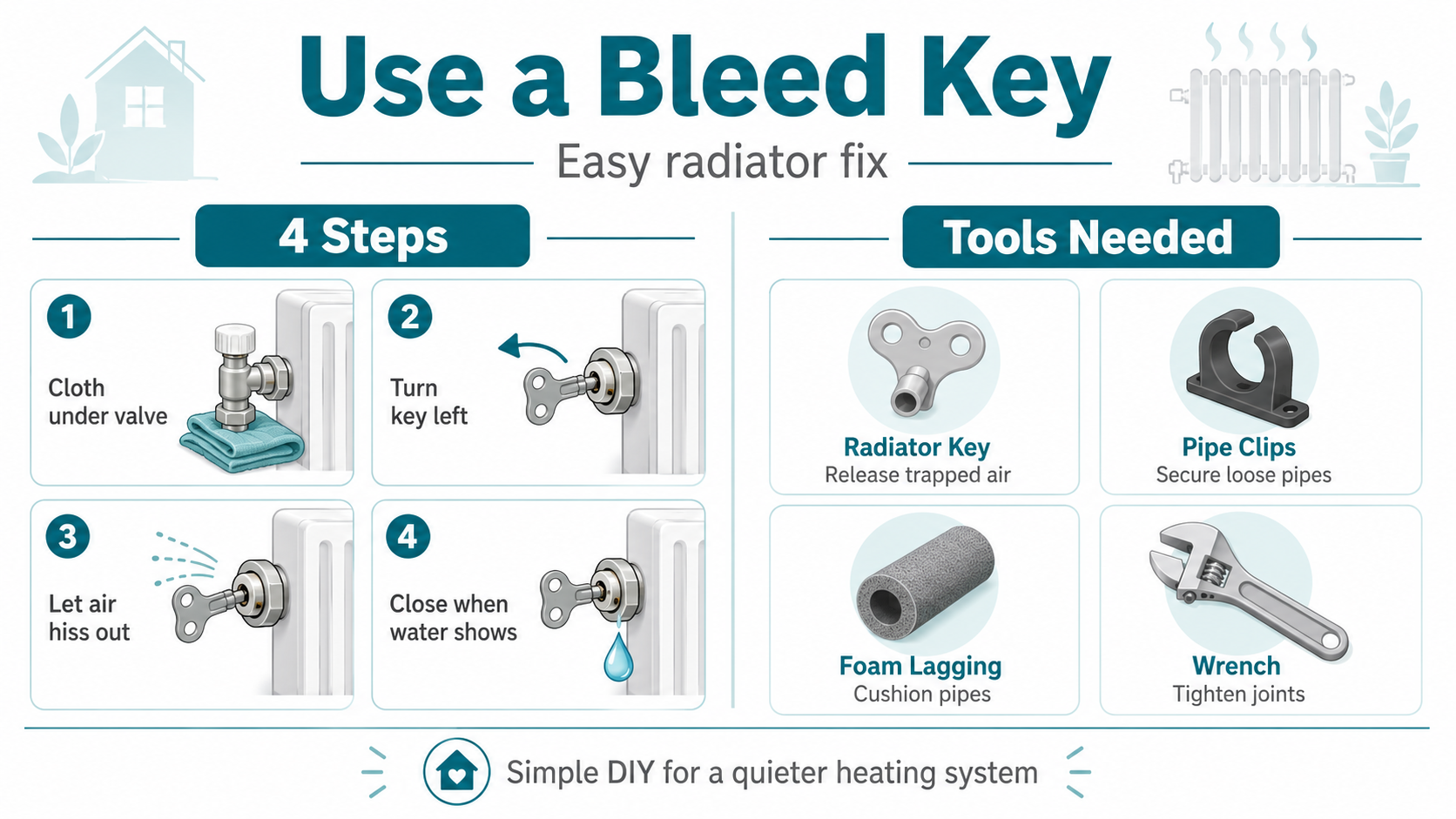
Using a bleed key is a very simple DIY task. First, place a cloth under the valve to catch drips. Insert the key and turn it slowly to the left. You will hear air escaping with a small hiss. When water starts to come out, close the valve tightly. Therefore, you have successfully removed the air from your system.
Tools Needed for a Quiet Home
- Radiator Key: Used for letting out trapped air bubbles.
- Pipe Clips: Used to secure loose vibrating pipes.
- Foam Lagging: Used to cushion pipes against floorboards.
- Wrench: Used to tighten any loose metal joints.
Why Do Pipes Make Clicking Noises in the Morning?
Pipes click in the morning because the heating is warming up. As the copper gets hot, it expands in size. The metal then rubs against the wooden floorboards or joists. This friction creates a rhythmic tapping or clicking sound. Furthermore, it happens again when the system cools down. Most UK homes experience this common expansion issue.
How Can You Stop Pipes from Rubbing Against Wood?
You can stop pipes from rubbing by adding a soft cushion. Use felt or foam lagging to wrap the pipes. This prevents the metal from touching the wooden joists directly. Additionally, make sure the holes in the floor are large enough. If the hole is too tight, the pipe will click. Consequently, padding provides a silent path for expansion.
Is Thermal Expansion Dangerous for Your Plumbing?
Thermal expansion is generally not dangerous for your plumbing system. However, constant rubbing can wear down the metal over many years. This could eventually lead to a small pinhole leak. Therefore, it is better to fix the noise early. Adding padding protects the pipe and stops the sound. Moreover, it gives you peace of mind at night.
How Do You Fix Noisy Pipes Under Floorboards?
Fixing pipes under floorboards requires you to lift the wood carefully. Find the area where the clicking sound is the loudest. Wrap the pipe in foam or felt at that spot. Furthermore, ensure the pipe is not bent or stressed. This allows the metal to move freely without making noise. Consequently, your floors will stay quiet all day.
Steps to Stop Clicking Noises
- Locate Sound: Find exactly where the pipe touches the wood.
- Lift Boards: Carefully move the floorboards to see the pipes.
- Wrap Metal: Use foam or felt to cushion the contact points.
- Check Gaps: Ensure the pipe has room to grow and shrink.
How Do You Stop Banging Central Heating Pipes?
Banging pipes are often caused by a “water hammer” effect. This happens when water stops moving too suddenly in the system. The energy from the water hits the pipe walls and creates a thud. To fix this, you can install a shock arrestor. Additionally, make sure all your pipes are clipped tightly. Therefore, the banging noise will stop completely.
Why Do Loose Pipe Clips Cause Loud Noises?
Loose pipe clips allow the pipes to shake and vibrate. When the pump turns on, the pipes hit the walls or floors. This creates a loud rattling or banging sound in the house. You should check the clips in your airing cupboard regularly. Furthermore, replace any broken plastic clips with new ones. This keeps the whole system stable and silent.
What is a Water Hammer and How to Fix It?
A water hammer occurs when a valve closes very fast. The flowing water has nowhere to go, so it bangs. You can fix this by adjusting your radiator valves. Moreover, a plumber can install a small device to absorb the shock. This device acts like a spring for the water. Consequently, the loud banging will no longer bother you.
Can High Water Pressure Cause Pipes to Bang?
High water pressure is a common cause of banging pipes. When the pressure is too high, water moves with too much force. This makes the pipes shake every time a tap is used. You should check your boiler gauge to see the pressure. Ideally, it should be around 1.5 bar for UK homes. Therefore, lowering the pressure stops the banging.
Ways to Prevent Banging Pipes
- Tighten Clips: Ensure pipes cannot move or shake easily.
- Check Pressure: Keep the boiler gauge in the green zone.
- Add Arrestors: Install devices to soak up water shocks.
- Balance Valves: Make sure water flows at a steady speed.
Why is Your Boiler Making a Kettling Noise?
‘Kettling’ sounds like a tea kettle boiling on your stove. This happens when limescale builds up inside your boiler unit. The scale blocks the water flow, causing it to overheat and bubble. This is very common in hard water areas like London. Furthermore, it makes your boiler much less efficient. You should use a chemical cleaner to fix it.
How Do You Remove Limescale from Your Heating System?
Removing limescale requires a special chemical called a “descaler”. You add this liquid to your heating system through a radiator. It slowly dissolves the hard scale and cleans the pipes. Additionally, you should flush the system with fresh water afterwards. This removes all the debris and stops the noise. Consequently, your boiler will run quietly again.
What are the Benefits of Using a System Inhibitor?
A system inhibitor is a chemical that prevents rust and scale. It forms a protective layer inside your pipes and radiators. Because it stops corrosion, it prevents sludge from forming in the water. This keeps the pump and boiler running very smoothly. Therefore, your system stays quiet and lasts much longer. Most experts recommend adding it every year.
How Does a Magnetic Filter Help Stop Noise?
A magnetic filter catches tiny pieces of metal in the water. These metal bits turn into black sludge if they are not removed. Sludge blocks the pipes and makes the boiler very noisy. The filter pulls these bits out before they cause any trouble. Furthermore, it is very easy for an engineer to clean. Consequently, your pipes stay clear and silent.
Chemicals to Keep Systems Quiet
- Inhibitor: Prevents rust and sludge from growing in pipes.
- Descaler: Breaks down hard limescale inside the boiler.
- Silencer: Specifically designed to stop boiler kettling sounds.
- Cleaner: Flushes out old dirt and debris from the system.
How Can a Heating Pump Cause Whistling Noises?
A whistling noise usually comes from the central heating pump. If the pump speed is too high, water whistles through the valves. You can often fix this by turning the pump speed down. Most pumps have a small switch with three different settings. Try setting it to a lower number to see if it helps. Therefore, the noise will go away instantly.
Why Does a Worn Pump Make Grinding Sounds?
A grinding sound means the internal parts of the pump are failing. Over time, the bearings inside the pump can wear out. This causes the motor to vibrate and make a loud noise. If you hear grinding, you may need a new pump. Furthermore, dirt in the water can damage the pump’s spinning parts. Consequently, keeping the water clean is very important.
How Do You Adjust the Pump Speed Safely?
Adjusting the pump speed is a quick way to stop whistling. First, locate the pump, which is usually near your boiler. Look for a small dial or switch on the side. Turn it down by one level and listen to the pipes. If the house stays warm and the noise stops, it is perfect. Additionally, this saves a small amount of electricity.
What is Pump Cavitation and How to Stop It?
Pump cavitation happens when air bubbles form inside the pump. These bubbles pop and make a loud rattling or crackling sound. It usually occurs if the water pressure is too low. To stop this, you should increase the pressure in your system. Check the filling loop to add more water. Therefore, the pump will run quietly and stay healthy.
Pump Maintenance Checklist
- Check Speed: Ensure it is not set higher than necessary.
- Listen for Grinding: Replace the pump if it sounds rough.
- Verify Pressure: Keep the system above 1.0 bar at all times.
- Clean Filters: Make sure no dirt is entering the pump.
How Does High Boiler Pressure Affect Your Pipes?
High boiler pressure forces water through the pipes too quickly. This extra force causes vibrations and humming sounds in the walls. You can see the pressure on the circular gauge on your boiler. If it is above 2.0 bar, it is likely too high. Furthermore, high pressure can cause the safety valve to leak. Therefore, you should bleed a radiator to lower it.
Why is Your Filling Loop Causing Noise Issues?
The filling loop is the pipe used to add water to the boiler. If the valves are left open, the pressure will keep rising. This leads to loud humming and potential leaks in the system. You should always make sure both valves are closed tightly. Additionally, check for any small drips coming from the loop. Consequently, your pressure will stay at a safe level.
What Happens if the Expansion Vessel Fails?
The expansion vessel manages the pressure as the water gets hot. If it fails, the pressure will go up and down very fast. This causes banging and clicking noises every time the heating starts. You will need a Gas Safe expert to check this part. They can pump it back up or replace it. Therefore, your system will become stable and quiet again.
How Do You Bleed Water to Lower System Pressure?
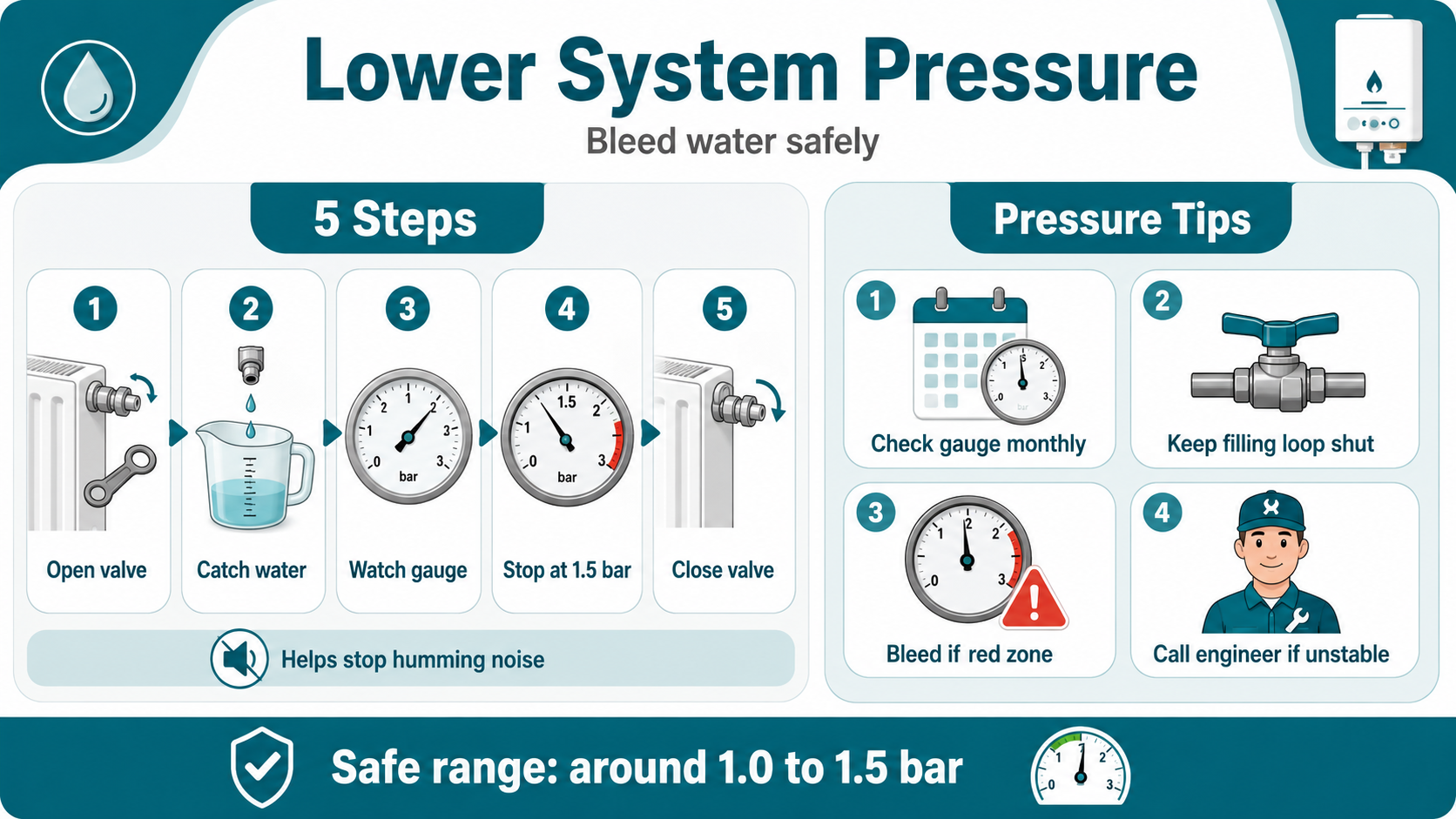
Lowering the pressure is easy if you have a radiator key. Open the bleed valve on one radiator and let water flow out. Use a jug to catch the water so you don’t make a mess. Watch the boiler gauge while you do this carefully. Once it reaches 1.5 bar, close the valve. Consequently, the humming noise from high pressure will stop.
Pressure Management Tips
- Monitor the Gauge: Check it once a month to ensure safety.
- Close Valves: Always keep the filling loop handles shut.
- Bleed Excess: Remove water if the needle enters the red zone.
- Hire a Pro: Call an engineer if the pressure won’t stay steady.
When Should You Call a Gas Safe Engineer?
You should call a Gas Safe engineer for any internal boiler problems. In the UK, it is illegal for an unqualified person to open a boiler. If you hear loud banging inside the unit, call a pro. Furthermore, if you smell gas, turn everything off immediately. An engineer can safely fix the heat exchanger or gas valves. Therefore, your home stays safe and quiet.
How Does a Professional Powerflush Stop Pipe Noise?
A power flush is a deep clean for your entire heating system. An engineer uses a powerful machine to push chemicals through the pipes. This removes all the heavy sludge and rust that DIY cleaners miss. Because the pipes are clean, the water flows silently. Moreover, your radiators will get much hotter than before. Consequently, a power flush is a great long-term solution for noise.
Why is an Annual Boiler Service Important for Noise?
An annual service keeps your heating system in top condition. During the service, the engineer cleans the burner and checks the pump. They can find small issues before they turn into loud, expensive problems. Additionally, they will check your inhibitor levels to prevent rust. This ensures your system runs all year round quietly. Therefore, it is a very wise investment for every homeowner.
What are the Warnings of a Failing Heat Exchanger?
A failing heat exchanger often makes a loud whistling or banging sound. This happens when the metal gets blocked by limescale or dirt. Because the heat cannot escape, the metal becomes stressed and noisy. This is a serious problem that requires a professional engineer. They might need to clean it or install a new one. Consequently, your boiler will be safe and silent again.
Professional Services for Your Pipes
- Boiler Service: A yearly check to keep everything running well.
- Powerflush: A deep cleaning to remove thick black sludge.
- Part Replacement: Installing new pumps or expansion vessels.
- Safety Check: Ensuring there are no gas leaks or risks.
How Can Smart Thermostats Reduce Pipe Clicking?
Smart thermostats can help reduce clicking by warming the house slowly. Instead of a sudden blast of heat, they raise the temperature gradually. This allows the copper pipes to expand slowly rather than quickly. Therefore, the friction against the wood is much less noticeable. Furthermore, you can control the heat from your phone. Consequently, your home stays comfortable and much quieter.
Why Should You Check Your Radiator Valves (TRVs)?
Radiator valves, or TRVs, control the flow of water into each room. If a valve is installed backwards, it can make a loud vibrating noise. This sounds like a machine gun or a loud rattle. You should check the arrows on the valve to ensure they are correct. Furthermore, a stuck valve can cause whistling sounds. Therefore, replacing old valves can make your system much quieter.
How Do You Maintain a Peaceful UK Home Long-Term?
To maintain a quiet home, stay proactive with your heating maintenance. Always keep your water pressure at 1.5 bar and bleed radiators. Use high-quality chemicals to prevent sludge and limescale build-up. Additionally, make sure your pipes are well-padded under the floors. This combination of DIY care and professional servicing works best. Consequently, you will have a warm and silent home for many years.
Summary: How Can You Stop a Noisy Central Heating Pipe?
Stopping a noisy central heating pipe is easy when you know what to do. Start by bleeding your radiators and checking the boiler pressure. Secure any loose pipes with clips and add foam padding to stop clicking. Furthermore, use chemicals to keep the system clean from sludge. If the noise stays, always call a Gas Safe engineer for help. Therefore, you can enjoy a peaceful and efficient home.