
Learning how to maintain a heating system efficiently can save you from cold rooms, high bills, and last-minute repair stress. Your heating system does not need daily attention. It needs smart, simple checks at the right time. A quick look at boiler pressure, warm radiators, safe alarms, and working controls can make a big difference. Add a yearly service, and your system stays safer, smoother, and ready for winter.
In this guide, we’ll break down the simple heating checks that keep your home warm and your bills under control.
Before Anything Else, What Is the Best Way to Maintain a Heating System?
The best way to maintain a heating system is to follow a simple routine. Check pressure monthly, test your carbon monoxide alarm, bleed radiators before winter, use the thermostat properly, keep heat moving freely, and book a yearly service.
What Is the UK Heating Care Map?
The UK Heating Care Map breaks heating care into five simple areas: safety, pressure, heat flow, controls, and professional care. This helps you know what to check, when to check it, and when to call a trained engineer. What matters most is that you do not need to be a technical expert to follow this; it is about keeping an eye on the basics.
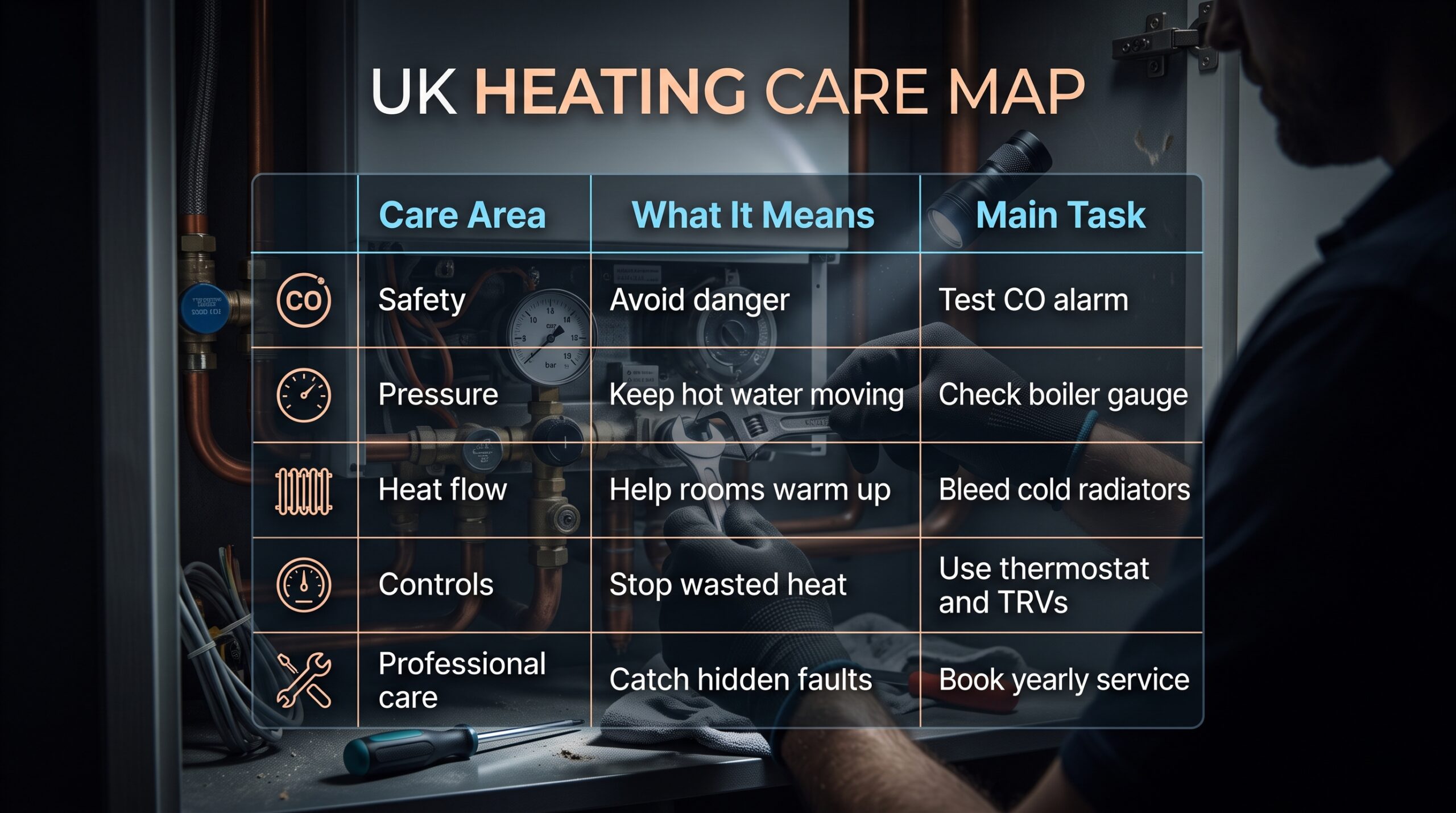
This framework makes it easy to stay on top of things. Safety keeps your family protected, while monitoring pressure and heat flow ensures you aren’t paying for energy that isn’t actually reaching your rooms.
How Do You Maintain a Heating System Without Wasting Money?
To maintain a heating system without wasting money, focus on heat flow and control. Keep radiators clear, check pressure, use TRVs, set a sensible thermostat, stop draughts, and service the system once a year. The fact is that a system that has to “work harder” because of air bubbles or blocked radiators will burn more fuel, raising your monthly bills unnecessarily.
The goal is to ensure heat reaches the centre of the room instead of being trapped behind a heavy sofa. Small habits, such as ensuring your radiator care includes regular dusting, make a genuine difference. When the system runs efficiently, it reaches the target temperature faster and switches off sooner, saving you money every day.
What Should You Check Monthly, Before Winter, and Yearly?
Check your heating system monthly, before winter, during winter, and once a year. Monthly checks help spot pressure or alarm issues. Pre-winter checks prepare the system for heavy use. Yearly servicing helps find hidden faults. To start with, mark a specific day each month to do a five-minute walk-around of your boiler and radiators.
Heating Care Timeline: What to Check and When
- Monthly Pulse Check: Look at the boiler pressure gauge to make sure the system stays balanced.
- Monthly Safety Check: Press the CO alarm test button so you know it still works.
- Winter Prep Check: Feel each radiator top before cold weather starts.
- Winter Control Check: Test the thermostat on your usual setting.
- Winter Watch Check: Look for leaks, drips, banging, or strange noises.
- Yearly Health Check: Book a boiler or heat pump service with a trained professional.
Consistency is the best way to avoid a total breakdown. A quick glance at the boiler gauge once a month can save you from a cold house and an emergency call-out fee.
What Should You Check Before Turning the Heating On?
Before turning the heating on, check the boiler pressure, thermostat, programmer clock, radiators, visible pipes, and carbon monoxide alarm. Then run the heating for 20 to 30 minutes and listen for unusual sounds. The surprising part is that many winter problems show signs early, often before the truly cold weather arrives.
- Look at the pressure gauge to ensure it is in the green zone (usually 1.0 to 1.5 bar).
- Set the thermostat to your normal temperature to see if the boiler fires up correctly.
- Check the programmer time to ensure it matches the current time of day.
- Run the heating for 25 minutes to get the water circulating fully.
- Feel each radiator to check for cold spots at the top or bottom.
- Look for any damp patches or drips near the pipework and valves.
- Test the CO alarm to make sure the batteries haven’t died over summer.
What Does Boiler Pressure Tell You?
Boiler pressure shows whether hot water can move around your heating system properly. Low pressure can stop radiators from heating well. Pressure that keeps dropping may point to a leak or another fault. The biggest issue is that if the pressure is too low, the system may shut down entirely as a safety measure.
Think of pressure as the “water push” inside your pipes. Most UK boilers have a simple gauge with a needle. If it drops into the bottom red zone, you might need to top it up using the filling loop. Indeed, you can usually do this yourself by following the manual, but you should never open the boiler’s internal casing yourself.
When Should You Bleed Radiators?
Bleed radiators when the top feels cold but the bottom feels warm. This usually means air is trapped inside, stopping the hot water from filling the whole panel. Bleeding lets that air escape so the radiator can work at full capacity. Furthermore, getting rid of air can help stop annoying gurgling or ticking noises when the heating is on.
- Turn the heating off and let the radiators cool down so you don’t get burnt.
- Get a radiator key and a cloth to catch any drips.
- Open the valve slowly by turning the key anti-clockwise.
- Listen for the “hiss” of air escaping from the valve.
- Close the valve tightly as soon as a steady stream of water appears.
- Check your boiler pressure afterwards, as bleeding can sometimes make it drop.
How Should You Set Your Thermostat and Programmer?
Set your thermostat to the lowest temperature that still feels comfortable. Many UK homes feel comfortable between 18°C and 21°C. Use your programmer to heat your home when you need warmth, not all day. Consequently, you save energy by not heating the house while everyone is out at work or school.
Think of the thermostat as the “target” and the programmer as the “schedule.” If you are feeling a bit chilly, try putting on a jumper before turning the dial up. Turning the thermostat to 30°C will not heat the room any faster; it just means the boiler won’t stop until the room is far too hot.
How Do TRVs Help Heat Each Room Better?
TRVs (Thermostatic Radiator Valves) help control heat in each room. They reduce hot water flow when a room gets warm enough. This helps you keep busy rooms warmer and turn down rooms you use less. The interesting thing is that a TRV doesn’t just turn the radiator on or off; it gradually adjusts the flow based on the air temperature.
TRV Settings by Room
- Living room: Keep it around 3 or 4 for steady comfort.
- Bedroom: Use 2 for a softer, cooler feel.
- Spare room: Turn it down to 1 or frost.
- Bathroom: Choose 3 or 4 when extra warmth helps.
- Kitchen: Keep it near 2, as cooking already adds heat.
By using these valves, you avoid wasting money heating a spare room to the same level as your sofa area. It is one of the most effective ways to manage your home comfort.
Where Should You Place a Room Thermostat?
Place a room thermostat where it can read room temperature fairly. Keep it away from radiators, sunlight, windows, curtains, furniture, and draughts. A poor position can make heating turn on or off at the wrong time. Because of this, many people find their house feels either too hot or too cold because the “brain” of the system is getting the wrong information.
A thermostat works like the brain of the heating system, so it needs a fair reading of the average temperature. For instance, if you put it right next to a lamp or in a sunny window, it will think the whole house is warm and shut the boiler down while you are still cold.
How Can Smart Heating Controls Stop Wasted Heat?
Smart heating controls can reduce wasted heat by letting you change settings from your phone, create weekly schedules, heat zones separately, and avoid heating an empty home. The biggest benefit is that you can adapt your heating to your real life on the go, rather than sticking to a rigid timer.
If your plans change or you are working late, you can just tap an app to tell the heating to stay off for another hour. Some systems even learn how long your house takes to warm up, so they only start the boiler at the exact moment needed. Moreover, they provide great insight into how much energy you are actually using.
How Should You Ventilate Without Losing Too Much Heat?
Ventilate with short fresh-air breaks instead of leaving windows open for hours. Fresh air helps reduce damp and stale air. Long window opening while heating runs wastes energy. The challenge is that without fresh air, everyday activities like showering and cooking can lead to mould growth on your walls.
Simply put, you should open your windows wide for about ten minutes once a day to refresh the air, then close them properly. This “purge” ventilation clears out moisture without cooling down the walls and furniture too much. Along with that, always make sure your bathroom and kitchen extractor fans are running when needed.
What Warning Signs Mean Your Heating System Needs Help?
Your heating system may need help if pressure keeps dropping, radiators stay cold, pipes leak, fault codes appear, the boiler makes loud noises, or the carbon monoxide alarm sounds. Catching these safety advice signals early can prevent a small issue from becoming a total system failure.
- Watch for banging, whistling, or “kettling” noises coming from the boiler.
- Notice if the pressure drops and needs topping up more than once a month.
- Check for radiators that stay cold at the bottom (this might be sludge).
- Look for small drips or rust marks around radiator valves and pipe joints.
- Pay attention to any error codes on the boiler display screen.
- Never ignore a faint smell of gas or any dark sooty marks on the boiler.
Which Heating Jobs Can You Do Yourself?
You can check pressure, test alarms, adjust controls, bleed radiators, clear vents, and look for visible leaks yourself. Boiler repairs, gas work, flue checks, and internal part replacement need a qualified professional. The remarkable thing is that doing the simple tasks yourself keeps the system healthy, but you must know where the DIY line is.
- Test your CO alarm: You can do this yourself.
- Check boiler pressure: Look at the gauge once a month.
- Bleed radiators: Use a radiator key when the top feels cold.
- Gas smell: Call a professional right away.
- Internal leak: Let a qualified engineer handle it.
- Annual service: Book a trained heating engineer.
Be confident with the basics, but never take the cover off the boiler. Gas safety is a serious matter, and only a Gas Safe-registered engineer should handle the internal components.
What Should You Check Before Turning the Heating On?
The simple fact is that tenants and landlords both have a role in keeping a home warm. Tenants should report heating problems early, use controls properly, and avoid unsafe repairs. Landlords must keep supplied gas equipment safe and arrange the legal annual gas safety check.
If you are a tenant, make sure you know where the stop tap is and how the programmer works. If you are a landlord, providing a clear “how-to” guide for the heating system can prevent a lot of maintenance calls. Next, ensure that the boiler is serviced before the winter rush begins to keep everyone happy and warm.
What Heating Mistakes Cost More Money?
In short, bad habits are often the biggest cause of high energy bills. Small changes in how you use your home can lead to big savings over the winter months.
- Do not let sofas or beds sit right in front of radiators.
- Stop covering radiators with wet clothes, as this causes damp and blocks the heat.
- Don’t set the thermostat to 25°C just because you’ve come in from the cold.
- Avoid heating rooms that you aren’t actually using during the day.
- Never leave windows on “vent” or “crack” all day while the heating is on.
- Don’t ignore weird boiler noises; they usually mean something is wearing out.
- Never skip your yearly service, as it keeps the system running at peak efficiency.
How Much Can Better Heating Control Save?
Better heating control can lower wasted energy and reduce bills. Real savings depend on your home, insulation, heating system, room use, energy prices, and daily habits. The honest truth is that even small changes to your TRVs and thermostat can help lower monthly heating costs.
By being more mindful of when and where you need heat, you stop burning fuel for no reason. Most UK homes can see a noticeable drop in their gas usage just by using a programmer properly and turning the main thermostat down by one or two degrees.
Final Thoughts: What Is the Smart Way to Maintain a Heating System?
The reality is that to maintain a heating system effectively, you just need to stay consistent with small checks. By following the UK Heating Care Map, you can spot issues before they become expensive disasters. Check your pressure, bleed your radiators, and use your controls to match your actual lifestyle.
Finally, always book a professional service once a year to keep everything safe and efficient. A little bit of care today means a much warmer, stress-free winter for your whole family.