
Pharmacists hold an important role in the UK healthcare system. Many people often ask how much do pharmacists make in the UK. Salary depends on experience, location and the type of sector.
In the UK, the average pharmacist earns about £48,254 per year. New pharmacists usually start around £39,000 per year. Experienced pharmacists can earn up to £63,000 annually. In London, salaries are higher, averaging about £59,800 per year. Junior pharmacists earn between £47,000 and £47,796. NHS and private sector jobs also offer different pay levels. Career growth can take pharmacists from entry roles to senior positions with higher salaries.
Let’s dive into the full salary breakdown, NHS pay structure and career growth opportunities in detail.
What is the Average Pharmacist Salary in the UK?
The pharmacist’s salary in the UK is good and steady across the country. Most pharmacists earn about £48,254 per year on average. New pharmacists usually start at around £39,000 per year. With more experience, pay can go up to £63,000 per year. Most pharmacists work around 38 to 42 hours each week, depending on their position.
In simple terms, pay grows as you gain more skills and experience. Senior pharmacists and specialists earn more money. Overall, it is a stable job with clear salary growth over time.
How Much Do Pharmacists Make in London?
The pharmacist salary in London is higher than many other parts of the UK. On average, pharmacists in London earn about £59,800 per year. Junior pharmacists usually earn around £47,796 per year. Senior pharmacists can earn between £60,000 and £83,000 or more. In simple terms, London pay is about 8% higher than the UK average.
Some nearby areas also offer strong salaries. For example, Carshalton pays about £64,197 per year. Ilford pays around £62,026. Kingston upon Thames offers about £61,815, while Harrow pays around £60,931. In many cases, places outside central London pay more because of high demand for pharmacists.
To understand how London salaries compare with the national average, read our Average Pharmacist Salary UK article.
What Do Junior Pharmacists Earn in the UK?
The junior pharmacist salary in the UK starts at a good level for new healthcare workers. New pharmacists usually earn between £39,000 and £47,000 per year. Clinical and GP roles can pay a bit more, from £41,000 up to £55,416 per year. At this stage, most pharmacists focus on training, learning and working under supervision.
At the same time, junior roles still offer strong income compared to many other jobs. Pay is fair even while gaining experience and skills. Overall, it is a solid starting point for a long and stable healthcare career.
How Does NHS Pharmacist Salary Work?
The NHS pharmacist salary follows a clear band system. Each band shows different pay levels and job responsibility. As pharmacists move up, both salary and duties increase.
A Simple Breakdown about NHS Pharmacist Salaries
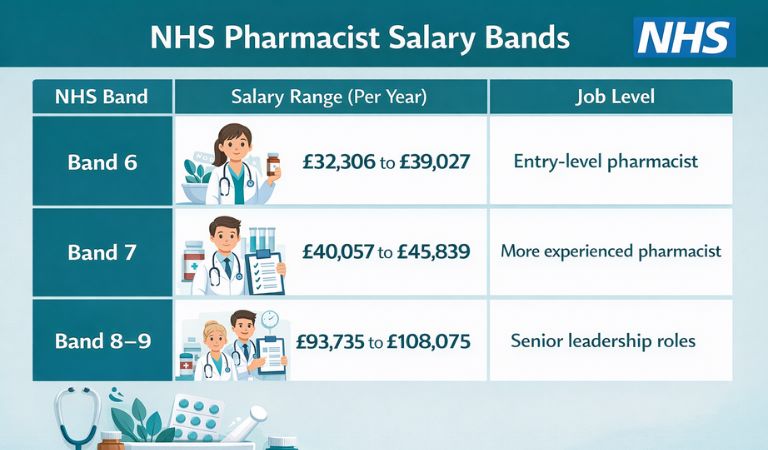
At Band 6, pharmacists are usually starting their NHS career. Band 7 brings more experience and responsibility in daily work. At Band 8–9, pharmacists move into senior or leadership positions with much higher pay. Overall, each step in the NHS band system gives a better salary and more responsibility.
What Do Pharmacists Earn in the Private Sector?
The private pharmacist salary in the UK changes from one company to another. Private jobs do not follow one fixed pay scale like the NHS. So, pay can feel more flexible.
At Boots, pharmacists earn around £37,990 per year on average. However, salaries in the private sector can range from £19,000 to £58,000 per year. Some companies, such as Lloyds, pay pharmacists on an hourly basis. This can go up to around £19 per hour.
As a result, earnings depend on the company and job role. Bigger companies often pay more. Smaller roles may start lower but experience can increase pay over time. Overall, private sector jobs offer different pay options based on skills and responsibility.
How Much Do Locum Pharmacists Make?
The locum pharmacist pay in the UK is based on hourly work. On average, locum pharmacists earn about £28 per hour. They often work in hospitals, clinics and GP surgeries. They can also choose different shifts based on availability.
Because of this, locum work gives more freedom. Pharmacists can decide when and where they want to work. At the same time, income can change each month. Some months may be busy, while others may be quiet.
Overall, locum roles give strong flexibility. However, they offer less job stability compared to full-time positions.
What is the Highest Pharmacist Salary in the UK?
The highest-paying pharmacist jobs in the UK are mostly senior and leadership roles. These jobs come with more responsibility and much higher pay.
Pharmacist Top Roles and Their Salary Ranges:
- Senior Lead Pharmacist: £72,921 to £83,362 per year.
- Deputy Pharmacist: £64,156 to £71,148 per year.
- Chief Pharmacist: up to £108,075 per year.
- Senior Rotational NHS Roles: £56,276 to £63,176 per year.
In these roles, pharmacists lead teams and make important decisions. They also support patient care at a higher level.
As a result, senior positions offer the highest salaries in pharmacy. Experience and responsibility play a big role in reaching these jobs.
How Do Pharmacist Salaries Increase with Experience?
The pharmacist salary progression shows how pay increases step by step with experience. At the entry level, pharmacists usually start on around £39,000 or more per year. This stage focuses on learning basic skills and gaining confidence in real work settings.
After that, pay grows at the mid-level stage, where salaries range between £45,000 and £55,000 per year. Pharmacists take on more responsibility and handle more complex daily tasks. As they gain more experience, salaries move into the experienced stage, where earnings reach about £55,000 to £63,000 per year.
At the senior level, pharmacists can earn £80,000 or more each year. They often lead teams and manage important services. As a result, experience plays the biggest role in salary growth and pay increases step by step over time.
How Do Working Hours Affect Pharmacist Pay?
The pharmacist working hours in the UK affect both pay and daily life. Most pharmacists work around 37.5 to 42 hours each week. These hours depend on the job and workplace.
At the same time, many pharmacists also work on the weekends and on bank holidays. In NHS jobs, some pharmacists also take on on-call duties. This means they may need to work outside normal hours when needed.
As a result, work life can feel busy and flexible together. However, extra shifts and overtime can increase total yearly income. Overall, more working hours often lead to higher pay.
How Do You Become a Pharmacist in the UK?
The way to becoming a pharmacist in the UK follows a clear route from school to professional practice. Students begin by choosing the right subjects in school. After that, they take 2–3 A-levels, including Chemistry.
Next, they move on to a 4-year MPharm degree at a university. This stage builds strong knowledge about medicines and healthcare. Then they complete a 1-year foundation training in a real pharmacy setting. After that, they pass the final registration assessment and join the General Pharmaceutical Council (GPhC).
Altogether, the full journey takes about 5 years. As a result, students gain strong skills and real experience before working fully as pharmacists. In the end, this long training leads to a stable and well-structured healthcare career.
Pharmacy Technician vs Pharmacist Salary
The pharmacy technician salary in the UK is lower than a pharmacist’s salary but both roles are important in healthcare. Each job has different training, responsibilities and pay levels.
Pharmacy Technician
- Starter salary: around £27,000 per year.
- Experienced salary: up to £38,000 per year.
Pharmacist
- Starting salary: around £39,000 per year.
- Experienced salary: £63,000+ per year.
As a result, pharmacists earn more because they complete longer training and take more responsibility. At the same time, pharmacy technicians still perform a vital role in providing patient care and daily pharmacy work.
Overall, higher qualifications usually lead to higher pay in this career path.
What Affects Pharmacist Salary in the UK?
What affects pharmacist salary in the UK depends on a few important factors. These factors change how much a pharmacist can earn during their career.
First of all, location plays a big role. London usually pays more than other parts of the UK. After that, experience level also makes a big difference. More years of work often lead to higher pay.
Another key factor is the work sector. NHS and private jobs offer different salary levels. At the same time, specialisation also affects income. Clinical, GP and hospital pharmacists can earn different amounts.
Finally, leadership responsibility increases salary further. As a result, even small changes in role or skills can raise total earnings.
What Career Progression Options Increase Pay?
The pharmacist career progression in the UK offers many paths to grow and earn more. As pharmacists gain experience, they can move into higher roles. These roles bring more responsibility and better pay.
First of all, some pharmacists become independent prescribers. This allows them to prescribe medicines directly to patients. Some pharmacists also work as GP practice pharmacists, where they support doctors in clinics.
At the same time, some choose hospital or consultant pharmacist roles. These jobs focus on expert advice and complex care. Additionally, certain pharmacists transition into academic or research roles. Others step into management positions and lead pharmacy teams.
Consequently, career growth creates numerous opportunities. Specialisation and extra skills often lead to higher income and better job roles.
Final Thoughts
In conclusion, how much do pharmacists make in the UK depends on experience, location and job role. Salaries range from entry-level to senior positions with strong growth over time. Overall, pharmacy offers a stable income, clear career progression and good earning potential across the NHS and private sectors.
Ready to start your pharmacy career? Join our Pharmacy Assistant & Technician Course and build the skills employers look for.
FAQs on How Much Do Pharmacists Make
1. How much do pharmacists earn in the UK?
- Pharmacists in the UK usually earn between £39,000 and £63,000 per year; however, their salary depends on experience and role.
2. Is pharmacist a stressful job?
- Yes, it can be stressful at times due to patient care, workload and responsibility.
3. What jobs pay $500,000 a year in the UK?
- Very few jobs like top doctors, CEOs and investment bankers can reach this level.
4. What type of pharmacist gets paid the most?
- Chief pharmacists and senior leadership roles earn the highest salaries in pharmacy.
5. What is the lowest paid pharmacist?
- Entry-level pharmacists or trainees usually start at around £39,000 per year.
6. Will AI replace pharmacists?
- No, AI will support pharmacists but not fully replace them.
7. Who has more salary, a nurse or a pharmacist?
- Pharmacists usually earn more than most nursing roles in the UK.
8. Do pharmacists have a future?
- Yes, pharmacists have a strong and stable future in healthcare.
9. Which 3 jobs will survive AI?
- The demand for healthcare jobs, teaching roles and skilled technical jobs will persist.
10. What jobs will be gone by 2030?
- Many routine manual and repetitive office jobs may be reduced due to automation.

Pharmacy Assistant & Technician Course
Course Description :
- Certificate: Yes(Free)
- Accreditation: CPD Accredited
- Access: Lifetime