
Phone etiquette means how we behave during phone calls. In response, define phone etiquette as simple rules for respectful talking. It includes speaking politely and listening with care. It also covers how we answer and end calls. Good manners help people understand each other better on phone calls. It builds trust and clear communication in daily life.
First, always speak clearly and use a calm voice. Next, answer calls in a polite way without delay. Then, listen carefully and avoid interrupting the other person. Finally, end the call with respect and kind words. This habit improves communication in work and personal life.
Let’s dive into simple ways to improve your phone manners in daily situations.
Why is Good Phone Manners Important for New Residents?
Living in a new place requires a lot of clear communication. You might need to call a doctor or a school office. Good manners help these professionals understand your needs much faster. When you are polite, people are often more willing to help. Consequently, your life in the UK becomes much easier and less stressful.
Additionally, making friends is easier when you use your phone respectfully. Nobody likes a friend who spends the whole time looking at a screen. If you practise good etiquette, people will enjoy spending time with you. This shows you value their company more than a random social media post. Always remember that a little bit of politeness goes a very long way.
How Do We Define Phone Etiquette in the UK Today?
In the UK today, phone etiquette means simple rules for polite phone use. It helps people talk clearly and show respect in every call. It also makes daily communication easier and friendlier. By talking with respect, everyone sees you as a positive person.
First, always start with a friendly conversation. Speak clearly and calmly. Listen fully to what the other person says. Also, avoid loud or rude words. Finally, end the call with a polite goodbye. These small habits make every phone call easy, clear and respectful at home, at work and in daily life.
Know more about this topic with our other blog on Telephone Etiquette Meaning.
When Should You Answer Your Mobile Phone in Public?
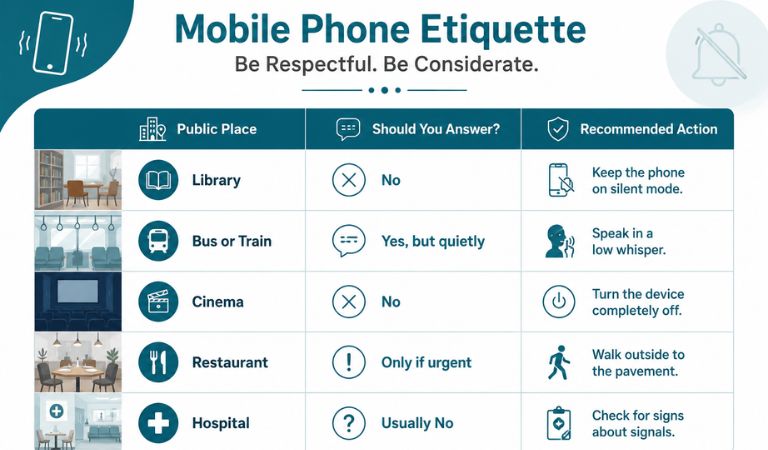
Deciding when to pick up a call can be quite tricky. In the UK, it is often seen as rude to talk loudly on a bus. Many trains even have “Quiet Carriages” where phone calls are strictly forbidden. If your phone rings in a shop, keep the talk very brief.
Alternatively, you can step outside to finish the conversation in private. This prevents strangers from hearing your personal business and feeling uncomfortable.
How Can You Define Phone Etiquette for Professional Business Calls?
Phone etiquette in business calls means how you speak and act on work calls. It helps you sound polite and clear. It also shows respect to the other person. In simple terms, you define phone etiquette as good behaviour during phone calls at work.
First, answer calls with a friendly greeting. Speak slowly and use common words which people use in daily life. Then, listen carefully to what the other people said. Don’t stop them when they are talking. Also, stay focused on the talking topic. Finally, end the call politely and thank the caller.
Who Should You Speak to First When Making a Call?
When you make a call, always speak to the person you called first. Start with a short conversation. Then, say the name that they identify you with. After that, ask if they have time to talk. This shows respect and good manners. It also helps the other person feel ready for the conversation.
Next, explain the reason why you are calling. Keep your tone low and clear. If the call gets transferred, talk politely with the new person. Always stay calm and friendly during the call.
Which Common Mistakes Should You Avoid During a Call?
During a phone call, small mistakes often create confusion. Good phone etiquette keeps your talk clear and polite. It also helps both people understand each other easily. Here are common mistakes you should avoid in daily calls.
- Avoid speaking too loudly or too softly.
- Never interrupt while the other person is talking.
- Do not ignore what the caller is saying.
- Skip unclear or rushed words during speech.
- Try not to answer calls in noisy places.
- Always greet and end the call politely.
What are the Best Tips for Leaving a Voicemail?
Start your voicemail with a clear greeting. Say your name slowly and clearly. Next, speak your reason in simple words. Keep your message short and direct. Also, mention your phone number twice for safety.
Then, speak calmly and slowly so that the listener understands your language. Find a quiet place to talk. Avoid noisy places. After that, stay polite and calm in your tone. Never rush your words or sound stressed. Finally, thank the person before ending your message.
Before you finish, check if your message sounds clear. A good voicemail helps people respond faster. It also shows respect and good communication skills.
How Should You End a Phone Call Gracefully?
Ending a discussion is just as important as starting it correctly. You should not just hang up the phone without warning. Instead, give a small signal that you are finished talking. You could say, “It was lovely talking to you today.” This lets the other person know that the chat is ending. It gives them a final chance to say something important.
Finally, wait for them to say goodbye before you press the button. This prevents you from cutting them off in the middle of a word. If you were the one who called, you should lead the ending. If they call you, let them finish their points before you stop. Ending a call politely leaves a positive feeling in the other person. They will remember you as a kind and very respectful individual.
Where is It Considered Rude to Use Your Phone?
Using a phone is normal today. But some places still expect silence and respect. Phone etiquette matters most in these moments. If you ignore it, people may feel disrespected. So, knowing the right place is important. It helps you stay polite everywhere. Here are places where phone use feels rude:
- During meetings or classes, full attention is needed.
- In hospitals or clinics where silence is respected.
- At religious places, quiet behaviour shows respect.
- While someone talks to you face-to-face directly.
- In cinemas or theatres where silence is very important.
- In libraries where people study and need a quiet space.
Why Should You Be Careful with Text Messaging Etiquette?
Texting is a huge part of how we communicate in Britain. However, the texting rules are slightly different from voice calls. Avoid sending too many messages in a very short period of time. This can be overwhelming and annoying for the person receiving them. Give them enough time to read and respond to you. Remember that people might be busy with school, work or family.
Also, be careful with how you use the letter format. Use normal sentences to keep the tone calm and friendly. Emojis are great for showing emotion. But do not overuse them. One or two emojis can make a message feel much warmer. Too many can make the text very difficult for someone to read.
How Can You Practise These Skills Every Day?
You can simply practise phone etiquette every day. First, always answer calls with a polite greeting. Speak gently and clearly so others understand you easily. Also, listen fully before you reply. This builds better conversations and trust.
Then, avoid phone calls in noisy places. It helps you stay focused. End every call with a kind goodbye. You should also avoid interrupting while someone speaks. In addition, check your tone before speaking. Keep it calm and friendly. Over time, these simple steps will make your phone communication much better in daily life.
Final Thoughts
Define phone etiquette as the way we act during phone conversations. It means using polite language, a calm voice and good listening skills. It also includes not interrupting others while they speak. These simple habits build trust and a better understanding. They help us in school, work and daily life. When we practise them, we avoid confusion and rudeness. So, always remember to speak clearly and show respect in every phone call you make.
Want more confidence while using defined phone etiquette skills? Join our Telephone Etiquette Online Training today.
Frequently Asked Questions (FAQs)
1. What is the definition of phone etiquette?
- Phone etiquette means how we speak and behave politely during phone calls.
2. What are 5 basic etiquettes?
- Five basic etiquettes are speaking politely, listening well, not interrupting, using a clear voice and ending calls kindly.
3. What are the 5 P’s of telephone etiquette?
- The 5 P’s are promptness, politeness, patience, professionalism and positive tone.
4. What are some examples of phone etiquette?
- Examples include greeting politely, listening carefully, speaking clearly and saying goodbye respectfully.
5. What are the 7 etiquette rules?
- The 7 etiquette rules include being polite, listening, speaking clearly, not interrupting, staying calm, being respectful and ending calls well.
6. What are the 10 rules of conversation?
- The 10 rules include listen first, speak clearly, be polite, avoid interrupting, stay focused, use simple words, respect others, ask questions, stay calm and end politely.
7. What is the 3 2 1 rule in talking?
- The 3 2 1 rule means think before speaking, listen more than you talk and respond with care.
8. What are the 7 C’s of conversation?
- The 7 C’s are clarity, conciseness, correctness, courtesy, consideration, completeness and confidence.
9. What to avoid in a conversation?
- You should avoid interrupting, shouting, using rude words and ignoring the other person.

Telephone Etiquette Online Training
Course Description :
- Certificate: Yes(Free)
- Accreditation: CPD Accredited
- Access: Lifetime