
A career in property can be fun and rewarding. Become an estate agent can open many doors and give you chances to meet new people every day. First, you need strong sales, communication, and negotiation skills. You do not need a specific degree, but being confident and organised helps a lot. Next, you can start with trainee roles, like a Sales Negotiator or Letting Assistant, where you will get on-the-job training and learn how to value properties, handle viewings, and manage clients. Also, a full UK driving licence is often required, and professional qualifications from Propertymark can help you move up in your career. With hard work and the right skills, you can grow into a successful estate agent and even manage your own team one day.
Now, let’s see the simple steps to begin a career as an estate agent in England.
What Does It Mean to Become an Estate Agent?
Becoming an estate agent means helping people buy, sell, or rent homes clearly and fairly. You act as a link between property owners and buyers, so both sides feel confident about their choices. Many people choose this career because it gives independence, flexible hours and the chance to earn good money through commissions. Also, estate agents usually see their salaries grow as they gain experience. They can also earn extra bonuses for completing successful deals.
This job suits people who enjoy meeting new people, have strong persuasion skills, and can work well under pressure. In addition, you need to understand market trends, property values and what clients want. You will often handle viewings, negotiate prices, and answer many questions every day. Therefore, transitioning into this career can feel exciting but needs dedication, patience, and a willingness to keep learning. Overall, an estate agent’s role is active, varied, and can be very rewarding if you work with energy and enthusiasm.
What Does an Estate Agent Do?
Estate agents work as middlemen in property deals. They usually represent sellers or landlords. Their job is to market, value, and sell or rent homes and commercial properties. Estate agents arrange property viewings and negotiate offers. Additionally, they handle all legal steps and give market advice. They also check buyers and guide the sale to completion.
Key Responsibilities of Estate Agents:
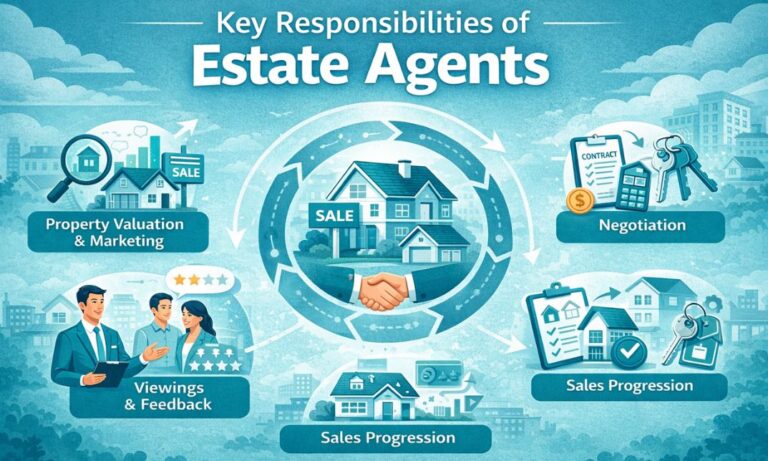
- Property Valuation & Marketing: Agents set the right asking price using market trends and local data. Then, they make listings with photos and floor plans for sites like Rightmove, Zoopla and OnTheMarket.
- Viewings & Feedback: They arrange and lead property viewings. They also speak with interested buyers or tenants.
- Negotiation: Agents act as the middle person. They try to get the best deal for their client.
- Sales Progression: After an offer is accepted, they handle paperwork and legal steps. They coordinate with solicitors, mortgage brokers, and surveyors.
- Letting & Property Management: For rentals, they find tenants, do credit checks, create leases, and sometimes manage repairs and rent collection.
For sellers, agents make the selling process smooth. For buyers, they give advice on homes and the local market. Also, agents need good people skills. In addition, they must pay attention to details. Therefore, the job can be busy but rewarding. Overall, it offers variety, learning, and career growth. Finally, hard work can lead to promotions and higher earnings.
What to Expect:
The work is usually office-based, but you spend a lot of time visiting properties. Hours are normally 35–40 per week. However, you may need to work Saturdays or evenings on a rota. You need great communication, patience, resilience, and a strong sales drive. Also, no specific degree is needed, but qualifications in customer service, sales, or property management help.
What Skills Do You Need to Become an Estate Agent?
Estate agents need a mix of people skills, marketing knowledge, and good organisation. Top agents are strong negotiators. They know their local market well. They can also use digital tools like social media, email campaigns, and CRM software. Key traits include being resilient, adaptable, and communicating clearly.
Essential Skills for Estate Agents
- Communication & People Skills: Listen carefully, speak clearly and build trust with buyers and sellers. Also, you must only explain complex information.
- Negotiation & Sales: Persuade clients, close deals, handle objections, and aim for the best price. In addition, you need patience and persistence.
- Market Knowledge: Understand local property trends, pricing, legal rules and property laws. This helps you give accurate advice.
- Organisation & Admin: Manage viewings, client follow-ups and paperwork carefully. Therefore, staying organised is essential for smooth transactions.
- Digital Skills & Marketing: Use social media, photos, video tours, and CRM software to promote properties effectively. It also helps to reach more potential buyers quickly.
- Problem-Solving & Resilience: Work well under pressure and handle deal problems calmly. Finally, you must adapt to changes and unexpected challenges.
Important Traits:
- Confidence & Enthusiasm: Build trust and persuade clients successfully.
- Proactivity & Tenacity: Keep looking for buyers and closing deals, even in slow markets.
- Customer Focus: Always put clients’ needs first. Overall, strong client service makes you stand out as an agent.
What Qualifications Are Required to Become an Estate Agent?
In the UK, you do not need a degree or legal qualification to become an estate agent. Most employers ask for GCSEs, including Maths and English. They also look for a driver’s licence and good people skills. Also, voluntary qualifications from Propertymark or RICS can give you an advantage.
Key Requirements & Paths to Entry:
- Education: A degree is not needed. However, courses in business, real estate, or property management can help. In addition, learning about property law or finance is useful.
- Skills: You need communication, negotiation, customer service, resilience, and local market knowledge. For example, knowing local property trends helps you advise clients better.
- Entry Roles: Common starting jobs include trainee positions, apprenticeships, and junior negotiator roles. Next, these roles give on-the-job training and experience.
- Professional Qualifications: Getting certifications from Propertymark or property law courses can make you more attractive to employers. Moreover, they help you move up faster.
- Licensing & Membership: You must join an authorised redress scheme, like The Property Ombudsman, to work legally. Therefore, clients are protected and rules are followed.
Alternative Routes:
- Apprenticeships: Give hands-on experience and official qualifications.
- Industry Exams: Exams like Level 3 Certificate in Property Advice and Practice (CePAP) boost credibility. Finally, they show your commitment.
For most people, a mix of on-the-job learning and passion for property is more valuable than formal degrees. Overall, being proactive, professional, and eager to learn will help you succeed quickly.
How Can You Become an Estate Agent in the UK Step by Step?
Becoming an estate agent can be exciting and rewarding. You get to meet different people, visit various homes, and help clients make important decisions. First, it is important to know that anyone can start this career with the right skills and determination.
Here is a clear step-by-step guide to help you begin.
Step 1: Gain Basic Education
Start with your GCSEs, especially in Maths and English. Also, being organised and confident will help you in daily tasks. You do not need a university degree to succeed. Many successful estate agents started with just basic education.
Step 2: Take a Property Course
Consider doing a property or real estate course. In addition, learning about property law, sales techniques, and local market trends gives you a big advantage. These courses make you feel more confident when talking to clients.
Step 3: Apply for Trainee Roles
Look for trainee positions, junior negotiator jobs, or apprenticeships. Next, these roles allow you to learn on the job. You will experience viewings, client meetings, and deal negotiations first-hand. This is a great way to build practical skills.
Step 4: Get On-the-Job Experience
Once you start working, stay eager to learn and ask questions. Pay attention to how experienced agents handle sales. Moreover, handling viewings, negotiations and paperwork yourself helps you gain real confidence. Every deal you complete teaches you something new.
Step 5: Register with a Professional Body
Finally, join a recognised organisation like Propertymark. Therefore, clients see you as professional and trustworthy. Furthermore, being part of a professional body can open doors to promotions and career growth.
How Long Does It Take to Become an Estate Agent in the UK?
Many people ask how long it takes to become an estate agent. You can start quickly if you are motivated. First, you do not need a formal licence to begin. You can start as a trainee right away. Most people take three to twelve months to learn the basic skills.
- Immediate Start or Trainee Roles (3–6 months): If you start as a trainee or sales negotiator, you learn on the job. Also, many beginners feel confident handling deals within six to twelve months. This is a good option if you want to start earning fast.
- Apprenticeships (12–18 months): Apprenticeships usually last one to one and a half years. You get paid while you learn. In addition, you get structured training and guidance from experienced agents. By the end, you are ready for more responsibility.
- Professional Qualifications (6–12 months): You can take courses with professional bodies like Propertymark. Moreover, certificates help you stand out to employers. Most courses finish in six to twelve months.
Therefore, becoming an estate agent can take a few months to a year and a half, depending on your path. Finally, enthusiasm and hard work help you succeed. Overall, it is an exciting career with good opportunities and rewards.
How Can You Start Your Own Estate Agency?
Starting your own estate agency can be exciting and fun. First, it lets you be your own boss and make your own choices. However, it also needs planning, effort, and patience. You must register your business with the government. Also, you need to join a scheme like The Property Ombudsman. This makes your business legal and trustworthy. Starting a business also costs money. You need funds for office space, staff, and tools. In addition, you need to plan for marketing, insurance, and other costs.
To get clients, you need good marketing. Use social media, local ads, and property websites. Moreover, having a strong brand helps people trust your agency. Finally, you need clients to grow your business. Talk to sellers and buyers, ask for referrals, and give great service. Therefore, happy clients bring more business. Starting your own estate agency can be hard. Overall, with hard work, planning, and love for property, it can be very rewarding and successful.
How Much Do Estate Agents Earn in the UK?
Many people ask how much estate agents make. The truth is, earnings can vary a lot. First, most agents earn a base salary between £20,000 and £25,000. Also, total earnings can be much higher because of commission. Experienced agents in London or wealthy areas can make over £100,000 a year.
Earnings by Experience:
- Starting or Trainee Agents: £18,000–£23,000 base salary plus commission. Many companies guarantee commission in the first few months.
- Experienced Agents: Total earnings range from £30,000 to £50,000 or more.
- Senior Agents or London-Based Agents: £50,000 to over £100,000. Big sales and high-value properties can boost income.
What Affects Your Earnings?
- Location: London and the South East pay more because property prices are higher.
- Commission Structure: Agents often get 10% or more of the company fee, which is usually 1–1.5% of the property value.
- Role Type: Sales agents usually earn higher commissions than letting agents. However, lettings offer more steady income.
How Commissions Work:
Agents get a percentage of the agency fee on each sale. For example, if a property sells for £250,000 with a 1.5% fee, the agency earns £3,750. An agent might earn £1,000–£3,000 or more from that single sale. In addition, top-performing agents often earn extra perks, like car allowances. Estate agent income can be exciting and rewarding. Therefore, if you work hard, improve your skills, and focus on good deals, your earnings can grow quickly. Finally, this career lets you enjoy both challenges and financial rewards while helping people find their dream homes.
What Are the Career Growth Opportunities for Estate Agents?
Being an estate agent can be exciting. The career has many ways to grow. First, most agents start as junior negotiators or trainees. With experience, you can take on bigger roles and earn more.
- Senior Negotiator: After some years, you can become a senior negotiator. Also, you will handle bigger deals and more valuable properties. You will help junior staff and work closely with clients. This role is both fun and rewarding.
- Branch Manager: With more experience, you can become a branch manager. In addition, you will manage a team, oversee daily tasks, and meet targets. Moreover, this job pays more and often includes bonuses.
- Lettings Manager: Some agents move into lettings management. They find tenants, manage rental properties, and handle leases. Furthermore, this job gives steady income and keeps work varied.
- Starting Your Own Estate Agency: Finally, some agents start their own estate agency. Therefore, you can be your own boss and build your own team. However, it takes planning, courage, and hard work. Overall, running your own agency can be very satisfying and rewarding.
Being an estate agent is not just a job. Finally, with passion and effort, you can grow, achieve goals, and reach roles you once dreamed of.
What Tools and Technology Do Estate Agents Use?
Estate agents use many tools to make their work easier and faster. First, CRM software helps track clients, leads, and deals in one place. Also, property listing portals like Rightmove, Zoopla, and OnTheMarket let agents showcase homes to more people. In addition, social media platforms like Facebook and Instagram help reach buyers and promote properties creatively.
Virtual tours are becoming very popular. Moreover, they let clients view homes online before visiting. Furthermore, high-quality photos and video tours make listings more attractive. Digital contracts save time and let clients sign papers online. Therefore, using these tools helps agents work smarter, impress clients, and close deals faster. Finally, technology is essential for success in real estate.
What Are the Pros and Cons of Becoming an Estate Agent?
Becoming an estate agent can be exciting. However, like any job, it has good points and challenges.
Pros
- High Earning Potential: Estate agents can earn good money. Also, top agents make even more from commissions.
- Flexible Working Hours: You can often arrange your own schedule. In addition, work is a mix of office and visits.
- No Degree Required: You do not need a university degree to start. Therefore, people with energy and people skills can do well.
Cons
- Commission Pressure: Most income comes from sales. So, if deals are slow, earnings may drop.
- Weekend Work: Agents often work Saturdays or evenings to meet clients. However, you can have flexibility on other days.
- Competitive Industry: The property market is busy and challenging. Finally, you need patience and focus to succeed.
Being an estate agent is a job full of chances and challenges. Overall, it suits people who like meeting clients, negotiating, and working in a fast-moving environment.
What Mistakes Should New Estate Agents Avoid?
Starting as a new estate agent can be tough. First, avoid these common mistakes:
- Overpricing properties: Homes that are too expensive may not sell.
- Poor communication: Always keep clients informed and clear.
- Weak follow-up: Stay in touch to show professionalism and care.
- Ignoring market trends: Learn about the market to give the best advice.
Also, avoiding these mistakes helps you grow faster and earn client trust.
What Soft Skills Make a Successful Estate Agent?
Being a great estate agent is not just about knowing property. First, it takes soft skills to succeed. These skills help you connect with clients and close deals.
- Emotional Intelligence: You need to understand your clients’ feelings. Also, noticing their needs helps you give the right advice. Being kind and patient builds trust.
- Persuasion Skills: You must explain ideas clearly and convince clients when needed. In addition, good persuasion helps you negotiate better deals.
- Handling Rejection: Not every deal works out. However, staying positive and learning from rejection helps you grow faster.
- Building Long-Term Client Relationships: Strong relationships bring repeat business and referrals. Moreover, remembering small details about clients makes them feel valued. Finally, happy clients often lead to more opportunities and success.
Being a successful estate agent is about more than sales. Overall, emotional intelligence, persuasion, resilience, and relationship-building help you stand out and grow in your career.
Final thought
Becoming an estate agent is a flexible and rewarding career. You can earn well and meet many new people. Also, you will learn strong sales, negotiation, and communication skills. Over time, you can focus on areas like luxury homes, commercial properties or rentals. In addition, you can build your own clients, get repeat business, and even start your own agency. Moreover, understanding the market and giving excellent service helps you grow faster. Finally, this career lets you enjoy independence, meet interesting people, and achieve long-term success. You can get more details by taking our Estate Agent Diploma course to learn everything you need.
FAQs
1. How long does it take to train to become an estate agent?
- Training usually takes a few weeks to a few months, depending on courses and on-the-job learning.
2. How to start a career as an estate agent?
- You can start by joining a property course or working as a trainee in an agency.
3. Is it hard to be a real estate agent in the UK?
- It can be tough because of competition and targets, but good people skills make it easier.
4. Do estate agents get paid well in the UK?
- Yes, they earn a salary plus commission. Successful agents can earn a lot.
5. What is the biggest mistake a real estate agent can make?
- Not communicating properly with clients or making mistakes in paperwork.
6. Are estate agents in demand?
- Yes, there is always demand in busy towns and cities.
7. Can I become an estate agent with no experience?
- Yes, many agencies hire beginners and train them on the job.
8. What are common mistakes new agents make?
- Overpromising, poor time management, and not following up with clients.
9. Is an estate agent a hard job?
- It can be stressful, but it is rewarding if you like sales and helping people.