
What does SENCO stand for? ‘SENCO’ means ‘Special Educational Needs Coordinator’. Think of this person as your child’s support champion at school. If your child struggles with reading, speaking, focus, behaviour, or learning, the SENCO helps find the right support. They work with teachers, parents, and outside experts to build a clear plan for your child. You may also hear SENDCO, which includes disabilities too. For many UK immigrant parents, school terms can feel like a new language.
So, this guide keeps things simple. You will learn what a SENCO does, how they help your child and when you should speak to them.
What does SENCO stand for in the UK?
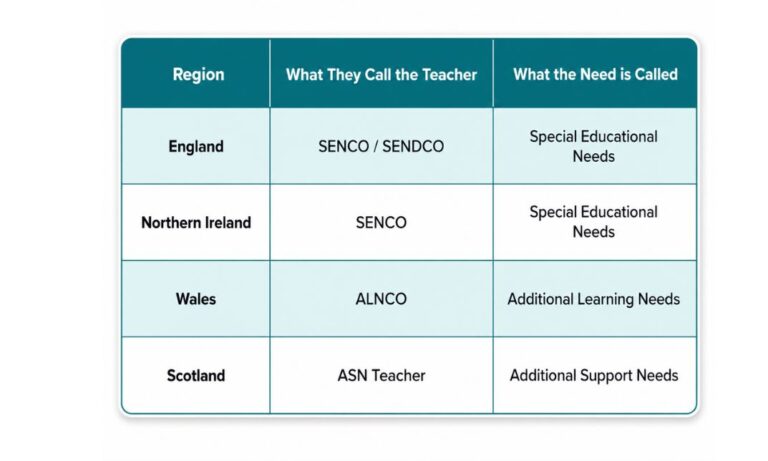
You might notice this word on school documents. Basically, the letters help describe a very important teacher. To be clear, in England and Northern Ireland, what does SENCO stand for is Special Educational Needs Coordinator. Some schools add a “D” and call them a SENDCO. Also, that extra letter stands for ‘disabilities’.
Usually, this person looks after kids who need extra help. Schools must have this person by law. They ensure no child feels left behind in class. Actually, every single school employs at least one. They act as a champion for your child.
Naturally, the name changes depending on where you live. Wales uses the name Additional Learning Needs Coordinator or ALNCO. On the other hand, Scotland uses the term Additional Support Needs teacher instead. Each name means the same thing for your family. They all point to a teacher who helps students. This teacher ensures every child feels safe and learns well. You can find their office in every local school. They usually have a very welcoming space for parents. You can drop by to say hello any time.
How is a SENCO role useful for your child?
When you hear this title, think of a dedicated leader. To be clear, what is a SENCO role involves a promise of help. This person leads the team that helps with learning. Specifically, they focus on children who struggle with certain tasks. Some children might have autism or find talking difficult. Other students might have dyslexia, which makes reading very hard. Some kids have ADHD and find it tough to sit still. The teacher creates a plan so these kids can thrive. They look at each child as an individual.
Actually, the teacher works with many people every single day. They talk to your child’s main class teacher often. Plus, they meet with parents to share school progress. They also invite experts from outside the school to help. These experts might be doctors or special speech teachers. Everyone works together to make a good plan. This plan helps your child reach their big goals. You are a big part of this special team. Your voice matters more than you might realise. Besides, your input helps the teacher understand your child.
What does SENCO do during school hours?
To show you more, what does SENCO do involves a lot of variety. They do not just sit in a quiet office all day. You will often see them walking around the hallways. They visit classrooms to see how children are doing.
Sometimes they sit on the floor to play with younger kids. Other times, they help older students with their big exams. Their main job is to make sure learning is fair. Every child should have a chance to do well. That goal stays the same every single day.
Actually, they also look after the teaching assistants in the school. These are the adults who sit next to students in class. The SENCO tells these helpers exactly what to do. They provide special books and toys that help with focus.
To help further, they might set up a “sensory room”. This is a quiet place where a child can go to relax. The role also includes checking the school building for safety. They make sure children in wheelchairs can move around easily. Everything they do aims to make school a happy place. They work hard to remove any barriers.
How to become a SENCO teacher in a UK school?
Becoming a SENCO takes teaching experience, proper training, and a strong wish to help children. In England, every mainstream school must have a SENCO. This person must usually be a qualified teacher or the headteacher.
Since 1 September 2024, new SENCOs in England must complete the National Professional Qualification for SENCOs. People often call it the NPQ for SENCOs. This replaced the old National Award for SEN Coordination, also known as NASENCO. If a SENCO already has the old qualification, they do not need to take the new NPQ. New SENCOs must finish the required training within three years of starting the role.
The training helps teachers understand SEND law, learning needs, child development, and support plans. It also teaches them how to work with parents, class teachers, teaching assistants, local authorities, and outside experts.
To become a SENCO in England, a teacher usually needs:
- Qualified Teacher Status, known as QTS
- Classroom teaching experience
- The NPQ for SENCOs, if new to the role
- Good knowledge of SEND needs
- Strong communication and leadership skills
- A clear DBS check
- Patience, kindness and problem-solving skills
What does SENCO stand for during school meetings?
When you sit down with them, think about open communication. To be clear, the SENCO stands for collaboration in meetings. They act as the bridge between home and the classroom. You might feel a bit nervous before your first meeting.
Actually, the teacher wants to listen to your unique story. They value your deep knowledge about your own child. You know what David or Maria likes to do best. These details help the teacher build a better support plan. So, you should speak up with confidence.
Moving on, the teacher will explain how the school helps. They might show you special software for a computer. Or, they could describe a small group for reading. Specifically, they talk about “reasonable adjustments” for your child.
This means they change things to make learning easier. You can ask for a copy of all notes taken. That way, you can read them slowly at home later. Naturally, you can bring a friend along for support. Most schools find these meetings very helpful for everyone. They want you to feel like a partner.
How could a SENCO support your family?
Actually, the support from this teacher comes in many forms. They can assess your child’s needs and suggest home activities. Specifically, they make sure school resources are ready for use. They might even find assistive technology like special keyboards.
To help even more, they undertake further training when needed. They want to learn about your child’s specific condition. Naturally, they support your whole family with access arrangements too. If you speak another language, they can find an interpreter.
Besides that, they help prepare children for new schools. Moving to secondary school is a very big step. The SENCO talks to the new school about your child. This ensures the help continues without any big gaps.
They also refer your child to very specialist experts. For example, they might contact a child psychologist for advice. Truly, they attend many meetings to fight for your child. They work collaboratively with local authority coordinators as well. Their goal is to find the best way forward. You can always ask for their advice.
- SENCOs may provide special pens to make writing easier.
- Teachers can create visual schedules for the classroom wall.
- Schools may arrange quiet times during busy events.
- Staff can monitor your child’s emotional well-being each day.
- The team may suggest local clubs for children with special needs.
- Trained staff can learn how to use medical equipment safely.
- They may also help you apply for extra funding.
A story about a family meeting the SENCO
Elena and her young son, David, moved to Manchester from Italy last year. David is a very bright boy who loves drawing. However, he found it very hard to read English words. He started to feel very frustrated and cried at breakfast. Elena felt worried because she did not know the system. She decided to call the school office for help. The school secretary told her to meet the SENCO. Elena felt nervous before the meeting started. She worried her English was not good enough.
Right away, the teacher made Elena feel very comfortable. They sat in a small room with colourful posters. The teacher explained that David just needed a different approach. Specifically, they gave him books with more pictures and fewer words. They also gave him a “reading buddy” from an older class. David started to smile again when he went to school. Elena felt a huge weight lift off her shoulders. She realised the school was on her side. This meeting changed David’s life for the better. Now, David loves going to his local library. He even draws pictures about his favourite stories.
How can a SENCO help with legal learning plans?
Sometimes, a school needs more money or tools to help. The SENCO will then ask for a deeper check. In England, they apply for an Education, Health and Care plan. People usually call this an EHC plan for short. Wales uses a different name called an Individual Development Plan. Northern Ireland uses a Statement of Special Educational Needs. Scotland has something called a Coordinated Support Plan. These documents are very powerful and helpful. They protect your child’s right to learn.
Actually, these plans are legal papers that protect your child. They stay with your child even if you move. The SENCO handles all the hard paperwork for you. They guide you through each step of the process. This helps ensure your child gets the right support. You can ask for a meeting to start this. Usually, the process takes a few months to finish. The teacher will keep you updated every single week. It is a long journey but very worth it. Your child gets a stronger future because of it. Everyone deserves this level of protection.
Which questions should parents ask the school?
It is good to prepare before you meet the teacher. You might want to know about your child’s tests. Asking about feedback is also a very smart idea. Here are five questions you can use today:
- How is the school checking my child’s progress?
- How often will you tell me about the results?
- Can I see the school’s special needs policy?
- What help is ready for the next school year?
- How can I help my child learn at home?
Actually, asking these things helps you understand the school better. It also shows the teacher that you are involved. Specifically, you can ask about transitions between different grades. The move from primary to secondary school is an important change.
The SENCO makes sure that the move goes very smoothly. They talk to the new school about your child. This helps your child feel ready for the change. You can even visit the new school early. This helps your child feel less anxious.
How do you work well with the teacher?
Building a good relationship with the school is important. You should try to stay in touch quite regularly. Many parents find that writing things down helps a lot. Keep a small notebook for all your school meetings.
You can record what the teacher promises to do. Then, you can check if those things actually happen. Always share the good news with the school too. A little bit of kindness goes a long way. Teachers appreciate knowing that David is happy.
Moving on, tell the teacher if your child likes a lesson. This helps the SENCO know what works for your child. Also, try to learn about your child’s specific needs. You can find many helpful websites for parents online.
Basically, being a partner with the school gets results. Your child will see that everyone is working together. This makes them feel more confident in their lessons. Teamwork makes the biggest difference in a child’s life. It creates a solid foundation for their future. You are your child’s best advocate.
- Send a quick email once a month to check.
- Attend all the parent meetings at the school.
- Share what works well at home with teachers.
- Ask for a copy of every learning plan.
- Be patient because some plans take a while.
- Actually, try to stay positive during difficult times.
- Keep all school letters in one safe folder.
What should I do if I feel unhappy?
Sometimes, you might feel the support is not enough. Perhaps your child is still struggling with their reading. You should first talk directly to the SENCO teacher. Tell them exactly what is worrying you right now. Usually, they will try to fix the problem quickly. If that does not work, talk to the headteacher. Every school has a boss who looks at complaints. That person has the power to change things. They want the school to be successful.
Surprisingly, you can also write to the school’s lead governor. Every school website has a special page for help. This page is called the SEN Information Report. It explains how to complain if you feel sad. Always keep your letters polite but very clear. Specifically, explain what help your child needs to succeed. Most schools want to solve problems without any big fights. They truly want your child to be very successful. Your child has a right to a good education. Do not be afraid to stand up for them. You have the law on your side.
Where can I find more help today?
You are not alone in this learning journey. Every school in the UK must have a SENCO. You can call the school office to find them. Just ask for the name of the SENCO teacher. They will give you an email or a phone number.
Also, look at the government website for more rules. Websites like Mumsnet have many stories from other parents. These parents can offer very useful tips. They have been in your shoes before.
In fact, these stories can give you great ideas for support. You can also look at the BBC Bitesize website. It has many videos about how schools work here. Understanding the system takes a little bit of time.
Don’t worry if you don’t know every word yet. The SENCO is there to explain everything to you. They are your partner in your child’s big future. Reach out to them this week to start talking. Your family deserves the best support possible. Education is the key to a bright future in the UK.
Final thoughts on SENCO support
To wrap things up, remember that help is always available. You are doing a brave job as a parent. Moving to a new country takes strength. Learning a new school system also takes time. Many parents ask what does SENCO stand for during school meetings. Once you understand this role, you can speak with more confidence. SENCOs are there to listen, guide, and support your family. The more you share, the better they can help.
Your child has amazing talents waiting to shine. With the right support, they can grow, learn, and feel proud. Keep your notebook ready for your next meeting. Stay positive and keep talking with the school. Your child’s future can be bright with the right care.
FAQs
What does a SENCO do in schools?
- A SENCO helps children who need extra support with learning, behaviour, speech, focus, or emotions. They work with teachers, parents and outside experts. Their goal is simple: help your child learn in the best way.
Why would a child be referred to SENCO?
- A child may be referred to the SENCO if they find school harder than other children. This may include reading problems, speech delays, autism, ADHD signs, anxiety, or trouble joining class activities.
Is a SENCO a qualified teacher?
- Yes, in England, a SENCO must usually be a qualified teacher or the headteacher. New SENCOs must also complete special SENCO training within three years of starting the role.
How do I know if my child needs SENCO?
- Your child may need SENCO support if they often struggle with reading, writing, speaking, focus, behaviour, or friendships. If you feel worried, speak to the class teacher first. Then ask for the SENCO.
Can SENCO diagnose ADHD?
- No, a SENCO cannot diagnose ADHD. Only trained health professionals can do that. However, a SENCO can notice signs, record school concerns, support your child and guide you toward the right help.
What are the top 3 signs of autism?
- The top signs can include trouble with social communication, a strong need for routine, and repeated actions or intense interests. Every child is different. If you feel unsure, speak to your GP, health visitor, or school SENCO.