What do butterfly tattoos represent? In many places, they symbolise change, joy, the soul, or remembrance. Yet, the meaning shifts across cultures, giving each butterfly tattoo a unique story. Butterfly tattoos can tell a deeper story beyond their appearance. They carry deep meanings, often linked to transformation, freedom and the soul. From love and joy to remembrance and growth, butterflies tell a story that goes beyond their delicate wings.
In this blog, you’ll explore the meanings of butterfly tattoos across different cultures. You’ll see how symbolism can represent transformation, freedom, love, or remembrance. By the end, you’ll understand how to choose a butterfly tattoo that tells your own personal story.
How Culture Shapes the Meaning of Butterfly Tattoos

Language, folklore, festivals, religion and art influence how people interpret butterflies. Each culture adds its own stories and traditions to the symbol.
However, cultural symbolism and tattoo meaning are not always the same thing. A butterfly may carry meaning in old art or folklore. That does not always mean the culture had a traditional butterfly tattoo with that meaning.
Here are some well-documented cultural meanings:
- Greece: The Greek word psyche can refer to the soul and a butterfly or moth. This created a strong connection between butterflies and the human soul.
- Japan: Butterflies appear in traditional art and wedding clothing. Paired butterflies can represent a newly married couple and a long marriage.
- China: Butterflies can represent joy, weddings, love and longevity. They also appear in famous stories about love and identity.
- Korea: Joseon flower-and-butterfly paintings often carried wishes for longevity.
- Mexico: Monarch butterflies have strong links with remembrance and Día de Muertos. Some Indigenous communities connect their return with ancestral spirits.
- Ancient Mesoamerica: Butterflies had links with souls, warriors, fire, fertility, death and rebirth.
- Christian art: The butterfly’s transformation has been used to represent the soul and the Resurrection.
- Modern culture: Butterflies often represent change, freedom, survival and personal identity.
Cultural Butterfly Symbolism Is Not Always Tattoo Tradition
Before looking at each culture, there is one important difference to understand. A historical butterfly symbol does not automatically have one traditional tattoo meaning.
There are three different ways to look at butterfly symbolism:
- Historical meaning — what butterflies represented in art, religion, stories, or ceremonies.
- Traditional tattoo meaning — meanings established inside a particular tattoo tradition.
- Personal tattoo meaning — what the wearer wants the tattoo to represent today.
For example, ancient Mesoamerican art gives butterflies several powerful meanings. However, this does not mean every modern butterfly tattoo carries those meanings.
The same applies to Japan, China, Greece and other cultures. Cultural history can inspire a tattoo. Still, your tattoo can have its own personal meaning.
What Do Butterfly Tattoos Represent in Cultures
Ancient Greece — Butterfly Tattoo Meaning in Greek Culture
In Ancient Greece, the word psyche had a special connection with butterflies.
The Greek term could refer to the soul. Ancient Greek sources also used it for a butterfly or moth. This created a strong link between the winged insect and human life.
Because of this, Greek-inspired butterfly tattoos can represent the inner self and spiritual change.
Here’s why a Greek-inspired butterfly tattoo can be so special:
- Soul and transformation — it can represent inner growth and personal change.
- Life and identity — the butterfly can reflect the journey of the self.
- Spiritual meaning — it can show something deeper than physical beauty.
- Ancient symbolism — the design connects with a long history of ideas about the soul.
A butterfly tattoo like this can mark an important chapter in life. It can also represent the person you have become.
Japan — Butterfly Tattoo Meaning in Japanese Culture
Butterflies have appeared in Japanese clothing, art and decorative design for centuries.
They also hold an important place in traditional wedding imagery.
The Metropolitan Museum of Art has a Japanese wedding uchikake decorated with paired paper butterflies. The male and female butterflies represent the newly married couple. The word chō, meaning butterfly, also supported wishes for a long marriage through wordplay.
Other Japanese robes use butterflies alongside flowers and seasonal designs. Some examples connect butterflies with joy, longevity and marital happiness.
Here’s what a Japanese-inspired butterfly tattoo may represent:
- Marriage and partnership — paired butterflies can represent two people together.
- Joy — butterfly imagery often appears with positive and beautiful themes.
- Long-lasting love — traditional wedding imagery gives the butterfly this association.
- Seasonal beauty — butterflies can appear with flowers and changing seasons.
- Personal change — modern wearers may also connect them with transformation.
If you use Japanese imagery, look at the whole design. Flowers, clothing patterns and other motifs can change its meaning.
China — Butterfly Tattoo Meaning in Chinese Culture
Butterflies carry several well-documented meanings in Chinese art.
They are commonly linked with joy, weddings and longevity.
One reason comes from language. The Chinese word connected with butterfly imagery can sound like a term for advanced age. This helped butterflies become symbols of long life.
Here’s what a Chinese-inspired butterfly tattoo can represent:
- Joy and happiness — butterflies appear as positive decorative symbols.
- Marriage — butterfly imagery has strong links with weddings.
- Long life — wordplay helped create a link between butterflies and longevity.
- Love — paired butterflies can connect with famous romantic stories.
- Summer and beauty — butterflies also appear as seasonal symbols.
Chinese butterfly imagery becomes even richer when you look at two famous stories.
The Butterfly Lovers — Love That Continues Beyond Separation
One famous Chinese story tells of a young couple who cannot marry.
In later versions of the story, the lovers become butterflies and fly away together. The story became strongly linked with love, separation and devotion.
A tattoo inspired by this story could represent:
- Lasting love
- Devotion
- Love after separation
- Freedom from social limits
- Two people remaining connected
If you choose two butterflies for this meaning, explain the story to your tattoo artist. That gives the design more depth than simply using two butterflies for romance.
The Butterfly Dream — Transformation, Identity and Reality
Another important Chinese butterfly story comes from the philosopher Zhuang Zhou, or Zhuangzi.
In the story, Zhuang Zhou dreams that he is a butterfly. After waking, he questions what was real. Was he a man dreaming of a butterfly? Or was he a butterfly dreaming of being a man?
The story became known for exploring identity, reality and the transformation of things. It later inspired art across East Asia.
A tattoo inspired by the Butterfly Dream may represent:
- Identity — questioning who you really are.
- Transformation — accepting that life constantly changes.
- Reality and dreams — exploring where one ends and another begins.
- Freedom of thought — looking beyond simple answers.
- Self-discovery — learning how your sense of self can change.
This gives butterfly tattoos a deeper meaning than physical transformation alone.
Korea — Butterfly Tattoo Meaning in Korean Culture
In Korea, butterflies have a strong history in traditional painting. During the Joseon period, artists produced many paintings of flowers and butterflies. The National Museum of Korea explains that these works carried wishes for longevity.
Butterflies also appear beside flowers and plants in detailed natural scenes. A Korean-inspired butterfly tattoo may therefore represent:
- Long life — one of the clearest meanings found in traditional butterfly painting.
- Beauty in nature — butterflies often appear alongside flowers.
- Harmony with nature — the image can celebrate the natural world.
- A meaningful life — modern wearers can connect longevity with living well.
This meaning comes mainly from art and visual culture. It should not be treated as one fixed Korean tattoo rule.
Mexico (Día de Muertos) — Butterfly Tattoo Meaning in Mexican Culture
Monarch butterflies have a powerful connection with Día de Muertos. Each autumn, monarchs arrive in central Mexico after a huge migration. Their arrival happens around the time of Día de Muertos.
Because of this timing, monarchs became connected with returning spirits and remembrance. Smithsonian sources describe beliefs that monarchs may carry the spirits of people who have died.
These traditions have particular importance among communities such as the Purépecha of Michoacán and Mazahua communities in central Mexico.
Here’s why monarch butterfly tattoos can feel so meaningful:
- Remember loved ones — the monarch can keep someone’s memory close.
- Return and reunion — migration can represent coming home.
- Life and death — the butterfly can connect both parts of life’s cycle.
- Family connection — some people use the image to honour relatives and ancestors.
- Cultural roots — monarch imagery can connect people with Mexican traditions.
Many designs pair monarchs with marigolds or other Día de Muertos imagery. However, these meanings should not be presented as one belief held by every Mexican person.
Ancient Mesoamerica — Butterfly Meaning Before Modern Mexico
Butterfly symbolism in Mexico goes much further back than modern Día de Muertos traditions. Butterfly imagery had a long history across ancient Mesoamerica.
The Metropolitan Museum of Art explains that butterflies appeared in Teotihuacan and Cholula imagery. They could connect with warriors, fire, fertility, death and rebirth. Among later Mixtec and Mexica cultures, butterflies also appeared on objects, clothing pieces, vessels and images of gods.
Some scholars connect Mesoamerican butterflies with the soul. They also appeared in funerary settings linked with regeneration and reincarnation. Butterflies could also appear beside important deities.
For example:
- Xochiquetzal and Xochipilli connect butterfly imagery with pleasure and abundance.
- Itzpapalotl, or Obsidian Butterfly, gives the image a darker and more complex side.
- Butterfly imagery could connect with warriors and ideas about the afterlife.
So, an ancient Mesoamerican-inspired butterfly tattoo can carry many meanings.
It may represent:
- The soul
- Death and rebirth
- Regeneration
- Courage
- Fire and energy
- The afterlife
- Fertility and abundance
However, research the exact culture and symbol before using it. Ancient Mesoamerica included many different peoples and traditions.
Hopi and Southwestern Pueblo Butterfly Traditions
It is better to discuss named Indigenous traditions than to use one broad Native American meaning. The Smithsonian documents Butterfly Dance traditions among Hopi and other Southwestern Pueblo communities.
These traditions have their own cultural and ceremonial settings. Therefore, they should not become a general claim that all Indigenous peoples give butterflies the same meaning.
If this tradition inspires your tattoo:
- Learn which community the design comes from
- Avoid copying ceremonial clothing without context
- Understand whether a motif has special restrictions
- Speak with people from that culture when appropriate
A butterfly may hold deep meaning in one Indigenous nation and something different in another.
Christian Europe — Butterfly Tattoo Meaning in Christian Traditions
Butterflies became symbols of the soul and Resurrection in some European Christian art.
The connection comes from metamorphosis. A caterpillar changes before emerging as a butterfly.
European artists sometimes used that transformation as an image for spiritual life and Resurrection. The Met documents this symbolism in Christian painting.
A Christian-inspired butterfly tattoo may therefore represent:
- Resurrection — moving from death towards new life.
- Spiritual renewal — leaving an old life behind.
- The soul — representing something beyond the physical body.
- Hope — trusting that change can bring something new.
- Faith journey — marking a personal spiritual chapter.
This can make the butterfly a quiet faith symbol without using a larger religious image.
Butterfly or Moth? An Important Persian Poetry Distinction
Butterflies and moths can look similar in symbolic art. However, the difference matters in Persian poetry.
The famous Persian and Sufi image is usually the moth and the flame, not the butterfly. In this tradition, the moth becomes drawn to the flame. The image can represent a lover drawn towards the beloved.
In Sufi writing, the moth may represent the human soul or believer. The flame can represent divine love or God. The Met preserves Iranian lamp stands carrying poetry about this moth-and-flame image.
So, if you want a tattoo inspired by Persian mystical poetry, a moth may be more accurate.
The design can represent:
- Longing
- Devotion
- Spiritual love
- Surrender
- Being drawn towards something greater
- Love that consumes the self
Knowing this difference helps prevent a butterfly tattoo from being given a meaning that belongs mainly to the moth.
Modern Global Culture — Contemporary Butterfly Tattoo Meaning
Today, butterfly tattoos often mean personal change, survival, freedom and self-expression.
Modern wearers do not always follow one historical meaning. They may combine cultural symbolism with their own experiences.
Here’s why butterfly tattoos remain popular:
- Personal reinvention — they can mark a new chapter in life.
- Survival — they can represent coming through a difficult time.
- Freedom — wings can suggest movement and independence.
- Identity — people can use the design to express who they are.
- Remembrance — butterflies can honour someone who has died.
- Growth — metamorphosis naturally fits stories of personal change.
The design also has its own modern tattoo history.
Butterfly Tattoos, Y2K Culture and Modern Reclamation
Butterflies became a highly visible tattoo trend during the 1990s and early 2000s.
During this period, butterfly designs became popular alongside other small tattoos. Lower-back placements also became a major trend. Allure’s history of modern tattoo culture lists butterflies among popular 1990s designs.
Lower-back tattoos later faced negative stereotypes. Women with these tattoos often faced judgement and sexist labels.
However, Y2K fashion later returned. With it came renewed interest in butterflies and lower-back designs. Fashion publications have documented this revival and the changing attitude towards these tattoos.
For some modern wearers, choosing this style can now represent:
- reclaiming femininity
- rejecting old stereotypes
- Y2K nostalgia
- confidence
- personal style
- freedom over your own body
So, the same butterfly design can mean something different across generations.
Languages & Names of Butterfly: Literal Meaning vs Symbolism
Different languages have their own words for butterfly. However, the word itself and its cultural symbolism are not always the same thing.
Here’s a clearer guide:
- Greek: psyche (ψυχή) — the word has meanings connected with the soul. Ancient sources also use it for a butterfly or moth.
- Japanese: chō (蝶) — means butterfly. Traditional imagery can connect butterflies with marriage and longevity.
- Chinese: húdié (蝴蝶) — means butterfly. Butterfly imagery can represent joy, weddings and longevity.
- Korean: nabi (나비) — means butterfly. Traditional Korean butterfly paintings can carry wishes for longevity.
- Spanish: mariposa — means butterfly. It does not automatically mean freedom or beauty.
- Filipino: paru-paro — means butterfly. Cultural meaning depends on the wider context.
This distinction matters when choosing words or characters for tattoos.
Do not assume the dictionary word automatically carries every symbolic meaning linked with butterflies.
(Tip: Always verify foreign words and characters before putting them permanently on your skin.)
When People Choose the Butterfly Symbol
People choose butterfly tattoos for many personal and cultural reasons.
Some of the most meaningful include:
- Remembering someone — monarch imagery can carry remembrance meaning in Mexican traditions.
- Marking a marriage — paired butterflies have documented links with Japanese wedding imagery.
- Celebrating love — Chinese butterfly stories can inspire tattoos about devotion.
- Starting again — metamorphosis makes butterflies a natural symbol for new chapters.
- Exploring identity — Zhuangzi’s Butterfly Dream adds a deeper meaning about the self.
- Expressing faith — Christian art can connect the butterfly with the Resurrection and the soul.
- Honouring heritage — cultural butterfly imagery can connect someone with family history.
- Reclaiming personal style — modern butterfly tattoos can also connect with Y2K culture.
The most important part is understanding where your chosen meaning comes from.
Respectful Use: Culture-First Etiquette & Boundaries
- Research First: Understand the culture before using its symbols. Learn where the design comes from.
- Be Specific: Avoid calling something Chinese, Indigenous, or Mesoamerican when you know the exact tradition.
- Ask When Needed: Some ceremonial or community-specific designs may need extra care. Seek guidance before copying them.
- Use Language Carefully: Check spellings, scripts and characters with a reliable speaker or source.
- Do Not Copy Sacred Designs: A meaningful cultural symbol should not become decoration without context.
- Separate History From Tattoo Tradition: Historical symbolism does not always mean a traditional tattoo meaning.
- Focus on Real Connection: Choose imagery because it means something to you, not only because it is trending.
How to Communicate Your Cultural Meaning to Your Tattoo Artist
Start by clearly naming the culture behind your idea. Then explain what the butterfly means within that tradition. This gives your tattoo artist a clear direction. Gather a few trusted cultural references. Museum collections, historical art, books and cultural institutions work well.
Try not to copy another tattoo exactly. Their design may contain personal or cultural details you do not understand. If you use another language, verify every word and character first.
You can also explain what you do not want changed. This matters when a historical symbol has specific details. Finally, give your artist a short brief.
Include:
- The culture or tradition
- Your chosen meaning
- Trusted visual references
- The correct word or script
- Colours or objects you want included
- Anything that should not be changed
This makes the design more accurate and personal.
UK Tattoo Laws and Age Requirements
In the UK, you must normally be 18 or older to get a tattoo. In England, Wales and Scotland, the Tattooing of Minors Act 1969 makes tattooing anyone under 18 an offence. The main exception is tattooing carried out for medical reasons.
Northern Ireland has separate legislation. The Tattooing of Minors (Northern Ireland) Order 1979 also prohibits tattooing anyone under 18, apart from limited exceptions.
Parental permission does not override the minimum age for an ordinary tattoo. Studios may also ask for photo ID to confirm your age.
Tattoo business rules differ across the UK:
- England: Tattooists and premises generally need registration with their local council. Councils can also set hygiene rules through local byelaws. Exact requirements can vary by area.
- Wales: Since 29 November 2024, tattooing has come under the Special Procedures Mandatory Licensing Scheme. Practitioners need a valid licence. Premises or vehicles must also have approval. Wales also maintains a national register of valid licence holders.
- Scotland: Tattooing and skin piercing require licensing through the relevant local authority under Scotland’s existing licensing system.
- Northern Ireland: Tattoo businesses must register with the relevant local council. Councils can inspect registered premises and check hygiene standards.
Before booking, check the rules in your area and make sure the tattoo studio meets the required registration or licensing standards.
Tattoo Ink Safety and Chemical Rules in the UK
Tattoo safety is not only about clean needles. The chemicals inside tattoo inks also matter. Northern Ireland and Great Britain do not currently follow exactly the same chemical system.
Northern Ireland
EU REACH restrictions on hazardous substances in tattoo inks apply in Northern Ireland.
Restrictions covering thousands of hazardous substances came into force in January 2022. They include substances linked with skin irritation, sensitisation, cancer and other health concerns. Tattoo businesses should use compliant inks with suitable labels and documentation.
Great Britain
England, Scotland and Wales operate under UK REACH.
On 30 December 2025, the UK Government decided to restrict certain substances in tattoo inks and permanent make-up. It published the decision and a draft amendment on 15 January 2026. The documents include proposed concentration limits and labelling requirements.
However, the legal amendment is still presented as a draft. Therefore, check the latest UK REACH position when updating safety advice. As a client, you do not need to understand every chemical rule.
Still, you can ask your artist:
- Which ink brand they use
- Where the ink comes from
- If the bottles have clear batch details
- If the inks meet current UK requirements
- How they store and handle opened inks
Safety & Hygiene: How to Stay Safe During a Tattoo
Safety and hygiene matter as much as your design. Tattooing breaks the skin. Poor practice can increase the risk of bacterial infection and bloodborne viruses.
UKHSA guidance for England highlights risks including hepatitis B, hepatitis C and HIV when tattooing or piercing is not carried out safely.
Before choosing a studio, check its legal registration or licence. You should also look for clear hygiene standards.
On-site, you should expect:
- Clean working surfaces
- Fresh single-use needles
- Suitable gloves
- Safe disposal of used sharps
- Clean equipment
- Infection-control procedures
- Written consent processes
- Clear aftercare instructions
Safety & Hygiene: How to Stay Safe During a Tattoo
Safety and hygiene matter as much as your design. Tattooing breaks the skin. Poor practice can increase the risk of bacterial infection and bloodborne viruses.
UKHSA guidance for England highlights risks including hepatitis B, hepatitis C and HIV when tattooing or piercing is not carried out safely.
Before choosing a studio, check its legal registration or licence. You should also look for clear hygiene standards.
On-site, you should expect:
- Clean working surfaces
- Fresh single-use needles
- Suitable gloves
- Safe disposal of used sharps
- Clean equipment
- Infection-control procedures
- Written consent processes
- Clear aftercare instructions
Ask about infection-prevention routines. They should follow the current Guidance on Tattooing and Body Piercing: Infection Prevention and Control Guidance, published 5 March 2025, to keep every client safe.
If anything looks unsafe, you do not need to continue with the appointment. Reschedule if you feel unwell or your skin is badly sunburnt. Tell your artist about relevant allergies, medicines, or health concerns. If you are unsure about your health, speak with a healthcare professional first. Eat properly and stay hydrated before a longer tattoo session.
Tattoo Infection Control for Artists & Apprentices
Artists and apprentices need strong infection-control knowledge to protect clients and themselves. UKHSA guidance for England promotes safe infection-control practices. However, England has no national legal competence requirement or nationally recognised tattooing qualification.
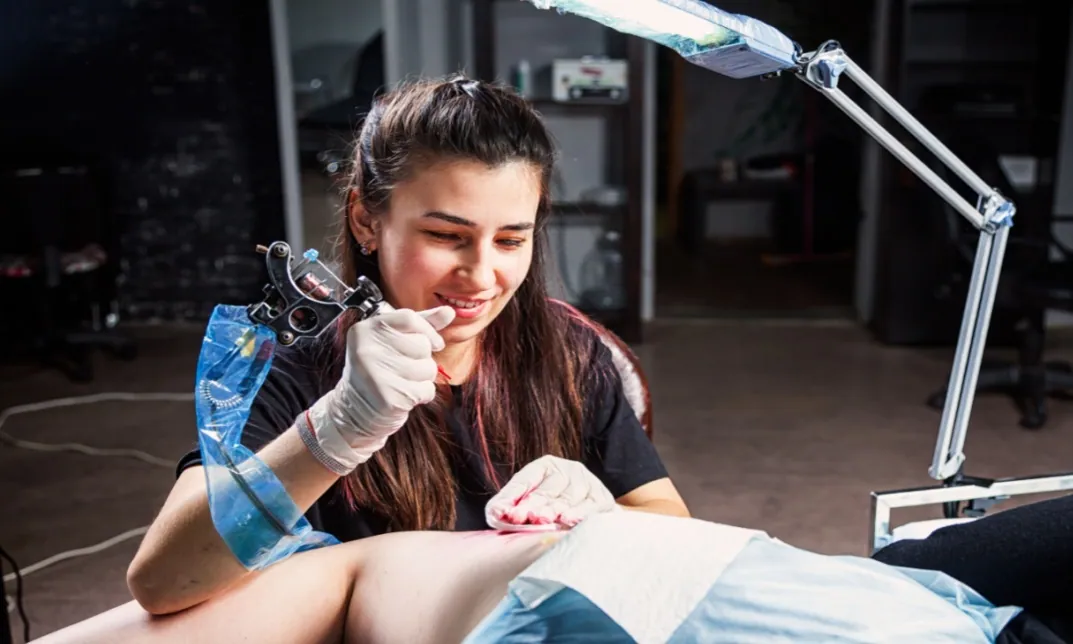
For extra training, consider the Tattoo Infection Control Level 3 Advanced Diploma by School of Health Care. It’s an online course that teaches safe practices, hygiene protocols and up-to-date UK standards. Completing it ensures you work confidently and responsibly in any studio.
However, training does not replace local licensing or legal requirements. Wales has separate rules. Tattoo practitioners there must complete specified infection-prevention training for its Special Procedures licensing scheme. Always check the rules where you plan to work.
So, What Do Butterfly Tattoos Represent?
Butterfly tattoos symbolise transformation, freedom, love and joy across many cultures. They can mark personal growth, new beginnings, or a reminder to embrace change. When choosing your design, think about the colours, size and style that feel meaningful to you, whether it’s realistic, minimalist, or abstract.
It’s also important to respect traditions and cultural meanings. Some butterfly designs hold special significance in different cultures. Plus, always follow safety and hygiene rules when getting tattooed to protect your health and help your tattoo heal properly.
Finally, a butterfly tattoo is not just decoration. It’s a personal story on your skin. Take your time picking a design that reflects your journey, emotions, or aspirations. That way, every glance at your tattoo will remind you of growth, hope and joy.
Tattoo Infection Control Level 3 Advanced Diploma
Course Description :
- Certificate: Yes(Free)
- Accreditation: CPD Accredited
- Access: Lifetime