
Healthcare administration no longer revolves around backend claim processing alone. Today, financial conversations begin before treatment starts. Rising operating costs and stricter payer requirements have pushed healthcare organizations to focus on front-end revenue management. Practices now verify eligibility, confirm benefits, and explain coverage details before delivering care.
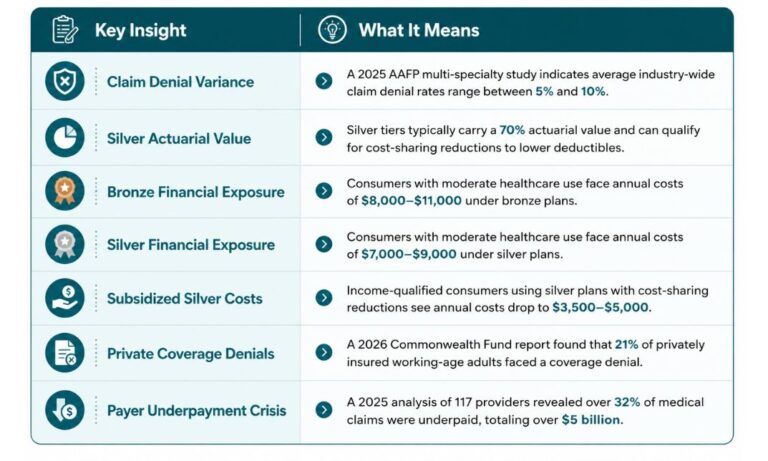
A 2025 multi-specialty study by the American Academy of Family Physicians (AAFP) found that average claim denial rates range between 5% and 10% across the industry. As a result, medical billing has evolved into a fully integrated process that spans registration, coding, claim submission, payment collection, and appeals.
To protect revenue, many organizations now use advanced claims-editing software. They also enforce internal audit workflows, often reviewing claims within 72 hours before submission. These measures help reduce preventable denials and improve reimbursement accuracy.
Health Plans Are Shifting More Costs to Patients
High-Deductible Health Plans (HDHPs) continue to gain popularity across the healthcare market. This trend transfers more financial responsibility to patients and changes how providers manage collections.
Administrative teams must closely monitor enrollment patterns and coverage changes. These insights help practices forecast accounts receivable, improve collection strategies, and maintain healthy cash flow. As insurance products become more complex, healthcare administrators must understand how plan design affects patient payment behavior.
Why Silver and Bronze Plans Matter
Front-office staff play a critical role in revenue performance. Understanding silver vs bronze health plans in 2026 helps them set realistic payment expectations before care begins. Silver plans typically carry a 70% actuarial value. Many also qualify for cost-sharing reductions (CSRs), which can significantly lower deductibles and out-of-pocket expenses for eligible consumers.
Bronze plans work differently. These plans generally require patients to cover a larger share of their healthcare costs. Many members face high deductibles before insurance benefits begin covering expenses.
This shift has increased the importance of point-of-service collections. Staff members must explain financial obligations clearly and collect payments earlier in the care journey. LIFE143 notes that bronze plans often lower monthly premiums while increasing out-of-pocket exposure. For independent practices, ineffective management of high-deductible plans can increase collection challenges and outstanding patient balances.
Consumers with moderate healthcare use can face annual costs of $8,000–$11,000 under bronze plans, compared with $7,000–$9,000 under silver plans. For income-qualified consumers, silver plans with cost-sharing reductions can lower annual costs to $3,500–$5,000. This reduction can ease financial strain and improve payment predictability.
How Billing Trends Affect Patient Care
Medical billing decisions now influence clinical outcomes more directly than ever. When patients understand their financial responsibility upfront, they face fewer billing surprises. Greater transparency builds trust and encourages patients to continue treatment.
Prior authorization remains one of the biggest administrative barriers to care. Delays can interrupt treatment plans and postpone necessary services. Faster approval workflows help patients begin recommended treatments sooner.
A 2026 Commonwealth Fund report found that 21% of privately insured working-age adults faced a coverage denial. Many denials involved medical care recommended by a doctor. Among those who received a denial, many reported treatment delays, unexpected costs, or difficulty accessing recommended services. Some patients skipped care altogether after a denial.
Rising deductibles create additional barriers. Many underinsured individuals postpone follow-up appointments, diagnostic testing, and specialty medications because of cost concerns. These delays can lead to poorer health outcomes and higher readmission rates.
Clear, easy-to-understand billing statements can help address these challenges. When patients understand their costs, they can budget more effectively and remain engaged in their treatment plans.
Insurers Are Expanding Automated Claims Management
Commercial insurers continue to invest heavily in automated claims-processing systems. These platforms use algorithmic rule engines to evaluate claims against medical necessity requirements and reimbursement policies. As automation expands, providers must submit increasingly accurate clinical and billing data.
Even minor formatting errors can trigger automatic claim rejections. This shifts more administrative responsibility back to healthcare organizations. According to Susan Morse, Executive Editor at Healthcare Finance News, payers are increasingly using AI algorithms to automate claims processing. The report notes that the industry is shifting toward real-time adjudication, replacing traditional pay-and-chase reimbursement models.
Reimbursement models also continue to evolve. Payers increasingly link payments to quality measures, patient outcomes, and cost efficiency rather than service volume. This transition has accelerated the adoption of risk-based contracts. Providers and insurers now share financial accountability for patient outcomes across entire episodes of care. Success depends on coordinated data tracking across multiple facilities and care teams.
Technology Is Reshaping the Revenue Cycle
Artificial intelligence and robotic process automation (RPA) have become standard tools in modern healthcare administration. Organizations use these technologies to automate repetitive administrative work and improve revenue cycle performance. AI-powered systems can identify claims that face a high risk of denial before submission. Staff members can then correct issues proactively instead of managing costly appeals later.
A 2025 analysis of 117 healthcare providers found that more than 32% of medical claims were underpaid. These underpayments totaled more than $5 billion in uncollected reimbursements. AI-driven payment validation tools are helping organizations detect these discrepancies and recover lost revenue.
RPA platforms also streamline routine workflows. They handle eligibility verification, electronic remittance posting, and claim status monitoring with minimal human intervention. As healthcare organizations rely more heavily on digital systems, data security has become a growing priority. Billing platforms store sensitive patient information, making strict access controls and vendor oversight essential components of modern administration.
Why Medical Billing Rules Differ Across States
Medical billing requirements vary widely across the United States. State regulations, Medicaid programs, and regional payer policies create significant differences in billing procedures and reimbursement requirements.
Although telehealth regulations have become more stable, reimbursement rates and audio-only coverage policies still vary considerably by state. Local Medicaid rules, prompt-pay laws, and commercial network agreements also affect billing timelines and payment processes.
The Compliance Challenge
Compliance teams must monitor regional documentation requirements carefully. Small differences in regulations can lead to audits, delayed payments, or denied claims. These administrative demands create growing pressure for independent healthcare organizations.
States retain significant authority over insurance regulation, provider oversight, and Medicaid administration. This flexibility allows them to tailor healthcare policies to local needs. However, it also creates substantial variation in reimbursement rules and administrative requirements across the country.
Frequently Asked Questions
How do medical billing trends affect patient care?
Medical billing trends directly affect patient care. High-deductible plans often cause underinsured patients to delay prescriptions and follow-up testing. Clear cost estimates before treatment help patients avoid unexpected bills. Greater transparency also reduces financial stress and encourages treatment adherence.
What do medical billing trends mean for insurers?
Insurers continue to shift from volume-based reimbursement to value-based care models. Many payers now use algorithmic rules engines to automate claims reviews and control costs. These systems require accurate and complete clinical documentation from healthcare providers.
What role does technology play in medical billing?
Technology now supports every stage of the revenue cycle. Robotic process automation (RPA) handles routine tasks such as eligibility verification, remittance posting, and claim tracking. Artificial intelligence helps identify billing errors, predict denials, and reduce manual data-entry mistakes.
Are medical billing trends the same across states?
Medical billing requirements vary across states. Each state maintains its own rules for Medicaid programs, telehealth reimbursement, and surprise billing protections. Healthcare organizations must adjust their compliance and coding processes to meet local requirements.
Key 2026 Medical Billing Metrics
Medical billing is no longer a standalone administrative function. It now influences patient access, revenue performance, compliance, and operational efficiency across healthcare organizations.
Rising patient financial responsibility, expanding payer automation, and evolving reimbursement models are reshaping how providers manage the revenue cycle. At the same time, artificial intelligence and robotic process automation are helping organizations reduce denials, recover lost revenue, and streamline administrative workflows.
Success in 2026 requires more than accurate claims processing. Healthcare leaders must combine financial transparency, technology adoption, and strong compliance practices to improve patient experiences while protecting long-term financial stability.