Manual handling may seem easy, but lifting or moving heavy items in the wrong way can cause injuries. Back pain, muscle strain, and accidents can happen when workers do not check the risks first. A TILEE risk assessment helps workers find possible dangers before they lift, carry, or move a load. TILEE stands for Task, Individual, Load, Environment, and Equipment. It helps people understand what could go wrong and how they can work more safely.
This risk assessment is useful in many UK workplaces, including construction, healthcare and warehouses. It helps workers choose the right lifting method, use suitable equipment, and ask for help when needed.
By following this safety assessment , workers can reduce injuries and create a safer workplace. A few simple checks before manual handling can make a big difference.
What is a TILEE Risk Assessment?
This safety assessment is a simple check that helps workers stay safe when they lift, carry, or move items. It helps people find possible dangers before they start a manual handling task.
TILEE is an extended version of the TILE method. It adds one more step by including Equipment. Each part helps workers understand the risks:
- T – Task: Look at the job you need to do. Check how far you need to carry the item and how often you need to lift it.
- I – Individual: Think about the person doing the work. Their strength, skills, and health can affect how safely they handle the load.
- L – Load: Check the item you need to move. Look at its weight, size, and shape.
- E – Environment: Check the area around you. Wet floors, tight spaces, or poor lighting can make lifting unsafe.
- E – Equipment: Think about tools that can help you move items safely, such as a trolley or lifting aid.
What Does TILEE Stand for in Manual Handling?
In manual handling, TILEE helps workers check risks before they lift, carry, or move anything. Here, we will look at the full meaning of this safety assessment and understand how each part helps keep people safe.
TILEE means:
- T – Task: What job do you need to do?
- I – Individual: Who will do the job?
- L – Load: What do you need to move?
- E – Environment: Where will you do the work?
- E – Equipment: What tools can help you move the item safely?
Now, let’s look at each part of TILEE one by one. This will help you understand how each part makes manual handling safer and helps prevent injuries.
Task
First, ask yourself, what needs to be moved? It could be a box, tool, machine part, or any other item. Next, think about how often you do the task. Lifting something once is different from lifting the same item many times a day.
You should also check if the job includes pushing, pulling, lifting or carrying. These movements can put extra pressure on your body. Finally, look for any awkward movements. Twisting, stretching, or reaching too far can increase the chance of injury. By checking the task carefully, you can find problems early and choose a safer way to complete the job.
Individual
The Individual part of the TILEE safety check looks at the person doing the job. Every worker is different, so a task may feel easy for one person but difficult for another.
You should check:
- Age: Some workers may need more help with heavy tasks.
- Strength: A heavy item may be easy for one person but too hard for someone else.
- Experience: Workers with more experience may know safer ways to do the job.
- Training: Proper training helps workers handle tasks safely.
- Health: Health problems can make lifting or carrying more difficult.
It is important to think about each worker before starting a task. By checking the individual, you can find risks early and help prevent injuries.
Environment
The Environment part of this safety assessment looks at the place where you will do the job. A safe work area helps you move items more safely. First, check the floor. Make sure it is clean, dry, and not slippery. A wet or uneven floor can cause you to slip or fall.
Next, check the lighting. Good light helps you see clearly. Also, make sure you have enough space to move the item without any problems. Then, look for obstacles. Boxes, tools or cables on the floor can get in your way. Move them before you start the job.
Finally, check the temperature. If the area is too hot or too cold, the job can become harder. A few simple checks can help you work safely and avoid injuries.
Equipment
The Equipment part of the TILEE safety check looks at the tools that can help you do the job safely. Before you start, check if you need any equipment. The right tool can make lifting and moving items much easier.
For example, you can use a trolley to move heavy items from one place to another. A lifting aid can help reduce the effort needed to lift a load. A hoist can help lift very heavy or large items. You may also need protective equipment, such as gloves or safety shoes.
Using the right equipment helps reduce the risk of injuries. It also makes the job easier, safer, and more comfortable.
Why is a TILEE Risk Assessment Important?
In the UK, employers must follow health and safety rules. How to Complete a the TILEE method Step By Step
Step 1: Identify The Manual Handling Task
First, look at the job. What do you need to move? It may be a box, tool, or other item. Know what you will lift, carry, push, or pull.
Step 2: Check The Person Doing The Job
Next, think about the worker. Do they have the right training? Can they do the job safely? If they need help, give them support before they start.
Step 3: Check The Load
Now, look at the load. Is it heavy? Is it big or hard to hold? If the load is difficult to move, find a safer way to handle it.
Step 4: Check The Work Area
Then, look around the work area. Make sure the floor is dry and clear. Check that you have enough light and space to move safely.
Step 5: Use The Right Equipment
Next, think about the tools you need. A trolley, lifting aid, or hoist can help you move heavy loads more easily and safely.
Step 6: Reduce The Risks
Finally, make the job as safe as possible. Remove any hazards, use the right equipment and give workers training if they need it. Taking a few simple steps helps keep you safe.
What is the Difference Between TILE And TILEE Risk Assessment?
Both TILE and TILEE help workers stay safe during manual handling. They both help workers check risks before lifting or moving a load. However, there is one main difference.
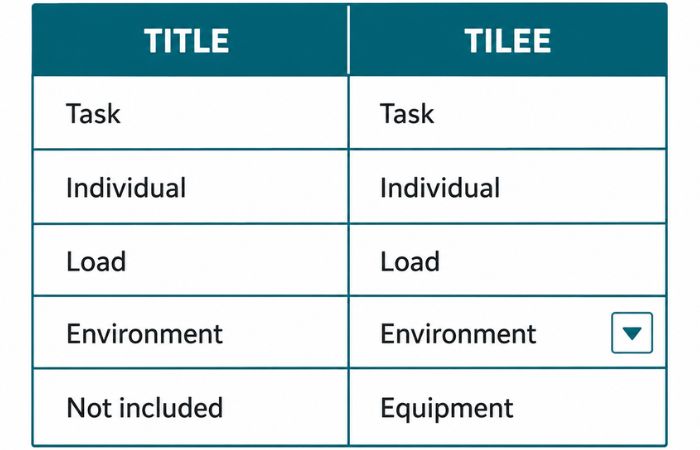
The biggest difference is Equipment. TILE does not include this step. However, TILEE asks workers to check if they need tools before they start the job.
For example, a trolley, lifting aid, or hoist can help move heavy items. These tools make the job easier and safer. They also help reduce the risk of injuries.
Who Needs to Use a TILEE Risk Assessment?
The TILEE safety check is useful for anyone who lifts, carries, pushes, or pulls items at work. It helps workers find risks before they start. This makes manual handling safer and helps prevent injuries.
Employers should use the TILEE method to keep their workplace safe. They should check manual handling tasks and give workers the right training and equipment. Warehouse workers move boxes and other heavy items every day. Construction workers also lift tools, materials, and equipment.
Healthcare staff and care workers often help move or support patients. They should check the risks before they start the task. This helps protect both the worker and the patient. Delivery workers carry parcels to different places every day. Office workers may also move boxes, furniture, or office equipment.
What are the Common Manual Handling Risks?
Manual handling can be risky if workers do not check the job first. Knowing the common risks can help prevent injuries. One common risk is lifting heavy objects. Heavy loads can hurt your back and muscles. Carrying awkward loads can also make the job harder because they are difficult to hold.
Poor posture, such as bending or twisting, can lead to injuries. Repeated movements can make your muscles tired and sore over time. A slippery floor can cause slips and falls. Workers should also have the right training before they lift or move items.
Finally, no lifting equipment can make the job unsafe. A trolley, lifting aid, or hoist can help move heavy loads more safely. By checking these risks before you start, you can work more safely and help prevent accidents.
Final Words
A TILEE risk assessment helps workers stay safe during manual handling. It helps you check the task before you lift, carry, push, or pull a load. These simple checks can help prevent back pain, muscle injuries and accidents.
The TILEE method also helps employers keep the workplace safe and follow UK health and safety rules. It is useful in warehouses, hospitals, construction sites, offices, and many other workplaces.
Taking a few minutes to check the risks can make a big difference. It helps you work safely, avoid injuries, and protect yourself and the people around you.
Frequently Asked Questions (FAQs)
1. What are the 5 points of a risk assessment?
The five main points are:
- Identify the hazards.
- Decide who could be harmed.
- Assess the risks and choose controls.
- Record your findings.
- Review and update the assessment when needed.
2. What are the 4 elements of TILE?
The four elements of TILE are:
- T – Task
- I – Individual
- L – Load
- E – Environment
3. What does the T In TILEE stand for?
- The T in TILEE stands for Task. It means looking at the job before you start. Check what you need to lift, carry, push, or pull.
4. What are the hazards of Tiling?
- Common tiling hazards include heavy lifting, bending for long periods, slips and trips, dust, sharp tools, and using adhesives or chemicals.
5. What is the 3 4 5 rule for TILEE?
- There is no official 3-4-5 rule in the TILEE manual handling method. If someone mentions this rule, they may be referring to a company policy or training programme, not the official TILE guidance.