
Starting a new life in the United Kingdom often means exploring new career options. Many people choose jobs where they can help others every day. This guide explains common support worker duties and how you can begin this rewarding career path in the UK care sector.
A support worker helps people with disabilities, mental health conditions, or older adults live safely and independently. In the UK, more than 1.6 million people work in adult social care, showing the strong demand for these roles. Support workers provide both physical and emotional help in daily life. Their duties include assisting with personal care, giving medication, completing household tasks, helping with shopping or finances, and supporting social activities. They may work in private homes, supported living settings, or care homes.
What Is a Support Worker in the UK?
A support worker is someone who helps vulnerable people live better lives. For example, these people may have disabilities or mental health problems or may be very elderly. In simple terms, your main goal is to help them feel safe, comfortable, and happy. However, you are not a doctor or a highly trained nurse. Instead, you act as a friend and a helper who provides important daily care.
In addition, many immigrants find this job a perfect start in Britain because it is easy to enter and is always in demand. This means that you can meet new people and practise your English skills at the same time. Moreover, the UK always needs kind and caring workers in this field. As a result, you can work in hospitals, private homes, or special care centres. Overall, every day gives you a new chance to help someone and make a real difference in their life.
What Are Common Support Worker Duties?
When you start this job, you will perform many different tasks. These support worker tasks change depending on the person you are helping. Some people need help with eating, while others just need a chat. You might help someone go to the grocery store for food. Alternatively, you may help them manage their money for monthly bills.
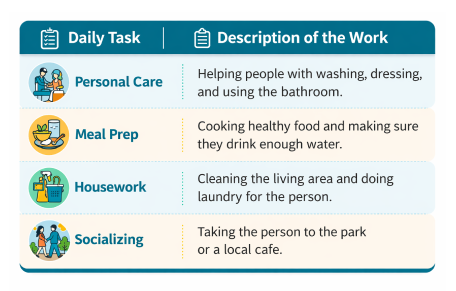
You must always treat the person with a lot of respect. This means asking them how they want things done in their home. Because everyone is different, you must learn their specific likes and dislikes. Small things, like how they take their tea, matter a lot.
How Do You Help People With Daily Life?
Helping with daily life means making sure the person stays healthy. First of all, you might need to remind them to take their morning medicine. However, you must always follow the rules written in their care plan. In fact, this plan tells you exactly what the person needs every single day. Therefore, following these instructions keeps everyone safe and prevents any big mistakes.
Furthermore, you will help people stay active and keep moving. This is because physical movement is very important for people who stay at home most of the time. For example, you might go for a short walk around the local block. Sometimes, you may only need to help them move from the bed to a chair. As a result, this prevents them from getting sore or feeling very stiff.
Next, you will also help with keeping the house tidy and clean. In general, a clean home makes people feel calmer and more relaxed. For instance, you might vacuum the carpets or wash the dirty dinner dishes. Although these tasks seem small, they are very helpful for the person you support. Because of this, people feel proud and comfortable when their living space looks nice, fresh, and bright.
Why Are Support Worker Duties So Important?
These support worker responsibilities are vital because they provide much-needed independence. Without your help, some people could not live in their own homes. They might have to live in a large hospital instead. Your support allows them to stay in a place they love. This creates a sense of freedom that everyone deserves to have.
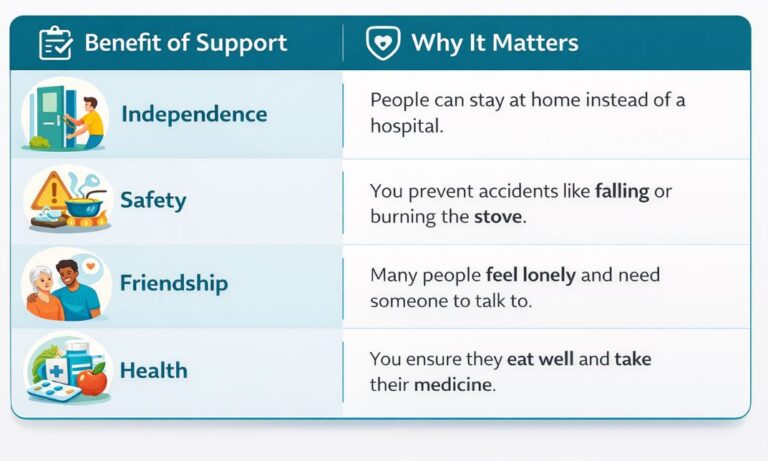
Furthermore, you act as the eyes and ears for the doctors. You notice if the person seems sad or feels a bit sick. Then, you can tell the manager or a family member quickly. This early warning can stop a small problem from becoming big. Your watchful eye is a very important part of the job.
What Is a Typical Day Like for a Worker?
To begin your day, you usually start with a friendly greeting and a smile. First, you should check if the person slept well during the night. After that, you might help them get dressed for the busy day ahead. Next, you can prepare a nice breakfast and some warm tea for them. Consequently, this simple routine helps the person feel calm and very well settled.
- First, check the daily care plan for any special medical notes.
- Help the person with their morning washing and basic hygiene.
- Prepare a nutritious meal that they enjoy eating.
- Clean the kitchen and the main living areas after the meal.
- Take the person outside for fresh air and light exercise.
- Write a short report about everything that happened during the shift.
Furthermore, later in the day, you might help with some fun activities. For example, this could include playing a board game or watching movies together. Additionally, some people enjoy doing crafts or listening to their favourite music. Most importantly, you should encourage them to do things they truly love. Because of this, building a strong bond makes the work feel very enjoyable.
Where Can You Work in This Role?
There are many different places where you can find employment. Some workers visit different houses throughout the entire morning and afternoon. This is called community care or “domiciliary” care in the UK. You get to travel around and see many different local areas. It is a great way to learn about your new city.
Other people work in a large building called a residential home. In this place, many people live together in their own rooms. You stay in one building for your whole working shift. This allows you to get to know the residents very well. You become part of a large team of helpful workers.
- Private Homes: You visit individuals in their own personal homes.
- Care Homes: You work in a building with many residents.
- Hospitals: You help patients who are getting ready to go home.
- Community Centres: You assist people during daytime fun activities.
You might even work in a school for children with needs. This involves helping kids learn and play safely during the day. It takes a lot of energy and a grin to work with youngsters. It is a very special way to use your kind heart. No matter where you work, your help is always valued.
What Skills Do You Need for This Job?
To begin with, you do not need fancy degrees to start this career. However, you certainly do need to be a very patient person. Sometimes, the people you help might feel frustrated or very confused. Therefore, you must stay calm and speak in a kind voice. In fact, being a good listener is more important than talking.
Additionally, another key skill is being able to follow safety rules. For example, you will learn about care worker responsibilities during training. This includes knowing how to lift things without hurting your back. It also means knowing how to keep private information very secret. Consequently, trust is the most important thing for your work.
- Patience: Staying calm when things take a long time.
- Communication: Speaking clearly and listening to what people need.
- Reliability: Always showing up for your work shift on time.
- Empathy: Understanding how another person feels inside their heart.
- Flexibility: Being ready to change tasks if the day changes.
Moreover, good communication is essential because you must write reports. You need to explain what happened during your time with them. These notes must be clear so other workers can read them. For instance, simple English is fine if the facts are correct. Finally, your team relies on these notes to provide great care.
How Do You Apply for These Jobs?
Finding a job as a support worker is usually quite simple. You can look on the internet for local care agency websites. Many companies are looking for staff right now in your area. You will need to create a simple resume, called a ‘CV’. This document lists your name, contact details, and any past work.
- Search for “support worker jobs” on Google or Indeed.
- Write a simple CV that shows you are a kind person.
- Apply to several different companies to increase your chances of luck.
- Prepare for a short interview by practising your English responses.
- Bring your identity documents to show you can work here.
During the interview, the manager will ask about your personality. They want to see if you are friendly and very helpful. You should tell them about the times you helped your own family. Showing that you care about others is the best way to get hired. Do not worry if you do not have much UK experience yet.
What Training Will the Company Give You?
Most companies provide free training before you start working alone. This training teaches you about health and safety in the UK. You will learn how to use equipment like hoists and chairs. You will also learn about the “Care Certificate”, which is standard. This certificate shows that you know the basic rules of care.
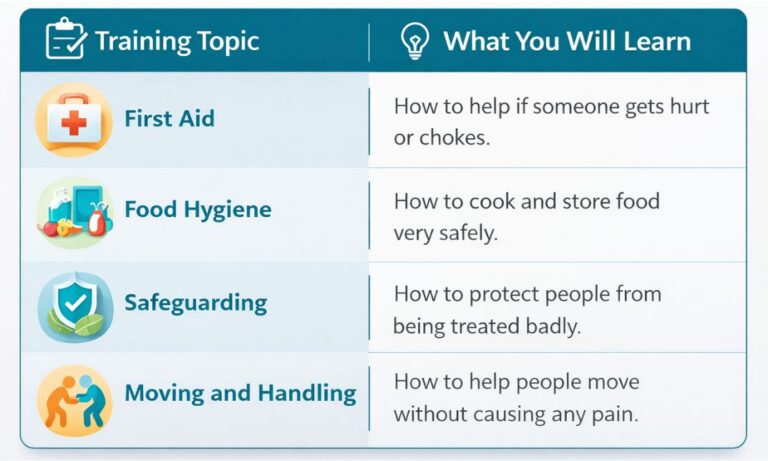
The training usually lasts for a few days or a week. You will meet other new workers who are also starting. This is a great time to ask questions and learn. Once you finish, you might shadow an experienced worker for a while. Shadowing means watching them work so you can learn the ropes.
Can You Progress in Your Career?
To begin with, being a support worker is just the start of your journey. For example, many people go on to become senior support workers later. As a result, you will lead a small team of other staff members. In the future, you might even decide to study to become a nurse. Furthermore, the UK government often helps people pay for this extra schooling.
You can also decide to specialise in a particular kind of care. For instance, maybe you enjoy helping people with autism or learning disabilities. Alternatively, you might prefer working with older people who have dementia. Consequently, specialising makes you an expert and can increase your monthly pay. Overall, there are many paths to take in the world of care.
Final Thoughts
Choosing to help others is a very noble thing to do. You will learn so much about life and British culture. Every shift you complete helps someone live a much happier life. While the work can be hard, the feeling of helping is great. Always remember the importance of your support worker duties every day. You are going to be a hero to the people you support in the UK.
FAQs
1. Can you name 5 key duties of a care assistant?
- A care assistant helps with personal care, gives medicine reminders, prepares meals, supports daily activities, and keeps clients safe.
2. Do support workers get paid well?
- Support workers earn a fair salary in the UK, and pay increases with experience, overtime, and night shifts.
3. What qualifications does a support worker need?
- You do not always need qualifications, but courses like Health and Social Care Level 2 or 3 are helpful.
4. What is the hardest part of being a support worker?
- The hardest part can be physical work, emotional stress, and caring for people with serious health needs.
5. What are 5 responsibilities of a support worker in care?
- A support worker helps with daily tasks, supports health needs, keeps records, provides emotional support, and follows care plans.
6. What are 10 key skills?
- Important skills include communication, patience, teamwork, kindness, problem-solving, responsibility, time management, listening, a caring attitude, and reliability.
7. Is support worker a stressful job?
- Yes, it can be stressful at times, but it is also rewarding because you help people live better lives.
8. How much should I pay a carer per hour?
- Depending on their region and level of experience, carers in the UK are typically paid between £10 and £15 per hour.