
Buying or selling a home is a very big life event. Therefore, understanding the role of an estate agent makes this process much smoother. They act as a helpful guide through the complex property world. Without them, finding the right buyer is often very difficult. In fact, they handle many tasks that keep your sales moving forward.
In the UK, agents connect people who want to move house. They solve problems and keep everyone calm during stressful times. Professional help is vital because the housing world changes quickly today. You need an expert to get the best price safely. Furthermore, they protect you from making costly legal mistakes.
What Is The Role Of An Estate Agent In The UK?
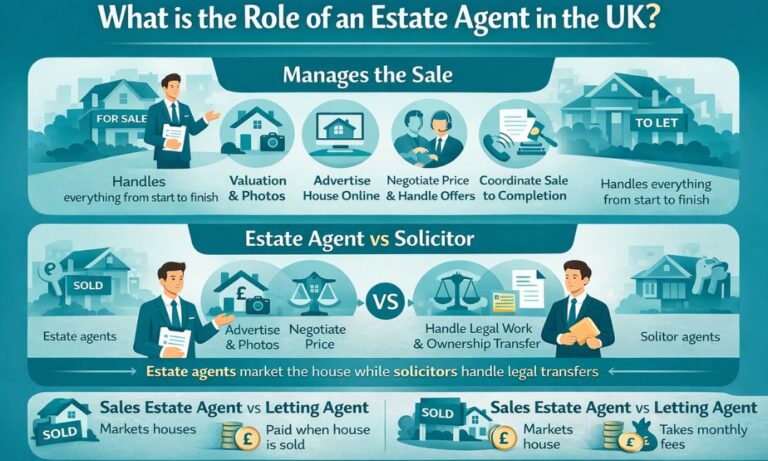
Many people are unsure what an agent actually does every day. Simply put, they manage the sale from start to finish. First, they visit your home to tell you what it is worth. Then, they take photos and put your house on the internet. However, their job does not end when they find a buyer.
They must also speak to other professionals to keep the deal alive. For example, they talk to the buyer’s mortgage lender regularly. They also ensure that paperwork moves between lawyers without delays.
How is an estate agent different from a solicitor or conveyancer?
This is a very common question for people new to the UK. An estate agent markets the house and negotiates the price. In contrast, a solicitor or conveyancer handles the legal work. The agent finds the buyer, but the solicitor changes the ownership. Agents cannot give legal advice because they are not lawyers.
What’s the difference between sales estate agents and letting agents?
Some agents sell houses, while others help rent them out. Sales agents focus on transferring ownership from a seller to a buyer. On the other hand, letting agents manage landlords and tenants. A sales agent is paid when the house is sold. A letting agent usually takes a monthly fee from the rent.
What Does An Estate Agent Do When Selling A Home?
Selling a house involves much more than just putting up a sign. A good agent works hard behind the scenes to find buyers. They use their skills to make your home look perfect.
How do agents value a property?
Valuing a home correctly is the first major step. Agents look at the prices of similar homes nearby. They call these “comparables” to justify the price to you. Also, they look at the current demand in your specific area. If many people want to move there, the price goes up.
They also use their local knowledge of schools and transport links. This helps them suggest a price that attracts interest quickly.
How do they market a property?
Marketing is how the agent shows your home to the world. They will list your home on big websites like Rightmove or Zoopla. Before that, they take professional photos to make rooms look bright. Additionally, they draw floor plans so buyers can see the layout.
They also arrange an Energy Performance Certificate (EPC) for the house. This document tells buyers how energy-efficient the building is.
Do estate agents handle viewings and buyer screening?
Yes, managing viewings is a huge part of their daily job. Good agents show buyers around your home to answer their questions. This is better than doing it yourself because they are professional sellers. Furthermore, they screen buyers before they enter your home.
They check if the person can actually afford to buy the house. This saves you time and keeps your home secure.
How do agents negotiate offers and manage bidding situations?
When a buyer likes your home, they make an offer. The agent passes this offer to you immediately. However, their job is to get you the highest price possible. They will negotiate with the buyer to increase their initial bid.
Sometimes, two buyers want the same house at the same time. The agent manages this “bidding war” to get the best result.
What is “sales progression”, and why does it matter in the UK?
Sales progression happens after you accept an offer. It is perhaps the most frustrating part of the UK system. The agent chases solicitors, surveyors, and mortgage brokers to speed things up. Without this pressure, the sale might drag on for many months. Good progression stops the buyer from changing their mind.
How Do Estate Agents Help Buyers?
Although agents work for the seller, they also help buyers significantly. They are the main point of contact for booking viewings. They can explain the local area to someone new to the town.
Do agents have a duty to the buyer or the seller in the UK?
Legally, the estate agent works only for the seller. Their goal is to sell the property for the most money. Therefore, buyers should remember the agent is not on their side. However, the agent must still treat the buyer honestly and fairly. They cannot lie about the condition of the house.
How do agents manage enquiries, viewings, and offers fairly?
Agents receive hundreds of phone calls and emails every week. They must organise these enquiries so no one is ignored. When booking viewings, they try to be fair with time slots.
If a buyer makes an offer, the agent must tell the seller. It is against the law to hide an offer from the owner. This rule ensures the system remains fair for everyone involved.
What information should agents disclose?
New rules say agents must disclose “material information” upfront. This means they must share important facts about the property. For example, they must mention council tax bands and asking prices. They must also list physical issues like flood risks or damp.
This helps buyers decide before they travel to view. It stops people from wasting time on unsuitable homes.
Can agents recommend brokers, surveyors, or solicitors?
Agents often suggest other professionals to help the deal move. They might recommend a specific solicitor or a mortgage broker. However, you do not have to use the person they suggest. You are free to choose your own independent advice.
Sometimes, agents get a referral fee for these recommendations. They should tell you if they earn money from this.
How Do Estate Agents Get Paid In The UK?
Estate agents usually only get paid if they sell the house. This is known as a “no sale, no fee” arrangement. It motivates them to work hard for your success.
What are typical estate agent fees, and what affects the price?
Fees vary depending on where you live in the UK. Usually, agents charge between 1% and 3% of the sale price. In London, the fees might be higher due to high costs. Additionally, VAT (a tax) is added on top of the fee. Always ask if the quote includes VAT to avoid surprises.
What’s the difference between a fixed fee and a percentage commission?
Some agents, often online ones, charge a fixed fee upfront. This is a set price, like £999, regardless of the sale price. Traditional high street agents usually take a percentage commission. This means if they sell for more, they earn more.
The percentage model aligns their interests with yours effectively.
When do you pay the agent?
With a traditional agent, you pay when the sale completes. The money is usually taken directly from the sale proceeds. Your solicitor sends the fee to the agent on completion day.
If you choose an online agent, you might pay upfront. This means you pay even if the house does not sell.
What is a “ready, willing and able buyer” clause?
Be very careful with this specific contract clause. It says you must pay if the agent finds a buyer. Even if you decide not to sell, you still owe money. Most experts suggest you should refuse this type of clause. You should only pay if the sale actually happens.
What Types Of Estate Agent Contracts Can You Sign?
There are different agreements you can make with an agent. Understanding these terms prevents legal headaches later on.
| Agreement Type | Description |
| Sole Agency | One agent sells your home. If you find a buyer yourself, you don’t pay. |
| Joint Agency | Two agents work together to sell. They split the fee at the end. |
| Multiple Agency | Many agents compete. Only the winner gets paid. Fees are usually higher. |
What is a “sole selling rights” agreement?
This is stricter than a sole agency agreement. With sole selling rights, the agent gets paid no matter what. Even if you find a buyer yourself (like a friend), you pay. This gives the agent total control over the sale fee.
How long are tie-in periods and notice periods usually?
Contracts usually lock you in for a specific time. This “tie-in period” is often between 12 and 24 weeks. If you leave early, you might face a penalty fee.
There is also a notice period to cancel the contract. This is typically two weeks of written notice.
What questions should you ask before signing an agency agreement?
- How long is the tie-in period in this contract?
- Does the fee include VAT, or is it extra?
- Will you charge me for marketing if I withdraw?
- Do you have a list of buyers waiting?
What Legal and Regulatory Rules Do UK Estate Agents Follow?
The UK property industry has rules to protect consumers. However, it is not as strictly regulated as you might think.
Do estate agents need a licence in the UK?
Surprisingly, estate agents do not need a formal license to operate. Anyone can open an estate agency business tomorrow. This is why checking their reputation is so important.
Which key laws apply?
The Estate Agents Act 1979 is the main law. It sets the basic standards for honest behaviour. Another key law is the Consumer Protection from Unfair Trading Regulations (CPRs). This prevents agents from making false claims about a property.
What are redress schemes, and why do they matter?
Although they don’t need a licence, agents must join a redress scheme. The two main ones are the Property Ombudsman and the Property Redress Scheme. If an agent treats you badly, you can complain here.
These schemes can order the agent to pay you compensation. It gives you a safety net if things go wrong.
What is the agent’s role in anti-money laundering?
Agents must check that your money comes from a legal source. They will request proof of address and your passport. They also need to see bank statements for the funds. This is a legal requirement to stop criminals from washing money.
What Skills Make A Good Estate Agent?
Not all agents offer the same level of service. The best ones have a mix of soft and hard skills.
What does “local market knowledge” look like in practice?
A great agent knows exactly who lives in your area. They know which streets are popular and which are noisy. They can tell you about local school catchment areas accurately. This knowledge helps them answer tricky questions from buyers.
How important are communication and negotiation skills?
Communication is the most important skill for any agent. They need to keep you updated every few days. Negotiation skills are essential when buyers try to lower the price. A skilled negotiator can add thousands of pounds to your final price.
How do great agents qualify buyers and reduce fall-throughs?
“Qualifying” means checking if a buyer is serious. Good agents ask tough questions about the buyer’s finances. They ensure the buyer has a mortgage agreement in principle. This prevents the sale from collapsing weeks later.
What tech and marketing capabilities should modern agents have?
Modern agents should use digital tools to sell faster. This includes using social media to reach younger buyers. They should also have a mobile-friendly website. Virtual tours are also becoming very popular for busy buyers.
You can learn more at our “Real Estate Agent Requirements in the UK: A Simple Guide” blog for details.
What Is The Role Of An Estate Agent in a Quick Sale or Chain?
Sometimes, selling a home is complicated by other people. Agents manage these complex situations to keep things moving.
How do agents manage chains and reduce delays?
A “chain” happens when buyers and sellers are linked together. If one person pulls out, the whole chain breaks. The agent talks to other agents in the chain regularly. They identify problems early and try to fix them quickly.
What can agents do when surveys downvalue a property?
Sometimes a bank surveyor says the house is worth less. This is called a “down valuation” in the industry. The agent will try to provide evidence to challenge this. Alternatively, they help renegotiate the price to save the deal.
How do they handle gazumping risks in England and Wales?
“Gazumping” is the practice of a seller later accepting a greater offer. This leaves the first buyer upset and out of pocket. Agents cannot stop this, but they can advise against it. They try to move the sale quickly to prevent it.
What’s different in Scotland?
The system in Scotland works very differently from England. Sellers there must provide a “Home Report” before marketing. Offers are usually “blind”, meaning you don’t know what others bid. Agents in Scotland guide sellers through this “closing date” process.
How To Choose The Right Estate Agent In The UK?
Picking the right partner is crucial for a good result. You should interview a few agents before deciding.
What should you compare?
Don’t just look at who charges the lowest fee. Compare their marketing plans and their photo quality. Ask them how often they will call you. Also, look at their track record in your neighbourhood.
What questions should you ask at a valuation appointment?
- How many homes have you sold here recently?
- What is the current property market like right now?
- Where will you advertise my home for sale?
- Who exactly will handle my viewings?
How can you check reviews, sold prices, and local performance?
Look at Google Reviews to see what past clients say. Check websites that show how close they get to the asking price. You want an agent who achieves the price they promised.
What are the red flags?
Be careful if an agent gives a very high valuation. They might just want to win your business. Long tie-in periods of 20 weeks are also a bad sign. If they are slow to reply now, they will be slow later.
Common Mistakes Sellers Make When Hiring An Estate Agent
Many sellers rush this decision and regret it later. Avoiding these errors saves you time and stress.
- Choosing based on the highest valuation: Some agents overprice homes deliberately.
- Not reading contract terms: Always check for hidden costs and tie-ins.
- Underinvesting in presentation: Bad photos make buyers scroll past your ad.
- Not agreeing on a communication cadence: Ensure they update you weekly.
Conclusion: Is Hiring An Estate Agent Worth It?
A good agent reduces stress and protects your money. They handle hard work so you can focus on moving. The role of an estate agent is truly essential for success. They navigate legal steps and negotiate the best price.
Always check their track record before you sign anything. Look for Propertymark members to ensure high standards. Choose wisely to enjoy a smooth, successful home sale.
FAQs
1. What is an estate agent’s role?
- An estate agent helps clients buy, sell, or rent properties and manages the sales process from listing to completion.
2. What are the 5 P’s of real estate?
- The 5 P’s of real estate are price, product, promotion, place, and people.
3. Is being an estate agent a hard job?
- It can be challenging because it involves sales targets, client communication, and market competition.
4. What are the five duties of an agent?
- Key duties include valuing properties, marketing listings, arranging viewings, negotiating offers, and handling paperwork.
5. Is an estate agent the same as a solicitor?
- No, an estate agent sells and markets properties, while a solicitor handles legal aspects of the transaction.
6. Do estate agents earn a lot of money?
- Estate agents can earn good money through salary and commission, especially with more sales and experience.