
Most often, moving to a new country brings many exciting challenges. You might be looking for a rewarding new career here. The property market is a very popular choice for many. You may wonder if you need a real estate license UK. In many countries, a license is strictly required by law. However, the United Kingdom works a little bit differently.
This can be confusing for new residents in the UK. You do not need a formal government license to start. But you cannot just do whatever you want. There are still many important rules to follow. This guide will help you understand the system. We will explain the real estate license in the UK situation clearly. You will learn the actionable steps to succeed. Get ready to start your journey in property sales.
Do You Need a Real Estate License UK to Become an Estate Agent?
Many immigrants are surprised by the UK property laws. You might think a strict license is mandatory.
Is a licence legally required in the UK?
Technically, you do not need a specific licence. The government does not force you to pass an exam. You can start working as an agent immediately. This applies to both sales and letting agents. Therefore, it is easier to enter this industry. You do not have to wait for months.
What does UK law say about property professionals?
The law focuses on conduct rather than licenses. You must follow the Estate Agents Act 1979. This law sets the rules for honest behaviour. If you break these rules, you get banned. So, while there is no real estate license UK, there are laws. You must be honest and fair with clients.
Differences between the UK and countries that require licensing
In the USA, you must study and pass exams. You cannot sell a house without a licence. In the UK, entry is much more open. However, this creates a lot of competition here. Anyone can set up an estate agency business. Consequently, you need to prove you are trustworthy.
What qualifications are recommended instead?
Since you do not need a licence, training matters. Employers look for people with recognised voluntary certificates. This shows you know what you are doing. It helps you understand the real estate license UK landscape. We will discuss these specific qualifications in the next section.
How to Get a Real Estate License UK (And What You Actually Need Instead)
Since there is no official licence, what do you need? You need to build a portfolio of trust.
Are there any mandatory certifications?
No single certificate is required by the government. However, most top agencies will ask for them. They want to know you understand the market. Getting certified protects you and your future clients.
Propertymark qualifications explained
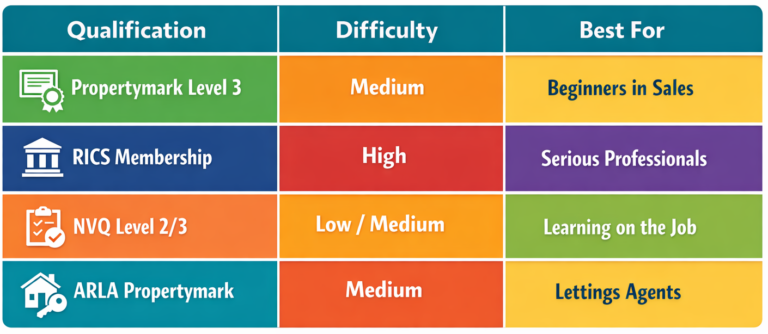
Propertymark is a leading body for estate agents. They offer courses that act like a license. They teach you everything about selling and letting. This is the closest thing to a real estate license UK. Employers respect these certificates very much.
Level 3 Award in Residential Sales overview
This is a great starting point for beginners. It is perfect for those new to the UK.
- Health and Safety: Keeps everyone safe during viewings.
- General Law: Teaches you the basic legal rules.
- Property Appraisal: How to value a home correctly.
- Building Construction: Understanding how houses are built here.
How to register with a redress scheme
You must join a government-approved redress scheme. This is actually a legal requirement for agents. It acts like a referee for customer complaints. If a client is unhappy, they go here. That’s why you cannot trade legally without joining one.
Anti-money laundering (AML) registration requirements
You must register with HMRC for anti-money laundering. This prevents criminals from buying houses with dirty money. It is a very serious part of the job. Failing to register can lead to huge fines. Therefore, treat this like your real estate license UK.
What Qualifications Help You Stand Out in the UK Property Market?
You want to beat the competition for jobs. Having extra qualifications makes you look very professional.
Propertymark (NAEA) qualifications
NAEA stands for the National Association of Estate Agents. Being a member shows you are a professional. You get to use special letters after your name. It tells clients you follow a code of conduct. This builds instant trust with people new to you.
RICS membership
The Royal Institution of Chartered Surveyors is prestigious. This is for very high-level property professionals. It is harder to get than other certificates. However, it commands the highest respect in the industry. It is the gold standard globally, not just here.
NVQs in Estate Agency
National Vocational Qualifications are practical, work-based awards. You earn these while you are actually working. This is great if you prefer learning by doing. It proves you have practical skills, not just theory.
Lettings and property management certifications
Letting agents manage rented houses for landlords. This requires different knowledge than selling houses. You need to know about tenant rights. A certification in lettings and property management helps. It ensures you know the specific rental laws.
How Much Does It Cost to Start a Career in UK Real Estate?
Starting a new career always costs some money. Fortunately, it is cheaper than many other businesses.
Course and qualification fees
Studying for the real estate license UK equivalent costs money.
- Level 3 Award: Expect to pay around £300 to £500.
- Study Materials: Books might cost an extra £50.
- Exam Fees: You pay for each exam you sit.
Registration and compliance costs
If you open your own agency, you pay more.
- Redress Scheme: Costs about £200 to £300 per year.
- HMRC Registration: This fee is for money laundering checks.
- Data Protection: You must pay a small fee to the ICO.
Ongoing professional membership fees
Joining Propertymark or RICS involves an annual fee. This usually costs a few hundred pounds yearly. However, the benefits are worth the cost. You get legal advice and marketing help.
Insurance requirements (PI insurance)
Professional Indemnity (PI) insurance is essential. It protects you if you give bad advice. If a client loses money, insurance covers it. You cannot operate safely without this protection. Costs vary based on your business size.
Can You Start an Estate Agency Without Qualifications?
You might ask, “Can I just start today?” The answer is yes, but be very careful.
Legal requirements to open an agency
You do not need a real estate license UK. You can rent an office and open up. Hence, you simply need to register your business legally. This freedom is why the UK market is busy.
Compliance obligations
Even without exams, you must follow the law. You must join a redress scheme immediately. You must also register for anti-money laundering supervision. If you miss these, you are breaking the law. Ignorance of the law is not a defence.
Risks of operating without training
Without training, you will likely make big mistakes. You might price a house incorrectly. You might fail to disclose property faults. These mistakes can lead to lawsuits or fines. Therefore, skipping training is a very risky move.
Building trust with clients
Clients want to know they are safe. If you have no credentials, they worry. They trust agents with their most valuable asset. Showing a certificate proves you are serious. Also, it helps overcome the lack of a formal licence.
What Are the Legal Requirements for UK Estate Agents?
Since there is no real estate license in the UK, laws are strict. You must know these acts to avoid trouble.
Estate Agents Act 1979 explained
This is the most important law for agents. It says you must be honest and clear. You must tell clients about all offers received. You cannot hide information to make more money. It also allows the government to ban bad agents.
Consumer Protection Regulations
These rules protect the buyer and the seller. You cannot make false claims about a house. For example, you cannot say a roof is new if it is old. You must be truthful in all your advertisements.
AML supervision and HMRC registration
We mentioned this before, but it is vital. You must check the ID of your clients. You must know where their money comes from. This stops criminals from using property to hide cash. You must report anything suspicious to the authorities.
Joining a government-approved redress scheme
There are two main schemes in the UK.
- The Property Ombudsman
- The Property Redress Scheme
You must join one of these organisations. They solve disputes between you and your clients. This ensures fair treatment for everyone involved.
How Long Does It Take to Start a Career in UK Real Estate?
You are probably eager to start earning money. The timeline depends on your chosen path.
Timeframe for completing qualifications
Studying for a Level 3 Award takes time. Most people finish it in three to six months. You can study at your own pace. If you study hard, you finish faster. This acts as your real estate license in the UK preparation.
Fast-track options
Some intensive courses allow faster completion. You could finish training in just a few weeks. These courses are often full-time and intense. They are great if you are in a hurry.
Gaining practical experience
Many people start working as a trainee. You learn while you earn a salary. This is the fastest way to start. You can get qualified later while you work. It usually takes a year to feel confident.
Tips for Passing the Real Estate License Requirements
Even though it is voluntary, passing exams helps. Here is how to succeed in your studies.
Study tips and recommended resources
You should buy the official textbooks first. Read them carefully and take many notes. There are also online mock exams available. These practice tests help you prepare for questions. Joining study groups can also be very helpful. Furthermore, try to read UK property news daily. This helps you understand the current market language.
How to gain practical experience
Try to get a weekend job first. Many agencies need help on Saturdays. You can conduct viewings or help in the office. This experience is worth more than just reading. It shows you the reality of the job. You will meet real buyers and sellers.
Common mistakes to avoid during the application
When applying for jobs, be very honest. Do not say you have a real estate licence. Instead, say you are “studying for qualifications”. Employers appreciate honesty and a willingness to learn. Also, check your CV for spelling errors. Attention to detail is vital for contracts.
Career Opportunities After Getting a Real Estate License
Once you are trained, many doors open. The UK property market is huge and diverse.
- Estate agent roles and salary expectations: You usually start as a trainee negotiator. The starting salary is often around £18,000 to £25,000. However, you also earn commission on sales. Successful agents can earn much more than this. Senior managers often earn over £50,000 per year. After all, the sky is the limit if you sell well.
- Self-employment vs joining an agency: You can choose to work for yourself. This gives you freedom and higher commission. However, you must pay your own business costs. Joining an established agency provides security and training. For new immigrants, joining an agency is usually safer.
- Long-term career paths and progression: You can move up the ladder quickly. You might become a branch manager in five years. Some agents eventually open their own businesses. Others move into property development or investment. Therefore, your real estate license knowledge is the foundation.
Final Thought: Is a Career in UK Real Estate Worth It in 2026?
You have learned a lot about the industry. Now, you must decide if it is right for you.
Salary expectations
The potential earnings in real estate are high. While the base salary is low, commissions help. Hard workers are rewarded very well in this job. Besides, if you are good at talking to people, you win.
Commission structure
Agents usually take a percentage of the sale price. In the UK, this is often around 1% to 2%. On a £300,000 house, that is good money. This motivates you to sell more and more.
Job demand and growth outlook
People in the UK always need to move homes. They get married, have kids, or change jobs. Therefore, estate agents are always in demand. The market changes, but it never stops completely.
Pros and cons of the industry
- Pros: High earning potential and meeting new people. Every day is different and very exciting.
- Cons: The hours can be very long. You often have to work on weekends.
In conclusion, you do not need a real estate license UK by law. But getting qualified is the smart choice. It builds trust and helps you succeed. With the right attitude, you can thrive. So, start your study, get experience, and enjoy your new career!
FAQs
1. How to get a real estate licence in the UK?
- There is no mandatory licence, but completing property training courses can improve your job prospects.
2. How much is a real estate license in the UK?
- Since no official licence is required, training courses typically cost between £200 and £2,000.
3. Do realtors make good money in the UK?
- Earnings vary, but successful estate agents can earn strong commission-based income.
4. What GCSE do I need to become a real estate agent?
- There are no strict GCSE requirements, though Maths and English are helpful.
5. What is the hardest part of the real estate exam?
- Many learners find legal rules and property regulations the most challenging topics.
6. Can I become an estate agent with no experience?
- Yes, many people enter the industry without experience and learn through training or work.