
Great hair teachers help students build skills for life. In the UK, more than 63,800 hair and beauty businesses support the industry. So, skilled teachers matter more than ever.
If you want to know how to teach hairdressing, this guide will help you. You will learn easy ways to plan lessons and teach practical skills. Also, you will see how to build student confidence every day. We will share simple teaching tips, useful classroom ideas, and smart assessment methods. In addition you will learn how to plan learners for salon work. Let’s look at the key steps, skills and teaching methods that help learners succeed in hairdressing.
Why Should You Consider a Career in Hair Education?
A career in hair education gives you the chance to share your skills every day. You help new learners build confidence and prepare for real salon work. Also, you stay connected to an industry you already enjoy.
Make a Real Difference
Teaching hairdressing is more than showing techniques. You help learners improve their skills and reach their career goals. As they grow, you become part of their success.
Enjoy Great Career Benefits
Hair education offers many rewards, including:
- Regular working hours in many teaching roles.
- The chance to work in colleges or training centres.
- Opportunities to train apprentices and adult learners.
- A career that keeps your salon skills up to date.
Build a Long-Term Career
Many hairdressers move into teaching after several years in a salon. This career lets you use your experience in a new way. You can also continue learning about new styles, products, and trends. As a result, your knowledge stays fresh and valuable.
Where Can You Work?
Qualified hair educators can work in different places, such as:
- Further education colleges.
- Private training academies.
- Beauty and hair brands.
- Workplace training programmes.
Each role offers new challenges and fresh opportunities.
What are the Challenges of Teaching Hairdressing in the UK?
Teaching is not always easy and requires a lot of patience. One big challenge is keeping up with the new T-Levels. These are new technical qualifications launched by the UK government. You must read the official guidelines to stay on track. Furthermore, every student learns in a very different way here.
Some students learn by watching you work. They need to see each step clearly. Other students learn by doing the task themselves. So, let them practise often. You should change your teaching style to help every learner do well.
Also, use digital tools to make lessons more fun. For example show videos of famous stylists. This can give students new ideas and spark their creative interest. As a result they stay interested and enjoy learning more.
Use social media to teach them about building a brand. Managing different personalities in one room can be quite hard. However, seeing a student pass their exam is very rewarding. It makes all the difficult days feel completely worth it.
How to Teach Hairdressing in the UK?
Teaching hairdressing is a great career if you enjoy helping others learn. You need the right qualifications, real salon experience, and good teaching skills. Also, you should keep learning to teach the latest salon methods.
- Gain a Hairdressing Qualification: Start with an NVQ Level 2 or Level 3 in Hairdressing. This gives you the practical skills you need. Most training providers and colleges expect this qualification.
- Build Salon Experience: Work in a salon for at least three to five years. During this time, improve your cutting, colouring, and styling skills. Real experience also helps you teach with confidence.
- Get a Teaching Qualification: Complete the Level 3 Award in Education and Training (AET). Then, study Level 4 CET or Level 5 DET if you want to teach full-time in colleges.
- Gain an Assessor Qualification: Take the CAVA qualification if you want to assess learners. This helps you mark practical work and give useful feedback.
- Keep Your Skills Up to Date: Join training courses and learn new hair trends often. This helps you teach modern techniques. As a result, your learners stay ready for today’s salon industry.
What Qualifications Do You Need to Teach Hairdressing in the UK?
You need hairdressing skills and teaching skills. Both are important. Together, they help you teach learners with confidence.
Get Hairdressing Experience
First, you need a hairdressing qualification. Most tutors hold an NVQ Level 2 or Level 3. An equal qualification also works. You should also have 3 to 5 years of salon experience. This helps you teach real salon skills every day.
You should know how to:
- Cut hair.
- Colour hair.
- Style hair.
- Care for clients.
Gain a Teaching Qualification
Next, you need a teaching qualification.
- Level 3 Award in Education and Training: A good first step for adult teaching.
- Level 4 Certificate in Education and Training: Helps you teach in more settings.
- Level 5 Diploma in Education and Training: Best for full-time college teaching.
Learn to Assess Learners
Many training centres also want assessment qualifications.
- Level 3 CAVA: Lets you assess NVQ and SVQ practical work.
- IQA Qualification: Helps you check assessment quality and keep standards high.
Start Your Teaching Career
The right qualifications open more career opportunities. They also help you teach with confidence. Most employers want both teaching skills and salon experience. When you have both, you can train the next generation of hairdressers.
How Do You Transition from a Senior Stylist to a Teacher?
Moving from the salon chair to the classroom takes time. First, you should start building a very professional work portfolio. Take high-quality photos of the hairstyles you create every week. These images prove that you know how to teach hairdressing.
They show that you understand modern styles and technical rules. Next, try to find “shadowing” experience at a local college. This means you watch an experienced teacher during their lessons. You will learn how they manage many different student needs.
Moreover, you must stay current with every new hair trend. The UK hair scene changes very quickly every single season. You should follow famous British stylists to see their techniques. Read industry magazines to learn about the newest hair products.
Finally practice explaining your actions while you are working now. Talk through your process out loud to your current clients. This helps you get used to describing every small movement. It builds your confidence before you step into a classroom.
How to Teach Hairdressing: From Stylist to Tutor
Many hairdressers decide to teach after spending years in a salon. They want to share what they have learned with others. Teaching lets them help new hairdressers start their careers while doing work they enjoy.
First, get good salon experience. Most employers want people with several years of hands-on work. Next, get a recognised teaching qualification, such as the Level 3 (AET). You may also need an assessor qualification for some teaching jobs.
Next work on your teaching skills. Keep your lessons easy to follow. Explain each step as you go. Show learners how to do the task first. Then give them time to try it on their own. Watch their work and give simple tips to help them improve. Good feedback helps learners feel more confident each time they practise.
You should also keep your hairdressing skills up to date. Learn new styles, tools and trends. As a result your lessons stay fresh and useful.
Finally, apply for jobs at colleges, training providers or private beauty academies. Some salons also hire in-house trainers. With the right skills, qualifications and experience, you can move from stylist to tutor. Then you can help others build a successful hairdressing career.
How Do You Structure a Hairdressing Lesson Plan?
Every good lesson starts with a very clear, simple plan. You must set learning objectives for every single class session. These goals should follow the City & Guilds or VTCT standards. Tell your students exactly what they will learn by lunch. For instance, they might learn how to apply a tint.
Also, you must include Health and Safety in every lesson. Mention the COSHH rules which cover all hazardous substances used. This keeps everyone safe from skin allergies or breathing problems. You should balance your time between theory and practical work.
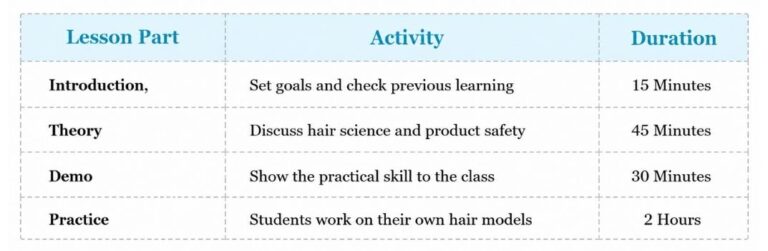
Theory work usually involves trichology, the study of the hair. You must explain how hair grows and why it breaks. However, most students prefer the hands-on workshop time in class. Make sure you give them plenty of time to practice. Always finish the day with a quick summary of lessons.
How Much Do Hairdressing Teachers Earn in the UK?
Hairdressing teachers can earn a good salary in the UK. Your pay depends on your experience, qualifications, and employer. Also, your location and job role can affect your earnings. College tutors often earn a yearly salary. However, freelance trainers may earn more if they teach regular courses.
Average Hairdressing Teacher Salary
Most hairdressing teachers earn:
- New tutors: £25,000 to £30,000 per year.
- Experienced tutors: £30,000 to £40,000 per year.
- Senior tutors or course leaders: £40,000 to £45,000+ per year.
Many colleges also offer pension schemes, paid holidays, and staff training.
What Can Increase Your Salary?
You can earn more if you have:
- 5 or more years of salon experience.
- Teaching qualifications such as AET, CET or DET.
- Assessment awards, including CAVA or IQA.
- Specialist skills in barbering, colouring or hair extensions.
- Experience managing courses or leading teaching teams.
Each qualification and skill can help you move into higher-paid roles.
Can Freelance Hairdressing Teachers Earn More?
Yes. Many tutors also work as freelance trainers. They may teach salon staff, apprentices, or beauty brands. Some charge £150 to £300 a day for training. Others earn more by running their own workshops or online courses.
Hair education offers steady career growth and good earning potential. As your skills grow, you can take on senior roles, freelance work, or even start your own training academy.
Where Can You Find Hairdressing Teaching Jobs in the UK?
Hairdressing teachers work in many places across the UK. Your skills and qualifications can open many career paths. So, you can choose a job that suits your experience and goals.
Common Places to Find Jobs
You can apply for jobs at:
- Further education colleges: Teach students who want to start a career in hairdressing. You may teach both theory and practical lessons.
- Private hair and beauty academies: Train learners in salon skills. These centres often offer short courses and professional qualifications.
- Independent training providers: Teach apprentices and adult learners. You may also visit salons to support learners at work.
- Apprenticeship training centres: Help apprentices learn while they work in a salon. You also assess their progress and give feedback.
- Hair and beauty product companies: Teach salon teams how to use new products and tools. You may also deliver workshops and live demonstrations.
These employers often look for skilled hairdressers who enjoy teaching.
Where to Search for Jobs
You can find hairdressing teaching jobs on trusted job websites. Each website offers different job opportunities.
- GOV.UK Find a Job – Find teaching jobs in colleges, training centres, and other education settings across the UK.
- Indeed UK – Search thousands of teaching jobs. You can also search by location, salary, or working hours.
- Reed – Find hairdressing tutor, assessor, and trainer jobs. You can also set up job alerts.
- Totaljobs – Look for full-time, part-time, and freelance teaching jobs across the UK.
- FE Jobs – Find jobs in further education colleges. It also lists vocational tutor and lecturer roles.
Build More Opportunities
You can improve your chances of getting a hairdressing teaching job by taking a few simple steps.
- Keep your CV up to date: Add your latest work, skills, and qualifications. A clear CV helps employers learn about you quickly.
- Show your salon experience: Include the years you worked in a salon. Also, mention your skills, such as cutting, colouring, and styling.
- Add your teaching and assessment qualifications: List qualifications like AET, CAVA, or IQA. These show that you can teach and assess learners.
- Join professional groups: Meet other hairdressers and tutors. You can also hear about new jobs and learn from others.
- Go to industry events: Visit hair shows, training days and career events. You can build new contacts and find more job opportunities.
These steps can help you meet employers and find new job openings. With the right skills and regular job searches, you can find rewarding hairdressing teaching jobs across the UK.
Final Thought
Understanding how to teach hairdressing is a journey that changes lives. You move from being a stylist to becoming a mentor. This role is vital for the future of our industry. Always remember to stay patient and kind with your learners. Start by getting your AET Level 3 qualification very soon. This first step opens many doors for your new career. You have the power to inspire many people with talent.
Take the leap and start your journey into education today. The UK industry is waiting for your unique, creative skills. We wish you the very best of luck with teaching. Your passion will help create the stylists of tomorrow here. Maintain focus on your goals and continue to study every day.
FAQs
1. What do I need to teach hairdressing?
- You usually need an NVQ Level 2 or 3 in Hairdressing, salon experience and a teaching qualification such as the Level 3 AET.
2. How much do hairdressing teachers earn?
- Hairdressing teachers in the UK often earn between £25,000 and £40,000 a year. Pay depends on your experience, employer and location.
3. What are seven important qualities of a hairdresser?
- Good communication
- Creativity
- Patience
- Attention to detail
- Time management
- Friendly attitude
- Good customer service
4. What qualifications do I need to teach hair extensions?
- Most employers expect a recognised hair extension qualification, strong salon experience, and a teaching qualification such as the Level 3 AET. Some training providers may have extra requirements.
5. Do hairdressers earn good money?
- Yes. Many hairdressers earn a good income, especially with experience, loyal clients or their own salon. Offering extra services can also increase earnings.
6. Can I get into teaching without a degree?
- Yes. You do not always need a degree. Many hairdressing teachers start with vocational qualifications, industry experience and a recognised teaching qualification.
7. How much do hairdressers charge per hour?
- Many UK hairdressers charge £30 to £100 or more per hour. Prices depend on experience, location and the service provided.
8. How much do hairdressers get paid a month in the UK?
- Many employed hairdressers earn around £1,800 to £2,500 a month before tax. Experienced professionals and salon owners may earn more.