
A fridge can look clean while food residue, crumbs and moisture hide in less obvious places. Door seals, drain holes, drawer tracks and air vents often need extra attention. So, how to clean a refrigerator properly? Just start by keeping chilled food cold while you empty the fridge. Then remove the shelves and drawers, clean the inside from top to bottom and pay attention to hidden areas.
Once the main surfaces are clean, check the seals, drain area and air vents. Then dry every surface before putting the food back. Also, check your fridge manual before cleaning special parts or using any cleaning product.
Now, let’s look at the best way to clean a refrigerator in detail from top to bottom.
Why Does Your Refrigerator Need Regular Cleaning?
Regular fridge cleaning helps protect your food and prevent common fridge problems. Here are the main reasons:
- Reduce cross-contamination: Raw meat and fish can leave harmful bacteria on fridge surfaces. Cleaning spills helps prevent bacteria from spreading.
- Remove hidden food residue: Crumbs, sauces and food pieces can collect under drawers and around shelves. Regular cleaning removes this hidden build-up.
- Prevent bad smells: Spoiled food and old spills can cause strong odours. Cleaning the source helps keep the fridge smelling fresh.
- Keep the drain clear: Food debris can block the fridge drain hole. This can cause excess water to build up inside the fridge.
- Limit mould and bacterial growth: Moist food residue can support mould and bacteria. Cleaning removes the dirt and moisture they need.
- Protect your stored food: Cleaning helps you spot spoiled food, leaks and damaged containers. It also makes food easier to check.
- Spot fridge problems early: Cleaning lets you check seals, vents and drainage areas. You may notice problems before they become more serious.
A clean fridge does more than look good. It helps keep food storage safer and prevents avoidable appliance problems.
How to Clean a Refrigerator Properly?
The best way to clean a refrigerator properly is to follow a clear order. This simple order helps you avoid making clean areas dirty again.
Step 1: Prepare the Refrigerator
Start by preparing everything before you begin cleaning. Keep chilled food cold while the fridge stays open. Gather your cloths, sponge, mild washing-up liquid and cleaning brush. Check the fridge manual before removing parts or using cleaning products.
Step 2: Remove and Check the Food
Take everything out of the fridge. Check use-by dates and remove spoiled or damaged food. Keep meat, fish, dairy and other chilled foods in a cool bag. Use ice packs to help keep them cold.
Step 3: Remove the Shelves, Drawers and Bins
Take out all removable shelves, drawers and door bins. Remove only the parts your manufacturer allows you to remove. Do not force anything that feels stuck. Check the manual if you are unsure how a part comes out.
Step 4: Clean the Removable Parts
Wash shelves, drawers and bins with lukewarm water and mild washing-up liquid. Use a soft sponge to remove food marks and dried spills. Let cold glass shelves warm first. A sudden change in temperature can make the glass crack.
Step 5: Clean the Inside From Top to Bottom
Start with the ceiling and upper walls. Then clean the back wall, sides, ledges and corners. Finish with the bottom of the fridge. This method helps prevent dirty water from reaching clean areas.
Step 6: Clean the Hidden Areas
Pay extra attention to door seals, drawer tracks, shelf grooves and the drain hole. These areas can collect food, moisture and dirt. Use a soft brush for narrow gaps. Follow the manufacturer’s instructions when cleaning the drainage area.
Step 7: Clean the Outside
Wipe the doors, handles and other outer surfaces with a suitable cleaner. Use something soft to clean the surface without causing scratches. Clean control panels carefully. Never spray liquid directly onto buttons, screens or other electrical areas.
Step 8: Dry Everything Thoroughly
Dry the shelves, drawers and fridge interior with a clean cloth. Check corners, grooves and seal folds for trapped moisture. Do not put damp parts back inside the fridge.
Step 9: Put the Food Back
Return only food that remains safe and suitable to eat. Wipe dirty jars, bottles and containers before putting them back. Keep food away from air vents. Check that the fridge returns to 5°C or below for safe chilled storage.
These 9 steps explain how to clean a refrigerator properly without missing key areas. They also cover the spots that quick cleaning usually skips.
What Should You Do Before Cleaning the Fridge?
Before you clean the fridge, prepare the food, cleaning tools and appliance properly. This makes the process safer and helps you avoid unnecessary mess.
Choose a time when the fridge contains less food. The day before your main food shop can work well. Which? recommends this timing because you have fewer items to remove.
Remove all food and check the use-by dates. Throw away spoiled food and anything that looks unsafe. Keep meat, fish, dairy and other chilled foods in a cool bag with ice packs. The Food Standards Agency recommends keeping your fridge at 5°C or below.
Next, check your refrigerator manual before switching it off or removing parts. Cleaning instructions can differ between models. For example, Bosch advises switching off its appliance before cleaning. Also, gather your cloths, sponge, mild washing-up liquid and cleaning brush before you begin.
Keep the fridge door closed until you are ready to start cleaning. This helps chilled food stay cold for longer. Once everything is ready, you can move on to the first cleaning step without leaving the door open unnecessarily.
What Cleaning Products Are Safe to Use Inside a Refrigerator?
You usually do not need a cupboard full of special products. A few simple items can handle most fridge cleaning jobs. Here are the main cleaning items you will need:
- Lukewarm water
- Mild washing-up liquid
- A soft sponge
- Microfibre cloths
- A clean drying cloth
- A soft brush or old toothbrush
- A suitable fridge cleaner, where the manufacturer allows it
For everyday refrigerator cleaning, lukewarm soapy water is usually enough. It removes food residue, light grease and dried spills without harsh chemicals. You may also find advice about vinegar or bicarbonate of soda. These common household cleaners do not suit every fridge surface.
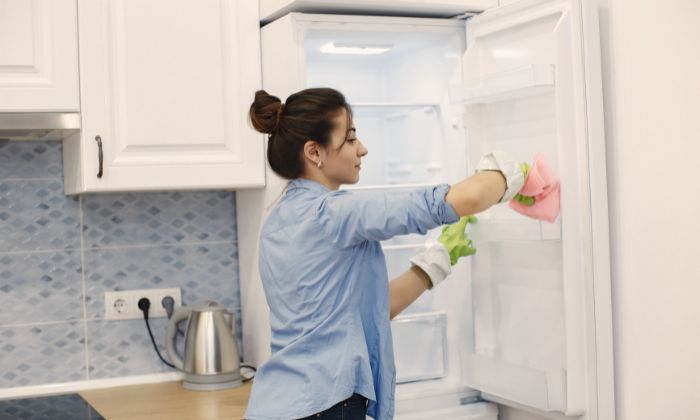
Before using vinegar, bicarbonate of soda or a stronger cleaner, check your fridge manual. Bosch advises avoiding abrasive, chloride-based and acidic cleaning products. It also warns against abrasive sponges.
Bicarbonate of soda can help with light stains and lingering smells. A diluted vinegar solution works on some surfaces too. Always check the manufacturer’s cleaning instructions first. Also, never mix vinegar and bicarbonate of soda in the same solution. They react together and reduce the cleaning effect of both ingredients.
How Do You Deep Clean a Fridge From Top to Bottom?
A deep clean removes more than visible spills and crumbs. It also reaches shelves, corners, seals and the condensation area. Working from top to bottom helps stop dirty water from reaching surfaces you already cleaned.
How Should You Remove Shelves, Drawers and Bins?
Start by removing the shelves, drawers and door bins that your fridge allows you to remove. Taking them out gives you better access to the fridge walls, corners and edges. Do not force any part that feels stuck. Check your refrigerator manual for model-specific removal instructions.
Wash the removable parts separately with suitable soapy water. Check the manual before using a dishwasher. Some manufacturers advise against dishwashers while others allow certain parts at lower temperatures.
How Should You Clean Cold Glass Shelves?
Cold glass shelves need extra care during cleaning. Do not place a cold shelf straight into hot water. A quick temperature change can put stress on the glass and crack it.
Let the shelf reach room temperature before washing it. Then clean it with suitable warm, soapy water and a soft sponge. Bosch and Which? both advise allowing cold glass shelves to warm first.
How Should You Wash Removable Parts?
Wash shelves, drawers and bins with suitable soapy water. Use a soft sponge to clean off food bits without damaging the surface. Soak dried food for a few minutes before wiping it away.
Rinse each part properly after washing. Then let the parts air dry or dry them with a clean cloth. Make sure everything is completely dry before returning it to the fridge.
How Should You Clean the Inside of the Fridge?
Clean the fridge interior from top to bottom. Start with the ceiling, then clean the back wall, side walls, shelf ledges and corners. Pay close attention to areas where spills and crumbs can collect.
Do not overlook the condensation trough on the back wall. This narrow channel directs water towards the drainage opening. Finish by cleaning the fridge base, where crumbs and spills often collect.
How Should You Clean the Door Areas?
Clean the inside of the fridge door after cleaning the main compartment. Wipe door shelves, edges and corners where bottles and jars can leave sticky residue.
Also check the rubber door seal while cleaning. Food particles and moisture can collect inside its folds. Gently wipe the seal with a soft cloth and stick to the care instructions for your fridge. Bosch recommends cleaning its door seal with clear water and drying it thoroughly.
How Should You Clean the Condensation Drain Area?
Check the drainage opening on the back wall during a deep clean. Food residue can collect around this area and restrict water drainage.
Use the cleaning tool supplied with your fridge when available. A blockage can cause water to collect at the bottom of the fridge. Always follow your appliance manual before cleaning deeper inside the drain.
How Should You Dry the Fridge After Cleaning?
Dry every cleaned surface before putting the shelves and food back. Check the corners, shelf grooves, drawer tracks and door seals for trapped moisture. A clean, dry interior is the final part of a proper deep clean. Bosch also recommends drying the interior and removable parts before returning them to the fridge.
Which Fridge Parts Do People Usually Forget to Clean?
Some parts of the fridge are easy to miss when you clean it. These areas can collect food, dirt and water over time. Check these spots during a deep clean:
- Door seals: The rubber door seal can get dirty as crumbs and food bits collect in its folds. Wipe inside the folds with a soft cloth. Dry it well after cleaning.
- Drain hole: The drain hole carries water away from inside the fridge. Food bits can block it and cause water to build up. Clean it as your fridge manual recommends.
- Drip tray: The drip tray collects water from the fridge. Its location differs by model. Check the manual before you remove or clean it.
- Drawer tracks: Food bits can fall into the tracks under the drawers. Use a soft brush to remove them. Then wipe the area with a damp cloth.
- Shelf grooves: Small spills can sit inside the edges and grooves of shelves. Use a soft brush or cloth to clear away dirt from small spaces around the fridge.
- Air vents: Air vents help move cold air around the fridge. Food can block them and stop air moving properly. Keep the space around them clear.
- Corners and small gaps: Crumbs and spills can hide behind shelves and drawers. Check these areas carefully when deep cleaning the fridge.
Why Is Water Collecting at the Bottom of the Fridge?
A small amount of condensation inside a refrigerator is normal. However, a pool of water at the bottom usually means the drainage system needs attention. In most fridges, condensation runs down the back wall and enters a small drainage channel. The water then leaves through the drain hole. When dirt or food blocks this path, water can build up inside the fridge.
What causes water to collect at the bottom of a fridge?
A blocked drain is a common cause but it is not the only one. Check these areas if you notice water inside the fridge:
- Blocked drain hole: Food crumbs and dirt can block the opening. Water then stays inside instead of draining away.
- Blocked drainage channel: Dirt can stop water from reaching the drain hole. This can lead to water collecting on the fridge floor.
- Door left open: Warm air enters when the door stays open for too long. This can create more condensation inside the fridge.
- Hot food placed inside: Hot food adds heat and moisture to the fridge. This can increase condensation as the food cools.
- Poor fridge levelling: An uneven fridge can affect how water moves towards the drainage area.
- Damaged door seal: A worn or loose seal can let warm air into the fridge. This can lead to extra moisture and condensation.
How can you stop water collecting inside the fridge?
Start by checking the drain hole and the drainage channel for visible food or dirt. Clean them using the method recommended in your refrigerator manual. Do not push sharp or unsuitable objects deep into the drain, as this could damage the appliance.
Also, check the door seal for dirt or damage. Make sure the fridge sits level and avoid leaving the door open for long periods. Wait until hot food has cooled before placing it in the fridge. Bosch also notes that blocked drainage and incorrect levelling can cause water to build up inside the appliance.
If the water returns after you clean the drainage area, the problem may need more attention. Check the manufacturer’s instructions or arrange a repair. Repeated water build-up should not be ignored, especially when cleaning does not solve the problem.
How Do You Get Rid of a Smell in a Fridge?
A bad fridge smell usually has a source. So, cleaning the visible shelves may not solve the problem. Check the fridge in this order: spoiled food → spills → seals → drain hole → drip tray → nearby sources. Look under containers and around areas that are easy to miss.
Once you find the source, remove it and clean the affected area properly. Then dry the area fully before closing the fridge. But what if the smell still remains? Check the drain area and drip tray again. Also, check nearby bins, drains and food waste outside the fridge.
Bicarbonate of soda can help control leftover odours after cleaning. Still, it should not replace proper cleaning or finding the original source.
5 checks for a stubborn fridge smell
- Check old food: Look for spoiled items, leftovers and food with an unusual smell.
- Check spills: Look beneath jars, bottles and containers for dried liquid.
- Inspect seal folds: Crumbs, grease and moisture can hide inside the rubber seal.
- Check the drain area: Trapped residue can create smells that return after cleaning.
- Check nearby sources: A bin, drain or nearby food waste may cause the smell.
If the smell remains, do not simply add more deodoriser. Find the source before trying to mask it.
Can You Clean a Fridge Without Turning It Off?
Yes, you can clean some parts of a fridge without turning it off. For example, you can quickly wipe a fresh spill while the appliance keeps running. However, a full refrigerator clean needs more care. You may need to remove shelves, leave the door open, or clean areas near electrical parts.
There is no single rule for every refrigerator. The correct method depends on your fridge model and the cleaning job. Always check the manufacturer’s instructions before switching off or unplugging the appliance. Some manufacturers give specific instructions for cleaning, moving or maintaining their refrigerators.
For a longer clean, keep the fridge door open for as little time as possible. Move meat, fish, dairy and other chilled food into a cool bag with ice packs. This helps keep the food cold while you clean the refrigerator.
Also, take care around electrical parts. Never spray water or cleaning products directly onto lights buttons, screens or controls. Put a suitable cleaner onto a cloth instead, when your manufacturer allows it.
So, can you clean a refrigerator without turning it off? Yes, quick cleaning usually does not require switching it off. For a deep clean, follow the manufacturer’s instructions for your specific model.
What About Water Dispensers, Filters and Built-In Freezers?
Some refrigerator models have extra parts that need special cleaning. Water dispensers, filters and built-in freezers do not all work the same way. So, always check your refrigerator manual before cleaning or removing these parts.
For a water dispenser, clean the nozzle and the area where water collects. Some models also have internal water lines that need a specific cleaning method. Do not take apart the dispenser unless the manufacturer says you can.
Water filters also need model-specific care. Check the manufacturer’s instructions for the right filter type and replacement timing. Do not clean or reuse a filter unless the manufacturer recommends it.
The same rule applies to built-in freezers. Clean removable shelves and drawers according to the manufacturer’s instructions. If ice builds up inside the freezer, follow the correct defrosting method for your model.
The safest approach is simple. Do not assume every refrigerator uses the same filter, dispenser or freezer system. Always follow the instructions for your specific appliance.
How to Clean a Refrigerator Properly From the Outside?
The outside of a refrigerator can collect dust, grease and marks from daily use. Focus on these areas when cleaning the exterior:
- Doors and handles: Wipe them with a soft cloth and a suitable mild cleaner. Give handles extra attention, as hands touch them many times each day.
- Stainless steel: Choose a cleaner that suits the appliance’s finish. Wipe gently in the direction recommended by the manufacturer. Avoid rough scourers, which can leave scratches.
- Control panel: Keep moisture away from buttons and screens. Put a suitable cleaner on your cloth rather than spraying it directly onto the controls.
- Top surface: Dust, grease and small food particles can settle on top of the fridge. Wipe the surface with a damp cloth, then dry it.
- Back and condenser area: Dust can gather around accessible coils at the back or underneath. Check the manual before moving the fridge or cleaning these parts. Use a suitable brush or vacuum only when the manufacturer allows it.
- Electrical areas: Keep water and cleaning products away from lights, sockets and other electrical parts. Follow your refrigerator manual for any areas that need special care.
How Often Should You Clean Your Fridge?
There is no fixed cleaning schedule for every fridge. Your cleaning routine depends on how often you use it and how much food you store. For example, a busy family fridge may need more frequent cleaning. Spills and food residue should always be cleaned as soon as you notice them.
A simple routine makes it easier to keep the fridge clean all year.
| Cleaning job | Practical timing | Main focus |
| Spill clean-up | As soon as needed | Spills and food residue |
| General wipe-down | Regularly | Shelves, handles and visible dirt |
| Deeper clean | Every few months | Interior, drawers, seals and hidden areas |
| Drainage check | During deeper cleaning | Drain hole and drip tray |
| Coil check | As the manufacturer recommends | Dust around accessible coils |
Which? says a fridge benefits from a deep clean two to four times a year. It also advises cleaning spills and crumbs as soon as they appear. However, you do not need to follow the same schedule as every household. More frequent cleaning may suit fridges with heavy use or frequent spills.
What Fridge Cleaning Mistakes Should You Avoid?
A few small mistakes can damage parts or leave the fridge less clean than you expect.
5 cleaning mistakes that can damage a fridge:
- Putting cold glass into hot water: Sudden temperature changes can crack glass. Let it warm first.
- Using abrasive cleaners: Harsh products and rough sponges can damage surfaces and finishes.
- Spraying liquid onto controls: Cleaner can reach areas that should stay dry. Put suitable cleaner on a cloth instead.
- Leaving moisture in seal folds: Water can stay trapped after cleaning. Dry the seal before closing the door.
- Removing parts without checking the manual: Some parts need a specific method. Check before forcing anything loose.
These steps matter more than trying lots of different cleaning hacks. Bosch also warns against abrasive products and cleaning methods that can damage the appliance.
What Should You Check Before Restocking the Fridge?
You are almost finished cleaning the refrigerator. Before putting the food back, check that the fridge is clean, dry and ready for safe storage.
5 Things to Check Before Putting Food Back:
- Shelves and drawers: Make sure they are clean and fully dry before putting them back inside.
- Interior surfaces: Check the walls, base and corners for leftover food marks, crumbs or sticky spots.
- Door seals: Look inside the seal folds for dirt and trapped moisture. Wipe and dry them if needed.
- Drainage area: Check the drain hole for visible food bits or dirt. Make sure nothing is blocking the opening.
- Food: Check use-by dates and the condition of each item. Return only food that is still safe to eat.
Before restocking, wipe the outside of jars and bottles that feel dirty. This stops fresh dirt from getting onto clean shelves. Also check the fridge temperature when you finish. The Food Standards Agency recommends keeping a fridge at 5°C or below.
Final Thoughts on How to Clean a Refrigerator Properly
A clean refrigerator should feel easy to manage, not like a big weekend job. The key is to notice small problems before they turn into bigger ones. A quick wipe after a spill can save you from a harder clean later. Regular checks also help you notice unusual smells, water build-up or a poor door seal.
Most importantly, treat your refrigerator like a food storage area, not just another kitchen appliance. Keep it clean, keep it dry and follow the care advice for your model. That simple approach makes how to clean a refrigerator properly less of a chore and more of an easy routine.
What if your fridge problem needs more than cleaning? Explore how cooling systems work with our Heating, Ventilation and Air Conditioning (HVAC) Technician Course and build practical HVAC knowledge.
Frequently Asked Question (FAQs)
1. What Is the Best Thing to Clean the Inside of Your Refrigerator With?
- Lukewarm water with mild washing-up liquid works well for most fridge interiors. Use a gentle sponge or microfibre cloth to wipe spills without scratching the fridge.
2. What Are the Most Common Mistakes When Cleaning a Refrigerator?
- Using harsh cleaners, rough sponges and too much water can damage your fridge. Another common mistake is ignoring the door seals, drain hole and other hidden areas.
3. What Is the Most Effective Way to Clean a Refrigerator?
- Empty the fridge, remove the shelves and clean from top to bottom. Then clean the seals, drain area and hidden gaps before drying everything properly.
4. What Is a 2-Minute Habit for a Cleaner Refrigerator?
- Wipe fresh spills as soon as you notice them. This tiny habit stops food from drying, sticking and becoming harder to clean later.
5. What Should You Not Clean a Fridge With?
- Avoid abrasive cleaners, rough scourers and products that your manufacturer does not recommend. Also, never use excessive water around lights, controls or electrical parts.
6. What Is a Good Homemade Cleaning Solution for a Refrigerator?
- A mix of lukewarm water and mild washing-up liquid is often enough for basic fridge cleaning. Some people use diluted vinegar but always check your fridge manual first.