
The UK property market is currently a very busy and exciting place. Many people want to learn how to become estate agent because the job is fun. You will see many beautiful homes and meet different people every single day. This job is perfect if you enjoy staying active and talking to others.
Furthermore, a career in this sector provides excellent flexibility and high earning potential. The UK job market shows a strong demand for enthusiastic new property staff. Although you do not need a formal degree, certain steps remain essential for success. This guide will explain everything you need to know about starting this journey today.
How to Become Estate Agent With No Experience: Your Step-by-Step Guide
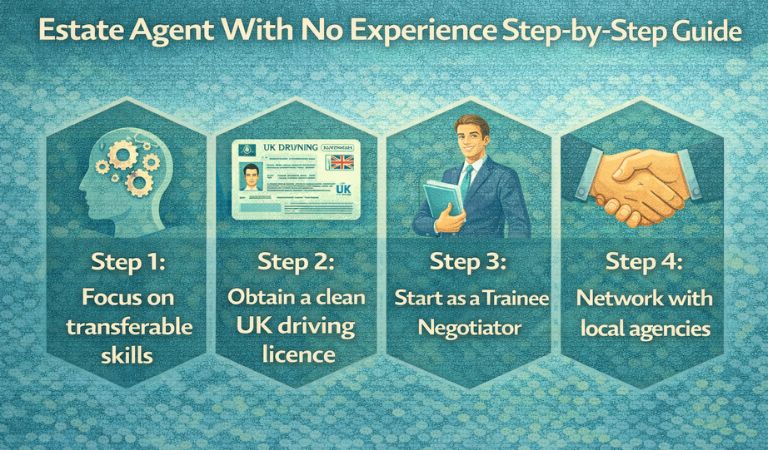
Step 1: Focus on transferable skills
You might wonder how to become an estate agent if you have never done it. Firstly, look at the skills you already have from other previous jobs. Customer service experience from a shop or a restaurant is very valuable. Sales skills help you convince people to look at new property listings. Retail experience shows that you can handle money and talk to customers well. These skills are exactly what big property firms look for in new staff.
Step 2: Obtain a clean UK driving licence
Next, you must ensure you have a valid and clean UK driving licence. This requirement is non-negotiable for almost every agency in the whole country. You will need to drive to various house viewings throughout the day. Often, these houses are far apart or in different small towns. Therefore, having a car and a licence is vital for your daily tasks. Most employers will ask about your driving record during the first interview.
Step 3: Start as a Trainee Negotiator
The best way to enter the field is as a Trainee Negotiator. These entry-level roles teach you the basics of the property business. You can find these jobs on websites like Indeed or LinkedIn easily. Alternatively, look at the careers page of local estate agency branches nearby. In this role, you will learn how to book viewings and enquiries. It is the perfect starting point for any ambitious and hard-working person.
Step 4: Network with local agencies
Additionally, you should start networking with agencies in your own local area. Send a speculative CV even if they are not currently hiring staff. This shows that you are proactive and very eager to start working. Learn about the local house prices and popular streets in your town. This knowledge will impress managers when you finally meet them for a talk. Building these connections is a smart way to find hidden job openings.
What Skills Does a Successful Estate Agent Need?
Success in this industry depends heavily on your personal and social skills. You must be a “people person” who enjoys helping others find homes. Being friendly and approachable makes clients feel much more comfortable with you. Moreover, you need to stay organised while managing many different tasks daily. Good time management ensures you never miss an important house viewing or meeting.
Furthermore, negotiation and communication skills are the core of this entire profession. You must act as a bridge between the buyer and the seller. Clear speaking helps you explain complex prices and contract details very easily. Also, you must listen carefully to what your clients actually need. Strong negotiators can close deals that make both sides very happy indeed. This skill usually improves with practice and a lot of quiet patience.
Local market knowledge is another huge factor for your future career success. You should know which schools are the best in your specific area. Buyers often ask about transport links and local shops near the property. Knowing these details makes you look like a true expert in houses. Consequently, clients will trust your advice much more when they are buying.
Finally, modern agents must be quite tech-savvy to stay ahead of others. You will use digital tools to list properties on websites like Rightmove. Also, many agencies use social media to find new buyers and sellers. Learning how to use professional cameras or tablets is also very helpful. Technology helps you work faster and reach a much wider audience online.
What Training and Certifications Are Available for UK Estate Agents?
You do not need a specific degree to learn how to become an estate agent. However, taking short courses can significantly boost your personal employability very quickly. Many colleges offer basic certificates in property services or simple sales techniques. These courses show employers that you are serious about your new career. They provide a solid foundation of knowledge before you start working.
Should you join professional organisations like NAEA Propertymark in the UK? The answer is a big yes because it adds great professional credibility. Propertymark is the leading body for property professionals in the United Kingdom. Joining them gives you access to excellent resources and high-quality training. It also tells your clients that you follow a strict code of conduct. This builds a lot of trust within the local community and market.
Are there mandatory qualifications for compliance in the UK property sector currently? Currently, there are no legal laws requiring a licence to practice property. Nevertheless, the government might change these rules in the near future. Most top agencies prefer staff who hold a Level 3 Award qualification. This award covers all the essential legal and ethical parts of the job.
Furthermore, you should update your training quite regularly throughout your entire career. Laws regarding property and taxes change almost every single year in Britain. Staying updated ensures that you always provide the most accurate advice possible. Many agents attend yearly seminars to keep their knowledge fresh and relevant. Continuous learning is the secret to staying competitive in this fast-moving industry.
How to Become Estate Agent and Meet UK Legal Requirements
Understanding consumer protection and property laws is a vital part of the work. You must ensure that every house advert is honest and very accurate. Misleading a buyer about a property’s condition can lead to big fines. Therefore, you must learn the “Consumer Protection” regulations quite early in training. These rules protect people from making bad decisions based on wrong info.
Do you need to register for anti-money-laundering (AML) checks in this role? Yes, because estate agents must help stop illegal money entering the market. You will need to check the identity of every buyer and seller. This process involves looking at passports and proof of address documents carefully. Failing to do these checks can result in very serious legal trouble. It is a mandatory part of working as a real estate professional.
What is Client Money Protection, and do you really need it today? This is a scheme that protects the money clients give to agencies. If the agency closes down, the client’s money stays safe and secure. Most professional agencies must belong to a Client Money Protection (CMP) scheme. It provides peace of mind to both landlords and home buyers alike. You should always check if your employer has this protection in place.
Lastly, data protection (GDPR) rules affect how you handle personal information daily. You will collect names, phone numbers, and home addresses every single day. These details must be stored safely and never shared without proper permission. Breaking these rules can lead to massive fines for your agency branch. Therefore, always follow your company’s policy on keeping private data very secure.
How Do You Find Your First Job in an Estate Agency?
You must decide whether to start with high-street or online agents first. High-street agents have physical shops and offer a very traditional working experience. They are great for beginners because you get more face-to-face training. Online or hybrid agents often work remotely and use digital platforms mostly. These roles might require more independence and better self-motivation from the start.
How do you write a CV tailored to estate agency roles properly? Focus on your achievements in sales or customer service positions very clearly. Use active words like “achieved,” “managed,” and “assisted” to describe your work. Mention your driving licence and your knowledge of the local area. A clean and professional layout makes a very good first impression. Keep it short and easy for a busy manager to read.
How can you stand out in interviews and assessments for this job? Always dress in a professional suit to show you are serious. Practice answering questions about how you handle difficult or angry customers well. Show your enthusiasm for the local property market during the interview. Employers want to see that you are confident and very polite. Bringing a positive attitude is often more important than having previous experience.
Is commission-only work a good first step for a new starter today? Some agencies offer jobs where you only get paid when selling houses. This can be very risky if you do not have savings. However, it can also lead to very high earnings if working hard. Most trainees prefer a basic salary plus a small commission at first. This provides a safety net while you are still learning the basics.
What Is the Typical Salary and Commission for UK Estate Agents?
The starting salary for a trainee usually ranges from £18,000 to £22,000. However, your total earnings will likely be much higher due to commission. Commission is an extra payment you get for every house you sell. This system motivates you to work harder and find more buyers quickly. Many agents find this part of the job very exciting and rewarding.
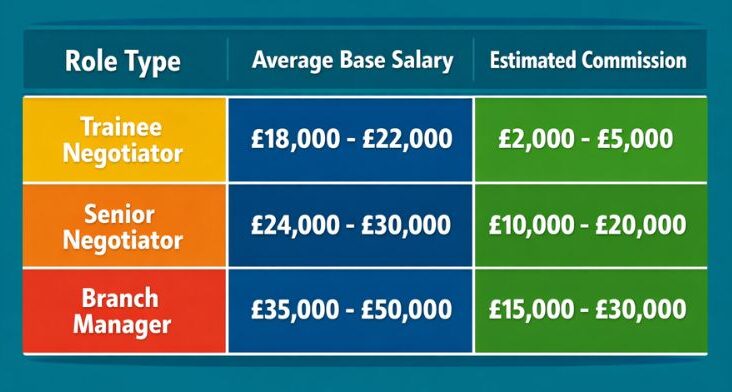
How does the commission and bonus pay usually work in daily practice? Usually, you get a small percentage of the fee the agency charges. For example, if the agency earns £3,000, you might get 5% commission. Some companies also offer bonuses for meeting monthly or yearly sales targets. These extra rewards can help you save money for your own home. Always ask about the commission structure during your first job interview.
Do earnings vary much by region across the United Kingdom currently? Yes, because house prices in London are much higher than elsewhere nearby. Consequently, agents in London often earn much larger commissions on their sales. However, the cost of living in the capital is also very high. Agents in the North of England might earn less but have lower expenses. Every region offers , different opportunities and challenges for a new agent starting.
How do independent and corporate agencies compare regarding pay and benefits? Corporate agencies often provide a better basic salary and more company benefits. They might offer a company car or a good pension scheme too. Independent agencies might offer higher commission rates to attract talented staff members. They often have a more family-like feel and flexible working rules. Both options have pros and cons depending on your personal career goals.
What Are the Career Progression Paths for Estate Agents?
You can move from a negotiator to a branch manager quickly. This usually happens after three to five years of consistent hard work. As a manager, you will lead a team and run the shop. You will be responsible for hitting targets and training new staff members. This role comes with a higher salary and more daily responsibilities. It is a great goal for anyone starting as a trainee negotiator.
What are the options for specialising in different property fields later? You might choose to focus on luxury homes or commercial buildings. Some agents prefer working in lettings, which involves renting out private houses. Lettings is a very stable part of the market with steady income. Others enjoy the fast pace of selling multi-million pound mansions in London. Specialising allows you to become a true expert in one specific area.
Can you become self-employed or start your own agency eventually? Many experienced agents choose to work for themselves after several years. This gives you total control over your schedule and your total earnings. However, starting a business requires a lot of hard work and money. You will need to handle marketing, admin, and sales all by yourself. It is a challenging but very rewarding path for many people.
What long-term prospects does the property industry offer to you today? People will always need houses to buy, sell, or rent. Therefore, the demand for good estate agents will always remain quite high. This career offers long-term stability and many chances to grow your income. You can build a very successful life by helping others find homes. It is a career that rewards hard work and a positive mindset.
How to Become an Estate Agent: Daily Life and Tasks
Many new starters wonder what a normal day looks like for agents. Usually, you start the morning by checking your emails and new enquiries. You will call potential buyers to discuss the newest houses on the market. Furthermore, you will spend a lot of time outside the office daily. Driving to different properties for viewings is a major part of work. You must be ready to walk and stand for long periods.
Additionally, you will spend time taking photos of new houses for adverts. Writing descriptions that make a home look attractive is a key skill. You must highlight the best features, like large kitchens or sunny gardens. Sometimes, you will need to give advice on how to tidy homes. Small changes can make a house sell much faster for a price. This creative part of the job is very satisfying for many people.
Meeting new people is the most common task you will perform daily. You will meet young couples buying their first home with much excitement. Sometimes, you will help older people moving into smaller and quieter flats. Every person has a unique story and specific needs for their home. Being a good listener helps you find the right match for them. This makes the job feel very personal and helpful to the community.
Moreover, you will spend time negotiating offers between buyers and sellers. This can be stressful but also very rewarding when a deal closes. You must stay calm and polite even when people are feeling nervous. Explaining the next steps in the legal process is also your job. You act as a guide for people through a very big life event. Most clients will be very grateful for your professional help and support.
Keeping Motivated in the UK Property Market
Working in property can be a bit like a rollercoaster sometimes. Some week,s you will sell many houses and feel very successful indeed. Other weeks might be quiet with fewer people looking to buy homes. However, staying positive during quiet times is the key to long-term success. You should use slow days to call old clients and find leads. Hard work always pays off eventually in the world of property sales.
Furthermore, you should build strong relationships with your team members at work. Having supportive colleagues makes the busy days much easier to handle well. You can share tips on how to handle difficult house viewings. Sometimes, you might even help each other close a difficult sale. A happy office environment helps everyone perform better and stay much longer. Teamwork is truly a vital part of any successful estate agency branch.
Learning from your mistakes is another important way to stay motivated daily. Not every viewing will lead to a sale, and that is okay. Instead of feeling sad, ask the buyer why they did not like it. Use that feedback to help the seller improve their home’s overall look. This proactive approach turns a “no” into a learning chance for you. Growth comes from facing challenges with a brave and open mind.
Finally, remember to celebrate your wins, no matter how small they are. Selling your first house is a huge milestone you will never forget. Getting a positive review from a happy client is also very great. These moments remind you why you wanted to learn how to become an estate agent. Focus on the joy of helping people, and the money follows. Your passion will shine through and attract even more clients to you.
Conclusion: Is a Career as a UK Estate Agent Right for You?
Learning how to become estate agent is the first step toward a great future. This career is best for energetic people who love meeting new faces daily. You need to be organised, friendly, and very hardworking to succeed here. Start by getting your driving licence and looking for trainee roles today. Good luck as you begin this exciting new journey in the UK property market!
Frequently Asked Questions (FAQs)
1. What qualifications do you need for an estate agent?
- You do not need specific qualifications, but GCSEs in English and Maths and a property or sales course can help.
2. How long does it take to qualify as an estate agent?
- You can start working as an estate agent within a few weeks, while professional training courses may take a few months.
3. Do estate agents get paid?
- Estate agents usually earn a basic salary plus commission from property sales.
4. Is it hard being an estate agent?
- Being an estate agent can be challenging because it involves sales pressure, client communication, and market competition.
5. Do real estate agents make good money in the UK?
- Real estate agents in the UK can earn good money through commissions, especially in busy property markets.
6. What is the biggest mistake a real estate agent can make?
- One of the biggest mistakes is poor communication with clients or giving inaccurate property information.
7. Can I become an estate agent with no experience?
- Yes, many estate agents start with no experience and learn through training and on-the-job practice.
8. What is the best age to start a real estate agent?
- There is no specific age, but many people start in their early 20s after finishing education or training.
9. Is an estate agency a stressful job?
- Estate agency can be stressful due to sales targets, deadlines, and dealing with property transactions.