
Many people choose electrical work because it offers good pay and steady jobs. Also, the work teaches useful skills. If you want to know How to Become an Electrician UK, you must complete proper training. Most people start with a 3–4 year apprenticeship. This route mixes site work with college study. You complete Level 2 and Level 3 electrical diplomas. You also pass the 18th Edition Wiring Regulations exam and the AM2 practical test. However, other routes also exist. Some people take private electrical courses. Meanwhile, experienced workers can use the Experienced Worker Assessment route.
Now, let’s look at the simple steps to start a career as an estate agent in England.
What Does an Electrician Do?
Being an electrician is more than just wires and tools. Every day, electricians help homes, offices, and factories stay safe and powered. They install, maintain, and repair electrical systems. For example, they fix lights, sockets, and wiring. Also, they test circuits and solve problems quickly. It is a hands-on job, and no two days are the same.
Daily Tasks and Responsibilities
Electricians do many tasks. For instance:
- Fit lights, sockets, and circuit breakers.
- Check electrical systems for faults.
- Repair damaged wiring or equipment.
- Install special systems like solar panels or smart home devices.
- Use tools like multimeters to test circuits.
Meanwhile, they always follow safety rules. They also make sure all work meets UK regulations. Because of this, clients feel safe and happy with the results. Finally, electricians feel proud when a tricky job works perfectly.
Types of Electricians
Electricians often focus on different areas:
- Domestic electricians – work in homes, fixing wiring, lights, and sockets.
- Commercial electricians – work in offices, shops, and schools.
- Industrial electricians – handle factories, machines, and large electrical systems.
Related Terms
Some words you will hear a lot are electrical installation, wiring, and maintenance. These describe the main work electricians do every day.
How to Become a Fully Qualified Electrician in the UK
If you want to know How to Become an Electrician UK, you need proper training and certificates. First, most people complete a Level 3 Electrotechnical Apprenticeship or Diploma in Installation or Maintenance. Then, you study the 18th Edition Wiring Regulations (BS 7671). After that, you take an NVQ Level 3 and the AM2 practical test. Because of this, you can work safely on site.
Key Qualifications & Requirements
- Level 2 & 3 Diplomas: Learn the basics and practical skills, often through City & Guilds 2365.
- NVQ Level 3: Shows you can do real work safely.
- 18th Edition Wiring Regulations (BS 7671): Important for safety and legal rules.
- AM2 Assessment: A final practical test to prove your skills.
- ECS Gold Card: This card shows your qualifications in the industry.
Training Routes: How to become an electrician UK
- Apprenticeship: Usually 3–4 years. Combines work on site with college study.
- Also, adult or private training is available. These courses are faster and suit career changers.
- Meanwhile, the Experienced Worker Assessment (EWA) helps those with site experience but no formal certificates.
- Finally, completing any of these routes gives you the skills and certificates to work legally.
Additionally, following these steps carefully increases your chances of success. So, with dedication, you can start a strong career as an electrician in the UK.
Step-by-Step Path to Becoming an Electrician
Becoming an electrician can feel exciting and challenging at the same time. Luckily, the path is clear if you follow these steps
Step 1: Complete school-level qualifications
First of all, finish school subjects like maths and English. These help you understand electrical work and solve problems.
Step 2: Choose a college course or apprenticeship
Next, decide how you want to learn. Meanwhile, think about whether you prefer classroom study or earning while learning. College gives theory, while apprenticeships give hands-on experience.
Step 3: Gain hands-on experience
After that, work on real sites. Also, learning from experienced electricians teaches useful tips. It improves your skills and confidence.
Step 4: Achieve recognised certifications
Then, complete NVQ Level 3 and the AM2 practical test. In addition, these prove you can work safely and professionally.
Step 5: Apply for professional registration
Finally, register with organisations like NICEIC or ECA. Moreover, this helps people trust your work. Eventually, completing all steps gives you a strong start to a successful career as an electrician in the UK
Skills Required for Electricians
Being an electrician needs more than tools. First, you need strong technical skills. You must know how to do wiring, install sockets, and set up lighting. You also need to find faults and fix them quickly. Also, following safety rules carefully prevents accidents.
Next, soft skills matter a lot. You need to talk clearly with clients and coworkers. Meanwhile, problem-solving skills help you handle unexpected issues on site. You also need to stay organised and plan your work well. In addition, being patient and focused makes your work safer and easier. Electricians also need physical skills. They often bend, climb ladders, and lift tools or equipment. Moreover, good time management helps finish jobs on schedule.
Finally, combining technical, soft, and physical skills gives you confidence on site. Because of this, electricians feel proud when a tricky job works perfectly. Eventually, these skills help you grow in your career and gain trust from clients.
Salary and Career Prospects an Electrician UK: Growth and Benefits
Electricians in the UK earn good money. First, in 2025, the average salary is about £39,000. Experienced electricians can earn over £45,000. Also, industrial specialists can make more than £60,000. Meanwhile, the industry is growing fast. There will be a shortage of over 100,000 electricians by 2032. Because of this, jobs are secure and pay is strong. In addition, there are many career options in domestic, commercial, and industrial work.
Salary Breakdown (2025–2026)
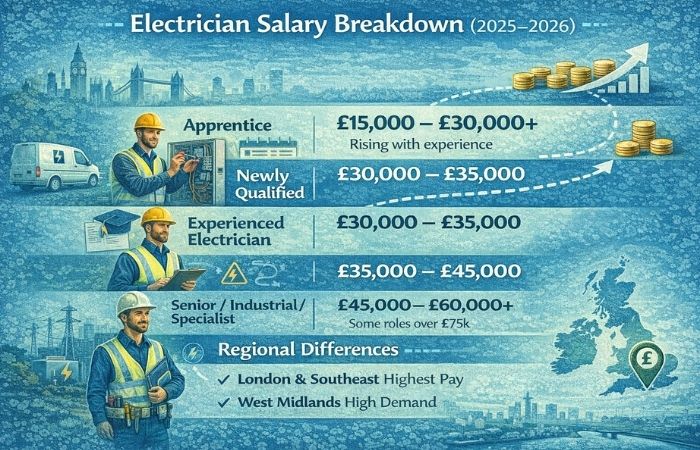
- Apprentice: £15,000 – £30,000+, rising with experience
- Newly Qualified: £30,000 – £35,000
- Experienced Electrician: £35,000 – £45,000
- Senior / Industrial / Specialist: £45,000 – £60,000+, with some roles over £75,000
- Regional Differences: The highest pay is in London and the Southeast. The West Midlands also has high demand.
Career Prospects and Growth
- High Demand: Over 10,000 new apprentices are needed every year.
- Specialisation: You can become a Site Supervisor, Project Manager, Electrical Engineer, or work in areas like EV chargers or hazardous zones.
- Self-Employment: Running your own business can pay more than employed work. Furthermore, it gives you more freedom.
Key Benefits and Considerations
- Steady Income & Overtime: Many roles are 37–45 hours a week. Extra money comes from overtime and emergency call-outs.
- Job Security: Electrical work is needed in construction, factories, and renewable energy. Therefore, demand is steady.
- Training & Qualifications: A 3–4 year apprenticeship plus NVQ Level 3 and AM2 is the usual route. Finally, this often gives the ECS “Gold Card,” recognised across the industry.
What Obstacles Do Electricians Deal With Daily?
Being an electrician can be rewarding, but it also comes with many challenges. First, safety is a big concern. Electricians face risks like electrocution, burns, falls from ladders or roofs and injuries from arc flashes or faulty equipment. Also, they must wear protective gear and follow strict safety rules every day.
Next, physical strain is common. Electricians often work in tight spaces like attics, crawl spaces, or under floors. Meanwhile, lifting heavy tools and equipment, bending, and doing repetitive tasks can cause back, shoulder, and knee pain. This work can be tiring, especially on long projects.
In addition, technical and rule changes can be tricky. Older buildings may have old or unsafe wiring. Electricians must troubleshoot complex problems and keep up with new electrical codes. Because of this, continuous learning is important.
Furthermore, site conditions are often tough. Electricians work outside in extreme heat, cold, or rain. They also navigate crowded urban areas or busy construction sites.
Moreover, business challenges affect electricians. Rising material costs, tight deadlines, and finding skilled staff can be stressful. Self-employed electricians must manage cash flow and plan projects carefully.
Finally, health risks are real. Dust, debris, and vibrations from power tools can cause long-term problems like Hand-Arm Vibration Syndrome (HAVS). Therefore, taking care of health and using protective gear is essential.
Electrician Apprenticeship Requirements
If you want to be an electrician, you need to meet some basic rules first.
Minimum Age Requirements
You must be at least 16 years old. This is easy to reach if you finished school.
GCSE Requirements
Most apprenticeships ask for maths and English GCSEs. However, some courses accept equivalent skills or extra help if you don’t have them.
Finding Apprenticeships in the UK
First, look at online job sites. Then, check local colleges or electrical companies. Also, ask friends or family for tips. Finally, apply and be ready to learn.
With the right start, your apprenticeship can be fun and full of learning.
How Long Does It Take to Become an Electrician in the UK
Becoming a fully qualified electrician in the UK usually takes 3 to 4 years. First, most people start with a traditional apprenticeship. This combines on-site work experience with college training, where you learn wiring, safety and practical skills. Also, apprenticeships let you earn while you learn, which helps many people.
Next, fast-track courses are available for adults. These teach the theory in just a few weeks. However, you still need 2–3 years of hands-on experience to become fully skilled. During this time, you practice installing circuits, fixing faults, and working on different systems.
Meanwhile, the domestic installer route is the quickest option. It takes a few weeks to months. But it only allows work on small home systems. You cannot work on larger commercial or industrial projects with this route. Finally, completing full training and on-site experience gives you the confidence to work safely. In addition, it prepares you to handle real challenges and grow in your career.
Is Becoming an Electrician Worth It in the UK?
Becoming an electrician in the UK can be a good choice. First, there is high job demand. Many homes, offices, and factories need electricians. Also, this means it is usually easy to find work. Next, salary grows with experience. You start with a lower wage, but it rises over time. Meanwhile, overtime or special work can increase earnings even more.
Finally, job security is strong. Electrical work is needed in construction, factories, and renewable energy. Because of this, electricians usually have steady work. In addition, the skills you learn are useful for life and open new career chances. Overall, if you like practical work and solving problems, becoming an electrician in the UK is worth it.
Final Thought
Becoming an electrician in the UK is a smart choice for anyone who enjoys hands-on work and solving problems. With high demand and good pay, it offers both job security and career growth. The journey takes dedication, but training makes it easier. Starting with a Basic Electrician Course helps you learn essential skills and understand safety rules. From there, a Professional Electrician Course takes your knowledge further, preparing you for real-world challenges and advanced work. These courses give you confidence, practical experience and recognised qualifications. Step by step, with the right training, you can build a strong and rewarding career as a fully qualified electrician.
Frequently Asked Questions (FAQs)
1. How long does it take to be an electrician in the UK?
- It usually takes 3–4 years through an apprenticeship. Fast-track courses exist, but hands-on experience is still needed.
2. Do electricians get paid well in the UK?
- Yes. Average salaries are around £39,000, with experienced or specialist electricians earning £45,000–£60,000+.
3. Can I become an electrician at 30?
- Absolutely. Many people start later using apprenticeships, private courses or the Experienced Worker Assessment route.
4. Can I become an electrician without GCSE?
- Yes. Some apprenticeships and courses accept candidates without GCSEs, though maths and English help a lot.
5. Can I train to be an electrician at 40?
- Yes. Training is open to adults of any age, though practical experience may take longer to gain.
6. What’s the quickest you can become an electrician?
- The fastest is the domestic installer route or intensive courses, but full qualification usually takes 2–3 years.
7. What are 5 skills you need as an electrician?
- Technical knowledge, problem-solving, communication, organisation, and physical fitness.
8. Who earns more, a plumber or an electrician?
- It depends, but experienced electricians, especially in industrial work, often earn more than plumbers.
9. Is it worth becoming an electrician in the UK?
- Yes. High demand, good pay, job security and useful skills make it a rewarding career.

Professional Electrician Course
Course Description :
- Certificate: Yes(Free)
- Accreditation: CPD Accredited
- Access: Lifetime