Being a PE teacher means more than teaching sports. You help students stay active and maintain their health. You also help them feel confident every day. Physical education matters because it builds teamwork and discipline. It also gives children a fun break from lessons. If you love sports and enjoy helping others, learning how to become a PE teacher can feel very rewarding. You will also be glad to know that the average salary for a PE teacher in the UK is around £32,000 per year, with most teachers earning between £25,000 and £38,000 depending on experience and location. Teachers with more experience or leadership roles can earn even more, especially in London.
In this article, you will learn the steps to start this career. You will see what qualifications you need. You will also learn what a normal day looks like. Plus, you will find ways to gain experience and jobs. By the end, you will have a clear understanding of how to become a PE teacher and where to start.
What is a physical education (PE) teacher?
A physical education (PE) teacher helps students stay active and healthy at school. They teach sports, exercise, and fitness skills in a fun way. They also show students how to warm up and stay safe.
To begin with, PE teachers design lessons that build strength, balance and coordination. They teach many activities, from team sports to dance. They also explain why exercise and good food matter. In addition, PE teachers work with students of all ages and abilities. They help students work as a team and follow simple rules. They also run school sports clubs and events.
Overall, a PE teacher supports both body and mind. They build confidence and self-belief. Most of all, they help students enjoy movement and build healthy habits for life.
What Are the Key Responsibilities of a PE Teacher?
- Plan & Teach Lessons: PE teachers create fun and easy-to-follow lessons in sports, dance, gymnastics, athletics, and fitness. This helps every student join in and enjoy learning.
- Develop Skills: By guiding students step by step, they improve strength, balance, coordination, and endurance safely.
- Promote Health: PE teachers explain why exercise, healthy food and good habits matter. As a result, students understand how staying active benefits both body and mind.
- Manage Activities: They organise sports teams, school clubs and after-school activities, making sure students have fun while staying safe.
- Assess & Evaluate: Observing students closely allows teachers to give helpful advice and celebrate progress.
- Foster Positive Attitudes: Encouraging students to try their best helps build confidence and a love for movement.
- Support Wellbeing: In doing so, PE teachers help students develop teamwork and social skills through physical activity.
How to become a PE teacher?
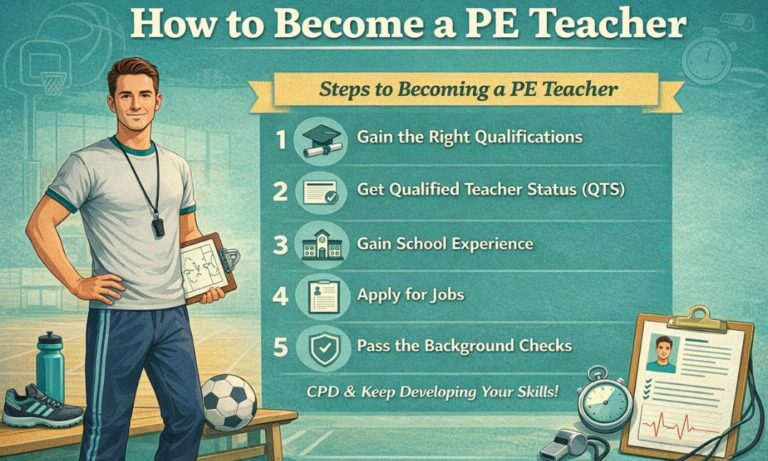
Becoming a PE teacher is exciting, but you need the right qualifications and skills. Here’s a simple guide:
GCSEs
You need at least a Grade 4 (C) in English and Maths. Moreover, these are important for teacher training and school life.
Bachelor’s Degree
Most PE teachers study Physical Education, Sports Science, or a related subject. A degree helps you teach sports, fitness, and how the body works as well.
Postgraduate Qualification
After your degree, complete a one-year PGCE or PGDE to get Qualified Teacher Status (QTS). This shows that you can teach and manage a class.
Alternative Routes
Some courses combine a degree with QTS. If your degree is not PE-focused, you can take a Subject Knowledge Enhancement (SKE) course to learn what you need.
Key Skills:
- Good leadership and communication
- Ability to motivate students
- Knowledge of sports and the human body
- DBS check to keep students safe
With these requirements to be a PE teacher, you can start your journey to physical education teacher and inspire students to stay active and healthy.
What Does a PE Teacher Do Every Day?
A PE teacher plans and teaches fun lessons in different sports, checks students’ fitness and skills, manages behaviour, and encourages a healthy lifestyle. Additionally, their work often includes running clubs, talking to parents, and organising school sports events. PE teachers need energy, patience, and the ability to work with children of all ages and abilities, both indoors and outdoors.
Morning/Classroom Tasks
- Lesson Planning: First, prepare activities like gymnastics, athletics, or team sports and get equipment ready.
- Admin Work: Then, mark work, update student records, and get ready for the day.
During Lessons (Gym or Field)
- Teaching & Coaching: Guide students in skills, tactics, teamwork and fitness.
- Motivation: Encourage students to join in and try their best.
- Class Management: Keep students focused and safe.
- Assessment: Finally, track student progress and check understanding.
After School & Other Duties
- Clubs & Teams: Run sports clubs and coach teams.
- Events: Help organise sports days, matches, and competitions.
- Communication: Talk with parents and staff about student progress.
- Professional Growth: Attend training and meetings to improve skills.
Key Focus Areas
- Encourage lifelong fitness and healthy habits.
- Teach teamwork, sportsmanship, and social skills.
- Moreover, adapt lessons so all students, including those with special needs, can participate.
What Skills Make a Great PE Teacher?
A great PE teacher needs to know sports, fitness, and the human body. Also, they must have strong communication, leadership, and motivation skills to inspire all students. In addition, traits like patience, creativity, and adaptability help manage different needs, keep students safe, and make learning fun.
Core Teaching & Subject Skills
- Knowledge of Sports and Fitness: Understand different sports, rules, exercises, nutrition, and the body.
- Curriculum Knowledge: Know what to teach at different ages.
- Lesson Planning & Delivery: Create fun and clear lessons, sometimes using videos or tools.
- Assessment & Feedback: Give helpful feedback and check student progress.
Interpersonal & Leadership Skills
- Communication: Give clear instructions and build good relationships.
- Motivation: Encourage all students to take part and enjoy fitness.
- Leadership: Guide students and help them work as a team.
- Empathy & Patience: Understand struggles, stay calm, and respect students.
Personal Traits & Adaptability
- Adaptability: Change lessons to suit different students and situations.
- Creativity: Find new ways to teach and make activities exciting.
- Organisation: Manage time, equipment and tasks well.
- Problem-Solving: Solve problems quickly during lessons.
- Enthusiasm: Show love for sports and exercise to inspire students.
Safety & Professionalism
- Safety Awareness: Know first aid, check risks and keep students safe.
- Initiative: Make decisions and take action when needed.
- Role Model: Show healthy habits and a positive attitude.
Finally, combining these skills helps a PE teacher create a safe, engaging, and motivating learning environment for all students.
What Different Types of PE Teachers Exist?
PE teachers can be different depending on their qualifications, the students they teach, their teaching style, and their focus on health and fitness. Also, they can work in primary schools, secondary schools, or sports clubs as coaches. In addition, some focus on general fitness while others specialise in a particular sport or student group.
1. By School Level and Qualification
- Primary PE Teacher: Teaches young children basic movement, games, and motor skills.
- Secondary PE Teacher: Teaches older students sport-specific lessons and health-related fitness.
- General Classroom Teacher: In some primary schools, teachers who are not PE specialists may lead lessons.
- Support Staff or Assistants: Sometimes, staff with experience in sports teach PE, guided by senior teachers.
2. By Teaching Style
- Command Style: Teacher makes decisions; students follow instructions.
- Practice Style: Students work alone on tasks set by the teacher.
- Reciprocal Style: Students work in pairs to help or observe each other.
- Inclusive Style: Lessons include all students and allow them to choose suitable tasks.
- Problem-Solving Style: The teacher sets challenges, and students find solutions.
- Learner-Led Style: Students plan activities, while the teacher gives advice.
3. By Role and Specialisation
- Head of Department: Manages curriculum, staff and PE strategy.
- Adaptive PE Specialist: Teaches students with disabilities or special needs.
- Sports Coach: Focuses on one sport, often after school or in clubs.
- Health & Fitness Instructor: Works in gyms or community centres to improve general fitness.
4. By Career Stage
- Early Career Teacher (ECT): Just starting, often supported by a mentor.
- Experienced Teacher: Has more skills and may guide others.
- Leading Practitioner: Helps improve teaching across the school or department.
5. By Teaching Philosophy
- Traditionalist: Focuses on skills, fitness, and direct teaching.
- Progressive/Holistic: Focuses on lifelong health, well-being, and inclusive lessons.
- Performance-Focused: Concentrates on competitive skills, biomechanics, and anatomy.
Finally, PE teachers are diverse. This variety helps students get the right lessons for their age, ability, and interests.
How Can You Gain Experience Before Becoming a PE Teacher?
Getting experience before you become a PE teacher helps you feel confident and ready to teach. It also shows schools that you love working with students and sports.
- Gain confidence and show schools you enjoy working with students and sports.
- Work placements & volunteering: Help in schools, youth clubs, or community centres; assist with lessons or run activities.
- Sports clubs & coaching: Plan sessions, motivate players, and work with different ages.
- Internships & assistant roles in schools: Support teachers, help in lessons, and learn how a school day works.
- Other activities: Attend workshops, organise sports events, and join community fitness programmes.
- Builds skills, confidence, and brings you closer to becoming a PE teacher.
How Much Can a PE Teacher Earn in the UK?
Thinking about becoming a PE teacher? One big question is, “How much does PE teacher earn?” Let’s break it down. To start with, a new PE teacher in a state school usually earns around £32,000 to £33,000 a year. If you teach in London, your starting pay is even higher, which is a nice boost when living in the city.
As you gain experience, your salary grows. Teachers on the main scale can earn between £40,000 and £50,000. Then, highly experienced teachers may reach the Upper Pay Scale, earning £46,000 to £52,000 or more.
Leadership roles bring even bigger pay. For instance, heads of department or senior teachers can earn over £50,000, and in London, leadership roles can go up to £61,000–£88,000 a year. Clearly, location, experience, and responsibilities all play a big part in how much you can earn.
Honestly, money is just one part of the job. Many PE teachers love their careers because they help students get active, enjoy sports and build confidence. Still, it’s great to know your hard work and experience can really pay off.
How Can You Apply for PE Teacher Jobs?
There are some steps you have to follow to apply for this job. Let’s see what you have to do step by step.
Make your CV and cover letter
- Keep your CV clear and simple.
- Show your teaching experience, sports skills and any coaching or volunteering.
- Write a cover letter that shows you love PE and enjoy helping students.
Prepare for interviews
- Think of times you helped students learn or try new sports.
- Practice speaking clearly and confidently.
- Show your personality and how you work with students.
Find job openings
- Check school websites and teaching job boards.
- Look at government education sites.
- Talk to other teachers or attend sports and school events.
Stay positive and enjoy it
- Applying is your chance to show your passion for teaching and sports.
- Remember, schools like to see enthusiasm and energy.
What Challenges Might You Face as a PE Teacher?
Managing large classes
- Keeping all students safe, active, and focused can be tough.
- You need energy, patience and strong attention skills.
Adapting lessons for different abilities
- Some students are confident in sports, while others may be shy or less skilled.
- You must plan activities that include everyone and keep them motivated.
Balancing teaching with admin work
- Marking work, planning lessons, updating records, and talking to parents takes time.
- Staying organised helps make it manageable.
Finding the rewards in challenges
- Despite the difficulties, seeing students enjoy sports, improve skills and gain confidence makes it all worthwhile.
Final Thoughts on How To Become A Pe Teacher
Being a PE teacher is a joyful and satisfying job. You help students stay active, healthy, and confident. You plan lessons, teach sports, and show students how to work as a team. It takes the right qualifications and skills, but the rewards are great. For example, seeing students enjoy sports and grow healthy makes the job special. Moreover, you get to inspire children to build lifelong healthy habits. If you love sports and helping others, this could be the perfect career. Also, our full blog shows all the steps you need to start your journey to becoming a PE teacher.
FAQs
- What qualifications do you need to be a PE teacher?
You need GCSEs in English and Maths, a degree in PE or sports, and a PGCE to get Qualified Teacher Status (QTS). - Can I become a PE teacher without going to university?
It’s hard. Most PE teachers need a degree, but some schools offer alternative training or apprenticeships. - How much is a PE teacher paid?
Starting salary is about £32,000–£33,000 a year. Experienced teachers earn £40,000–£52,000. Leadership roles can pay £50,000–£88,000. - Can unqualified teachers teach PE?
Sometimes, yes, as temporary cover or assistants. But to be a full-time PE teacher, a QTS is usually required. - Are PE teachers in demand in the UK?
Yes, there is steady demand, especially in primary and secondary schools.