
Lifeguards are the heroes of the water in the UK. They stand watch at local leisure centres, busy lidos, and beautiful coastal beaches. Their main job is to keep swimmers safe from harm. They watch the water closely and stop accidents before they happen. However, many people wonder about how much do lifeguards make for a living. Is it enough to make a living?
Most lifeguards in the UK make between £11.44 and £13.50 per hour if they are over 21. If a lifeguard works full-time, this adds up to about £22,000 to £26,000 per year. However, this amount can change based on many things. For example, where you work matters a lot. A lifeguard at a quiet community pool earns less than one at a busy London centre. Also, your experience and qualifications can help you earn more money.
In this guide, you will learn everything about lifeguard pay in the UK. We will look at hourly wages and yearly salaries. You will also see which regions pay the most money. Finally, we will share tips on how to increase your income. Let’s dive into the details of lifeguard salaries.
How Much Do Lifeguards Make?
If you want a fast answer, the pay depends on your age and skills. In the UK, pay is often linked to the National Minimum Wage. Entry-level guards earn the least. Experienced guards or managers earn the most. Here is a simple look at the average pay across the country.
Average Lifeguard Pay at a Glance
For most new lifeguards, the pay starts near the government minimum. However, it goes up with time. If you work at a complex beach or a luxury health club, the pay is better. Below is a table that breaks down the typical income for different levels of experience.
|
Experience Level |
Hourly Pay |
Weekly (Full-Time) |
Yearly (Full-Time) |
| Junior / Apprentice (16–17) | £6.40 – £8.50 | £240 – £320 | £12,480 – £16,640 |
| Young Adult (18–20) | £8.60 – £10.50 | £322 – £395 | £16,700 – £20,500 |
| Experienced (21+) | £11.44 – £13.50 | £430 – £506 | £22,300 – £26,300 |
| Senior/Duty Manager | £13.50 – £16.00+ | £506 – £600 | £26,300 – £31,200 |
How Much Do Lifeguards Make an Hour vs Per Year?
It is important to understand how the maths works. Most lifeguards are paid by the hour. Therefore, if you work more hours, you make more money. A part-time guard might only work 15 hours a week. In contrast, a full-time guard works 37 to 40 hours a week.
Also, remember that lifeguarding is often seasonal. Many outdoor pools (lidos) are only open in the summer. Because of this, a yearly salary figure can be confusing. A lifeguard might earn a good hourly rate, but they might only work for three or four months. Full-time, year-round jobs are harder to find, but they provide the most stable income.
4 Key Factors That Affect How Much Lifeguards Make
Not all lifeguarding jobs are the same. Some jobs are easy, while others are very hard. The difficulty of the job changes the pay. Here are four big factors that decide how much money lands in your bank account.
1. Work Environment: Beach vs. Pool
This is the single biggest difference in salary. The environment changes the risk level.
Pool lifeguards usually earn the lower end of the pay scale. You will find these jobs at council leisure centres, gyms, or schools. The pay is typically £11.44 to £12.50 per hour for adults. The water is calm and clear. Rescues are rare. Because the environment is controlled, the pay is lower.
Beach lifeguards are different. In the UK, many work for the RNLI (Royal National Lifeboat Institution). They must be very strong swimmers. They deal with rip currents, cold water, and waves. Because of the danger and high fitness standards, the pay grades can be higher. Rates often start at £12.00+ per hour and go up for senior beach guards.
2. Public vs. Private Sector
Who you work for also changes your pay cheque.
Municipal (council) jobs are very common. These are jobs with local leisure providers like GLL (Better) or Everyone Active. They usually have strict pay scales. This means you cannot negotiate your wage easily. However, these jobs are stable and offer good breaks.
Private clubs and hotels operate differently. Luxury hotels and health clubs (like David Lloyd or Virgin Active) want the best staff. Therefore, they may pay a higher base rate. They do this to attract friendly and professional workers. In some cases, working at a high-end spa can pay significantly more than a local pool.
3. Certifications
The more you know, the more you are worth. Basic training gets you a basic job.
Basic certifications include the NPLQ (National Pool Lifeguard Qualification). This is the standard in the UK. It covers CPR, AED, and pool rescue.
Advanced certifications can boost your pay. For example, a Swim Teacher qualification (SEQ Level 1 or 2) is valuable. This allows you to teach swim lessons. Teaching pays much more than guarding. You could earn £15 to £25 per hour while teaching a class.
4. Experience & Rank
New guards start at the bottom. However, if you stick with it, you can move up. Moving from “Lifeguard” to “Senior Lifeguard” or “Duty Manager” is a smart move. This promotion usually comes with a raise of £1 to £3 per hour. It also looks great on your CV for future jobs.
How Much Do Lifeguards Make an Hour?
Let’s look closer at the hourly wage. This is the number most teenagers and students care about. It determines how much cash you have for the weekend.
Average Hourly Wage in the UK
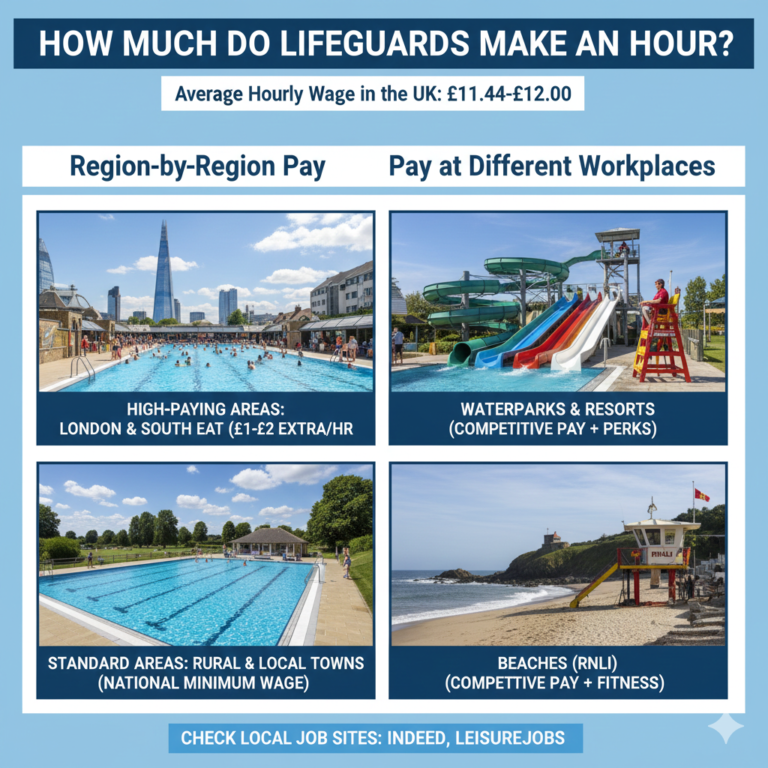
The national average hourly wage varies. Generally, it sits around £11.44 to £12.00 per hour for those over 21. However, this depends on where you live. In London, wages are higher. In the North or rural areas, wages might be closer to the minimum. This is because the cost of living is different in each region.
Region-by-Region Lifeguard Hourly Pay (Overview)
Location is very important. Some areas pay lifeguards more to cope with living costs.
- High-paying areas: London and the South East often pay “London Weighting”. This can add £1 to £2 extra per hour.
- Mid-range areas: Major cities like Manchester, Birmingham, and Bristol usually pay slightly above the minimum wage.
- Standard areas: Rural towns often stick to the National Minimum Wage rates based on age.
You should always check local job sites like Indeed or Leisurejobs. The specific town or city you live in will have its own rates.
How Much Do Lifeguards Make an Hour at Different Workplaces?
The type of building you work at matters, too.
- Community pools and leisure centres pay standard wages.
- Private gyms are consistent, but expect high customer service.
- Waterparks can be tiring. However, places like Alton Towers Waterpark may offer perks.
- Beaches (RNLI) generally offer competitive pay due to the physical fitness required.
- Resorts (e.g., Centre Parcs, Butlins) are unique. They offer steady work and sometimes subsidised accommodation.
How Much Do Lifeguards Make a Week, Month & Year?
Sometimes it helps to see the bigger picture. Hourly pay is good, but how does it add up over time?
Weekly and Monthly Pay Examples
Let’s pretend you are a part-time student (age 18). You work 15 hours a week at £8.60 per hour. You would earn £129 a week. That is over £500 a month. This is great money for a student living at home.
Now, imagine a full-time summer lifeguard (age 21+). You work 40 hours a week at £12.00 per hour. You would earn £480 a week. Over a six-week summer holiday, you could earn nearly £2,880. This is excellent for saving for university.
Finally, look at a year-round full-time lifeguard. If they earn £12.50 per hour for 37 hours a week, they make £462 a week. That is roughly £1,850 a month before tax.
Yearly Salary for Full-Time Lifeguards
If you manage to work all year, the numbers get bigger.
- Regular Pool Lifeguards: £22,000 to £25,000 per year.
- Beach/Ocean Lifeguards: £23,000 to £27,000 per year (often pro rata for the season).
- Senior Lifeguards: £26,000 to £30,000 per year.
However, we must clarify one thing. Many lifeguard positions are seasonal or “casual”. This means the yearly income can be lower. You might need a different job in the winter.
Beach vs Pool vs Waterpark: Who Makes the Most?
We touched on this earlier, but let’s go deeper. Why is there such a big difference?
How Much Do Beach Lifeguards Make?
Beach lifeguards face nature. They deal with jellyfish, changing tides, and cold wind. Therefore, the training is intense. You must run fast on sand and swim far. Because of this high risk and high training, the RNLI pays well. There are different grades, from Grade 1 (entry) to Grade 3 (senior).
How Much Do Pool Lifeguards Make?
Pool lifeguards have a calmer job. They watch people swim in lanes or play on inflatables. The risks are lower because the water is shallow and clear. Consequently, typical rates at public pools are consistent but rarely high. Private clubs might pay slightly more, but the ceiling is lower than at the beach.
How Much Do Waterpark Lifeguards Make?
Waterparks are loud and busy. Lifeguards here must be very alert. The pay depends on the park size. Hence, a small local splash park pays like a pool. A huge park like Sandcastle Waterpark in Blackpool might pay more. Also, waterparks often have long shifts in summer. This means you can get extra hours, which boosts your cheque.
Lifeguard Pay by Employer Type
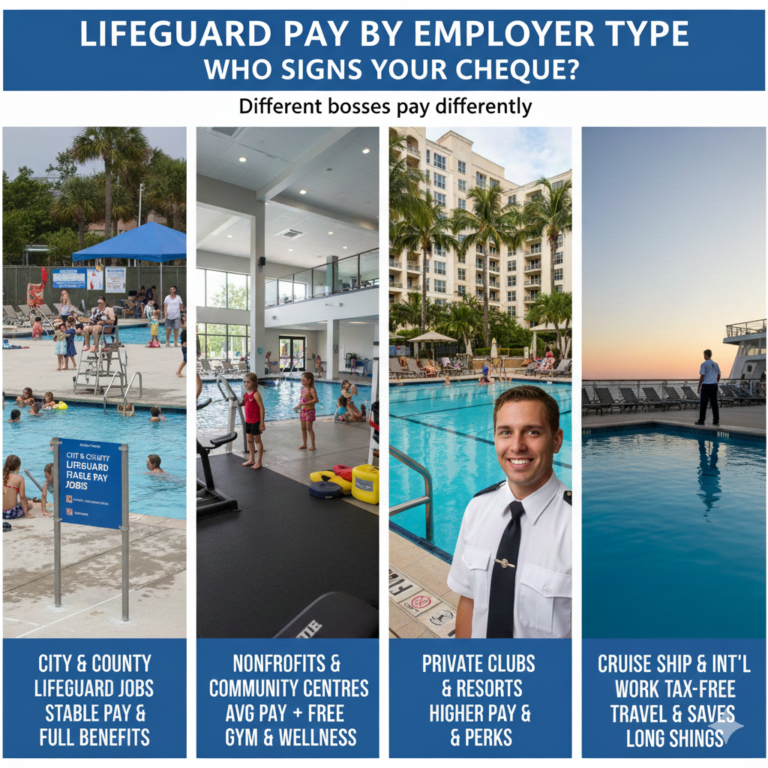
Different bosses pay differently. It helps to know who signs the cheques.
City & County Lifeguard Jobs (Public Sector)
These are jobs with the local council or charitable trusts like GLL. Municipal pools are stable places to work. They tend to have standardised pay scales. This means everyone knows what they will earn. They also follow labour laws strictly. You will always get your breaks and holiday pay.
Nonprofits & Community Centres
Organisations like the YMCA or local community trusts are popular. They are focused on community, not profit. Typical pay ranges are average. However, they offer nice perks. You often get a free gym membership. This can save you £40 or £50 a month.
Private Clubs, Resorts & Hotels
Private employers have more freedom. Luxury hotels want their guests to be happy. Therefore, they might pay more to get friendly, professional staff. At resorts, you might also get tips, though this is rare in the UK. Additionally, holiday parks like Haven or Pontins offer “live-in” roles. This includes accommodation and food for a small fee.
Cruise Ship Lifeguards & International Work
A cruise ship job is an adventure. You might earn £1,200 to £2,000 a month tax-free in some cases. However, you get a free cabin and free food. You also get to travel the world. The downside is the long shifts. You are away from your family for months at a time.
Do Lifeguards Get Benefits? (Beyond Base Pay)
Money is not the only thing that matters. Lifeguard Benefits are important, too.
Common Benefits for Full-Time Lifeguards
If you work full-time year-round, you get good benefits. Most jobs offer a pension scheme. This means the employer helps you save for old age. Furthermore, you get paid for annual leave. Annually, you are legally entitled to 28 paid vacation days in the UK, including bank holidays.
Perks for Part-Time & Seasonal Lifeguards
Part-time workers also get holiday pay, usually calculated based on hours worked. The most common perk is free access to the pool or gym. You might also get discounts for your family. If you want to take a swim class or a first aid course, you might get it for free. Also, the schedules are flexible. This is perfect for students who need to study.
How to Make More Money as a Lifeguard
Do you want to earn more than the average? There are smart ways to boost your income.
Get Higher-Paying Certifications
Knowledge is power. Consider getting extra certificates from the RLSS UK.
- NVBLQ (Beach Lifeguard): Allows you to work at the coast.
- Lifeguard Trainer Assessor: Allows you to teach other lifeguards.
- First Aid at Work: Shows you are a safety expert.
Instructor roles often pay much more than regular guarding. You are paid for your expertise, not just your time.
Move into Higher-Paying Roles
Do not stay an entry-level guard forever. Try to become a team leader. From there, aim for Duty Manager. Eventually, you could be a centre manager. These roles come with more responsibility. However, they also come with a much bigger pay cheque.
Stack Related Jobs Around Lifeguarding
You can combine jobs to make money. For example, work as a guard in the morning. Then, teach swim lessons in the afternoon. Swim teachers often earn £5 to £10 more per hour than guards. You can also offer personal training if the gym allows it. Combining shifts keeps the day interesting and fills your wallet.
Negotiate & Choose Smart Employers
Do your homework. Research the wage rates in your town. If one pool pays £11.44 and another pays £12.50, apply to the second one. Also, seasonal employers love returning staff. If you work there one summer, ask for a raise when you return the next year. They will likely say yes because they know you are reliable.
Is Lifeguarding a Good Job for You?
The money is decent, but is the job right for you?
Pros of Lifeguard Work
First, the hours are flexible. This is ideal for students. Second, the environment is active. You are not stuck behind a desk. Third, it looks strong on a CV. It shows you are responsible and know how to handle safety.
Cons & Challenges
On the other hand, the income is often limited. It is hard to get rich just by guarding. Also, there is a high responsibility. If someone is drowning, you must save them. That is stressful. Finally, you face the weather. Beach guards deal with hot sun and UK rain.
Who Lifeguarding is Best For
This job is best for teens and university students. It is also great for people building a career in leisure. If you want to work in public services, this is a good start. It teaches you to stay calm in an emergency.
Related Jobs & How Their Pay Compares
If you like safety, there are other jobs to consider.
Swim Instructor vs Lifeguard Pay
Swim instructors usually make more per hour. They are teachers. Parents pay good money for their children to learn to swim. Typical hourly rates can be £16 to £25. However, you spend all your time in the water, which can be cold and tiring.
Aquatics Coordinator, Pool Manager & Aquatics Director
These are the bosses. A leisure centre manager can make £30,000 to £45,000 per year. They manage the staff, the budget, and the safety rules. To get here, you usually need experience and management qualifications.
EMT, Firefighter & Other Public Safety Roles
Lifeguarding is a stepping stone. Many guards become paramedics or firefighters. These jobs pay much more. A trainee firefighter can earn £25,000, rising to over £32,000 when qualified. The medical and rescue skills you learn as a lifeguard help you in these careers.
Final Thoughts: How Much Do Lifeguards Really Make?
What is the salary of lifeguards, then? In short, most make between £11.44 and £13.50 per hour if they are adults. If you work at a beach or get promoted, you can make more. While you might not become a millionaire, it is a rewarding job. But you may earn money while keeping your community safe.
If you want to earn the most, then get your NPLQ and a swim teaching qualification. Look for jobs at busy leisure centres or holiday parks. The more skills you have, the higher your salary will climb. Also, check your local listings today and see what opportunities are waiting for you at the water’s edge.
FAQs About How Much Lifeguards Make
- How much do lifeguards get paid in the UK?
Most lifeguards earn £10–£14 per hour. Annual pay is usually £20,000–£30,000, depending on hours and location. - What is the highest paid lifeguard?
Supervisory or specialist lifeguards (team leaders, offshore, or overseas contracts) can earn £35,000–£45,000+. - How much does a 16-year-old lifeguard earn?
Typically £7–£10 per hour, based on minimum wage and employer. - What jobs pay £70k a year in the UK?
Examples include senior software engineers, doctors, dentists, solicitors, senior managers, and airline pilots. - Is being a lifeguard good money?
It’s decent hourly pay, especially for students or seasonal work, but not usually a high long-term salary. - What jobs have a £100k salary in the UK?
Consultants, surgeons, senior lawyers, finance directors, investment bankers, and some tech leads. - Do you need GCSEs to be a lifeguard?
GCSEs are not required. You need a recognised lifeguard qualification and strong swimming skills. - Who pays for lifeguards on beaches?
Usually, local councils or organisations like the RNLI. - How much do pro swimmers get paid?
Most earn little or nothing. Top international swimmers can earn £30,000–£100,000+ through sponsorships and prizes.

Lifeguard Course
Course Description :
- Certificate: Yes(Free)
- Accreditation: CPD Accredited
- Access: Lifetime