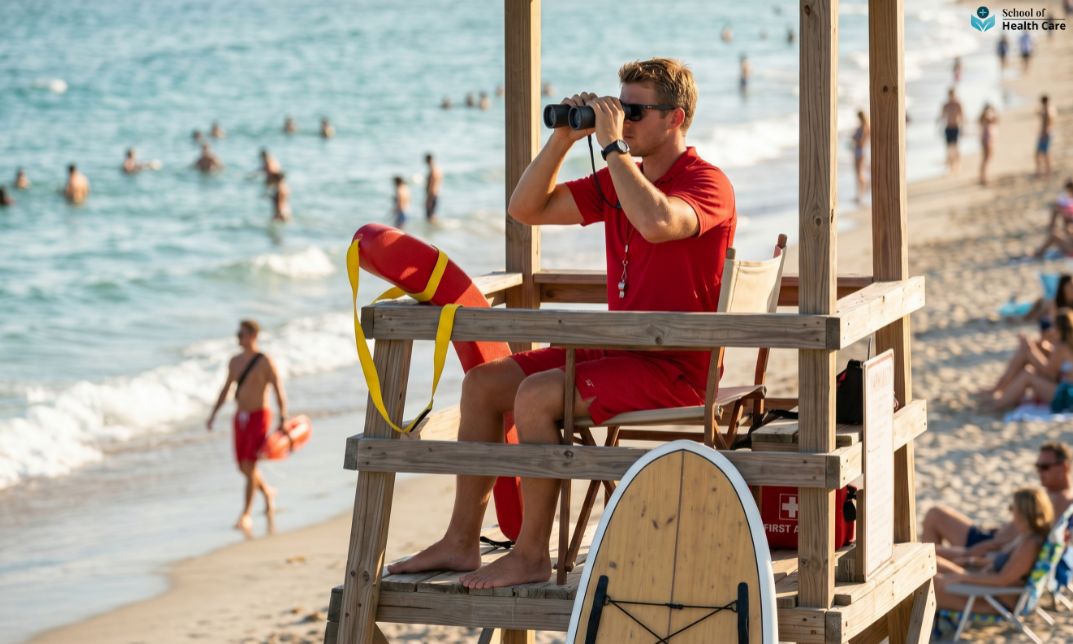
Before becoming a lifeguard, you may ask, well, how much do lifeguards get paid across the UK? The answer mostly depends on where you work and how much experience you have. While some lifeguards protect swimmers at local indoor pools, others face big waves on busy beaches.
On average, full-time pool lifeguards earn around £11 to £13 an hour, which equals about £24,000 every year. However, beach lifeguards with the RNLI can earn up to £16.55 an hour because their work is harder. As you gain more qualifications or become a supervisor, your pay goes up even higher. Beyond the good wages, it is a great job for keeping active and saving lives every single day.
Now let’s deep dive.
What does a lifeguard do?
These are the main jobs lifeguards do on duty, such as:
Step 1: Check the Equipment and Clean Up
The lifeguard inspects all the safety gear, like life rings and first-aid kits, to make sure everything works properly. Then, they look around the pool or beach to pick up rubbish and clean away slippery spots so nobody falls.
Step 2: Watch the Water
The lifeguard climbs up to their high chair or stands by the edge. They look across the water very carefully to watch every swimmer and spot any danger early.
Step 3: Warn Swimmers About Danger
While watching, they look out for tricky things like deep water, strong waves, or slippery tiles. They warn people about these hazards right away so accidents do not happen.
Step 4: Enforce the Rules
The lifeguard makes sure everyone follows the safety rules. For example, if someone is running by the pool, the lifeguard will gently blow their whistle and ask them to walk.
Step 5: Help Visitors
If swimmers have questions, the lifeguard is there to help! They talk to visitors, answer questions, and give helpful safety advice so everyone can have fun.
Step 6: Respond to Emergencies
If someone gets into trouble in the water, the lifeguard acts super fast. They jump in to rescue the swimmer, bring them to safety, and give them first aid or CPR if they need it.
How Much Do Lifeguards Get Paid?
In the UK, full-time lifeguards usually make about £24,000 every year. Being a lifeguard is a very important job because you keep people safe in the water. However, your exact pay changes depending on where you work and how experienced you are.
How Much Different Lifeguards Earn
To begin, swimming pool lifeguards usually earn between £11 and £13 for every hour they work. This means they make about £22,000 to £24,500 each year.
Following, beach lifeguards working for the RNLI get paid £12.90 to £16.55 per hour. Because they mostly work during the warm summer months, they can make between £22,000 and £26,000 during that season.
Moreover, lifeguards at private gyms and leisure centres earn a bit less. They usually make around £17,400 to £17,500 a year for full-time work.
How to Earn More Money
Fortunately, you can earn more money as a lifeguard if you take on extra tasks. For example, helping to train new staff or giving swimming lessons will increase your pay.
In addition, working in busy places like big swimming pools or popular beaches pays more. Beach lifeguards often get higher pay because their work is much harder. They have to deal with giant waves, strong water currents, and big crowds.
In the end, your pay as a lifeguard depends on your skills, your location, and your exact role. But overall, it is a rewarding job where you can earn good money while saving lives!
Lifeguard Hourly Pay Explained
Lifeguards at local council or leisure centre pools usually make between £11 and £12.50 every hour. On the other hand, beach lifeguards working for the RNLI earn a bit more, which is around £12.90 to £14.70 an hour. Furthermore, in busy places like South East England, the pay can go up to £16.55 an hour. However, if you are just starting out at a smaller pool, you might begin with a lower pay of about £10 to £11 an hour.
You can also earn more money by gaining experience and doing extra training. For example, if you lead a team, teach swimming, or finish special first aid courses, you will often get higher pay. Similarly, working at very busy pools or popular beaches can help you earn more.
Additionally, it is a good idea to think about both hourly pay and yearly pay. Even though summer or part-time jobs might pay well for each hour, a full-time job gives you a steady income all year round. Overall, if you have the right skills and work in a good place, you can earn nice money while keeping people safe every day!
Pools vs. Beaches: Where Do Lifeguards Earn More?
Beach lifeguards earn more money than pool lifeguards. Lifeguards can work at swimming pools or on beaches, but each location offers a different type of job.
Pool Lifeguards: Steady Work and Safe Waters
First, swimming pools offer steady work all year long. The conditions are safe, and the working hours are easy to predict.
- Pay: Most pool lifeguards earn between £11 and £13 per hour.
- Benefits: Although the pay is lower, it is a safe environment. You get to learn valuable skills while keeping swimmers safe every day.
Beach Lifeguards: Higher Pay and Bigger Waves
However, beaches usually pay higher wages because the job is trickier and more dangerous. For example, RNLI beach lifeguards can earn between £12.90 and £16.55 per hour.
- Challenges: Beach lifeguards must deal with huge waves, strong tides, changing weather, and busy summer crowds.
- Benefits: Even though the work is mostly seasonal, it is very exciting. They get extra pay because the role requires extra courage and specialised rescue skills.
Let’s See a Quick Comparison
| Job Location | Typical Pay | Main Advantage | Main Challenge |
| Indoor Pool | £11 – £13 / hour | Reliable work all year | Lower pay range |
| Sandy Beach | £12.90 – £16.55 / hour | Higher pay & adventure | Waves, tides, & weather |
How Location Affects Lifeguard Pay?
Where you work changes how much money you earn as a lifeguard because different places have different needs and costs.
To begin with, lifeguards in big cities usually get paid more money. This is because big cities are always busy and need pool staff all year round. For example, lifeguards in London make around £13.44 per hour, while workers in Oxford get a similar pay of £13.50 per hour.
On the other hand, smaller towns often pay less money to their lifeguards. In towns like Crawley, lifeguards earn about £11.45 per hour because life is quieter and living costs are lower there. However, seaside towns can pay much higher wages during the summer months. This happens because lots of tourists visit the beach and swimming in open water carries extra dangers.
In the end, your pay as a lifeguard depends heavily on your location and the company you work for.
How Lifeguard Experience and Qualifications Increase Salary?
More experience and extra training help lifeguards earn higher pay, for example:
- New lifeguards start on lower hourly pay.
- Experience adds one to three pounds hourly.
- Senior guards can earn up to thirty thousand pounds.
- Extra certificates like NPLQ lead to higher pay.
- First aid qualifications boost your hourly wage.
- Having more skills opens up better paid jobs.
How to Become a Lifeguard in the UK?
- Check Your Age and Fitness:
First, you need to be at least 16 years old. You also need to be a strong and confident swimmer. Since lifeguards must move fast in an emergency, staying healthy and fit is very important.
- Choose Your Special Qualification:
After that, you must take a special training course depending on where you want to work:
- For swimming pools: You need to pass the National Pool Lifeguard Qualification (NPLQ).
- For the beach: You need to complete the RNLI Beach Lifeguard course.
- Learn First Aid and CPR:
After that, you will learn First Aid and CPR (Cardiopulmonary Resuscitation, which means helping someone breathe and keeping their heart beating). These practical skills will give you the confidence to help people if an accident happens.
- Look for Free or Funded Courses:
Because training can cost money, look out for funded programs! Some local councils, private companies, and the RNLI pay for your training so that you can start without spending a lot.
- Apply for Jobs:
Eventually, once you have passed your courses, you can start applying for lifeguard jobs at pools, leisure centres, or sunny beaches! Many lifeguards start with summer jobs and then move into full-time roles later on.
Final Thoughts on How Much Do Lifeguards Get Paid
Being a lifeguard is much more than just a job for the summer. It is a wonderful path full of purpose, hard work, and the chance to save lives every single day. You get to stay fit, learn life-saving skills, and enjoy your time by the pool or on the beach.
So, how much do lifeguards get paid? While entry-level pool jobs usually start around £11 to £13 an hour, your pay can grow much higher as you gain experience, get extra qualifications, or take on beach and supervisory roles. On top of that, you can even step up to become a leisure manager or water safety officer in the future.
Are you ready to start and earn your qualifications,, taking the Lifeguard Course is the perfect first step. This course covers everything you need to become confident, fully trained, and ready for work.
FAQs
How much does a 17 year old lifeguard get paid?
- A 17-year-old lifeguard typically earns between £8.00 and £11.00 per hour in the UK.
Is being a lifeguard good money?
- Yes, lifeguarding offers competitive hourly pay (£11 – £16.55/hr) alongside active, life-saving responsibilities.
How much are lifeguards paid in the UK?
- Full-time UK lifeguards earn around £24,000 yearly, with hourly rates ranging from £11 – £16.55.
Do you need GCSEs to be a lifeguard?
- No GCSEs are required; you only need strong swimming skills and official lifeguarding qualifications.
Is 22 too old to be a lifeguard?
- No, 22 is not too old. Anyone 16 or older who meets physical requirements can become one.
What jobs pay 40 an hour in the UK?
- Roles like senior software engineers, commercial pilots, project managers, and freelance consultants pay £40/hr.
What jobs pay 500 pounds a day?
- IT contractors, locum doctors, legal consultants, and interim managers frequently earn £500 a day.

Lifeguard Course
Course Description :
- Certificate: Yes(Free)
- Accreditation: CPD Accredited
- Access: Lifetime