
Every year, around 400 people die from drowning in the UK. Without lifeguards, that number would be much higher. Lifeguards are there every day. They keep swimmers safe, stop accidents, and save lives. Most people don’t see their hard work, which is why many of us have no idea about pay for lifeguard. Now, let’s look at how much do lifeguards get paid in the UK.
On average, lifeguards earn between £11 and £13 an hour. If you work full-time, this adds up to about £24,000 a year. Beach lifeguards or those with more experience earn more, sometimes up to £16 an hour. Seasonal or part time lifeguards earn less overall. But, they can still make good money during busy summer months.
Pay also depends on location. Lifeguards in big cities or busy coastal areas earn more than those in smaller towns. Also, your role and responsibilities matter. Lifeguards who supervise a team or teach swimming earn higher pay.
So let’s take a closer look at how much does lifeguards make and the things that can change lifeguard payment.
What Does a Lifeguard Do?
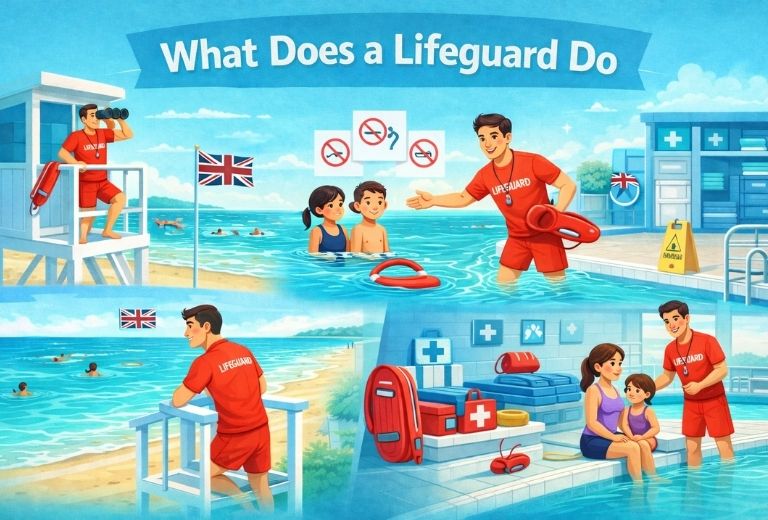
These are the main jobs lifeguards do on duty:
- Surveillance – Watch swimmers and the water closely to spot danger early.
- Rule enforcement – Make sure everyone follows safety rules and stays in safe areas.
- Emergency response – Act quickly to rescue anyone in trouble and give first aid or CPR.
- Prevention – Warn about hazards like strong currents, riptides, or slippery spots to stop accidents.
- Safety equipment check – Keep life rings, first aid kits, and other tools ready and working.
- Environment maintenance – Keep the pool or beach clean, safe, and well-organised.
- Customer support – Help swimmers, answer questions, and give simple safety tips.
How Much Do Lifeguards Get Paid?
Being a lifeguard is more than just sitting by the water. It is a serious job that keeps people safe and also pays well. On average, full-time lifeguards in the UK earn about £24,000 a year. However, your pay can change depending on where you work, your experience, and the type of lifeguard job you do.
Lifeguard Jobs Pay by Workplace:
- Pools – Most lifeguards earn £11–£13 per hour, which is about £22,000–£24,500 a year.
- Beaches (RNLI) – Seasonal lifeguards earn £12.90–£16.55 per hour, adding up to £22,000–£26,000 for the summer months.
- Private gyms and leisure centres – Full-time lifeguards earn around £17,400–£17,500 a year.
At the same time, lifeguards can earn more by taking on extra responsibilities. For example, supervising a team, helping with training, or giving swimming lessons can increase pay. Similarly, working in busy locations, like popular beaches or large pools, usually pays higher. Beach lifeguards often earn higher because the work is harder. They face strong currents, large crowds and changing conditions.
Overall, how much you earn as a lifeguard depends on your location, your role and your experience. But with the right skills and commitment, you can make good money while doing something truly meaningful.
Lifeguard Hourly Pay Explained
Lifeguard pay depends on where you work and your experience. For example, lifeguards at council or leisure pools usually earn £11–£12.50 per hour. Meanwhile, beach lifeguards working for the RNLI earn more, around £12.90–£14.70 per hour and in busy areas like South East England, pay can reach £16.55 per hour. Entry-level lifeguards at smaller pools often start lower, about £10–£11 per hour.
Experience and extra training can help you earn more. As an example, lifeguards who supervise teams, teach swimming, or complete advanced first aid and lifesaving courses usually get higher pay. Also, working at busy pools or popular beaches can increase your earnings.
It is helpful to look at both hourly and yearly pay. Part time or seasonal jobs may pay well per hour, but full-time work gives a steady income. Overall, with the right skills, experience and workplace, you can earn a good wage while helping people and keeping them safe every day.
Pools vs. Beaches: Where Do Lifeguards Earn More?
Lifeguards can work in pools or at beaches. Each place has different pay, challenges, and benefits. Let’s explore what makes each option unique.
Pool Lifeguards: Steady Work, Safe Environment
Pools offer steady work all year. The conditions are safer and the hours are more predictable. Most pool lifeguards earn around £11–£13 per hour. On top of that, you get the satisfaction of knowing you’re keeping people safe every day. Pools are a great choice if you want a stable job and a chance to learn and grow as a lifeguard.
Beach Lifeguards: Higher Pay, Bigger Challenges
Beaches usually pay more because the work is more complex. For example, RNLI lifeguards can earn £12.90–£16.55 per hour, depending on experience and location. You face strong waves, tides, large crowds and changing weather. The work is seasonal but it is thrilling and rewarding. Higher pay comes from the extra skills, responsibility and courage required to keep swimmers safe.
Overall, pools give safety and steady work, while beaches offer adventure and higher pay. Both roles make a real difference by protecting people. Your choice depends on your skills, comfort with risk and the type of experience you want by the water.
Senior or Head Lifeguard Salaries
Senior and head lifeguards earn more because they take on extra duties. Usually, they make £25,000–£28,000 per year. In big leisure centres or cities, pay can go up to £30,000. Lifeguards who manage more than one site or act as duty managers can earn £32,000–£35,000. Leading staff training or running daily operations can increase pay even further.
There are also clear career steps. Experienced lifeguards can move up to Duty Manager or Leisure Centre Manager, earning £35,000–£45,000 per year. With experience and leadership, lifeguards not only earn more but also make a bigger difference. They keep people safe and make sure pools and beaches run smoothly every day.
How Location Affects Lifeguard Pay?
Where you work can affect how much you earn as a lifeguard. To start with, the lifeguard salary UK is often higher in big cities. These places need lifeguards all year. For example, lifeguards in London earn about £13.44 per hour. Oxford offers a similar rate at £13.50 per hour. These cities are always busy, so lifeguards are in demand.
On the other hand, smaller towns usually pay less. In places like Crawley, lifeguards earn around £11.45 per hour. Life feels calmer and living costs are lower. At the same time, coastal towns often pay more in summer. Tourist crowds and open water increase risk. Because of this, employers offer higher pay. In the end, location and employer decide how much you earn.
How Lifeguard Experience and Qualifications Increase Salary?
Experience can really increase lifeguard pay. New lifeguards usually earn less, but after a few years, you can earn £1–£3 more per hour. Also, senior lifeguards or supervisors can earn £25,000–£30,000 a year. Taking extra responsibilities, like leading a team or training new staff, can raise your pay even more.
Qualifications can give another boost. Important certificates include:
- National Pool Lifeguard Qualification (NPLQ)
- RNLI Beach Lifeguard Qualification
- First Aid at Work / Advanced First Aid
- Pool Plant Operator or Supervisor Certificates
With these skills, you can handle more challenging situations safely. Experience and qualifications also bring confidence, leadership, and better career opportunities. So, the main point is that learning new skills and gaining experience helps you earn more and make a real difference.
How to Boost Earnings of Lifeguards?
Here are some practical ways to increase the earnings of a lifeguard:
- Work evenings, weekends, and holidays – These shifts pay more than regular hours, so take them to increase your income.
- Take beach lifeguard roles – Hard conditions like strong waves and busy crowds often come with extra pay.
- Get extra training – Courses like First Aid, AED, or NPLQ refreshers make you more skilled and help you earn more.
- Use flexible contracts and overtime – Extra hours give you more ways to earn money.
- Gain experience and aim for promotions – Showing commitment and skill can lead to roles like Lead Lifeguard or Supervisor, which pay higher and come with more responsibility.
How to Become a Lifeguard in the UK?
Becoming a lifeguard starts with the basics. You must be at least 16 years old, swim confidently, and stay physically fit. Being fit means you can swim long distances, stay strong in the water and act quickly in an emergency. These skills keep you safe and allow you to help others.
The next step is training and certification. Most pool lifeguards take the National Pool Lifeguard Qualification (NPLQ). Beach lifeguards usually complete the RNLI Beach Lifeguard course. Every lifeguard should also learn First Aid and CPR. These courses give you the skills and confidence to respond to accidents safely. Some programs from the RNLI, local councils, or private companies even offer funded training, so you can start your career without paying a lot. After training, you can start lifeguard jobs at pools, beaches, leisure centres or seasonal resorts. Many lifeguards begin with seasonal work and then move to full time roles.
Career Progression and Alternative Opportunities
As you gain experience as a lifeguard, many new opportunities appear. First, you start by keeping swimmers safe and learning the basics. Next, you can move up in your career:
Lifeguard → Head Lifeguard → Pool or Beach Manager → Trainer/Instructor → Water Safety Officer → Resort, Cruise Ship, or International Opportunities
Becoming a Head Lifeguard lets you lead a team and earn higher pay. After that, you may become a Pool or Beach Manager, managing schedules, budgets and safety rules. Some lifeguards choose to become Trainers or Instructors, teaching new lifeguards important skills. Others move into specialist roles like Water Safety Officer, focusing on safety programs, risk management and public education. Your career can also take you to exciting places, such as resorts, cruise ships, or international locations. There, lifeguards watch over swimmers, keep everyone safe and act quickly if there is an emergency.
Final Thoughts: Is Lifeguarding Worth It?
So, how much do lifeguards get paid? On average, lifeguards earn £11–£16 per hour or £18,000–£26,000 per year as of 2026. Pay is higher in busy cities, popular beaches, or for lifeguards with experience. Lifeguarding is more than a job. You stay active, work outdoors, learn lifesaving skills and have flexible hours.
The job can be challenging. Some shifts start early, work can be seasonal and conditions are not always easy. Even so, the rewards are great. You gain teamwork, responsibility and the satisfaction of keeping people safe.
The first step is training. Courses like NPLQ and RNLI beach lifeguard qualifications give you the skills and confidence to start. So, if you enjoy helping people and staying active, lifeguarding can be a very rewarding career. Start training now and turn a summer job into a career where you save lives and grow your future.
FAQs
- How much do lifeguards earn in the UK?
Most lifeguards earn £11–£16 per hour, depending on experience and location.
- What does a 17-year-old lifeguard make?
Teen lifeguards make around £10–£12 per hour while learning lifesaving skills.
- Is lifeguarding good money?
Yes, especially with experience, extra duties, or beach roles.
- Do you need GCSEs to be a lifeguard?
No, you just need to meet the age, swimming and fitness requirements.
- Can a 15-year-old work as a lifeguard in the UK?
No, the minimum age is 16.
- Are RNLI lifeguards paid?
Yes, RNLI lifeguards earn more than average, especially in busy locations.
- Who is the highest-paid lifeguard?
Senior lifeguards, supervisors, or managers can earn £30,000–£45,000 per year.

Lifeguard Course
Course Description :
- Certificate: Yes(Free)
- Accreditation: CPD Accredited
- Access: Lifetime