
If you delight in assisting people in finding their dream homes, a career in estate agency can be thrilling. Many agents love the mix of meeting clients, negotiating deals and seeing their hard work pay off. You can start quickly, gain experience on the job, and watch your income grow. But if you’re curious about the real numbers, here’s a look at how much can an estate agent earn.
Estate agents usually earn through a mix of base salary and commission, so your earnings increase as you make more sales. The low barrier to entry makes it simple to begin your career and quickly develop your skills. An estate agent’s earnings vary a lot. Beginners often start around £23,000, while more experienced agents can earn £40,000 or more. High performers in busy areas like London can even make over £100,000, thanks to higher property prices and bigger commission rates. Your income depends heavily on your location, experience, firm and sales volume, but there’s also room for bonuses if you really excel.
In this blog, we’ll take a detailed look at how an estate agent can earn in 2026, so you can get a complete guide from our article.
Why Real Estate Can Be a High-Earning Career
One of the biggest reasons people choose real estate is that you don’t need high qualifications to get started. This makes it easier to jump in and start learning on the job. Your progress depends mostly on your effort and results. If you work hard and make sales, you can climb the career ladder quickly. Commission and bonus schemes make the job exciting. Every sale can boost your income, which keeps things motivating and rewarding.
Earnings also change across the UK. Busy cities like London offer bigger sales and higher commissions, while smaller towns may pay less but still offer good opportunities.
Real Estate Agent Career Path and Progression
A career in real estate can be exciting, rewarding, and full of opportunities. Over time, your skills, confidence, and income can grow steadily. With clear steps, you can see exactly how your career might progress.
Career Progression in Sales
Many people start as a trainee sales negotiator. At this stage, you learn the basics and watch experienced agents. Gradually, your confidence and people skills improve. After that, you become a sales negotiator. Here, you manage viewings, offers and client calls. At the same time, you start earning commission, which makes the work feel rewarding.
Next, you can progress to a senior sales negotiator. You handle bigger deals and support junior staff. Because of this, your earnings usually increase. Then, some agents move into a valuer role. You value properties and win new instructions. As a result, commissions can rise sharply.
Later, you may step into a sales manager position. You lead a team, track performance and earn higher basic pay plus bonuses. Following this, the area sales manager and regional sales director roles become possible. Here, you oversee multiple branches and set targets. Consequently, income grows further. Finally, senior roles such as sales director or chief executive let you lead the whole business. At this stage, earnings can feel life-changing.
Career Progression in Lettings
Lettings offer steady income and long-term growth. Many start as trainee lettings negotiators, learning property management and tenant care. Next, you move into a lettings negotiator role, handling properties and tenant enquiries while earning commission.
With experience, you can become a senior lettings negotiator, then an assistant lettings manager, and eventually a lettings manager. Each step brings more responsibility and higher pay. Later, the area lettings manager and regional lettings director roles opened. Consequently, income rises with portfolio size.
How Much Do Entry-Level Estate Agents Earn?
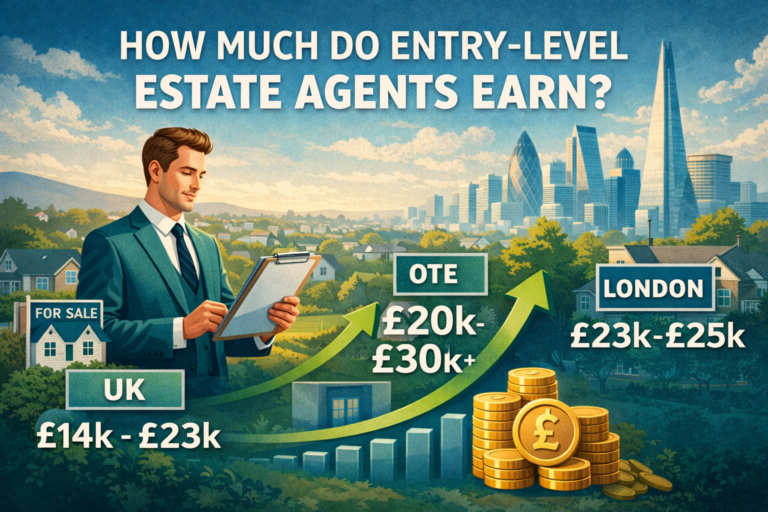
Starting as an entry-level estate agent, such as a trainee or negotiator, can be both exciting and challenging. In the UK, basic salaries usually range from £14,000 to £23,000. However, first-year earnings (also called On Target Earnings or OTE) often reach £20,000 to £30,000 or more because of commission.
In London, starting salaries are often higher, usually around £23,000 to £25,000, which reflects the city’s property market and living costs.
Key Earnings Factors for Entry-Level Agents
Structure: Your income typically combines a basic salary and commission. Commission is usually a percentage of the property sales or rental income.
Commission & OTE: While the basic salary might feel modest, strong performance can significantly increase your earnings. For example, some companies offer guaranteed commission for the first few months to help you settle in.
Location: Where you work matters. London roles tend to pay more, often starting near £25,000, while regional positions may start closer to the lower end of the scale.
Perks: Many roles also include extras such as a car or car allowance, fuel allowance, and performance bonuses. In addition, these perks add real value to your overall package.
Typical Salary Breakdown
- Basic Salary: £14,000 – £23,000 per year
- OTE (On Target Earnings): £20,000 – £30,000+ (including commission)
- High-End Agencies: Some trainee roles, especially in London, may offer higher starting salaries
Overall, earnings usually rise quickly after the first year. Building your client base and improving your skills helps your commission grow, making the role both rewarding and motivating.
How Do Estate Agent Commissions Work?
Estate agent commissions are performance-based fees. Typically, they range from 0.9% to 3.6% (including VAT) of the final sale price and are only paid once the sale completes. Agents often charge 1%–1.8% for sole agency agreements, while multi-agency deals can increase fees to 2.5%–3.6%. These fees usually cover marketing and negotiations and are often negotiable.
How the Commission Works
- Percentage-Based: The commission is calculated as a percentage of the final sale price. This means agents earn more if they secure a higher price for your home.
- Payment Structure: Commission is normally paid upon completion of the sale and is often deducted directly from the sale proceeds by your solicitor.
- VAT Inclusion: The fee quoted by agents often does not include VAT (currently 20%), which increases the total cost.
- Sole vs. Multi-Agency: Using a single agent (sole agency) is cheaper (1%–1.8%), whereas multiple agents (multi-agency) charge higher fees (2.5%–3.6%).
Types of Contracts
- Sole Agency: You instruct one agent. If you sell privately or through another agent, you might still owe fees.
- Multi-Agency: Several agents compete to sell your property. Only the agent who completes the sale gets paid, but the percentage is higher.
- Ready, Willing, and Able Purchaser: A clause that obliges you to pay the agent if they find a qualified buyer, even if you later withdraw from the sale.
Key Considerations
- Negotiation: Agents are often willing to negotiate their commission rate, especially for high-value properties.
- Contract Terms: Always check notice periods and whether you owe fees if a previous buyer returns (called a “connected person”).
- Additional Costs: Ask if the fee includes photography, floor plans or listings on sites like Rightmove, or if these are extra.
Example Calculation: On a £300,000 property sale with a 1.5% commission + 20% VAT:
- Commission: £300,000 × 1.5% = £4,500
- VAT: £4,500 × 20% = £900
- Total Fee: £4,500 + £900 = £5,400
Overall, knowing how commissions operate guarantees that there are no unpleasant surprises during the sale and helps you make well-informed selections.
How Do Estate Agent Commissions Work?
In the UK, commission is typically paid to estate agents as a percentage of the sale price of the property. Typically, this ranges from 0.9% to 3.6%, depending on whether you use a sole or multiple agencies, the property location and negotiation. For example, a sole agency might charge 1–1.8% (including VAT), while multiple agencies charge 2.5–3.6%. Agents usually take a portion of that fee, often around 10%, as their personal cut. As a result, top agents can earn much more through a mix of salary, commission and bonuses.
Fee Variations
- Sole Agency: You use one agent. Fees are generally lower, around 1.2%–1.8% + VAT.
- Multiple Agency: You use several agents. Only the agent who sells the property is compensated, but fees are higher—between 2.5% and 3.6% + VAT.
- Online/Fixed Fees: Some agents offer flat fees. These are cheaper, but you often do more work yourself.
How much can an estate agent earn Personally
- Base Salary: Many agents start with a low monthly salary.
- Commission Split: They earn a percentage of the agency’s commission, usually about 10%.
- Bonuses: Some agencies also give bonuses monthly, quarterly, or annually.
Example Earnings: For a £500,000 sale with a 1.5% agency fee (£7,500), an agent earning 10% of that would get £750, plus their salary and any bonuses. Experienced agents can earn £50,000–£100,000+ per year.
Overall, commissions give agents a real chance to earn more as they gain experience and close bigger deals.
Estate Agent Bonuses Explained
Estate agent bonuses are extra payments for doing more than usual. For example, selling more homes, getting higher prices, or signing more properties. Normal commission is paid on every sale. However, bonuses are extra and usually given monthly, quarterly, or yearly.
How Estate Agent Bonuses Work
- Targets and Goals: Bonuses are linked to goals set by the company. For example, earning £250,000 in commission or selling a set number of homes. Usually, these bonuses are not guaranteed.
- Trigger Payments: If an agent reaches their target, they may get a higher commission rate or a lump-sum bonus.
- High-Value Incentives: Agents can get extra money for selling above the asking price or selling quickly.
- Listing or Selling Bonuses: Agents can earn bonuses for bringing new properties to the market or finding a buyer.
Types of Bonuses
- Performance Bonuses: Paid when the agent or office exceeds targets.
- Enhanced Commission: A higher percentage once sales reach a certain level.
- Listing Bonuses: For signing new properties.
- Referral Bonuses: For sending clients to services like mortgage lenders.
- Client Bonuses: Sometimes, sellers pay extra to get a higher price or faster sale.
Example Scenarios
- Annual Commission Bonus: If an agent earns £250,000 in commission, a 10% bonus gives an extra £25,000.
- Sold Above Target: A seller may pay 1% normally, but 1.25% if the sale is higher than asking.
- Extra Cash Reward: A seller could give £1,000 if the property sells quickly.
Key Things to Know
- No Sale, No Fee: Most bonuses are only paid after the sale is complete.
- Direct Payment by Seller: Some sellers give extra money for higher prices.
- Motivation: Bonuses encourage agents to work harder and focus on certain properties.
Key Terms
- OTE (On-Target Earnings): Total pay if targets are reached, including salary, commission and bonuses.
- Sliding Scale Fee: Extra reward for higher sale prices or faster sales.
Overall, bonuses give agents more money and push them to do their best.
How Much Can an Estate Agent Earn? Salary of an Experienced Estate Agent
Experienced real estate agents in the UK can earn between £40,000 and £100,000+ per year. Most of their income comes from commission on property sales. Base salaries usually start around £23,000–£30,000, but top agents, especially in London, can earn over £100,000 with bonuses and commission. On average, many experienced agents earn around £40,000–£50,000, but this can vary depending on location and sales.
Key Earnings Data for Experienced Agents
- Average Earnings: Most experienced agents earn between £40,000 and £45,000. Earnings depend on sales volume and location.
- High Earners: Top agents, especially in London, can earn over £100,000 per year.
- London Market: In London, salaries range from £35,000 to £100,000+, and some high-end roles can pay up to £120,000.
- Commission Structure: Most agents have a base salary plus commission. Agents usually get around 10% of the fees they generate.
- Regional Differences: Areas with higher property prices, like London and the South East, give higher commissions and higher overall pay.
Factors That Affect Salary
- Sales Volume: The more properties an agent sells, the higher their commission.
- Job Role: Being promoted to Branch Manager increases base salary and commission potential. Branch managers often earn around £30,901+.
- Location: London and the South East pay the most because property prices are higher.
Overall, experienced agents who work hard, sell more properties and build strong client relationships can earn very good money, especially in high-value markets.
Skills You Need to Earn More as a Real Estate Agent
To earn more, real estate agents need strong skills in negotiation, marketing, and local property knowledge. For example, these skills help build trust, close deals faster and get more listings. Agents also need good communication, persistence, and client relationship skills. By developing these abilities, agents can earn higher commissions and grow their business.

Key Skills for Higher Earnings
- Negotiation and Sales: Persuade clients and close deals to increase commission. This means more income for each sale.
- Local Market Knowledge: Know neighbourhoods, schools, and amenities to advise clients well. As a result, clients trust you more.
- Digital Marketing: Use social media, online ads, and websites to reach more people.
- Networking: Build a strong network of clients and referrals. Also, networking can lead to more listings.
- Technology Skills: Use CRM software and virtual tours to make work easier.
- Communication and Emotional Intelligence: Connect with clients and guide them through stressful transactions.
- Problem-Solving and Persistence: Handle difficult deals and follow up consistently.
- Financial Knowledge: Understand property values and financial details to advise clients.
How to Develop These Skills
- Keep Learning: Attend workshops, online courses, and seminars to stay updated.
- Mentorship: Learn from experienced agents. In addition, ask for feedback to improve faster.
- Use Tools: Get comfortable with modern CRM and property analysis software.
Overall, the more you develop these skills, the more clients you can help and the higher your income can grow.
Real estate agent pay can be very different depending on where you work. Usually, areas with higher property prices pay more. However, smaller towns or growing markets can also give good chances to earn well. Let’s look at the main regions in the UK.
London
In London, agents can earn a lot. Experienced agents usually make around £50,000–£100,000+ per year. Top performers in luxury areas can go above £100,000. Also, sales often pay more than lettings, but lettings give a steady monthly income. Working in London is busy and fast, but hard-working agents can earn well.
South East England
The South East has expensive commuter towns like Guildford and Reading. Experienced agents here often earn £45,000–£80,000 per year. For example, strong sales and repeat clients can push pay higher.
Scotland
House prices are usually lower than in London, so agent pay is often around £35,000–£60,000. Agents need good pricing and negotiation skills, especially in Edinburgh and Glasgow. Smaller towns usually pay a bit less.
North West
Manchester and Liverpool are growing fast. Therefore, experienced agents often earn £40,000–£70,000 per year. Also, new builds and first-time buyers give steady work and commissions.
South West
Cities like Bristol and Bath have strong demand. Experienced agents usually earn £45,000–£75,000 per year. Because property prices are higher, commissions can also be bigger.
North East
Property prices are lower in the Northeast, so pay is usually smaller. Experienced agents often earn £30,000–£50,000 per year. However, many sales happen here, so busy agents can still earn well.
Northern Ireland
Prices in Northern Ireland have grown recently, so agents can earn good money. Typical earnings are £35,000–£60,000, with higher pay in Belfast.
Yorkshire and the Humber
This region is more affordable, but demand stays steady. Experienced agents often earn £35,000–£60,000 per year. Also, cities like Leeds and York give good chances for agents who know the local market.
Overall, where you work matters. Also, your effort, skills, and people skills can increase your income no matter the region.
Sales Agents vs. Lettings Agents – Who Earns More?
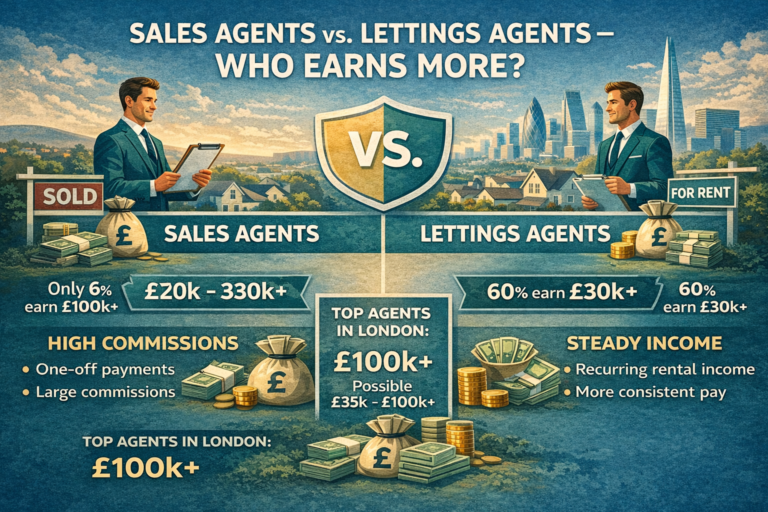
Earnings for sales and lettings agents can be very different. Generally, letting agents earn a more consistent income, while sales agents can make bigger one-off payments. For example, around 60% of letting agents earn £30,000 or more, but only about 6% of sales agents earn over £100,000 a year. However, in high-value areas like London, top agents in both fields can earn over £100,000.
Key Earnings Comparison
- Letting Agents: They earn a steady income from managing properties. Many negotiators earn £10,000–£20,000, and around 8% earn over £100,000. Usually, they make 7–15% of the monthly rent. Because the income is recurring, it is more reliable.
- Sales Agents: They earn more per deal, but payments come less often. Top agents in expensive areas can get large commissions, for example, 1.5% of a £500,000 sale. Average sales negotiators usually earn £20,000–£30,000. Also, income can vary depending on how many properties they sell.
- Regional Factors: In London, high-performing agents in either sales or lettings can earn £35,000–£100,000+.
- Income Structure: Letting agents enjoy consistent recurring income, while sales agents rely on high-value, one-off commissions.
Overall, letting agents earn steady pay, while sales agents can make big sums on individual deals. At the same time, agents who work hard, build clients, and operate in strong markets can earn very well in both fields.
Is a Career as a Real Estate Agent Worth It?
A career in real estate can be both exciting and rewarding, but it is not for everyone. Let’s look at the pros and cons and see who this job suits best.
Pros and Cons
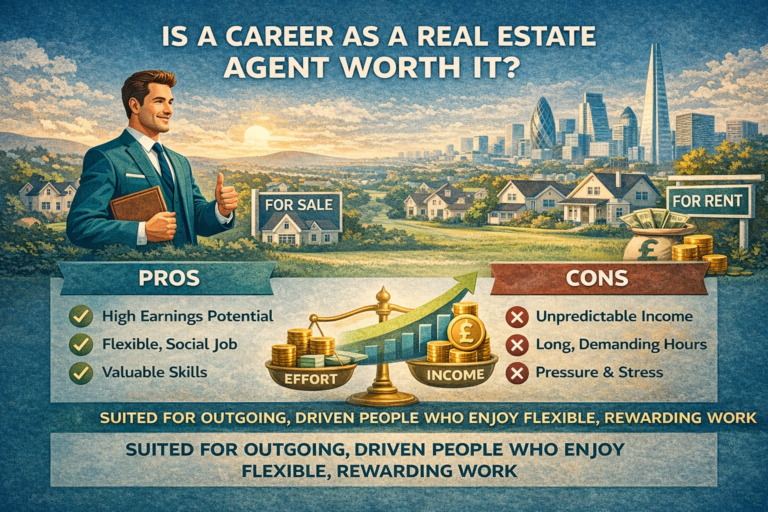
Pros:
- You can earn a lot if you work hard.
- Every day is different. No two clients or properties are the same.
- You meet new people and build a strong network.
- Skills like negotiation and marketing help you in many areas.
Cons:
- Income can be unpredictable, especially at first.
- The job can be exhausting with tight deadlines and demanding clients.
- You may need to work evenings or weekends to meet clients.
Income Potential vs Effort
Generally, income depends on effort. Sales agents can earn big one-off commissions, while letting agents get a steady monthly income. However, both need hard work, persistence and good client relationships. Also, the more skilled and motivated you are, the higher your pay can go.
Who This Career Suits Best
This career suits people who are outgoing, confident, and enjoy working with others. In addition, it is good for those who can handle pressure and like variety. For example, if you like flexible work and earning based on your effort, real estate could be right for you.
Overall, working as a real estate agent may be highly satisfying, both financially and personally. At the same time, it takes dedication, patience, and energy to succeed.
Final Thoughts on How Much Can an Estate Agent Earn
A career as a real estate agent can be exciting and rewarding. Usually, the more effort you put in, the more you can earn. Also, your skills and experience make a big difference. Some areas, such as London or the South East, offer higher salaries and larger commissions. Meanwhile, smaller towns or growing markets give a steady income. Sales agents can earn big one-off deals, while letting agents get regular, steady payments.
At the same time, this career is not for everyone. It can be challenging, and your finances may fluctuate at first. However, if you enjoy meeting people, negotiating deals and having flexible work, it can be very satisfying.
Overall, real estate rewards people who are hard-working, patient, and good at building relationships. With effort and persistence, you can make good money and enjoy a flexible, interesting career.
Frequently Asked Questions (FAQs)
1. Do estate agents make a lot of money?
- Yes, but it depends on experience, location, and effort. Beginners earn less, while top agents in London can earn over £100,000.
2. How much can an estate agent earn in the UK?
- Entry-level agents earn around £20,000–£30,000. Experienced agents typically earn £40,000–£100,000+, depending on commissions and bonuses.
3. What is the highest paid real estate agent’s salary?
- Top agents in luxury markets, especially in London, can earn £150,000 or more per year with commissions and bonuses.
4. Is estate agent a good career?
- Yes, if you enjoy sales, meeting people, and flexible work. It can be rewarding, but income can be unpredictable at first.
5. What jobs make $500,000 a year in the UK?
- High-paying jobs include top investment bankers, surgeons, corporate lawyers, senior executives, and some luxury property agents.
6. Is being an estate agent stressful?
- It can be, due to deadlines, demanding clients, and fluctuating income. However, it can also be exciting and flexible for motivated people.