
How many times can you reheat rice safely at home? In the UK, you should reheat rice only once. Cool cooked rice within one hour. Then place it in the fridge and eat it within 24 hours.
But why is rice different from many leftovers? Uncooked rice can contain Bacillus cereus spores. These spores may survive cooking and grow if rice stays warm too long. Reheating also cannot always fix poor storage. So, safe rice depends on three things: quick cooling, cold storage and one thorough reheat. Keep heating until the rice is steaming hot from edge to centre.
Home-use note: This guide covers rice stored and reheated in UK homes. Food businesses may have separate safety systems and legal requirements. So commercial kitchens should follow their workplace procedures.
Quick Answer
- Cool cooked rice within one hour.
- Keep your fridge at 5°C or below.
- Eat or reheat refrigerated rice within 24 hours.
- Reheat rice only once.
- Heat the whole portion until steaming hot.
- Eat reheated rice straight away.
These points follow current UK home food-safety guidance.
How Many Times Can You Reheat Rice Safely in the UK?
You should reheat rice only once. After reheating, eat that portion straight away. Do not cool the remaining rice for another reheated meal. But why? Actually, the microwave button itself is not the main problem. Usually, another reheat means another cooling and storage period happened beforehand. Each temperature change creates another chance for bacteria to grow.
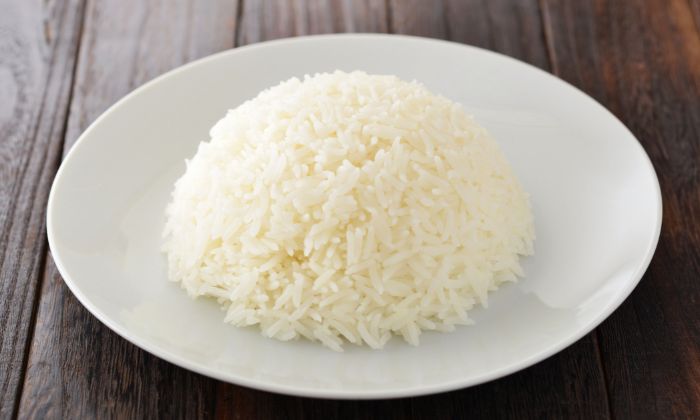
In practice, think about the rice’s whole journey. It moves from cooked and hot to chilled, then hot again. Adding another cooling stage makes safe temperature control harder.
Can You Reheat Rice Twice?
No. You should not cool rice after reheating and save it for another hot meal. The safer approach is to reheat only what you plan to eat.
For example, imagine you have three portions in one container. Do not microwave the entire container for one serving. Instead, remove one portion and leave the others chilled.
That simple habit has two benefits. You protect the untouched rice from unnecessary warming. Similarly, you avoid creating leftovers that have already been reheated.
What Actually Counts as Reheating Rice Twice?
Suppose the centre remains cold during reheating. Can you put it back in the microwave? Yes, continue heating it straight away. That does not create a separate stored reheating cycle. You are still heating the same portion for the same meal. Keep heating until no cold areas remain.
The problem starts when reheated rice is cooled and saved again. For example:
- Unsafe cycle: Reheat rice → eat some → cool the leftovers → refrigerate → reheat again later.
This means the same rice has gone through two separate reheating cycles. Repeated temperature changes give bacteria more chances to grow.
Avoid that cycle. Instead, follow this safer route:
- Safer cycle: Cook rice → cool it within one hour → refrigerate → reheat once → eat immediately.
Basically, reheat only the portion you plan to eat. Keep the remaining chilled rice untouched until you need it.
Why Can Cooked Rice Become Unsafe Before You Reheat It?
The main rice risk can begin long before reheating. Cooked rice can contain surviving spores from a bacterium called Bacillus cereus. These spores can tolerate normal cooking conditions.
But why does this happen? Bacillus cereus exists naturally in places such as soil and dust. Rice can carry its spores before reaching your kitchen. Cooking may kill active bacteria without destroying every spore.
After cooking, temperature control becomes important. Warm rice can provide suitable conditions for surviving spores. The bacteria may then multiply and produce toxins.
What Is Bacillus Cereus in Rice?
Bacillus cereus is a spore-forming bacterium linked with food poisoning. UK health guidance lists rice dishes as a main transmission source. Poor temperature control during cooling and storage increases the concern.
Basically, its spores act like a tougher form of the bacterium. They can survive conditions that kill many ordinary bacterial cells. That is why cooking alone cannot settle the whole safety question.
Still, this does not mean cooked rice is automatically dangerous. Proper cooling and refrigeration control the risk. The trouble begins when cooked rice sits at unsuitable temperatures.
Why Can Reheating Fail to Make Badly Stored Rice Safe?
Most people assume strong heat can rescue anything. With badly stored rice, that idea can create false confidence. Some toxins made by Bacillus cereus can remain stable during heating.
A UK study examined 4,162 cooked-rice samples from restaurants and takeaway businesses. Stored precooked rice contained higher levels of several microorganisms than point-of-sale rice. Final heating also could not destroy the emetic toxin when present.
So, here is the point worth remembering. Heat can warm rice again but it cannot erase its storage history. Safe cooling matters more than trying to rescue old rice later.
How Long Can Cooked Rice Stay in the Fridge Before Reheating?
For UK home use, refrigerated cooked rice should be eaten within 24 hours. Ideally, cool it within one hour after cooking. Then keep it refrigerated until eating or reheating.
This rule can surprise people. General leftover advice may allow a longer fridge period. However, current UK guidance gives rice its own stricter 24-hour limit.
So do not apply a general three-day or four-day leftover rule here. Rice needs its own timeline. Practically, treat tomorrow as the limit for today’s safely chilled rice.
What Temperature Should Your Fridge Be?
Keep your fridge at 5°C or below. Food Standards Scotland describes the suitable range as 0°C to 5°C. Proper refrigeration helps harmful bacteria grow more slowly.
Here is another useful point. Your fridge dial may not show the actual internal temperature. A fridge thermometer gives you a clearer check.
Actually, this matters for much more than rice. In FSA household research, many fridges ran above the recommended maximum. So cold to the touch is not always a reliable temperature check.
Why Does the First Hour After Cooking Matter?
Rice intended for later use should cool within one hour. Leaving a large hot batch sitting around slows that process. So what is the best approach?
A practical cooling routine looks like this:
- Remove saved rice from the hot pan or rice cooker.
- Divide a large batch into smaller amounts.
- Use shallow containers where they help with cooling.
- Avoid leaving one deep mound sitting for hours.
- Put cooled rice into the fridge promptly.
- Use it within 24 hours.
But why do smaller portions help? A deep pile traps heat mainly around its centre. That’s why it cools more slowly. Smaller amounts expose more rice to cooler surroundings. Food Standards Scotland specifically recommends removing rice from cooking equipment. It also suggests dividing larger amounts into smaller portions.
How Can You Reheat Rice Safely Without Leaving Cold Spots?
To reheat rice safely, make sure the whole portion becomes steaming hot. Do not check only the top or edges. The centre must also be fully heated before you eat it.
But why does this matter? Microwaves can heat rice unevenly. Some areas become very hot while dense clumps stay cooler. This can leave cold spots in the middle.
So what should you do? Reheat smaller portions and stir the rice during heating. Then check the centre and break up any cold clumps. Keep heating until the rice is steaming hot throughout.
How Do You Reheat Rice Safely in the Microwave?
Microwaves work well when you heat rice evenly. However, do not depend only on the timer. Use the food itself as your final check.
Follow these steps:
- Put one meal-sized portion in a microwave-safe dish.
- Break apart firm rice clumps with a fork.
- Add a small splash of water if needed.
- Cover the dish according to its instructions.
- Heat the rice, then stir it well.
- Move rice from the edges towards the centre.
- Break apart any remaining cold clumps.
- Continue until the whole portion steams.
- Eat the reheated rice straight away.
Adding water helps restore moisture. However, it does not make poorly stored rice safe. Safety depends on its earlier cooling and storage.
How Long Should You Reheat Rice in the Microwave?
There is no universal safe microwave time for reheating rice. Microwave power, food depth, portion size and container shape all affect heating. Starting temperature matters as well.
For that reason, avoid rules such as microwaving for exactly one minute. A fixed timer cannot show whether the centre became hot. FSA household research has also found fixed reheating routines in real kitchens.
Instead, follow your microwave or product instructions. Stir during reheating and observe any stated standing time. More importantly, check that the whole portion becomes steaming hot.
Why Should You Stir Rice While Reheating?
Microwaves often heat the edges faster than the middle. Stirring moves hotter and cooler rice through the dish. As a result, the portion heats more evenly.
Pay special attention to compact clumps. Their centres can stay cooler than loose grains. Break them apart during heating rather than checking only the surface.
Similarly, a visibly steaming edge does not prove everything is ready. Check several parts of the dish. The centre deserves the most attention.
How Do You Reheat Rice on the Hob?
Put the chilled rice into a saucepan. Add a small amount of water if the grains seem dry. Then cover the pan and heat it steadily. Meanwhile, stir the rice regularly. Break apart clumps and move rice through the pan. Continue until every part becomes steaming hot.
Serve it straight away. Do not cool leftovers from that reheated portion for another meal. The one-reheat rule still applies.
How Hot Should Reheated Rice Be?
For a UK home kitchen, the easiest rule is steaming hot throughout. NHS guidance also gives a useful core-temperature benchmark. Rice should reach 70°C for two minutes, or an equivalent combination.
You do not need to confuse home advice with commercial catering rules. Different business guidance may mention other temperature targets. This article focuses only on household reheating. If you use a food thermometer, check the centre of the portion. Otherwise, stir carefully and check for cold areas. Warm rice is not the same as thoroughly reheated rice.
Can You Reheat Takeaway Rice Safely?
Takeaway rice creates a different question. At home, you usually know exactly when you cooked your rice. With takeaway rice, its earlier history may be unclear. Some businesses serve freshly cooked rice. Others may precook rice and reheat it before serving. Because of that, another home reheating could become a second cycle.
What should you do then? Ask the business how they prepared and stored the rice. Current Scottish guidance specifically suggests checking when you want to save takeaway leftovers.
If you cannot confirm the handling history, do not guess. It is better to avoid reheating it. The issue is uncertainty, not takeaway rice itself.
Can You Reheat Chinese Takeaway Rice the Next Day?
Only consider it when you know the rice has a safe history. It must also have been cooled and chilled within the proper timeframe. Most importantly, it must not have already been reheated.
If those details are unclear, reheating is not a reliable safety fix. Another hot microwave cycle cannot undo poor storage. In that situation, binning the rice is the safer choice.
Can You Eat Cold Rice the Next Day Safely?
Yes, cold cooked rice can be safe when you stored it correctly. Cool it quickly and refrigerate it. Then eat it within 24 hours.
But why can cold rice be fine? Proper refrigeration slows bacterial growth. Rice does not need reheating simply because you stored it in the fridge.
The important question is its storage history. Properly chilled rice differs from rice left warming on a worktop. Cold itself is not the problem.
Why Is Partly Warm Rice Different?
Food between 8°C and 63°C sits in the general food-safety danger zone. Bacteria can grow more easily within that range. That’s why you should avoid partly reheating rice and leaving it standing. Similarly, do not let cold rice warm slowly for hours. Keep chilled rice chilled until you plan to eat it.
Basically, cold rice and poorly held warm rice have very different histories. That difference explains why one can be suitable while the other may not.
Can You Freeze Cooked Rice Instead of Reheating It Again?
Yes. Freezing is useful when you cooked more rice than you can eat within 24 hours. However, cool the rice safely before freezing it.
Divide large batches into meal-sized portions. Then freeze those portions promptly. This makes later reheating easier because you only thaw what you need.
Still, freezing cannot repair rice that already sat out too long. It only preserves rice that entered the freezer safely. Poor earlier storage remains part of its history.
How Should You Defrost Frozen Rice?
Defrost frozen food thoroughly before reheating. The safest approach is thawing it in the fridge. You can also use your microwave’s defrost setting. Do not leave frozen rice thawing for hours on the kitchen worktop. Room-temperature defrosting is not the recommended method.
Once defrosted, reheat the rice until steaming hot throughout. Eat it straight away. Freezing does not give you extra reheating cycles.
When Should You Throw Cooked Rice Away Instead of Reheating It?
Sometimes the safest answer is simple: do not reheat it. Another blast of heat cannot solve every storage mistake. Use the rice’s history to make the decision.
| Rice history | What to do | Why |
| Cooled safely and chilled for under 24 hours | Reheat once | This fits UK rice safety guidance |
| Already reheated once | Discard the rest | Rice should not be reheated again |
| Kept in the fridge for over 24 hours | Discard it | It is beyond the UK 24-hour limit |
| Left out overnight | Discard it | Reheating cannot undo unsafe storage |
| Time outside the fridge is unknown | Discard it | You cannot confirm safe storage |
| Reheated, cooled and stored again | Discard it | It has already passed through another heating cycle |
| Takeaway rice history is unclear | Avoid reheating it | It may already have been reheated |
| Still cold in places during the first reheat | Keep heating now | Finish the same reheating cycle until steaming hot |
These decisions follow the same principle throughout this guide. Safe rice needs a known and controlled history. When that history becomes uncertain, reheating cannot restore certainty.
Can You Tell Unsafe Rice by Smelling It?
Not reliably. Rice affected by Bacillus cereus toxins may look and smell completely normal. Its taste may also seem unchanged. So a normal smell should not cancel an unsafe storage history. Similarly, tasting questionable rice does not provide a safe test. Time and temperature tell you much more.
Of course, visible spoilage is still a reason to throw rice away. However, no visible spoilage does not prove safety. That difference matters.
Do Different Types of Rice Follow the Same Reheating Rule?
Generally, common cooked rice follows the same core home-safety approach. Cool it quickly, store it correctly and reheat it only once. The grain type does not remove those needs.
Can You Reheat Basmati or Jasmine Rice?
Yes. You can reheat basmati or jasmine rice when you stored it safely. Heat only one portion and make it steaming hot throughout. The rice variety does not restart the 24-hour clock. The same cooling and refrigeration history still matters. Practically, treat these varieties like other cooked rice.
Can You Reheat Brown Rice?
Yes. Brown rice can also be reheated once after safe chilling. Keep the same 24-hour UK storage rule. Again, the colour or fibre content does not remove the storage issue. The important factor remains what happened after cooking. Reheat the portion thoroughly.
Can You Reheat Fried Rice?
Yes, but only when the rice had a safe history before frying. Turning leftover rice into fried rice does not reset its storage clock. This point often gets missed. Day-old rice can give fried rice a useful texture. Yet it still needs to fit the 24-hour UK rule.
Can You Reheat Biryani or Risotto?
Yes, when the dish was cooled and stored safely. However, these meals may contain meat, dairy, seafood, or eggs. Those ingredients can create extra safety needs. Dense dishes may also heat unevenly. So, stir carefully and check the centre. Make sure the whole meal becomes steaming hot.
Can You Reheat Microwave Packet Rice?
Follow the packet instructions rather than using one rule for every brand. Ready-cooked products can have different directions after opening. Storage advice can differ too. If you heat a portion, do not automatically cool it for repeated reheating. Check the label for any unused product. Manufacturer instructions should guide that specific packet.
Which Rice Reheating Mistakes Are Easy to Miss?
Most problems do not come from unusual cooking methods. Actually, normal habits can create the biggest gaps. These mistakes are worth checking in your own kitchen.
- Heating the whole batch: Only reheat the amount you plan to eat. Otherwise, the remaining rice has already been reheated once.
- Using the same microwave time every time: One or two minutes may not heat every portion properly. Make sure the rice is steaming hot all the way through.
- Stirring only after heating: Stir the rice during reheating. This helps heat reach cooler areas in the middle.
- Checking only the edges: The outside can feel very hot while the centre stays cooler. Always check the middle too.
- Using a deep container: Thick portions can heat unevenly. A shallower portion makes stirring and checking easier.
- Cooling rice in the hot cooking pan: A large batch can stay warm for longer. Separate it into smaller amounts to help it cool quicker.
- Defrosting frozen rice on the worktop: Thaw it in the fridge or use a microwave defrost setting.
- Trying to fix poor storage with extra heat: Reheating cannot always remove toxins already formed during unsafe storage.
- Trusting smell or appearance: Unsafe rice can still look and smell normal. Storage time and temperature matter more.
FSA household research has found several related reheating habits in real kitchens. These include fixed heating routines and inconsistent stirring. So, these are practical risks rather than theoretical ones.
The easiest improvement is portion control. Store rice in amounts you actually plan to eat. That way, you avoid warming tomorrow’s portion today.
Final Thoughts on How Many Times Can You Reheat Rice
So, how many times can you reheat rice? For UK home food safety, the answer is once. But the real lesson goes beyond the reheat count. Safe rice depends on what happens between cooking, cooling, chilling and serving.
Cool it quickly, keep it properly chilled and use it within the safe period. When reheating, make every part steaming hot, not just warm. Most importantly, do not expect extra heat to correct poor storage.
Good rice safety starts before the microwave ever switches on.
Frequently Asked Questions (FAQs)
1. Is It Safe to Reheat Rice Twice?
- No. UK guidance says you should reheat rice only once. Reheat only what you plan to eat. Then eat it straight away.
2. What Is the 123 Rice Rule?
- The 1-2-3 rice rule is a cooking guide, not a food safety rule. It means one part rice, two parts water and about three parts cooked rice. However, the ratio can change with different rice types.
3. Is It Safe to Reheat Rice According to the NHS?
- Yes, if you stored it safely. The NHS says rice should cool within one hour. Keep it chilled and eat it within 24 hours. Also, never reheat it more than once.
4. What Is Reheated Rice Syndrome?
- Reheated rice syndrome usually means food poisoning linked to Bacillus cereus. It is also known as fried rice syndrome. The real problem often starts when cooked rice stays warm too long.
5. Is It Safe to Eat Leftover Rice?
- Yes, when you cool and store it correctly. Refrigerate cooked rice within one hour. Then eat it within 24 hours. Throw it away if it stayed out overnight.
6. How Quickly Does Bacillus Cereus Make You Sick?
- It can make you ill quite quickly. Vomiting symptoms can start within 1 to 6 hours. Diarrhoea and stomach pain usually start within 8 to 16 hours.