
Safeguarding means protecting people from abuse, neglect, harm and exploitation. It helps keep children and vulnerable adults safe from danger. It also protects their dignity, rights and wellbeing every day. To understand safeguarding duties, you first need to know its main principles. So, how many key principles of safeguarding should you know in the UK?
The Care Act 2014 has six key safeguarding principles. These principles help workers keep people safe from harm and abuse. They also help workers know what to do when concerns arise. Each principle supports safe, respectful and caring support. Understanding these principles helps workers spot problems early. It also helps them take the right action.
How Many Key Principles of Safeguarding are Used in England?
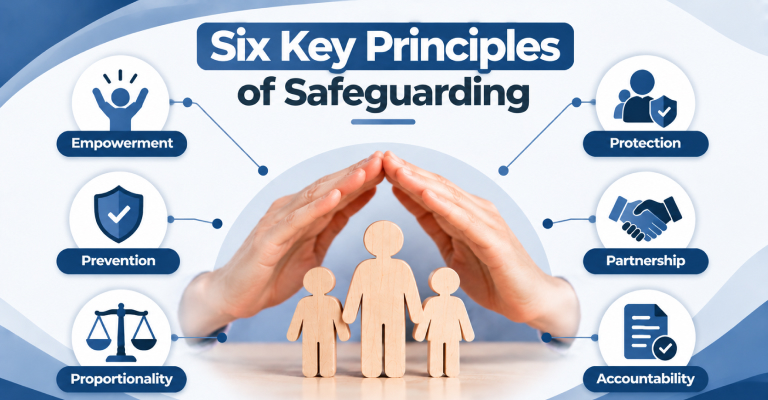
There are six key principles of safeguarding used in adult care in England. These principles help workers protect adults from harm, abuse and neglect. They also support people’s rights, choices and safety. The six principles are:
- Empowerment: Help people make their own choices and decisions. Respect what they want and support their independence.
- Prevention: Take action before harm, abuse or neglect happens. Early help can lower risks and keep people safe.
- Proportionality: Choose the right action for each risk. Use only as much action as the situation needs.
- Protection: Help people who face harm, abuse or neglect. Make sure they get the right help and support.
- Partnership: Work with other people and services to keep adults safe. Good teamwork helps people get better support.
- Accountability: Make sure everyone knows their safeguarding duties. Clear roles help workers take responsibility for their actions.
These principles help workers provide safe and respectful care. They also support the safeguarding duties set out in the Care Act 2014.
What Do the Six Key Principles of Safeguarding Mean?
The six principles help keep adults safe from harm and abuse. They also protect people’s rights, choices, dignity and safety. Each principle has a clear role in safeguarding. They help workers make good choices when supporting adults. These principles also guide workers when risks or concerns appear. Safeguarding should include the person whenever possible.
Workers should respect what each person wants and chooses. They should explain important matters in a clear and simple way. Keeping someone safe does not mean making every choice for them. Instead, workers should help people make their own choices safely. They should also take serious risks into account. This helps adults feel safe, valued and included.
Why are the Six Principles Important in Safeguarding?
The six principles guide workers when they make safety decisions. They also help workers respect each person’s needs and choices. Taking action early can prevent small concerns from getting worse. Clear responsibilities help workers understand their safeguarding role. Together, these principles help provide safe care in health and social care.
- Spot risks early: Workers can notice warning signs before problems get worse. Early action can help keep adults safe.
- Respect people’s choices: Listening to people’s wishes helps them stay in control. It also helps adults feel respected during care.
- Know their duties: Workers need to know what they should do. This helps them act correctly when concerns appear.
- Take the right action: Each concern needs the right type of help. Proper action can protect adults from further harm.
How Does Empowerment Work in Safeguarding?
Empowerment means helping people make their own choices. Workers should listen to what each person wants and needs. They should also give clear information before important decisions. This helps people understand their options and stay in control.
For example, a care worker can explain the support choices to a person. The person can then choose what they want. Workers should not make all the decisions for someone. Instead, they should help the person understand their choices. This gives people more control over their care. It also helps them stay independent and respected.
How Does Prevention Help Stop Abuse and Neglect?
Prevention means taking action before harm, abuse or neglect happens. Workers should learn the warning signs and act early. This can help stop a small concern from becoming serious. Staff training also helps workers understand risks and safeguarding duties.
Clear information helps people know when and how to ask for help. Organisations should also check for signs of abuse or neglect. Regular training can help staff notice these signs sooner. Early support can then help protect people and reduce further harm.
How Does Proportionality Guide Safeguarding Decisions?
Proportionality means taking the right action for the level of risk. Workers should not use stronger action than the situation needs. They should choose the safest and least restrictive option. This approach also helps protect a person’s freedom and choices.
For example, someone might face a small risk while living independently. A worker could offer extra support instead of limiting their choices. However, serious risks may need stronger action to keep them safe. The response should always balance personal choice with safety.
How Does Protection Support People at Greater Risk?
Protection means helping people stay safe from abuse, neglect or harm. Workers should act when they notice a safeguarding concern. They should report the concern and help the person get suitable support. They should also listen to the person’s wishes whenever possible.
For example, a care worker may notice an unexplained injury. They should report it through the right safeguarding process. The person should get the help and support they need. Workers should also respect their wishes and choices. At the same time, they should help keep the person safe.
How Does Partnership Improve Safeguarding?
Partnership means working together to keep adults safe. Different services can share their skills and support. These services include social care, health teams, housing teams and local groups. When they share the right information, they can spot risks early. They can also give people the right help.
Families, friends, neighbours and local groups also have an important role. They may notice changes in someone’s behaviour or daily life. They can report concerns to the right service. Good teamwork helps workers act quickly when problems arise. It also helps people get safe and suitable support.
How Does Accountability Support Better Safeguarding?
Accountability helps everyone understand their role in safeguarding. Each worker knows what they must do when a concern appears. Clear duties also reduce confusion and help staff act quickly. Organisations should make safeguarding rules clear to all workers. They should also keep accurate records of safeguarding concerns and actions.
Regular checks help teams spot problems early. Managers can fix these problems and support staff better. Clear communication also helps workers speak up quickly. Everyone has a part to play in safeguarding. When people work together, they can prevent harm. This helps keep children and vulnerable people safe.
How Do the Six Principles Work Together?
Each safeguarding principle has a different job. However, workers often use several principles at once. This helps them protect people and respect their choices. The principles also help workers make safer decisions.
| Principle | Main purpose |
| Empowerment | Help people make their own choices. |
| Prevention | Stop harm before it happens. |
| Proportionality | Take action that matches the risk. |
| Protection | Help people who face harm. |
| Partnership | Work with others to keep people safe. |
| Accountability | Make sure everyone knows their duties. |
How Do the Six Principles Apply to Adult Safeguarding?
The six principles help workers protect adults from harm. They also help workers give care that meets each person’s needs. Workers should listen to what each person wants. They should also respect their choices, rights and dignity. This helps adults feel safe and respected during care.
Safeguarding is something everyone must help with when supporting adults. Care workers, health staff, families and local services all have a part. They should speak up when they notice a concern. They should also take action when someone needs help. Good safeguarding helps adults stay safe and live independently. It also gives people more control over their own choices.
How Many Key Principles of Safeguarding Should Workers Remember?
Workers use six main ideas of safeguarding to keep people safe. These six ideas are choice, stopping harm, right help, protection, teamwork and responsibility. Workers help people make their own choices every day. They try to stop bad things before they can happen. They give help while keeping people free to live their lives.
Treating people with kindness builds strong trust. Using these simple ideas helps make life much better for everyone. Workers join hands with families to support people in need. They take responsibility to make sure they do good work. They give extra care to people who need it most. Following these steps helps build a safe and happy community.
Final Thoughts
Knowing how many key principles of safeguarding helps explain safe care. There are six key principles for adult safeguarding in England. These principles help protect people’s rights, choices and safety. They also help workers spot and deal with risks. Each principle has a clear role in keeping people safe. The six principles work together in everyday care. They help protect adults from harm, abuse and neglect.
Ready to build your safeguarding skills and knowledge? Explore our Safeguarding Lead Training Course and build the skills you need to support people safely.
FAQs
1. What are the 6 C’s of safeguarding?
- The 6 C’s are Care, Compassion, Competence, Communication, Courage and Commitment. They help workers provide safe and caring support.
2. What are the 6 principles of safeguarding?
- The six principles are Empowerment, Prevention, Proportionality, Protection, Partnership and Accountability. They help workers keep people safe from harm.
3. What are the 4 P’s in safeguarding?
- The 4 P’s are Prevention, Protection, Partnership and Prosecution. They help workers prevent harm and deal with safeguarding concerns.
4. What are the 5 main areas of safeguarding?
- The five main areas include physical abuse, emotional abuse, sexual abuse, neglect and financial abuse. They help workers spot different types of harm.
5. What do the 6 principles of safeguarding do?
- The six principles help workers protect people from harm and abuse. They also guide workers when making safe and fair choices.
6. What are the six principles under the Care Act 2014?
- The six principles are Empowerment, Prevention, Proportionality, Protection, Partnership and Accountability. They help workers follow good safeguarding practices.
7. How many key principles are there for safeguarding?
- There are six key safeguarding principles under the Care Act 2014. They help workers protect people and respond to concerns.
8. What are the 6 R’s of safeguarding?
- The 6 R’s are Recognise, Respond, Report, Record, Refer and Review. They help workers know what to do after spotting a concern.

Safeguarding Lead Training Course
Course Description :
- Certificate: Yes(Free)
- Accreditation: CPD Accredited
- Access: Lifetime