
Many people want a job in property because it offers good career growth. You can start this career without strict rules. Becoming a real estate agent in the UK requires no formal qualifications or legal licences. So, beginners can start easily. You still need strong communication skills and a driving licence. Most people begin as trainee negotiators or administrators. They learn step by step on the job. In the middle of the journey, many ask how do you become an estate agent UK in real life. The simple answer is to gain experience, get basic certifications, and learn the local property market. This career also lets you meet new people every day. Also, you can grow fast if you stay active and motivated.
Now, let’s see how to become a real estate agent in England and start your career.
What Does an Estate Agent Do Daily?
An estate agent follows a busy daily routine and handles many tasks each day.
- Start the day with team meetings and emails.
- Then, talk to buyers, sellers, and landlords during the day.
- Next, arrange and conduct property viewings.
- After that, drive to different properties for visits.
- Show homes to buyers or tenants clearly.
- Also, negotiate offers between buyers and sellers.
- Present offers and track the sales progress.
- Meanwhile, take photos and create property listings.
- Update CRM records and prepare brochures.
- Check local market trends and property prices.
- Therefore, give simple advice based on market research.
- Speak with mortgage brokers, solicitors, and surveyors.
- Finally, complete admin tasks and follow up with clients.
- Work from around 8:30 AM to 6:30 PM, often on Saturdays.
What Qualifications Do You Need to Become an Estate Agent in the UK?
In the UK, you do not need any legal qualifications or a degree to become an estate agent. Many firms care more about your skills, experience, and personality. However, some certificates can help you get a job faster. For example, the Level 3 Certificate in Residential Sales or Lettings (Propertymark) is useful. Also, degrees in property management or business can help you stand out. Often, starting as a trainee lets you learn the job and gain experience.
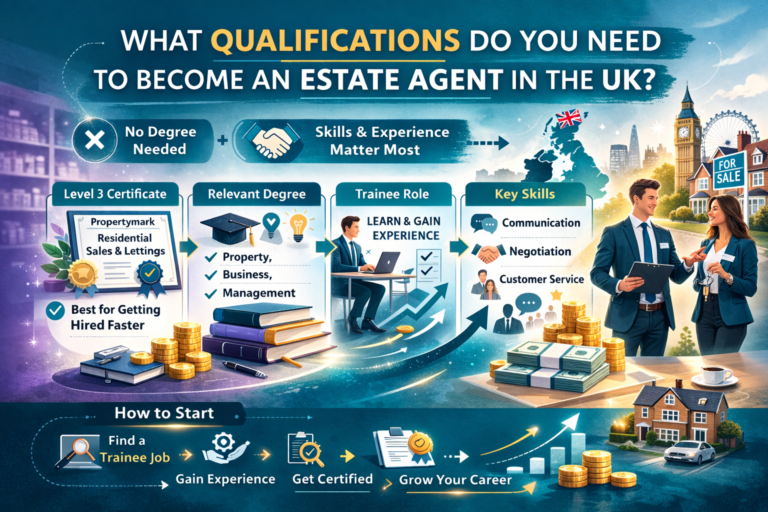
Key Qualifications & Requirements
- Formal Education: Not needed, but A-levels or degrees in business, estate management, or surveying can help. They can make it easier to get promoted.
- Industry Certifications: Propertymark certificates (Levels 2–4) in sales, lettings, or property management give useful skills. Furthermore, employers recognise these certificates.
- Apprenticeships: Level 2 apprenticeships as a Junior Estate Agent are a common way to start. During this time, you learn while you work.
- Legalities: You do not need a licence. Nevertheless, you must work under an approved redress scheme, like The Property Ombudsman, to protect clients.
- Skills: Good communication, sales, and negotiation skills are important. In addition, a full UK driving licence is usually needed because you travel to properties.
- Experience: Getting work experience early helps you understand the market. Eventually, this can lead to higher pay and more responsibility.
What Is an Estate Agent and Why Is It Important in the UK?
Estate agents in the UK help people sell, buy, or rent homes and commercial property. They act as a link between owners and buyers or tenants. In addition, they know the rules, show properties, and give advice about local prices to help clients get the best deals.
Key Roles of a UK Estate Agent
- Marketing & Visibility: Agents list properties on websites like Rightmove and Zoopla. They also use good photos to attract buyers.
- Negotiation & Sales: Agents help buyers and sellers agree on the best price. Moreover, they make sure both sides feel confident.
- Viewings & Feedback: They arrange visits, check potential buyers, and give feedback to sellers. At the same time, they manage schedules to avoid problems.
- Legal Compliance: Agents follow rules like Anti-Money Laundering checks and Property Ombudsman standards. Therefore, clients stay safe during the sale.
Why Estate Agents Are Important in the UK
- Local Knowledge: They know local prices and property trends to give good advice.
- Time & Stress Saving: Agents handle negotiations and buyers so clients feel less stressed.
- Safety Help: They guide clients through legal rules and work with solicitors to avoid mistakes.
- Better Exposure: Agents make sure properties reach more buyers. In short, this helps clients sell at the best price.
How Do You Become an Estate Agent UK?
Do you want to start your career as an estate agent? Then you must have known how do you become an estate agent UK You do not need a licence or special qualifications to start. First, beginners often work as trainees or administrators to learn the job. Then, taking courses can help you get jobs faster. Also, a driving licence is usually needed. Finally, with experience, you can move up to senior roles or run your own agency.
Steps to Start:
- Start as a Trainee: Work as a sales negotiator or administrator to learn on the job.
- Take Courses: Level 3 in Residential Sales or Lettings (PropertyMark) helps employers trust you.
- Learn Key Skills: Marketing, showing homes, valuing properties and helping with sales or lettings.
- Get a Driving Licence: Needed to travel to viewings and meet clients.
- Grow Your Career: Move to a senior agent, branch manager, or start your own agency.
Tips for Success:
- Work hard and stay motivated.
- Communicate clearly with clients.
- Learn local property market trends.
- Take extra responsibilities to gain experience.
What Skills Do You Need to Succeed as an Estate Agent?
To do well as an estate agent, you need people skills, local knowledge, and basic computer skills. In addition, being organised, patient, and able to solve problems helps you do better. Also, having a positive attitude and being willing to learn are very important. Here are the main skills you need:
- Communication and People Skills: Speak clearly, listen carefully, and build good relationships with buyers and sellers. Moreover, explain property details in simple words.
- Negotiation and Persuasion: Help buyers and sellers agree on deals that work for both. At the same time, stay calm and professional during discussions.
- Local Market Knowledge: Know property prices, trends, and the area to give accurate advice. Therefore, clients can make smart decisions.
- Sales and Marketing: Use social media, websites, and photos to show properties well. Besides this, basic online marketing helps attract more clients.
- Organisation and Time Management: Plan your day to handle viewings, calls, and admin without stress. Similarly, being organised avoids mistakes.
- Resilience and Tenacity: Stay motivated, handle rejection, and keep working under pressure. Finally, do not give up when deals fail.
- Integrity and Trust: Be honest and fair to build a good reputation and get repeat clients.
- Digital Skills: Use computers, online tools, and CRM systems confidently.
- Problem-Solving: Fix unexpected problems, like a buyer changing their mind or survey issues.
- Driving Licence: Needed to visit properties and meet clients easily.
How Long Does It Take to Become a Real Estate Agent?
You do not need a real estate licence in the UK to start working as an agent. This means beginners can take entry-level jobs and start learning on the job. With some training, most new agents take about 3–6 months to learn the basics. This includes showing homes, talking to clients, and understanding how sales work. After that, within 6–12 months, many feel confident managing their own deals and helping clients successfully.
The route you choose can change how fast you learn. For example, apprenticeships give both on-the-job training and formal lessons. This builds strong skills but takes longer. On the other hand, starting a job straight away lets you get experience faster. However, you need to learn quickly while working. Also, practising regularly helps you improve faster. Therefore, hard work and focus will help you succeed.
What Are the Common Challenges Estate Agents Face?
Estate agents face many challenges while doing their job. They work in a competitive market and must follow complex rules. Also, technology and AI are changing the way they work. In addition, changing market conditions and client expectations can make work harder. Agents need patience and focus to build a good reputation.
Here are the key challenges:
- Intense Competition: Many agents work in areas with several rivals. Therefore, you need to show why clients should choose you.
- Regulatory & Compliance Rules: Following all rules and regulations takes time and can be costly. Moreover, mistakes can cause problems for your business.
- Market Changes & Inventory: High-interest rates or economic problems can reduce the number of homes for sale. As a result, it becomes harder to complete deals.
- Lead Generation & Database Management: Keeping a list of clients and finding new leads is important, but can be difficult. At the same time, it helps you grow your business.
- Using Technology (PropTech): Smaller agencies may struggle to afford AI, CRM systems, and online marketing tools. However, using these tools helps you stay competitive.
- Managing Client Expectations: Balancing what buyers and sellers want can be tricky. Finally, good communication helps avoid misunderstandings.
How Much Can an Estate Agent Earn in England?
Have you ever wondered how much money estate agents can really make? If you start as a junior or trainee estate agent, you usually earn £18,000–£25,000 a year. However, with commission, you could earn up to £40,000 if you meet your sales targets. In the UK, agents get a share of the agency’s fee, not the property price. This means the more deals you complete, the more money you make.
As you gain experience, your salary can grow quickly. For example, most experienced agents earn about £45,000–£46,000 a year. Also, top agents can make £40,000–£70,000 or more, especially in senior roles like branch managers. In London, pay is higher, averaging £33,000, and top earners can make over £60,000. Meanwhile, other cities like Manchester, Bristol, and Reading pay less, but the money is still good.
Across the UK, estate agent fees usually range from 0.75% to 2.5–3% of the property’s sale price. Employed agents usually get 10–30% of the agency’s commission. On the other hand, self-employed agents or those on bigger splits can earn more. Therefore, the harder you work, the more money you can make.
What Career Path and Progression Can You Expect as an Estate Agent?
A career in real estate can grow step by step. You start small and get bigger roles as you gain experience. In addition, learning new skills helps you move faster. Here are the main ways to move up:
- Senior Negotiator: Handle bigger sales and work with important clients. You also help junior staff and close bigger deals. Moreover, you learn how to manage more responsibility.
- Branch Manager: Run a branch and lead a small team. You plan targets, support staff, and make sure everything runs smoothly. At the same time, you start making bigger decisions.
- Area Manager: Manage several branches in a region. You check sales across branches and help them do better. Therefore, your influence grows across the area.
- Property Investor: Use your money and knowledge to buy and invest in property. This way, you can earn extra by renting or selling properties.
- Franchise Owner: Start your own agency and run it your way. You hire staff, do marketing, and manage daily work. Finally, you are in full control of your business.
- Specialisation: Focus on areas like luxury homes, commercial property, or lettings. By doing this, you become an expert and can earn more money.
Are There Real-Life Success Stories of Estate Agents in the UK?
Many estate agents in the UK have inspiring stories. Some started as trainees with no experience. Then, they worked hard, learned about the property market, and built good relationships with clients. Slowly, they moved up to senior negotiators or branch managers and earned more money.
One agent said they struggled at first. They had tough clients and long working days. However, they did not give up. In addition, they kept learning new skills and asking for advice. Over time, their hard work paid off. They started closing bigger deals. Today, they earn a good salary and help new agents learn.
Another agent in a small town used social media to get noticed. As a result, they got more listings than other agents nearby. Moreover, they always helped clients honestly, which built trust and repeat business. These stories show that anyone can succeed as an estate agent in the UK. Also, staying motivated, working hard, and learning new skills helps a lot. Even if the start is hard, persistence and smart work can lead to success.

Final Thought
Becoming an estate agent in the UK is a good choice. You help people and work with homes. First, you do not need special qualifications. Beginners can learn while working. Next, gaining experience and knowing the local market helps you improve. Also, taking short courses or certificates can help you get better jobs. Being honest, organised, and good with clients builds trust. It also helps you succeed. Next, hard work and patience help you move up to senior roles or even run your own agency. Finally, staying motivated, learning new skills, and practising every day can make your career rewarding, and your income grow over time.
Frequently Asked Questions (FAQs)
1. How much do estate agents get paid in the UK?
- Junior agents earn £18,000–£25,000 per year. Experienced agents earn £45,000–£46,000. Top agents or branch managers can earn £60,000+ with commission.
2. What qualifications do you need to become an estate agent in the UK?
- No formal qualifications are needed. Certificates like Propertymark Level 3 help. Apprenticeships and experience also matter.
3. Is it hard to be a real estate agent in the UK?
- It can be challenging. You need good communication, patience, and the ability to handle pressure.
4. How long does it take to become an estate agent?
- You can start working immediately. Most agents take 3–6 months to learn the basics and 6–12 months to manage deals confidently.
5. Is being an estate agent good money?
- Yes. Pay grows with experience, sales, and commission. For example, top agents can earn over £60,000 a year.
6. What is the biggest mistake a real estate agent can make?
- Being dishonest, poor communication or ignoring clients’ needs can harm reputation and sales.
7. Can I become an estate agent with no experience?
- Yes. Many start as trainees or junior agents and learn on the job. Then, they gain experience and take on more responsibility.
8. Is it hard to start as a real estate agent?
- It can be competitive. Beginners need motivation, patience, and the willingness to learn quickly.