
Curious how professionals help people buy, sell, and rent property? It all starts with learning the role and the skills behind it. Estate agents guide people through important life decisions and handle property matters every day. This is exactly what you learn when exploring how do you become an estate agent.
Being an estate agent can be fun and exciting. Every day is different. You might show houses, speak to clients or make deals. You meet many people and solve problems, which makes the job interesting. To start, many people take entry-level roles like a Junior Negotiator. You gain experience and learn skills in sales, negotiation and customer service. You do not always need a degree, but A-levels or property diplomas can help. Knowing your local market, having a strong CV and applying to agencies, even by handing your resume directly, are key steps to begin.
An estate agent’s career gives many opportunities. You can work at a small agency or a large company. With hard work, you can earn well and grow into management. If you enjoy helping people and seeing results from your work, an estate agent job could be perfect for you.

What Does an Estate Agent Do?
An estate agent helps people sell, buy, or rent homes. They make the process easier and faster.
Key responsibilities of an estate agent include:
- Checking property prices: Agents compare homes to the local market to set fair prices.
- Advertising properties: They create brochures and list homes on websites like Rightmove and Zoopla. They also promote homes to attract buyers or tenants.
- Showing homes: Agents arrange viewings and explain property features to clients.
- Negotiating deals: They talk to buyers and landlords, compare offers, and guide clients to make the right choice. For example, they help agree on a fair price.
- Handling paperwork: Agents work with solicitors, mortgage brokers, and surveyors to complete sales or rentals. Then, they ensure everything is done correctly.
- Managing rentals: While some agents focus on selling, others find tenants, check references, collect rent, and handle repairs or maintenance.
A good estate agent works hard to get the best deal for their clients and keeps the process smooth and stress-free for everyone.
What Skills Do You Need to Become an Estate Agent?
To become an estate agent, you need strong communication, negotiation, and customer service skills. You also need good organisation, a proactive attitude, and a sales-driven mindset. For example, knowing your local property market and using digital tools like CRM software can make your work easier. Many roles do not require formal qualifications, while handling stressful situations is very important.
Key Skills for Estate Agents:
- Communication & People Skills: You must speak clearly, explain property details, and build trust with clients.
- Negotiation & Sales: You need confidence to persuade clients and close deals successfully.
- Customer Service & Empathy: Understanding client needs helps guide them through emotional property decisions.
- Organisation & Time Management: You handle viewings, listings and paperwork every day. Next, planning your time well keeps everything on track.
- Local Knowledge: Knowing schools, transport, and amenities helps you give clients expert advice.
- Digital Skills: Using online tools, CRM systems and social media makes marketing easier.
- Resilience & Motivation: You need persistence to deal with setbacks or deals that fall through.
Essential Requirements
To work as an estate agent, a driving licence is needed to visit properties and meet clients. Additionally, having industry knowledge, such as understanding property laws and standards like Propertymark, is very helpful. For instance, knowing local property rules can make your job easier.
How to Start
Many estate agent roles accept beginners. For example, you can start with traineeships or apprenticeships to gain experience. Also, transferable skills from retail, hospitality, or administration are valued and can help you progress faster in your career. Furthermore, showing enthusiasm and a willingness to learn can make you stand out to employers.
What Education and Qualifications Are Required?
The education and qualifications you need depend on the job you want. Most roles start with GCSEs in English and Maths (Grade 4/C or above). Next, higher-level courses like A-levels, T Levels, or vocational courses (VTQs) can help you move forward. Some jobs may also need a bachelor’s degree or a Higher National Diploma (HND).
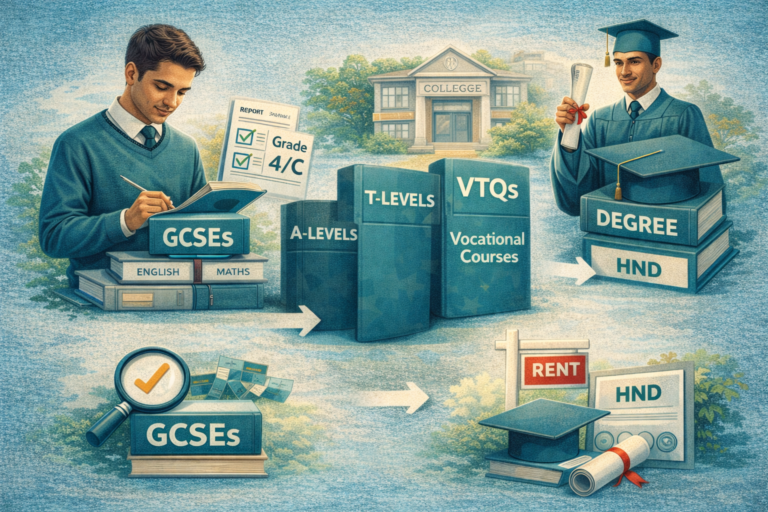
Common Education and Qualification Requirements:
- Secondary Education (Post-16): Students in England continue learning until 18, often through A-levels, T Levels, or apprenticeships.
- Essential Skills: Most roles need a Level 2 qualification in English and Maths.
- Higher Education (Post-18):
- Bachelor’s Degree (BA/BSc): Needed for many jobs, usually a 2:2 or above.
- Higher National Diploma (HND): Practical course, like the first two years of a degree.
- T Levels: Combine classroom learning with real work experience.
- Professional/Vocational Qualifications:
- Apprenticeships: Work and earn while you learn.
- VTQs: Practical, job-focused courses, for example, BTEC.
- Skills Bootcamps: Short courses to learn specific skills quickly.
Teaching Requirements
For primary and secondary teaching, you need a degree, GCSEs in English, Maths, and Science, plus Qualified Teacher Status (QTS). Additionally, for further education, strong subject knowledge is required, along with Level 5–7 teaching qualifications.
Other Points to Remember
Firstly, if you have non-UK qualifications, you may need a UK ENIC statement to show your qualification is equivalent. Also, some jobs may require specific licenses, certificates, or prior experience. Next, when preparing your CV, always list your qualifications starting with the most recent.
Finally, while certain teaching paths need higher education, many roles can be started with basic qualifications. In addition, practical experience is very helpful for building your skills and confidence.
How Do You Become an Estate Agent Step by Step
Starting an estate agent career path can feel exciting, but it can also seem overwhelming. Breaking it into clear steps helps make the process simple and achievable.
Step 1: Gain Experience
The first step is getting hands-on experience. Working in internships, as a property assistant or in related roles helps you understand the day-to-day tasks of an estate agent. For example, you might attend property viewings, communicate with clients, or help with basic paperwork. These experiences build confidence and practical skills that employers value.
Step 2: Complete Training or Certifications
Next, consider taking property agent training or professional courses. These teach you important areas such as property law, sales, marketing, and negotiation. Also, completing recognised certifications can make your CV stronger and show employers that you are serious about your career.
Step 3: Apply for Estate Agent Positions
Then, it’s time to start applying for jobs. Focus on building a strong CV that highlights your experience and skills. Local knowledge, enthusiasm and a friendly attitude can set you apart during interviews. You may begin with junior or assistant roles and gradually work your way up.
Step 4: Join Professional Bodies
Finally, think about joining professional organisations like NAEA or RICS. While this is optional, membership can boost your reputation, offer networking opportunities and give access to extra training.
By following these steps, you will gain the skills, knowledge, and connections needed to succeed. This clear approach helps you understand how to become a licensed estate agent and build a rewarding career helping people buy, sell, or rent their perfect homes.
Can You Become an Estate Agent Through an Apprenticeship?
Yes, you can start an estate agent apprenticeship to begin your career. Apprenticeships let you learn while you work, giving you real experience in property. For example, you may help with viewings, talk to clients, and assist with paperwork while learning important skills.
Overview of Apprenticeship Programs
A property apprentice program combines work and study. You earn money while learning about property sales, lettings, marketing, and customer service. These programs are designed for beginners and include support from experienced estate agents.
Benefits of Apprenticeships
Apprenticeships give you practical experience from day one. Also, you improve skills like communication, negotiation, and time management. Next, you can gain professional qualifications that make your CV stronger. While learning, you meet people in the property industry and build your network. Finally, you earn money while studying, which makes starting your career easier and less stressful.
Starting as an apprentice is a smart way to begin an estate agent career. It helps you gain confidence, learn the job in real life, and get ready for future roles in property.
How Much Do Estate Agents Earn and What Are Career Opportunities?
Estate agents in the UK usually earn between £18,000 and £25,000 as a base salary. Also, they can earn more through commission, often 0.75% to 3% of property sales. This can bring on-target earnings (OTE) to £25,000–£60,000 or more. For example, experienced agents in London can earn over £100,000, and top performers can make more than £500,000.

Estate Agent Earnings Breakdown:
- Starting/Trainee: £17,000–£25,000 OTE.
- Experienced Agent: £25,000–£60,000 plus commission.
- Manager/High-End: £50,000–£100,000+ depending on sales.
Earnings depend on location, property prices and personal performance. While base salaries are usually low, commission, branch performance and bonuses increase total pay.
Career Opportunities and Progression:
- Trainee Negotiator/Administrator: Entry-level role to learn the job.
- Sales/Lettings Negotiator: Show properties, negotiate and close deals.
- Senior Negotiator/Valuer: More responsibility, client management, and valuations.
- Branch Manager: Manage staff, compliance, and office performance.
- Area/Regional Director: Oversee multiple branches and strategy.
Next, with experience and strong skills, you can move up the career ladder quickly.
Key Skills and Benefits:
- Strong communication, negotiation, and confidence.
- Ability to work in a fast-paced environment.
- Benefits often include a company car, phone, and performance incentives like holidays.
- Work hours are usually 35–40 hours per week, sometimes including weekends on a rota.
What Are the Challenges and Rewards of Being an Estate Agent?
Being an estate agent can be exciting, rewarding, and sometimes challenging. You often work long hours, face stressful situations, and earn money mostly from commission. Also, the job gives independence, flexibility, and the chance to earn a good income if you are motivated.
Rewards of Being an Estate Agent:
- High Income Potential: Agents earn from sales, so top performers can make a lot of money. For example, closing a high-value property can increase your earnings significantly.
- Flexibility and Independence: You can manage your own time and plan your schedule. Many agents enjoy feeling in control of their day.
- Helping People: You guide clients through buying or selling one of the biggest investments in their life. This makes the work very satisfying.
- Varied Work: No two days are the same. You split your time between office tasks, property viewings, phone calls, and meeting new clients.
- Easy to Start: You usually do not need a university degree, so you can start quickly and learn on the job.
- Career Growth: Next, you can move from junior negotiator to senior agent, branch manager, or even start your own agency.
Challenges of Being an Estate Agent:
- Commission-Based Income: Pay depends on sales, so income can be unpredictable.
- Long and Irregular Hours: You often work evenings, weekends and holidays to meet clients’ schedules.
- Stressful Work: Deals can fall through at the last minute. While managing emotional clients and tight deadlines adds pressure.
- High Competition: Many agents compete for the same clients, so building a reputation takes time.
- Need to Find Leads: You must always look for new buyers and sellers to keep sales moving.
- Business Costs: Agents often pay for marketing, travel, and licenses themselves.
What Tips Can Help You Succeed as an Estate Agent?
Success as an estate agent needs local knowledge, people skills, and the use of technology. First, building trust with clients is more important than just making a sale.

Master Local Knowledge and Marketing
Know your area well, including schools, shops, transport, and new developments. For example, create content like “Top Areas for Families” instead of only posting property listings. Use professional photos, drone shots, or 3D tours to make listings stand out.
Use Technology and AI
Technology can make your work easier by streamlining daily tasks. AI tools help write listings, analyse market trends, and manage follow-ups more efficiently. Meanwhile, 3D tools allow clients to view homes remotely, and a mobile-friendly, easy-to-find website improves your online presence.
Build Your Brand and Network
Focus on a specific niche, like first-time buyers or luxury homes. Share useful content on social media, not just “Just Sold” posts. However, connecting with mortgage brokers, solicitors, and contractors can give you referrals and improve your clients’ experience.
Focus on Clients and Communication
Listen carefully to understand client’s needs. Keep them informed and respond quickly. After showing empathy, put their needs first. This builds trust and encourages referrals.
Organise Your Work and Business
Set clear goals for calls, listings, and sales. Plan your day to focus on tasks that give the best results because this helps you stay productive. Keep savings for a few months to manage early slow periods without stress.
Stay Flexible and Keep Learning
The property market changes fast. Adapt to interest rate shifts and new rules. Finally, keep learning about trends, technology, and regulations. Find a mentor to guide you and share advice.
Following these tips helps you grow a strong career as an estate agent, earn more, and make clients happy.
Final Thoughts on How Do You Become an Estate Agent?
Becoming an estate agent is exciting and rewarding. First, you can help people find their perfect home while building a good career. Start with entry-level jobs, apprenticeships, or courses to gain skills and experience.
Then, with hard work and dedication, you can grow, earn more, and even manage your own branch one day. Estate agency offers variety, flexibility, and the chance to meet new people every day. Finally, to learn more about estate agent jobs, salaries, and tips to succeed, read our full guide on how do you become an estate agent. It will help you start your property career with confidence.
Frequently Asked Questions (FAQs)
1. Do estate agents earn good money?
- Yes, estate agents can earn a good income. Base salaries range from £18,000–£25,000, with commissions boosting earnings to £60,000 or more.
2. How long does it take to become a qualified estate agent?
- Usually it takes 6 months to 2 years, depending on your route, such as apprenticeships, training courses, or gaining experience.
3. Can I be an estate agent without a degree?
- Yes, many estate agents start with GCSEs or A-levels. Practical experience and professional training often matter more than a degree.
4. How to get into an estate agency with no experience?
- Start with entry-level roles, apprenticeships, or traineeships. Transferable skills from retail, hospitality, or admin help you begin.
5. Is it hard to become an estate agent?
- It can be difficult due to competition and commission-based pay, but persistence, good communication and local knowledge help you succeed.
6. Who earns £250k a year in the UK?
- Top-performing estate agents, especially in luxury or high-value property markets, can earn £250,000 or more annually through commissions.
7. What is the biggest mistake a real estate agent can make?
- Failing to communicate clearly, overpricing properties, or neglecting client relationships can damage reputation and sales.