
How do you become a bricklayer? This question helps many people find a path into a strong UK industry. Recent data shows that the UK construction sector needs over 220,000 new workers by 2028 to meet building targets. Bricklayers are in high demand because they build the essential walls for new housing projects. Most skilled workers in this trade now earn an average yearly salary of £42,000. You can start this journey through a college course or a local apprenticeship. This guide explains exactly how to get your first job and gain the right skills.
The building trade offers a stable career with many chances for growth. You get to work outdoors and see the real results of your hard work every single day.
What Are the Main Tasks of a Bricklayer?
Bricklayers must carry out several key duties to build strong and safe structures. You play a vital role in every construction project from start to finish.
Your daily work involves reading building plans to understand the shape and size of the walls. You must measure the work area with great care before you start laying any bricks. Mixing mortar to the right consistency is a skill you use every single hour. You lay bricks in straight lines or special patterns while using string lines for guidance. It is essential to check your work constantly with spirit levels and plumb lines. Keeping the site clean and following safety rules also forms a large part of your busy day.
Is This the Right Career Path for You?
This job suits people who enjoy active work outdoors. You need a mix of physical strength and personal focus. Use the table below to see if you have the right skills:
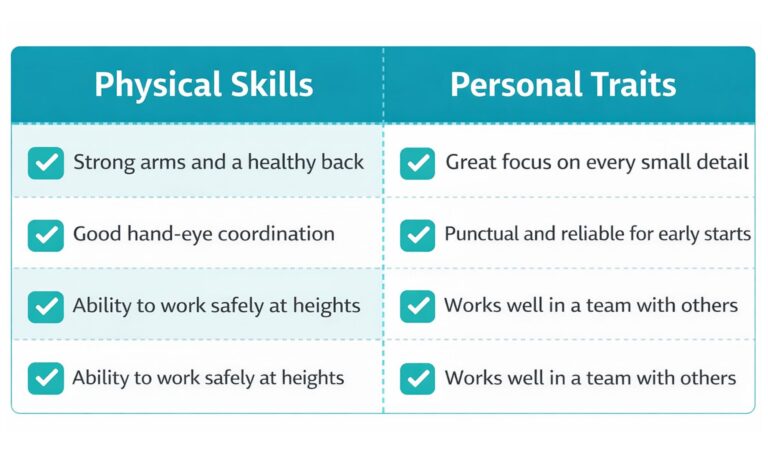
You must possess both the physical power to lift bricks and the mental focus to stay precise. Having strong arms helps you manage the heavy workload, while being reliable ensures you stay part of a productive team. When you combine these physical skills with a great eye for detail, you become a highly valued worker on any building site.
What Qualifications Do You Need to Start?
You do not need a university degree to join the building trade in the UK. Many people enter this career by starting with basic practical courses at a local college. These classes teach you how to handle tools and build simple structures safely. Having GCSEs in English and Maths at grade 4 or above also helps you understand site measurements and safety rules.
Essential Training Options for New Starters
- A Level 1 or Level 2 Diploma in Trowel Occupations provides a solid foundation.
- An intermediate apprenticeship allows you to gain a Level 2 qualification while working.
- You can take a T Level in Construction to learn about the wider building industry.
- Having a CSCS card is a key requirement for anyone working in the building trade.
These training paths ensure you have the right knowledge to work on a professional site. Most employers look for a mix of these qualifications and a strong work ethic when they hire new staff.
How Do You Become a Bricklayer by Apprenticeship?
An apprenticeship offers a fantastic way to learn the trade while you earn a weekly wage. You spend four days each week working on a real building site under the guidance of an expert. On the fifth day, you attend a local college to study the theory of construction and building safety. This practical path gives you hands-on experience and a recognised Level 2 or Level 3 qualification at the end.
To find an apprenticeship, you should look at the official government website or contact local building firms directly. Many large construction companies run their own programmes for school leavers every year. You need to show that you are hard-working and willing to learn in a busy outdoor environment. This journey usually takes between two and three years to complete and often leads to a full-time job with the same company.
What Tools Must Every Bricklayer Own?
You need your own set of high-quality tools to do a good job. Most bricklayers carry these items in their tool bag:
- Trowels for spreading and pointing mortar. You should own a large brick trowel and a smaller pointing trowel for fine finish work.
- Spirit levels to ensure every wall is perfectly straight. It helps to have a long level for main walls and a short level for small spaces.
- Chisels and hammers to cut bricks to the right size. A comb hammer and a bolster chisel are essential for shaping hard materials.
- Tape measures and string lines for accurate layouts. These tools help you follow the building plans and keep your courses level across long distances.
- Jointing tools to create a neat finish on the mortar. You can use a jointer or a piece of hose pipe to make the gaps between bricks look professional.
- Personal protective equipment, such as hard hats, gloves, and steel-toe boots. High-visibility vests and safety goggles protect you from dust and moving vehicles on a busy site.
Investing in professional equipment allows you to work faster and produce a much better result. Many builders keep their tools for many years by cleaning them thoroughly at the end of every shift.
How Do You Become a Bricklayer with No Experience?
You can still enter the building trade even if you have never held a trowel before. Many small building firms look for keen workers who have a strong work ethic and a willingness to learn on the job. You should start by applying for a role as a site labourer, which allows you to watch how professionals lay bricks every day. While you help with mixing mortar and moving materials, you gain a deep understanding of how a busy construction site operates. Some people also choose to take short, intensive private courses that last for a few weeks to learn the basic skills quickly. This early practical experience proves to employers that you are serious about a career in construction.
Showing up on time and working hard opens many doors for a trainee. Most builders will happily teach you the trade if they see you are reliable and stay focused on the task.
What Is the Average Salary for a Bricklayer?
Bricklaying remains one of the most profitable trades in the UK construction sector. Newly qualified workers usually start on a salary between £20,000 and £25,000 per year while they build up their experience. As you gain more experience and learn to work faster, your earnings will often rise to over £35,000. Many skilled bricklayers who work for large building firms earn a steady wage that reflects their technical ability and reliability on-site.
If you choose to work as a self-employed bricklayer, your earning potential can increase significantly. Many experts charge a daily rate or get paid for every brick they lay, which is known as piecework. This method allows the fastest and most accurate workers to earn over £50,000 a year in high-demand areas. You must also consider that your income may change depending on the location of the project and the current needs of the building industry.
How Can You Keep Safe on a Building Site?
Safety must remain your top priority every single minute you spend on a busy building site. You have a duty to protect yourself and your workmates from common hazards.
Your daily routine involves following strict rules to prevent accidents and long-term health issues. You must wear full personal protective equipment, including a hard hat, high-visibility vest, and steel-toe boots at all times. Learning the correct way to lift heavy bricks and bags of mortar protects your back from serious injury. You also need to stay alert for moving vehicles, like forklift trucks and diggers that operate nearby. Using stable scaffolding and checking your ladders ensures you work safely at heights without the risk of falling. Taking the time to keep your work area tidy prevents trips and falls while you move around the site with heavy tools.
What Are the Long Term Career Prospects?
Bricklaying offers many paths for growth as you gain experience:
- You may be a site foreman or a project manager.
- It’s possible to start your own building business.
- Some workers specialise in heritage or stone restoration.
- In fact, you might even teach the trade to students at a local college.
These career paths ensure that you always have a way to progress and increase your earnings. Whether you want to stay on the tools or move into an office role, the skills you learn as a bricklayer provide a very strong foundation.
Final Thought
Starting a career requires hard work, the right tools, and proper training to succeed. You might be thinking, how do you become a bricklayer? This trade offers excellent pay and the chance to build a lasting future in the UK. If you want to learn more about the financial rewards of this job, you should read about how much a bricklayer earns on our site.
FAQs
How Hard Is It to Become a Bricklayer?
- Learning the basics of bricklaying takes a few weeks, but mastering the trade takes years of practice. You must develop a steady hand and learn how to read complex building plans. The job is physically demanding because you work outside in all weather and lift heavy materials every day. Most people find that the first six months are the hardest as their bodies adjust to the work.
Do Bricklayers Get Paid Well?
- Bricklaying is one of the highest-paying trades in the UK construction industry. Newly qualified workers often start on around £32,000 per year. As you gain more speed and experience, your pay can rise to £45,000 or more. If you choose to run your own business, you can earn over £60,000. Demand for skilled workers remains very high, which keeps wages strong.
What Qualifications Do You Need for Bricklaying?
- You do not need specific school grades to start, but having GCSEs in English and Maths helps. Most people get a Level 2 Diploma in Trowel Occupations or complete an apprenticeship. You also need a Construction Skills Certification Scheme (CSCS) card to work on professional sites. This card proves you have passed the essential health and safety tests.
Is 40 Too Old to Become a Bricklayer?
- You can start a career in bricklaying at any age if you have good physical fitness. Many people switch to this trade in their 40s because they want an active outdoor job. While the work is tiring, older workers often bring great focus and problem-solving skills to the site. It is important to look after your joints and follow correct lifting techniques from day one.
Do Bricklayers Get Paid £1 a Brick?
- Some bricklayers earn money through “piece work”, where they get paid for every brick they lay. In 2026, the rate for standard bricks usually ranges from £0.50 to £1.00 per brick. The exact price depends on the type of brick and the difficulty of the wall. Very fast workers can earn a high daily wage using this method, but they must maintain high quality.
Can a Beginner Build a Brick Wall?
- A beginner can build a simple garden wall by following a step-by-step guide. You must start with a level, concrete foundation and use a string line to keep your rows straight. However, building a wall for a house or a garage requires professional skills to ensure it is safe and waterproof. It is best to practise on small, low-risk projects before trying anything larger.
Can a Bricklayer Lay 1000 Bricks a Day?
- Laying 1,000 bricks in a single eight-hour day is a very high target that only the fastest experts reach. Most professional bricklayers lay between 500 and 800 bricks daily on a standard straight wall. The number drops if the wall has many corners, windows, or decorative features. Having a labourer to mix mortar and move bricks helps a bricklayer work much faster.
What Are Common Bricklaying Mistakes?
Beginners often make mistakes with mortar consistency or wall alignment. Common errors include:
- Using mortar that is too wet or too dry.
- Forgetting to check if the wall is level at every row.
- Not cleaning excess mortar off the brick faces before it dries.
- Starting on a foundation that is not perfectly flat.
- Failing to stagger the vertical joints correctly for strength.
Is Bricklaying Harder Than Plastering?
- Both trades are difficult, but in different ways. Bricklaying is more physically taxing and involves working in cold or rainy weather. It also carries more structural responsibility because the walls hold up the building. Plastering requires more precision and a very steady hand to get a perfectly smooth finish. Most workers find that bricklaying is harder on the back, while plastering is harder on the arms and shoulders.
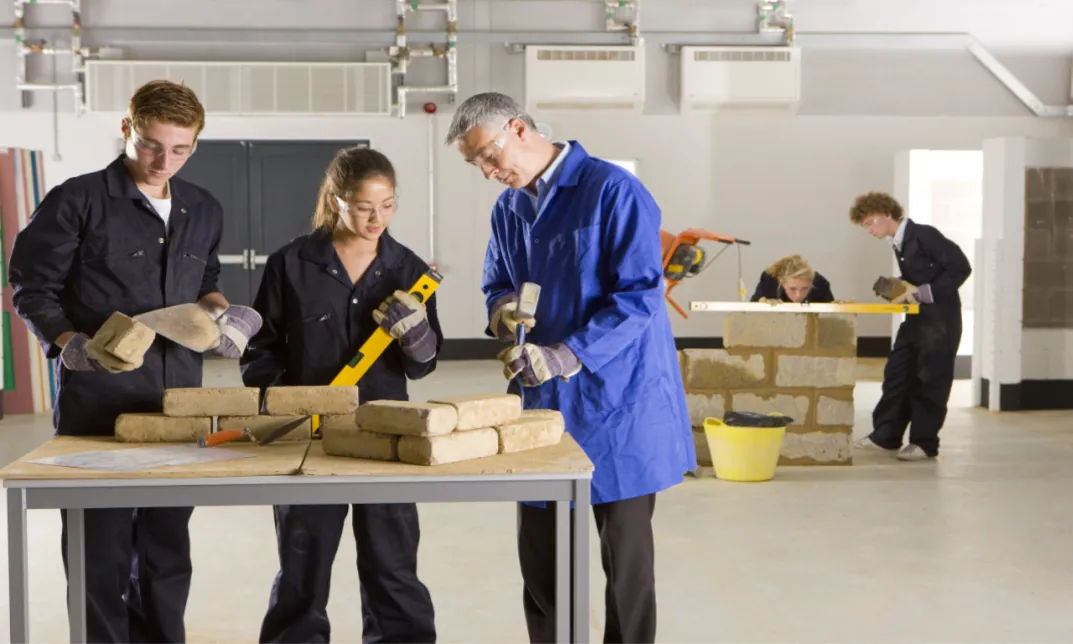
Bricklaying Training Course
Course Description :
- Certificate: Yes(Free)
- Accreditation: CPD Accredited
- Access: Lifetime