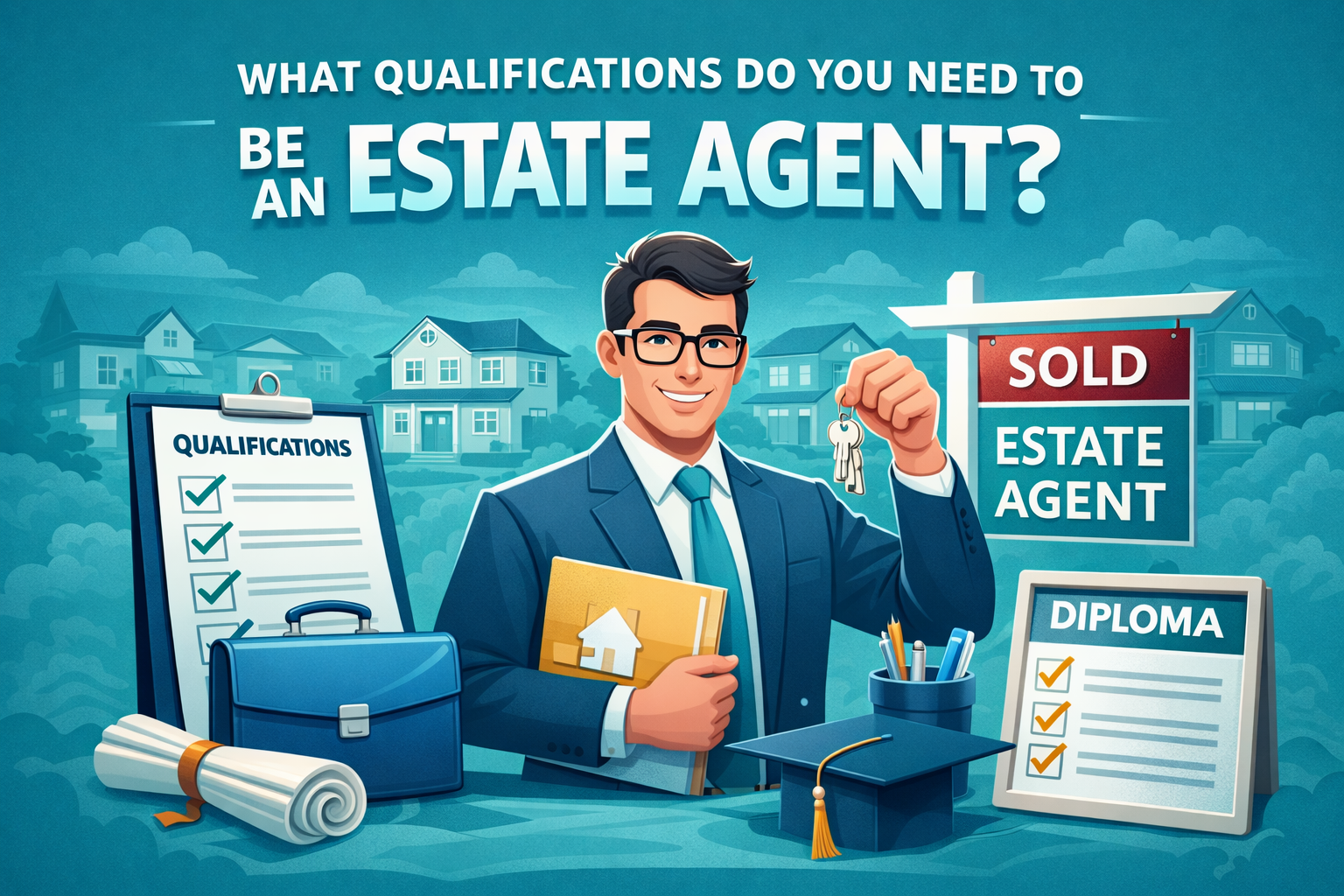
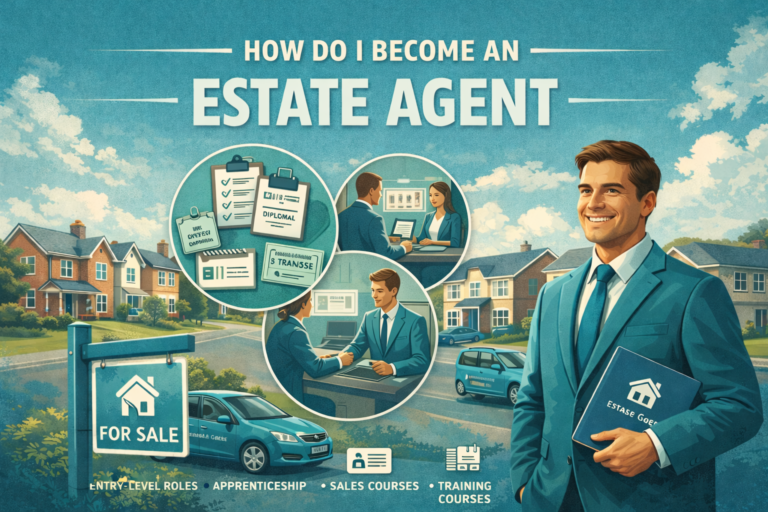
If you wonder about starting in property, there’s good news: you don’t need experience. The UK has over 25,600 estate agencies, and the industry is growing by 4% in 2026, offering many opportunities for newcomers. This makes it a great time to learn how do i become an estate agent. Most people start in entry-level roles, like junior negotiator, to learn the basics and gain confidence. You can also take an apprenticeship, a sales course or a Level 3 Diploma to improve your chances.
Some choose a degree in property or business, but practical experience matters most. Strong people skills and a driving licence will help you succeed. With effort and learning, you can move up quickly and enjoy a rewarding career in estate agency.
Let’s look at how do you become an estate agent in the UK and how much you can earn.
What Does an Estate Agent Do?
Estate agents help people buy, sell, or rent homes. They do many different jobs to make the process smooth:
- Check Property Value: They look at the area, study similar homes and suggest a fair price. This helps the property sell or rent faster.
- Promote Properties: Agents create listings, take clear photos, write descriptions, and advertise homes online on sites like Rightmove, Zoopla, or social media.
- Arrange Viewings: They invite buyers or tenants to visit the property, answer questions, and highlight the home’s best features.
- Negotiate Deals: Agents handle offers, counter-offers, and help both sides agree on a fair price.
- Manage Sales: After an offer is accepted, they work with solicitors, surveyors, mortgage advisors, and other professionals to complete the sale smoothly.
- Handle Rentals: They find tenants, prepare contracts, collect rent, and take care of repairs or maintenance issues.
- Give Advice: They guide clients on pricing, market trends, and legal requirements.
Estate agents act as a link between buyers, sellers, and renters, making sure the whole process is quick and stress-free.
How Much Estate Agents Earn in the UK (2026)
In 2026, UK estate agents usually earn a basic salary of £14,000 to £25,000. Also, with commission, experienced agents can earn £20,000 to over £60,000. For example, top agents in London can make over £100,000. Pay depends on the agency, location and how well the agent performs.
Salary by Experience
- Entry-Level: Basic pay is £17,000 to £25,000, with total pay around £24,400 to £35,000 in the first year. New agents usually start as trainee negotiators or administrators.
- Experienced Agents: After 4 to 9 years, total pay averages around £30,300. Agents with 10 to 20+ years of experience can reach £60,000 to £70,000, and top performers can go even higher.
Regional Differences
London jobs usually pay more, with basic salaries of £23,500 to £43,000. Top positions in London can exceed £100,000. Other cities and rural areas usually pay less, but commissions can still make earnings high.
Commission
Most estate agents earn commission, usually 0.75% to 3% of the property sale value. The better you sell, the more you earn. Some agencies offer team bonuses or branch-wide incentives.
Benefits
- Company Car: Many jobs provide a car or allowance for travel.
- Bonuses: Agents often get extra pay for hitting targets.
- Other Perks: Fuel allowance, pension schemes, mobile phone allowances and sometimes discounts on buying a home.
- Training Opportunities: Agencies often pay for courses or certifications to improve your skills.
Note: While estate agents can earn high pay through commissions, long-term benefits like pensions are often lower than in other industries. Still, hard work and experience can lead to a very rewarding career.
How do I Become an Estate Agent? Step-by-Step Guide
There are a number of people who are interested in becoming estate agents. They often ask how do I become an estate agent?’ Becoming an estate agent means learning sales. negotiation and local property knowledge. Most people start as a trainee or assistant to gain experience. Additionally, you also need some qualifications, register with a professional body and have strong communication skills.
Step-by-Step Guide
Step 1: Learn About the Role
To begin, understand what estate agents do. This includes valuing properties, marketing homes, showing them to buyers and handling offers. Important skills are talking clearly, negotiating, and helping clients.
Step 2: Get Qualifications
A degree is not always needed. Meanwhile, courses from Propertymark or NAEA teach property law, sales skills, and ethics. These make you more attractive to employers.
Step 3: Start Entry-Level Work
Work as a trainee sales negotiator, assistant, or office administrator. You will learn how an estate agency works, help clients and see how deals are done. In addition, this gives practical experience.
Step 4: Take an Apprenticeship
Apprenticeships in property sales or lettings provide practical training. You get paid while learning and gain real-life experience.
Step 5: Register with Professional Bodies
Also, join groups like NAEA or RICS. Membership shows you are a professional and follow the rules. Some clients trust agents more if they are registered.
Step 6: Build Your Network
Meet other agents, attend property events, and use social media. This helps you find new clients and learn tips from others.
Step 7: Keep Learning
Finally, the property market changes often. Stay updated on property laws, trends, and rules through Continuous Professional Development (CPD). This keeps you competitive.
What Qualifications Do You Need to Become a Real Estate Agent?
In the UK, no formal qualifications are required to become an estate agent. Instead, the role focuses on personality, sales skills and local knowledge. Key requirements include strong communication, customer service, resilience, and a full driving licence. Most people start through trainee roles, apprenticeships, or voluntary professional courses.
Key Routes and Qualifications
- Apprenticeships: Advanced apprenticeships in property or negotiation offer a structured way to start.
- Industry Certifications: Bodies like Propertymark offer Level 2 and Level 3 certificates in property sales and management.
- Specialised Qualifications: Level 3 Certificate in Property Advice and Practice (CePAP) covers sales, lettings, and consumer law.
- Higher Education: Degrees in estate management, surveying, or business can help, but they are not essential.
Essential Skills
- Communication & Negotiation: Build rapport and persuade clients.
- Local Knowledge: Understand the local property market.
- Resilience & Drive: Stay proactive and target-focused.
- Organisation: Manage multiple clients and properties efficiently.
Starting Without Experience
Many agencies hire for attitude over experience. Therefore, you can learn on the job as a trainee. Additionally, reading up on local property laws and markets can give you a head start. Finally, staying motivated and organised will help you grow quickly in your career.
Key Skills and Personal Qualities of a Successful Estate Agent
A successful estate agent needs a mix of people skills, practical knowledge and personal qualities. Top agents are not just salespeople. They are trusted advisers who combine local knowledge with digital skills to get the best results for clients.
Key Skills of a Successful Estate Agent
- Listening and Communication: Understand what clients need and explain things clearly. Use email, phone or text, depending on the client.
- Negotiation: Use market data to set prices and make smart counteroffers. Stay calm with emotional buyers or sellers.
- Local Knowledge: Know the area, schools, transport, and future developments.
- Time Management and Organisation: Handle many clients, properties, and viewings at the same time.
- Digital and Marketing Skills: Use social media, CRM tools and simple AI to promote properties. Take good photos and videos.
- Problem-Solving: Solve issues like failed inspections or finance problems without panicking.
Personal Qualities of a Successful Estate Agent
- Honesty and Integrity: Be trustworthy. Always explain fees and property issues.
- Resilience and Drive: Follow up leads and stay calm under pressure.
- Empathy: Put clients’ needs first and be understanding.
- Diplomacy: Handle demanding clients and solve disputes calmly.
- Proactive and Energetic: Take initiative and bring energy to every sale.
What Sets Top Agents Apart in 2026?
- AI Tools: Use AI like ChatGPT or Canva to save time on listings and marketing.
- Specialisation: Focus on a specific group, such as first-time buyers, to build authority.
- Tech and Personal Touch: Use technology efficiently while staying personal with clients.
- Financial Knowledge: Understand creative deals like seller carrybacks or rate adjustments.
How to Get Practical Experience to Become an Estate Agent
To gain practical experience as an estate agent, you can try apprenticeships (Levels 2-3), trainee or admin roles in local agencies, or property management internships. First, you can learn by shadowing experienced agents, conducting property viewings, and understanding local market rules.
Key Ways to Gain Practical Experience
- Apprenticeships & Training Programs: Join structured roles like Junior Estate Agent or Property Management Assistant. These programmes often last a few years and let you earn while you learn.
- Entry-Level Jobs: Apply for trainee sales negotiator or receptionist jobs in estate agencies to learn the basics. Additionally, you can gain customer service skills and see how property deals happen.
- Shadowing & Internships: Ask local or independent estate agencies for work experience. Moreover, you can watch daily operations, property viewings, and client meetings.
- Networking & Digital Skills: Follow professionals on LinkedIn or X, and attend events to stay updated on the property market. Next, building connections helps you find hidden opportunities.
- Relevant Qualifications: Courses like the Level 3 CePAP® or Propertymark certificates are not always required, but can meanwhile improve your knowledge and make you more attractive to employers.
Key Skills to Develop
- Local Area Knowledge: Learn about schools, amenities and property prices.
- Sales & Negotiation: Practice talking to clients and handling negotiations confidently.
- Compliance: Understand industry rules and regulations. Finally, keep learning as rules and markets change.
How to Get Licensed and Registered as an Estate Agent
In the UK, a legal licence is not necessary for estate agents to do business. However, you must join a Property Redress Scheme, which is required by law. Also, taking courses, doing apprenticeships, or joining professional groups like Propertymark (NAEA/ARLA) can help you build trust with clients and employers.
Key Steps to Becoming an Estate Agent
- Register for the Law: Join an approved property redress scheme (e.g., The Property Ombudsman) and register for Anti-Money Laundering (AML) supervision.
- Take Useful Qualifications:
- Level 3 Certificate (CELA): A Propertymark-approved course.
- Level 2/3 Apprenticeships: Roles like Junior Estate Agent or Housing Assistant.
- Propertymark Certificates: Level 3 or 4 courses in property management. Next, these can make you stand out to employers.
- Learn Key Skills: Improve communication, negotiation, and local market knowledge.
- Find a Job: Start as a trainee or junior negotiator to get experience. Then, keep learning while you work.
- Keep Improving: Stay updated with rules through Continuous Professional Development (CPD).
Even though these courses are not required by law, having them makes it easier to get hired and gain clients’ trust.
Final Thought on How do I Become An Estate Agent
Even without experience, becoming a real estate agent in the UK may be thrilling and satisfying. Therefore, start simple at first, learn on the job, and enrol in whatever classes or apprenticeships you can. To begin with, start small and learn on the job while taking any courses or apprenticeships you can. Next, sharpen your skills, know your local area, and show energy and confidence every day. In the end, keep learning, stay curious, and put your clients first. Success in property comes one step at a time, and every step matters!
Frequently Asked Questions (FAQ)
1. What’s the highest paid job in real estate?
- Top real estate brokers, property developers, and luxury real estate agents usually earn the most, especially in high-value markets.
2. What is the Rightmove qualification?
- Rightmove doesn’t offer a formal qualification; it’s a property portal used by agents to list and market properties.
3. What is the hardest part of the real estate exam?
- The hardest part is often understanding property law, contracts, and compliance rules.
4. Is estate agent a hard job?
- It can be challenging due to long hours, targets, and dealing with different clients, but it’s rewarding for motivated people.
5. What are common mistakes new agents make?
- New agents often overpromise, fail to follow up with clients, or lack local market knowledge.
6. Is it hard starting out as a real estate agent?
- Yes, starting out can be tough because you need experience, to build a client base, and to learn sales skills.