How can I become an estate agent in the UK? You are not alone in asking this question. It can feel confusing at first to know where to start. But the truth is, being an estate agent is more than just showing homes. Estate agents help people buy, sell, or rent property. They also guide clients through paperwork, talk with buyers and sellers, and make sure every deal goes smoothly. Because of this, it is a job that mixes working with people, solving problems, and earning money.
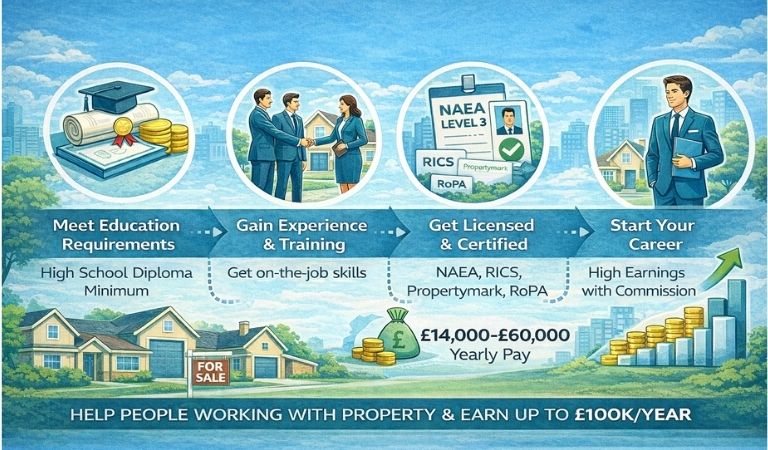
In the UK, you need at least a high school diploma. Also, studying business, property management, or estate development can help you get ahead. Many agents hold licences or certificates such as NAEA, Propertymark, RICS, or RoPA to stand out. Beginners usually earn £14,000 to £25,000. With experience, earnings rise to £25,000 to £60,000. Top managers can earn up to £100,000 plus a 1–3.5 per cent commission. To start, see if this career is right for you. Next, complete 3–4 months of training and get hands-on experience through an apprenticeship. After that, get your licence and start your career by joining a firm or opening your own agency.
Now let’s dive in and see how to become an estate agent UK and how much does a estate agent makes.
What Is an Estate Agent?
An estate agent makes the complicated world of property simple for clients. Their main job is to help people buy, sell, rent, or manage properties. They work with homes, shops, offices, and land. Some agents help sellers list and sell their property. Others guide buyers to find the right place. At the same time, they make sure every client feels supported and understands what is happening.
Life as an estate agent is busy and varied. Estate agents meet clients, show properties, handle negotiations, complete paperwork, and manage marketing. Because of this, they need to stay organised, speak clearly, and make sure every deal goes smoothly. In short, a good estate agent makes the property process easy, clear and stress-free for everyone.
What Does the Estate Agent Do?
Here are the main responsibilities of an estate agent:
- Check Property Value: Estate agents study the market and suggest a fair price. This helps the property sell or rent quickly.
- Promote Properties: They make listings, take photos and advertise properties online on websites like Rightmove or Zoopla.
- Arrange Viewings: Buyers or tenants are invited to see the property. During viewings, the agent points out the best features.
- Negotiate Deals: Estate agents handle offers and counter-offers between buyers and sellers to get the best deal.
- Manage Sales: Once an offer is accepted, the agent works with solicitors, surveyors, and others to make sure the sale goes smoothly.
- Handle Rentals: For rental properties, agents find tenants, prepare contracts, and take care of any maintenance or problems.
Essential Qualifications to Become an Estate Agent
Becoming a real estate agent UK begins with the right education. First, you need at least a high school diploma or equivalent. This gives you the basic knowledge of property, business, and working with clients. If you want to get ahead, you can also study a degree in business, real estate, or property management. These degrees teach practical skills and help you stand out when applying for jobs.
Next, professional certificates and licences are very important. Many agents take courses like NAEA, Propertymark, RICS, or RoPA. These certificates teach hands-on skills, build confidence, and show clients and employers that you know your work. Age is another factor to consider. Most agencies require you to be 18 or older. However, some allow 16–17-year-olds to join as trainees. In short, estate agent qualifications include basic education, optional degrees and professional certificates.
How Can I Become an Estate Agent Step-by-Step
Follow these simple steps if you want to become an estate agent in 2026:
Step 1: Decide if This Career Fits You
First, think about whether this job suits your skills and personality. You need to be good at talking to people, negotiating and staying calm under pressure. If you like helping people and solving problems, this career could be a great choice.
Step 2: Get Education and Training
Next, focus on learning the basics. You need at least a high school diploma or equivalent. To get ahead, you can study a degree in business, real estate, or property management. You can also take short real estate courses for 3–4 months to learn practical skills and prepare for the job.
Step 3: Earn Your Licence and Gain Experience
After training, get your licence and learn by doing. Apprenticeships or trainee roles let you work with clients, handle sales and understand the property market. This hands-on experience is very important for anyone wanting to become an estate agent.
Step 4: Start Your Career and Keep Growing
Finally, you can join a firm or even start your own agency. At the same time, keep learning new skills and meeting people in the industry. Networking and continuous learning help you grow faster and succeed in your career.
How Much Does an Estate Agent Make?
Knowing how much a real estate agent earns helps you plan your career. At the beginning, earnings of a real estate agent are usually between £14,000 and £25,000 a year. As you get more experience, your pay grows. Experienced agents can earn £25,000 to £60,000. Top managers can make up to £100,000 a year. They also earn 1–3.5% commission on property sales. This extra money can add a lot to your total income.
A few things affect how much you earn. First, location matters. London and busy areas usually pay more. Also, the type of property, market trends and your negotiation skills can change your income. By understanding these, you can plan your career better and work toward higher earnings.
How to Become an Estate Agent with No Experience UK
Here’s how to get started and build your career step by step:
- Get your licence: Take Propertymark or RoPA to show you are ready and professional.
- Learn while working: Join apprenticeships or entry-level jobs to gain real experience.
- Make a strong CV: Show skills that matter, like talking to people, helping clients and selling.
- Prepare for interviews: Give examples of how you used your skills, even from other jobs.
- Keep learning: Take short courses, find a mentor, and meet people in the industry.
Challenges of Being an Estate Agent
Being an estate agent can be exciting, but it is not always easy. For example, the property market changes a lot, and there is strong competition. You need to stay alert and be ready to adjust quickly. Also, many agents earn money through commission, so pay can go up and down. This can feel stressful, especially when you are just starting. In addition, work-life balance can be tricky because clients may need meetings in the evening or on weekends. Finally, if you start your own agency, there are extra risks. You have to manage your money and business costs, and all decisions are yours, which can feel overwhelming at times.
Essential Skills for Estate Agents
Here’s what you need to do well in this career:
- Talk and negotiate clearly: Explain things simply, listen to clients and help make the best deals.
- Help clients and build relationships: Make clients feel supported, answer their questions and keep a good connection.
- Understand the market: Know property trends, prices and make smart decisions quickly.
- Use digital tools: Manage online listings, social media and virtual tours to show properties to more people.
- Stay organised and solve problems: Keep paperwork in order, follow up on deals, and handle issues calmly.
How Can I Become an Estate Agent: Future Trends in Estate Agency
Technology is changing the estate agency world fast. For example, virtual tours, online tools, and AI are helping agents show properties and work smarter. At the same time, eco-friendly and sustainable homes are becoming more popular, and agents who understand this trend can stand out. Also, urban developments and rental hotspots are growing, creating new opportunities for agents. On top of that, estate agents are using technology to guide clients better and provide smarter advice. Overall, staying aware of these trends helps agents adapt, succeed and grow in their careers.
Final Thoughts on Becoming an Estate Agent
So, how can I become an estate agent? First, start with the right qualifications by taking a property or business course. After that, do the required training and get your licence to work in the UK. Then, get real experience by working in a good agency. This will help you learn the job and feel more confident.
Next, keep improving your skills. Learn about the property market and the rules you must follow. Talk to other professionals and make connections. Also, work on your communication, negotiation, and marketing skills. Over time, all this effort brings rewards. You can grow in your career, earn more money, and feel proud of helping people find their homes. With hard work and patience, a career as an estate agent can be exciting and very satisfying.
FAQs
1. What qualifications do I need to be an estate agent?
- You need at least a high school diploma. Degrees in business or property help, and a licence like Propertymark or NAEA gives you an edge.
2. Do estate agents earn good money?
- Yes! Beginners earn around £14k–£25k. Experienced agents can make £25k–£60k and top managers earn up to £100k plus commission.
3. How can I get into estate agency?
- Start with training or apprenticeships, get a licence and build experience. Networking and learning on the job help a lot.
4. How much does a real estate licence cost in the UK?
- Courses usually cost a few hundred pounds, depending on the provider. Some agencies even cover the fees for you.
5. Is it worth becoming an estate agent in the UK?
- Absolutely! With effort and the right skills, you can earn well and grow in your career. During the journey, you will meet new people and gain valuable experience.
6. What’s the highest paid job in real estate?
- Senior managers, directors and commercial property agents often earn the most, especially with big commissions.
7. Which jobs pay around $4,000 a month in the UK?
- Many entry-level estate agent roles, junior managers, and skilled trades in property or sales hit this mark.