
The estate agent wage in the UK is one of the most searched salary topics in 2026, especially as the property market continues to shift. With commission‑based earnings, bonuses, and performance incentives, income can vary significantly from one agent to another. Many people are asking whether estate agency is still a high‑earning career and what actually affects take‑home pay. This guide explains average salaries, commission structures, regional differences, qualifications and whether earning £100,000+ per year is realistic.
Now, let’s look at the easy steps to start a career as an estate agent in England.
Why Are So Many People Searching for Estate Agent Salaries?
Many people in the UK are searching for estate agent salaries because they want to know if it’s a career that offers strong earning potential without needing a university degree. With rising living costs and mortgage pressures, more people are carefully comparing job options before making a career change. As a result, estate agencies often stand out because of their commission-based pay and the possibility of earning more than a fixed-salary role.
In addition, social media and property TV shows make the job look exciting and high-paying. However, people also want to understand the reality behind the headlines. Therefore, they search for clear salary information to see how much estate agents actually earn, how commission works, and whether the income is stable enough to rely on in today’s UK housing market.
Is Estate Agency a High‑Earning Career in the UK?
Estate agency can be a high-earning career in the UK, but it depends heavily on performance, experience, and location. Most estate agents earn a basic salary between £22,000 and £30,000, and then boost their income through commission on property sales. As a result, agents who consistently hit their targets can make estate agency a high-paying career in the UK. However, it depends on your performance, experience, and location. Most estate agents earn a basic salary of £22,000 to £30,000. Then, they can increase their income with commissions from property sales.
As a result, agents who meet their targets can earn £40,000 to £60,000, while top agents in busy areas like London can make £80,000 or more. In addition, career growth also affects earnings.
A trainee negotiator may start with a small income. But, with experience, they can become a senior negotiator, valuer, branch manager or director. Each step usually comes with higher commission and bonuses. Therefore, the longer someone stays in the industry and builds good client relationships, the more they can earn
However, estate agency income is performance-based. During slow housing markets, fewer sales mean lower commissions. Also, competition between agencies can affect how many listings an agent gets. For this reason, estate agency offers high earning potential, but it needs strong sales skills, confidence, long hours and the ability to handle pressure.
What Affects Earnings?
Several things affect how much an estate agent earns in the UK. First, commission is very important, but income also depends on performance, market conditions, and the type of agency.
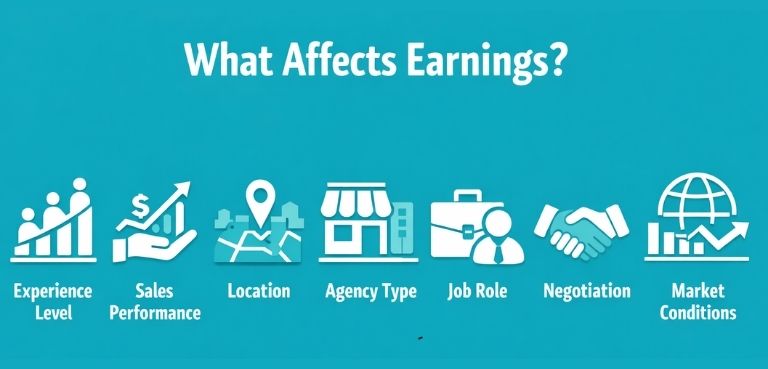
Experience Level: Trainee agents start with a lower salary while learning the role. Then, as they gain experience, their negotiation skills improve, and they build strong client relationships. As a result, their performance and commission grow, leading to higher overall earnings.
Sales Performance: Estate agency is target-driven. Also, agents who get more property listings have more chances to sell. Therefore, consistent performance increases overall income.
Location: Property prices vary across the UK. In addition, areas with high demand and expensive homes give bigger commissions. On the other hand, agents in cheaper areas may need to sell more properties to earn the same income.
Type of Agency: Corporate agencies often provide set salaries, clear targets, and bonuses. Meanwhile, independent firms may offer flexible commissions and extra incentives. Thus, pay can vary depending on the company.
Job Role and Seniority: Senior positions, like branch manager or director, usually earn more. Because they manage staff and meet targets, they may also get team bonuses.
Negotiation Skills: Agents who secure higher sale prices earn bigger commissions. Even a small increase in the final price can add up.
Market Conditions: Housing market trends affect income. For example, low interest rates, easy mortgages, and high buyer demand lead to more sales. As a result, commission earnings are higher when the market is strong.
Overall, estate agent earnings depend on experience, skills, location, agency type, and market trends. In addition, consistent effort and strong negotiation skills help agents earn the most.
Working Hours and Commitment
The amount of time and effort an agent invests can significantly affect their earnings. Many high-performing estate agents make themselves available during evenings and weekends to suit clients’ schedules. This flexibility often helps them win additional instructions and increase sales. Consequently, a stronger commitment to the role can contribute to increased income.
In summary, estate agent earnings in the UK are not fixed. They depend on performance, market strength, location and career progression. High income is achievable, but it requires consistency, resilience and strong sales ability.
What Is the Average Estate Agent Wage in the UK?
Here’s a breakdown of typical earnings for estate agents in the UK in 2026:
-
National Average Salary
-
-
- Base pay: £25,000 to £32,000 per year
- On-Target Earnings (OTE): £35,000 to £50,000 (including commission and bonuses)
-
-
Starting Salary for Trainee Agents
-
-
- Basic salary: £18,000 to £24,000
- OTE in entry level: £25,000 to £30,000
-
-
Comparison with Other Sales Roles
-
-
- Estate agent wages are broadly in line with other commission-based sales roles, but with higher potential upside if performance is strong.
-
-
Base Salary vs OTE
-
-
- Base salary provides financial stability.
- OTE includes performance-based commission and typically represents the figure most agents aim to achieve.
-
-
High Performers vs Average
-
- Many agents earn close to the average OTE.
- Top performers, especially in busy markets, often exceed the typical range.
Overall, estate agents in the UK usually earn a modest salaried income, with the opportunity to increase total pay significantly through successful sales and commission.
What Is the Current National Average Salary?
The current national average salary for estate agents in the UK in 2026 typically falls between £35,000 and £45,000 per year, including commission. Most agents receive a basic salary of around £25,000 to £32,000, with additional earnings generated through property sales and performance bonuses.
However, earnings vary considerably depending on experience, location and results. Entry-level agents often start closer to £22,000 to £28,000, while experienced negotiators and managers in high-demand areas can earn £60,000 or more. As an estate agency is largely commission-driven, overall income depends heavily on the number and value of completed sales.
What Is the Starting Salary for Trainee Estate Agents?
- Basic salary: £18,000 to £24,000 per year
- First-year OTE: £25,000 to £30,000 (including commission)
- Lower commission rate while training
- Higher starting pay is possible in citie
- s like London
- Earnings increase after promotion to sales negotiator
How Does It Compare to Other Sales Roles?
In general, estate agency salaries are similar to those of many other commission-based sales roles in the UK. For example, basic pay often falls between £22,000 and £30,000 per year, which is comparable to retail sales, car sales and recruitment positions. However, estate agents typically benefit from larger commission opportunities because property transactions involve higher overall values.
On the other hand, income in estate agency can be less predictable. While some sales roles offer more consistent monthly bonuses, estate agents rely heavily on completed property sales. Therefore, earnings may fluctuate depending on market conditions and the number of successful transactions.
How Does Estate Agent Wage Vary by Location?
Estate agent earnings in the UK are strongly influenced by where you work. This is because property values, market demand and the cost of living differ significantly from region to region. In higher-value markets, such as London, agents often earn larger commissions due to higher sale prices, while in lower-priced areas, total earnings may be lower, but transaction volumes can be higher. Below are examples of how wages vary by location:
- London and South East England – Typically, the highest earning potential due to expensive property prices and competitive markets.
- Major regional cities (e.g., Manchester, Birmingham, Leeds) – Strong demand and growing markets often bring solid earnings, though generally lower than in London.
- Smaller towns and rural areas – Base salaries are often modest, and lower property values mean smaller commission amounts.
Overall, location impacts both the base salary offered and the size of commissions an agent can realistically earn, making it one of the most important factors in estate agent wages.
What Do Estate Agents Earn in Manchester, Birmingham & Leeds?
Estate agent earnings can vary quite noticeably across different UK cities, reflecting local market conditions and property values:
- Manchester – Agents in Manchester typically earn around £54,800 per year on average, which is above the national average salary for estate agents.
- Birmingham – In Birmingham, reported average earnings are about £43,400 per year.
- Leeds – Estate agents in Leeds usually earn around £45,900 per year, roughly in line with typical UK estate agent pay levels.
These figures represent broad averages and include basic salary plus any reported bonuses and commission. Individual earnings can vary significantly based on experience, performance and the specific agency.
How Much Commission Do Estate Agents Make?
In the UK, estate agents usually earn commission from a percentage of the property’s sale price. For example, most agencies charge sellers 1% to 3% of the price, plus VAT. However, the agent does not keep all of this money. Instead, they get a share of the agency’s fee, often 5% to 20%, depending on their role, experience, and performance.
Also, many agencies use tiered commission systems. This means agents earn a higher percentage once they pass certain targets. In addition, employed agents usually get a smaller commission but have a guaranteed basic salary. On the other hand, self-employed agents can earn a bigger share, sometimes 30% to 70%, but they do not have financial security. Therefore, commission is a big part of total income and can greatly increase pay for agents who perform well.
How Does Commission Work in the UK?
- Commission is usually 1% to 3% of the sale price, plus VAT.
- It is only paid once the sale completes.
- The agency receives the full fee first.
- The agent then earns a percentage of that fee.
- Employed agents get a basic salary plus commission.
- Self-employed agents may earn higher commission splits, but no guaranteed pay.
Is Estate Agency a Good Career for Earning Potential?
Estate agency can offer strong earning potential in the UK, particularly for individuals who are ambitious and comfortable working in a target-driven environment. Unlike many traditional salaried roles, there is no fixed income ceiling. The more properties an agent lists and successfully sells, the higher their commission earnings can be.
Most estate agents begin with a modest basic salary, which provides some financial stability. However, total income can increase significantly through commission and performance bonuses. Experienced negotiators and branch managers in busy markets often earn well above the national average, and in higher-value areas, top performers may achieve six-figure incomes.
That said, earnings are not guaranteed. Income depends heavily on results, local market conditions and personal effort. During slower housing markets, fewer property transactions can reduce commission. For this reason, estate agency offers high earning potential, but it requires resilience, long hours and consistent performance to reach the highest income levels.
Progression Path:
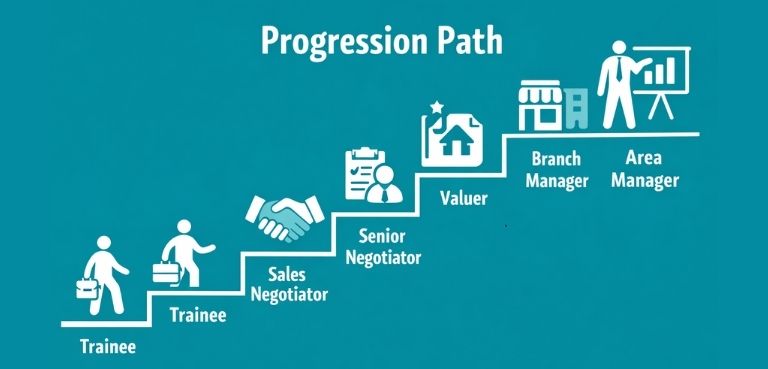
- Trainee Estate Agent – Entry-level role focused on learning the industry, arranging viewings and supporting senior staff.
- Sales Negotiator – Responsible for listing properties, conducting viewings and progressing sales to completion.
- Senior Negotiator – Handles higher-value properties, larger clients and often earns higher commission rates.
- Valuer (Lister) – Focuses on winning new instructions and valuing properties, usually with strong commission potential.
- Branch Manager – Manages the team, oversees targets and branch performance, with a higher salary and bonuses.
- Area Manager / Director – Oversees multiple branches or regions, often earning profit-based bonuses and leadership incentives.
Each step up the ladder generally brings greater responsibility, higher commission opportunities and improved overall earning potential.
What Qualifications Do You Need to Increase Your Estate Agent Wage?
In the UK, formal qualifications are not legally required to become an estate agent. However, gaining recognised certifications can improve career prospects and earning potential. Qualifications from Propertymark are widely respected and can support progression into senior roles.
In addition, strong sales skills, negotiation ability and ongoing professional development are essential. As estate agency income is performance-based, improving knowledge and expertise can directly contribute to higher commission and long-term career growth.
Can Estate Agents Earn Over £100,000 a Year?
Yes, some estate agents in the UK can earn over £100,000 a year. However, this usually happens for experienced and top-performing agents. For example, those working in expensive areas like London or selling luxury homes can earn bigger commissions. Also, reaching this level of income needs strong sales, long hours and steady performance over time.
Final Thought
The estate agent wage in the UK is strongly performance-dependent. Although base salaries may seem modest at first, commission structures can substantially increase overall income, particularly in higher-value markets and busy locations.
That said, achieving high OTE figures requires resilience, consistent effort and the ability to work long and often unsociable hours. Success depends on strong sales skills and sustained performance. If you are considering a career in property, explore current estate agent vacancies or subscribe to property market updates to stay informed about trends and opportunities within the industry.
Frequently Asked Questions (FAQs)
1. How much money do real estate agents make in the UK a year?
- Most estate agents in the UK earn between £35,000 and £50,000 per year, including commission, with top performers earning more.
2. What jobs make $500,000 a year in the UK?
- Jobs paying around £500,000 a year are usually senior investment bankers, hedge fund managers, top surgeons, FTSE CEOs or elite barristers.
3. What do the top 10 percent of real estate agents earn?
- The top 10 percent of estate agents in the UK can earn £80,000 to £150,000 or more in high-value markets.
4. Who earns 250k a year in the UK?
- People earning £250,000 a year in the UK are often senior executives, successful business owners or high-level finance professionals.
5. Is being a real estate agent worth it in the UK?
- Being an estate agent can be financially rewarding if you are target-driven, as income is strongly performance-based.
6. What is the biggest mistake a real estate agent can make?
- The biggest mistake is overvaluing a property to win instructions, which can damage reputation and reduce sales success.
7. How rare is a 100k salary in the UK?
- A £100,000 salary is relatively rare in the UK and places someone within roughly the top 3 to 5 percent of earners.
8. What jobs earn 300k a year in the UK?
- Jobs earning around £300,000 per year typically include senior bankers, private equity partners, top lawyers and large company directors.