
Choosing a career path often feels like a massive decision to make. Recent data shows that the UK property market involves over 1 million house sales every single year. If you dislike sitting at a desk all day, being an estate agent might be the perfect fit for your lifestyle. This job suits people who love chatting and exploring different types of homes. You get to act as a guide for families during one of the most important moments of their lives. Every morning starts with a fresh list of tasks and new people to meet.
The property industry moves at a very fast pace in the UK. You might spend your lunch break at a stunning mansion and your afternoon in a cosy flat. Having different tasks keeps the day interesting and ensures the job stays fresh. You also gain valuable skills in sales and marketing while you grow your professional network. If you feel ready for a challenge with high rewards, this career offers a bright future.
Our guide walks you through every step of the journey to help you succeed.
Why Is Being an Estate Agent a Great Career Choice?
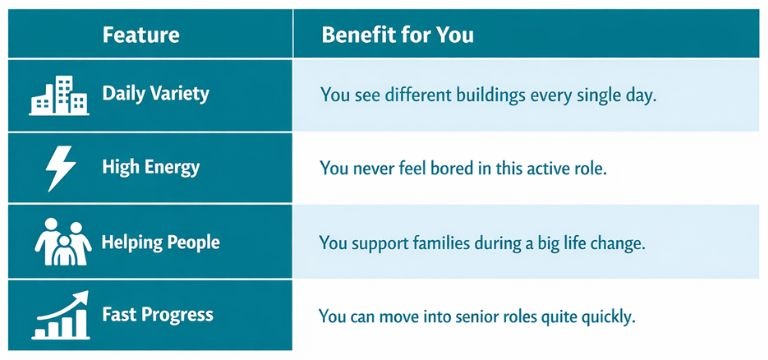
This table explains the top benefits of this career path.
What Qualifications Do You Need to Start Your Journey?
These core requirements help you enter the property market.
- You usually need good GCSE grades in English and Maths.
- Many employers look for people with a driving licence.
- You can study for a diploma in real estate management.
- Apprenticeships allow you to learn while you earn a wage.
Most offices value a positive attitude over specific degrees. They want to see that you can talk to customers with confidence. You will learn the legal rules while you work on the job.
How Do You Find the Best Properties to Sell?
Finding new houses to sell is a core part of the job. You must walk around your area and know every street name. This local knowledge helps you talk to homeowners with real authority.
- Networking: Build relationships with local business owners to find leads.
- Valuation meetings: Visit homes to tell owners what their property is worth.
- Door knocking: Introduce yourself to neighbours to see if they want to move.
- Marketing: Send letters to local streets to offer your expert services.
These active methods ensure you find the best local listings.
How Do You Handle Negotiations Between Buyers and Sellers?
The negotiation process starts when a buyer makes a formal offer on a property through your office. You call the seller to tell them the exact price and give your professional advice on the market value. If the price feels too low, you help the seller ask for more money or better terms. This part of the job requires a calm and fair mind to keep both sides happy with the final agreement. You must manage expectations carefully so that neither party feels pressured or ignored during the talks. Once everyone agrees on the figure, you confirm the price in writing for the solicitors to begin the legal work. Effective negotiation often saves a deal from failing when small disagreements occur between the two parties. You act as the expert voice that keeps the conversation moving toward a successful completion for everyone involved.
What Are the Legal Steps After a Sale Is Agreed?
The period after a price is agreed is known as sales progression in the property world. During this time, you talk to solicitors regularly to make sure the legal paperwork moves forward without any mistakes. You also check the mortgage progress with the buyer to ensure the bank is ready to provide the funds. Your main goal is to monitor every part of the chain to prevent any slow delays from stopping the deal.
If there is a delay at any stage, you must update the seller and the buyer immediately to maintain trust. Keeping everyone informed stops the sale from falling through because people feel more secure when they know what is happening. You act as the glue that holds the whole deal together by solving problems before they become too large. This stage of the job requires great attention to detail and a very proactive attitude.
How Does the UK Housing Market Affect Your Daily Work?
The state of the UK housing market controls how you spend every hour of your working day. When interest rates are low and buyer demand is high, your phone will ring constantly with people wanting to book viewings. In a busy market, houses can sell within days, so you must work at a very fast pace to keep up with the paperwork. You spend most of your time managing multiple offers and making sure every buyer has their finances ready to move quickly.
In contrast, when the market slows down, your focus shifts toward finding new leads and creative marketing. You might spend more time calling homeowners to offer valuations or designing better brochures to make a property stand out. During these times, you have to be more patient and work harder to find the perfect buyer for a specific home. Understanding the local market trends helps you give the best advice to your clients so they can sell their property at the right price.
What Tools and Technology Do Modern Agents Use?
Modern property professionals rely on these digital tools to market homes effectively.

- Use special software to list houses on websites like Rightmove.
- Capture high-quality photos of every room using digital cameras.
- Create virtual tours for online buyers using 3D scanners.
- Film short videos for Instagram to show a garden.
- Reach thousands of followers in just a few seconds via social.
- Manage buyer details using modern customer relationship management systems.
These advanced technologies help you reach thousands of potential followers in just a few seconds.
What Are the Biggest Challenges of Being an Estate Agent?
These common obstacles require a dedicated and resilient professional approach.
- Working on Saturdays is very common in this job.
- Most buyers have free time to see new houses.
- Shift patterns mean working while your friends are resting.
- Dealing with disappointment is common when house sales collapse.
- Having thick skin helps when picking up the phone.
- Starting the process over is necessary for your client.
Daily hurdles like these make the final success feel much more rewarding.
What Is the Best Way to Prepare for an Interview?
Researching the local area is the most effective way to impress a manager before you even enter the office. Take time to find out which houses the agency sold recently and look at the prices of properties in the nearby streets. This specific knowledge shows that you are serious about the job and possess the local awareness needed to succeed. Mentioning these details during the conversation proves that you have the initiative to study the market independently.
Wearing smart clothes is essential to show that you can represent the brand as a true professional. Practice your speaking skills at home so you sound confident and very friendly when answering questions about customer service. A good first impression is essential in the world of property because clients need to trust you quickly. Demonstrating a positive attitude and a neat appearance will make the manager feel comfortable sending you out to meet homeowners.
How Does Being an Estate Agent Build Your Local Network?
Working in property allows you to become a well-known face across the entire neighbourhood. You meet local solicitors, builders, and mortgage advisors every single week to discuss ongoing deals. These professional connections create a strong support system that helps you solve problems for your clients more quickly. Having a reliable list of contacts means you can recommend the right person for a survey or a quick repair at a moment’s notice.
People will naturally start to recognise you when you walk down the high street or visit local shops. They might even stop you to ask for quick advice on house prices while you are grabbing a coffee. Building this level of public trust is a huge part of being a successful agent because it leads to more recommendations. Over time, your network grows into a valuable asset that makes your daily work feel much more connected to the local area.
Final Thoughts on Being an Estate Agent
Building a career in the property market takes hard work and a very positive attitude. These daily tasks help you find the right homes for buyers and the best prices for sellers. Please remember to stay patient and keep your communication clear with every client you meet.
Developing your skills in negotiation and local research leads to long-term success in this exciting field. If you want to learn more about starting your journey, check our ‘How to Become an Estate Agent’ blog. Staying informed is the best way to grow your professional network.
Frequently Asked Questions (FAQs)
1. Is being an estate agent a good career?
- Yes, it is a brilliant choice for people who enjoy social interaction and variety. Recent data shows the UK property market involves over 1 million house sales every single year. You build a strong professional network and help families achieve their dreams. The role offers clear paths for promotion into management for dedicated staff.
2. Are estate agents good money?
- Many agents earn a high income through a mix of basic salary and sales commission. Your earnings often grow based on how many houses you successfully sell or rent. Top performers in busy cities often see very high rewards. This structure rewards hard work and excellent customer service skills.
3. How difficult is it to become an estate agent?
- Entering the field is relatively simple, as many firms value personality over degrees. You must show confidence, a willingness to learn, and a professional manner. Most new starters begin as trainees and learn on the job. You will need a driving licence and a positive attitude to impress most employers.
4. Is it stressful being an estate agent?
- The role can feel intense because you deal with high-value sales and tight deadlines. You must stay calm when chains break or buyers change their minds. Good organisation helps you manage this pressure effectively. Successful agents learn to balance many different tasks while keeping clients happy and informed.
5. What is the salary of an estate agent in the UK?
- Starting salaries for 2026 often range between £18,000 and £25,000, depending on your location. However, with commission added, many agents take home between £35,000 and £60,000 per year. Experienced branch managers in high-demand areas can earn significantly more than the national average.
6. What is the hardest part of being a real estate agent?
- Managing the emotions of buyers and sellers is often the biggest challenge. Moving house is a stressful life event for many people. You must act as a patient advisor even when things feel difficult. Keeping a sale together when problems arise requires great skill and mental strength.
7. How long is estate agent training?
- Most initial training periods last between three and six months for new starters. You will learn about property law, marketing, and local market trends during this time. Some online diplomas take around 24 weeks to complete at a steady pace. You can often fast-track these courses if you have more time to study.
8. What real estate job pays the most?
- Commercial property brokers and development managers usually earn the highest fees. These roles involve very expensive buildings and complex legal deals for large companies. Senior directors in these fields can see total earnings reach well over £100,000. These positions require years of experience and specialised market knowledge.
9. What is the biggest mistake a real estate agent can make?
- Poor communication is the most common error in this industry. If you fail to update your clients, they lose trust in your services. You must always be honest and clear about the progress of a sale. Missing small details in legal paperwork can also cause a deal to fall through completely.