
Good care changes lives every single day. Most UK nurses follow the 6 C’s in care to stay professional. Studies show that 95% of patients feel safer when staff use these values. These simple rules help everyone get the best help possible.
The 6 Cs are Care, Compassion, Competence, Communication, Courage, and Commitment. These core values ensure that every patient receives high-quality, empathetic, and professional support. This guide explains how to be kind and talk clearly to others. You will learn about courage and staying skilled at your job. We look at how these rules work in hospitals and homes. It shows you how to lead a great team, too. Also, you will see how to use them with new technology. These lessons help you build a better career in the health sector.
Are you ready to see how these values work in action? Let us dive into the details right now.
How is the Cultural Shift in Modern Healthcare?
In the past, many hospitals only cared about fixing bodies. Now, the focus has shifted to the whole person. This change happened because of the Compassion in Practice strategy. Leaders wanted a new way to measure success in the NHS.
The 6 Cs in care act as a North Star for staff. This means they guide workers through dark or difficult times. In 2026, private care homes also use these same values. This creates a standard level of kindness across the whole country.
The Origin Story: Why Were the 6 C’s in Care Created?
A few years ago, a big report changed everything. This was the Francis Report about the Mid Staffordshire Hospital. It found that some staff forgot to be kind to patients. This made people very angry and sad.
Because of this, the Chief Nursing Officer created a new plan. This plan moved away from just ticking boxes on a form. It put the patient back at the centre of the work. Now, every new carer learns these values on their first day.
Why Do the 6 C’s in Care Lead to Better Results?
Using the 6 c’s of care creates a very positive loop in every hospital. When staff act with kindness, patients feel much less stress during their stay. Lower stress levels help the body heal faster than usual. This means people can go home to their families sooner.
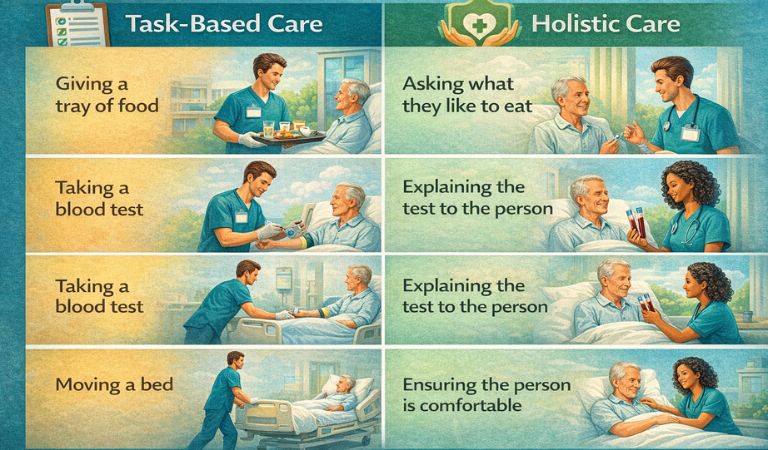
Good values also help the people who work in the health sector. Carers feel more satisfied when they see their patients getting better. It builds a team that stays strong even during very busy shifts. Everyone wins when we put these six simple rules into our daily work.
How is Defining Care More Than Just Clinical Tasks?
Care is the first of the values. It means you look at the person, not just their illness. You must help with their physical and emotional needs together. This helps the patient feel like a human being.
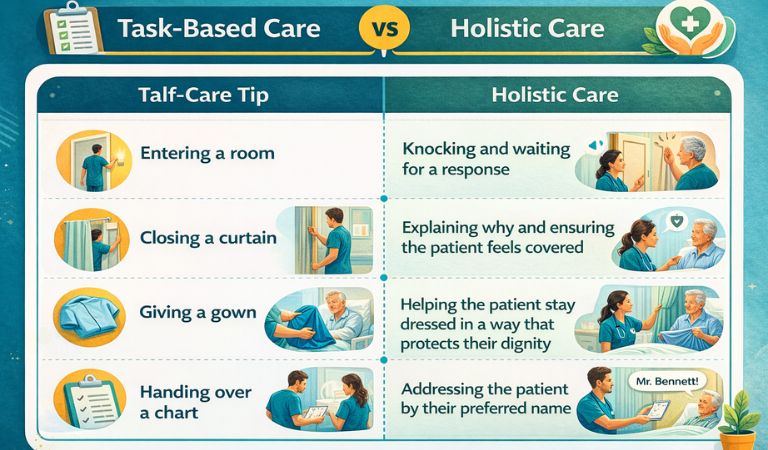
You must always respect a patient’s privacy and their dignity. Small things like knocking on a door really do matter. This shows the patient that you truly value their space. Good care builds a foundation for everything else you do.
How Are the 6 C’s Used in Specialised Settings Like Aged Care?
It takes a lot more patience to work with elderly individuals. In aged care, the 6 Cs help maintain a person’s identity. Many residents have lived long and very interesting lives. You must treat them with the respect they deserve.
Communication is very important when a resident has memory loss. You might have to repeat things many times with a smile. Compassion helps you stay calm during these difficult moments. It makes the care home feel like a real home.
Dignity is the most important part of this specialised work. You must help people wash and dress with great care. This keeps their spirits high and helps them stay happy. The 6 C’s provide a map for this delicate work.
What Is the Role of the 6 C’s in Mental Health Intervention?
Mental health care can be very challenging for new workers. In this setting, courage and compassion are the top priorities. You must support people who are going through dark times. This requires a very strong and stable heart.
Staff must work hard to reduce the stigma of illness. They use the 6 C’s to show that everyone deserves help. Competence is also key when dealing with a mental crisis. You must know the right steps to keep everyone safe.
Talking is often the best medicine in a psychiatric ward. You must be a great listener to help someone heal. Commitment ensures that you stay by their side during recovery. It is a very rewarding path for a dedicated carer.
How Do the 6 C’s Work in Paediatric Care When Working with Children?
Children see the world in a very different way. When they are sick, they feel very scared and lonely. Using the 6 c’s of care helps them feel brave. You must use play and fun to give them treatment.
- Use simple words that a child can understand easily.
- Be very patient if they start to cry or scream.
- Involve the parents in every single part of the care.
- Make the hospital room look bright and very friendly.
Competence is vital because children’s bodies are quite small and delicate. You must be an expert in how they grow and change. A child who trusts their nurse will heal much faster. Your kindness will stay in their memory for a lifetime.
How Do the 6 C’s and Diversity Promote Cultural Competence?
The UK is home to people from all over the world. This means carers must respect many different cultures and beliefs. The 6 C’s help you provide fair care to everyone. This is called being culturally competent in your work.
You might need to learn about different types of food. Some patients may have special rules about their daily prayers. Communication helps you learn what is important to each person. This shows that you truly value their unique background.
Never judge a person for having a different lifestyle from yours. Instead, use your compassion to understand their point of view. This builds a bridge of trust between different communities. It ensures that healthcare is equal for every single person.
How Can We Use the 6 C’s to Overcome Compassion Fatigue and Burnout?
Caring for others is a very hard job for anyone. Sometimes, staff feel very tired and stressed at the end. This is often called burnout or compassion fatigue. It happens when you give too much of your energy.
To stay committed, you must also care for yourself first. At work, you are not allowed to pour tea from an empty pot. Take breaks and talk to your friends about your stress. This helps you stay strong and ready for the day.
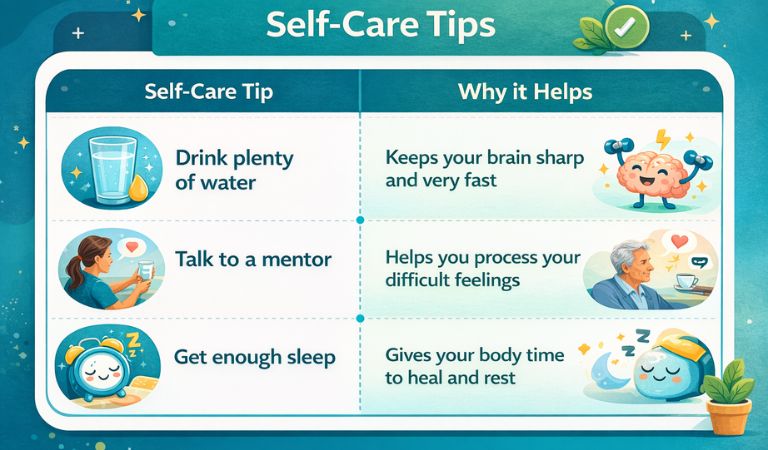
Managers should also support their staff with the 6 C’s. A happy team provides much better care for the patients. Remember that your health is just as important as theirs.
How Does Technology Impact Care in a Digital World?
In 2026, we will use robots and AI to help us with our daily work. While this might sound a bit scary at first, these tools are actually very helpful for everyone. Technology can take over the boring or repetitive tasks in a hospital, such as filing paperwork or moving heavy items. Because of this, carers have much more time to sit and talk with their patients. This ensures that the focus stays on the person, not just the chores.
However, you must learn how to use new software and digital tools. Using data can help you see if a patient is getting sick very early, which allows you to help them faster. Even so, a machine can never replace the warm touch of a real person. The 6 Cs remind us to keep the human element in everything we do. For example, when using video calls to check on patients who live far away, you must still show great care and love through the screen. Ultimately, technology is just a tool to help us be better at our jobs.
Why Is Value-based Recruitment Essential for Hiring the 6 Cs?
Hiring the right people is fundamental to a high-performing team, which is why many care homes now prioritise values-based recruitment over traditional methods. Instead of focusing solely on academic grades or technical certifications, employers look for inherent kindness and evidence of the 6 Cs within a candidate’s character. For instance, during an interview, they might ask you to describe a time you were brave or how you supported a friend in need. This approach highlights your natural attitude and empathy, based on the belief that while clinical skills can be taught during training, core values must already be present in your heart.
Consequently, a team built on these shared values tends to stay together much longer and provides a more stable environment for everyone involved. These individuals, aligned in their mission, naturally support one another when the ward becomes exceptionally busy or stressful. Furthermore, this collaborative spirit creates a positive culture that benefits both the staff and the patients alike. Ultimately, this method has become the benchmark for healthcare in contemporary Britain, as it consistently places compassion at the heart of every interaction.
Final Thought
The 6 c’s in care are not just words on a poster. They are a way of living and working every single day. By following these simple rules, we truly make the world a much better place. Patients feel respected while staff feel very proud of their hard work. Even as the world changes, kindness will always be important for every healthcare worker.
You can use this guide to improve your own daily practice right now. Every small action you take helps build a better and stronger NHS for everyone. We hope this guide helps you on your big journey in healthcare. Please stay brave, stay kind, and always put your patients first in everything you do.
Frequently Asked Questions (FAQs)
1. What are the 6 C’s of patient care?
- These are care, compassion, competence, communication, courage, and commitment used to help every single patient.
2. Which of the 6 C’s is most important?
- All six values work together as one team, so no single value is better than the others.
3. What are the 6 C’s of caring?
- They are a set of six simple rules that help workers stay kind and professional at work.
4. What are the 6C values of the NHS?
- These values guide NHS staff to provide the best and safest medical support to all British people.
5. How to remember the 6 C’s of nursing?
- Try using a fun word game or a bright poster on your wall to learn them fast.
6. What are the 6 C’s of nursing and leadership?
- Good leaders use these values to manage their teams with kindness and very strong professional skills.
7. What are the 6 core values of NHS?
- They are the same six values that ensure every patient gets fair and very high-quality treatment.
8. What is the 6C principle?
- It is a main rule book that tells all healthcare staff how to behave around their patients.
9. What are the 6 C’s of nursing interview questions?
- Managers ask how you use these six values to solve real problems and help sick people daily.